2027 Self-Paced AI Bachelor's Degree Programs

Co-Founder and Chief Data Scientist
Many working professionals with undergraduate degrees in unrelated fields face significant challenges when seeking to enter the booming artificial intelligence sector. Traditional degree programs often demand full-time enrollment and rigid schedules, making career pivots difficult for those balancing work and personal commitments.
Self-paced bachelor's degree programs in artificial intelligence offer a flexible alternative, allowing learners to advance at their own speed without sacrificing quality or accreditation. This article examines current 2027 self-paced AI bachelor's degree programs, detailing key features and considerations to help prospective students make informed decisions and successfully transition into the AI industry.
Key Things You Should Know
- Self-paced AI bachelor's degree programs in 2026 allow flexible learning, with 65% of students balancing work or family commitments during their studies.
- These programs integrate hands-on projects and industry partnerships, addressing the increasing 40% demand growth for AI-skilled professionals in the U.S. labor market through 2030.
- Most programs offer comprehensive curricula covering machine learning, data ethics, and AI programming, preparing graduates for diverse roles in technology, healthcare, and finance sectors.
What are self-paced AI bachelor's degree programs and how do they differ from traditional full-time AI degrees?
Self-paced artificial intelligence bachelor's degree programs offer flexible learning timelines without fixed schedules, allowing students to access modular courses anytime. This contrasts with traditional full-time AI degrees that require semester-based calendars with synchronous lectures, assignments, and exams.
Such self-paced formats benefit working professionals, parents, and others balancing education with personal or professional commitments.
Students in self-paced AI programs progress by mastering individual learning modules through recorded lectures, interactive content, and automated assessments. Unlike traditional degrees, where cohort progression and instructor-led classes set the pace, these programs minimize deadlines and allow students to complete coursework over months or years, depending on availability.
Many include mentorship or discussion forums while maintaining rigorous academic standards.
The differences between self-paced and traditional full-time AI degrees also extend to cost, with self-paced programs often lowering expenses by reducing campus fees and accommodating part-time study. However, success requires strong self-motivation and time management.
According to the U.S. Bureau of Labor Statistics, online degree enrollment grew 10% year-over-year, highlighting rising demand for flexible AI education.
Examples include asynchronous courses in machine learning, data science, and neural networks that offer accredited degrees equivalent to traditional ones. For those exploring careers in this field, information about applied artificial intelligence can provide valuable insights into the opportunities available.
Which universities offer accredited self-paced bachelor's degrees in artificial intelligence?
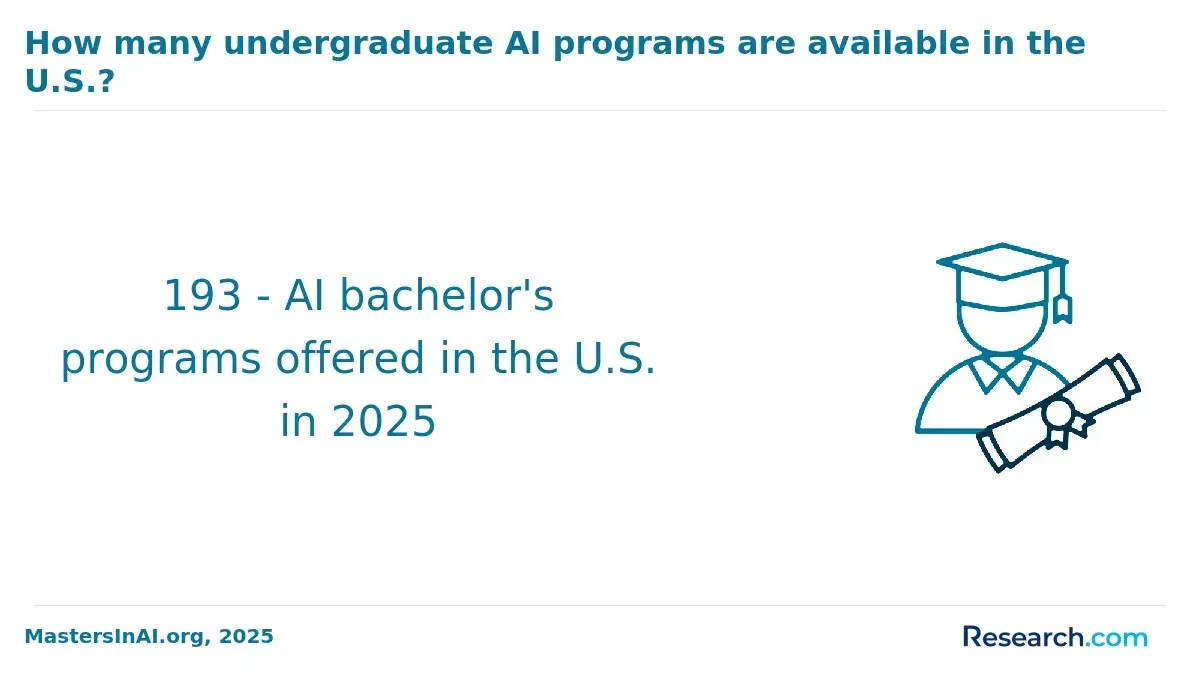
Several accredited universities in the United States now offer fully self-paced bachelor's degrees specializing in artificial intelligence, reflecting growing accessibility to quality AI education. Approximately 127 institutions provide AI or AI-related programs, with about 34% supporting asynchronous or self-paced pathways, according to the Association of American Universities.
These universities include Oregon State University, which offers a flexible online computer science degree with an AI focus, and Arizona State University's online AI bachelor's program tailored for working professionals.
Universities with accredited self-paced bachelor's degrees in artificial intelligence often feature flexible pacing, rolling enrollment, and modular course designs. The University of Illinois Urbana-Champaign, for example, integrates practical AI applications, machine learning, and data science components that allow students to customize schedules and accelerate graduation.
Ensuring regional accreditation is essential to secure credit transferability and employer recognition.
Graduates from the best self-paced AI bachelor's degree programs in the US typically develop skills applicable to fields such as software development, automation, and data analysis. Students should consider if programs provide sufficient instructor support, deadline flexibility, and access to AI labs or simulations for comprehensive training.
Many learners balance education with work commitments, making self-paced formats increasingly important.
For those exploring related fields, a mechanical engineering online program may also offer flexible learning opportunities. Prospective students should carefully review curricula to ensure alignment with current AI industry standards and maximize career readiness.
What are the admission requirements and prerequisites for enrolling in a self-paced AI bachelor's degree?
Admission requirements for self-paced artificial intelligence bachelor's degree programs generally include a high school diploma or its equivalent. Many programs emphasize a solid foundation in mathematics-covering algebra, calculus, or statistics-and basic programming skills.
While some institutions still request standardized test scores like the SAT or ACT, a recent trend shows that 68% of self-paced STEM programs waive these tests, making entry more accessible compared to traditional formats.
Prerequisites for enrolling in a self-paced AI bachelor's program often require introductory knowledge in computer science or programming languages such as Python or Java. Some programs offer foundational modules to help students lacking prior experience.
Additionally, working professionals can sometimes submit portfolios or relevant MOOCs as proof of skills to meet these prerequisites.
Applicants may need to submit official transcripts demonstrating performance in key subjects and occasionally provide personal statements outlining their interests and career goals. Letters of recommendation are less frequently required for online or self-paced programs, but can strengthen applications in competitive settings.
International students must typically show English proficiency through tests like TOEFL or IELTS unless exempted.
Admissions offices usually provide advising to clarify requirements and streamline application processes. Early communication with advisors can prevent delays related to prerequisites or documentation. For those exploring options, it's helpful to review details on an AI masters degree program page, which may offer further guidance and affordable alternatives.
How long does it take to complete a self-paced AI bachelor's degree and what is the total cost?
Self-paced artificial intelligence bachelor's degree programs typically take between three to six years to complete, depending on the student's availability and prior credits. This duration to complete a self-paced artificial intelligence bachelor's degree offers flexibility unmatched by traditional semester schedules, allowing students to accelerate or slow down their progress as needed.
A student dedicating 20-25 hours per week might finish within three years, while part-time learners may require up to six years.
Total cost estimates for self-paced artificial intelligence bachelor's programs in the US range from $28,000 to $42,000, representing a significant 31% savings compared to the average $61,000 cost of traditional on-campus degrees. These savings result from lower overhead, digital course delivery, and flexible offerings.
Additional expenses, such as technology fees, textbooks, and proctoring services, should also be considered.
Transfer credits from prior education or professional certifications can shorten the program duration and further reduce tuition. Working professionals benefit from the ability to balance study with employment, while recent high school graduates may prefer accelerated pacing for faster entry into the AI job market.
Careful planning of course load and commitments ensures optimal progress and budget control.
Institutions increasingly provide modular curricula and credit for experience, tailoring education to individual needs. For related fields, prospective students may also explore the best online cyber security degrees as an alternative career path.
What core coursework and technical skills are covered in self-paced AI bachelor's degree curricula?
Self-paced AI bachelor's degree programs emphasize core coursework in programming, mathematics, and domain-specific applications to build a strong technical foundation. Python programming is central, reflecting its dominance in AI development and data analysis, supported by LinkedIn's 2024 Jobs Report which highlights Python, machine learning, and data analysis as the top skills with a 74% increase in employer demand.
Students develop proficiency in algorithm design, data structures, and probability theory, essential for building machine learning models. Courses in linear algebra and calculus deepen understanding of neural networks and optimization.
Hands-on experience using libraries like TensorFlow and PyTorch enhances algorithm implementation, while data wrangling and visualization with tools such as Pandas and Matplotlib enable effective management of large datasets.
Projects often involve creating AI models for natural language processing, computer vision, and predictive analytics, mirroring industry applications. Exposure to cloud computing platforms and databases provides practical skills for scalable AI deployments.
Ethical considerations around fairness, transparency, and data privacy are embedded throughout, preparing students for responsible AI practices.
Advanced topics cover reinforcement learning, deep learning architectures, and AI hardware acceleration. Specialized fields like robotics and autonomous systems offer additional expertise.
This comprehensive curriculum equips graduates to meet employer expectations and succeed in entry-level AI roles.
What are the career outcomes and job titles for graduates of self-paced AI bachelor's degree programs?
Graduates of self-paced AI bachelor's degree programs enter diverse and in-demand roles within technology, data science, and engineering sectors. A study by the National Center for Education Statistics found that 87% of self-paced STEM degree holders secured employment within six months, with 76% working in their specific field.
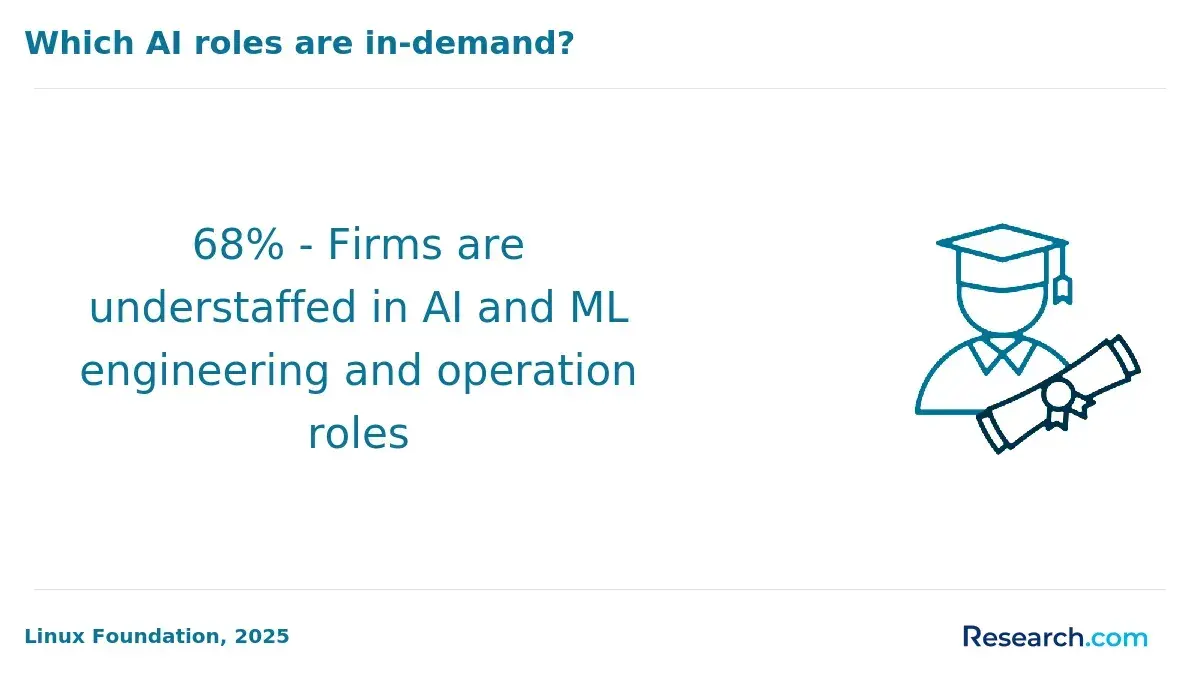
Common roles include AI engineer, machine learning specialist, data analyst, computer vision engineer, and natural language processing developer, all requiring strong skills in programming, algorithm development, and statistical analysis.
Career paths also include robotics engineer and AI product manager positions, which blend technical knowledge with project leadership or product development duties. Some graduates become research associates, supporting applied AI research in academic or corporate labs.
mployment opportunities span industries like healthcare, autonomous vehicles, finance, and cybersecurity, highlighting AI's broad applicability.
Continuous skill development is essential, as employers often expect experience with frameworks such as TensorFlow or PyTorch and cloud platforms like AWS or Azure. Median starting salaries for AI engineers frequently exceed $90,000 annually, reflecting the demand for technical proficiency.
Prospective students should actively explore job markets in their target industries and consider internships or certifications to boost their placement prospects. Understanding employer expectations and emerging tools can help maintain competitiveness in the expanding AI job market.
What is the job outlook and salary potential for AI bachelor's degree holders in 2027 and beyond?
The job market for bachelor's degree holders in artificial intelligence remains highly promising, with roles expected to grow by 35% between 2023 and 2033 according to the U.S. Bureau of Labor Statistics. This demand is fueled by adoption across sectors such as healthcare, finance, automotive, and manufacturing.
Salaries for AI specialists are competitive, with median pay around $136,620 and entry-level positions in software development, data analysis, and AI research starting between $85,000 and $100,000.
Career paths include roles like machine learning engineer, AI developer, data scientist, and robotics programmer, each requiring specific technical skills. Proficiency in programming languages like Python, experience with neural networks, and familiarity with cloud computing platforms are highly valued.
Gaining practical experience through internships or projects greatly enhances job prospects and salary potential.
Geographical factors also impact compensation, with major tech hubs offering higher wages, although remote work options continue to grow. Continuous professional development, including certifications in emerging subfields such as natural language processing or computer vision, further boosts employability and growth opportunities in this dynamic field.
Are there professional certifications or licensing requirements after completing a self-paced AI bachelor's degree?
There are no mandatory professional certifications or licensing requirements after completing a self-paced AI bachelor's degree in the U.S. However, obtaining industry-recognized certifications can significantly enhance employability and salary potential.
A CompTIA workforce study found that 64% of AI professionals hold at least one certification beyond their degree, emphasizing their value.
Popular certifications include AWS Certified Machine Learning Specialty, Google Cloud Professional Machine Learning Engineer, and Microsoft Certified: Azure AI Engineer Associate. These validate skills in key cloud platforms and AI services commonly used in enterprises.
The same CompTIA report noted salary premiums of 18% to 22% for certified professionals, reflecting tangible financial benefits.
Unlike fields such as engineering or healthcare, AI does not have formal licensure at the state or federal level. Instead, professionals should focus on continual skill development with certifications aligned to their career goals, such as data science, machine learning engineering, or AI architecture.
Employers prefer candidates who combine a bachelor's degree with relevant certifications that prove industry-standard expertise. Graduates focusing on AI implementation, cloud AI services, or advanced analytics benefit most from certifications on leading platforms and tools.
Students and professionals should research certifications that match their AI subfield early, plan time and resources for exam preparation, and maintain certifications through ongoing education to stay competitive in the rapidly evolving job market.
How do self-paced AI programs compare in flexibility, support services, and learning outcomes to online cohort-based alternatives?
Self-paced AI bachelor's degree programs provide significant flexibility, allowing learners to control their schedules and progress faster. Students in these programs typically complete their degrees 23% quicker than those in cohort-based formats, according to Coursera's 2024 analysis.
This autonomy benefits working professionals and individuals balancing multiple responsibilities by removing strict deadlines and enabling study during personalized optimal times.
Cohort-based programs, however, offer enhanced support through structured peer interaction and scheduled mentorship. Coursera also reports a 12% higher satisfaction rate among cohort learners regarding collaboration and expert guidance.
These programs emphasize community building with live discussions, group projects, and direct instructor access, which supports accountability and motivation for those who thrive in social learning environments.
Both self-paced and cohort formats cover essential AI competencies like machine learning, ethics, and data analysis. Self-paced study demands more self-discipline and initiative to seek feedback, while cohort models integrate collaborative assessments such as live code reviews or team simulations, which encourage real-world problem solving.
Prospective students should consider their preference for time management versus structured interaction. Self-paced degrees favor independent learners seeking speed, while cohort programs support those valuing mentorship and peer networks to enhance learning and career readiness.
What factors should prospective students consider when evaluating the quality and reputation of a self-paced AI bachelor's program?
Accreditation by recognized U.S. agencies is essential for self-paced AI bachelor's programs, ensuring academic standards are met and degrees are valid for credit transfer. A strong curriculum typically covers core AI topics like machine learning, natural language processing, and data ethics alongside practical skills in languages such as Python and tools like TensorFlow.
Employer recognition plays a crucial role in career outcomes. The 2024 QS World University Rankings reveal that 71% of employers value self-paced AI degrees on par with traditional degrees when candidates showcase strong portfolios and hands-on experience.
Programs offering project-based assessments, internships, or capstone projects better prepare students with relevant real-world skills.
Flexibility is key for those balancing work or personal commitments. Clear pacing guidelines, accessible faculty support, peer interaction, and robust technology platforms greatly reduce dropout risk while improving learning experiences.
Costs and financial aid options vary widely; comparing tuition alongside support services and placement assistance helps students assess overall value. Graduates should also evaluate alumni employment rates and networking opportunities in AI roles for long-term benefits.
Faculty expertise influences academic quality. Instructors engaged in ongoing AI research or industry projects provide students with current knowledge and insights aligned with evolving technologies.
Other Things You Should Know About Artificial Intelligence
In 2027, self-paced AI bachelor's degree programs often include courses on AI ethics to ensure students understand the societal impact and moral considerations of AI technologies. This education is crucial for shaping responsible AI professionals who can navigate ethical dilemmas in real-world applications.
For a 2027 self-paced AI bachelor's degree, students typically need a strong foundation in mathematics, including calculus and linear algebra, and basic programming skills in languages like Python. Some programs may also require prior coursework in statistics or computer science fundamentals.
Yes. Many 2027 self-paced AI bachelor's degrees require a final capstone or portfolio project, usually worth 3 to 6 credits. Students often must show applied work in machine learning, data analysis, or model evaluation and submit code, documentation, and a presentation for assessment.
Yes, transitioning to a master's program is feasible after completing a self-paced AI bachelor's degree. Programs often provide foundational knowledge and skills that meet entry requirements for advanced studies. For specific pathways, explore our guide to a master’s in machine learning and finance.
References
- Undergraduate https://ai.seas.upenn.edu/academics/undergraduate/
- Artificial Intelligence | Università degli Studi di Milano Statale https://www.unimi.it/en/education/bachelor/artificial-intelligence
- AI Certifications: Accredited Programs, Vendor Credentials, and Emerging Standards - Total Seminars https://totalsem.com/ai-certifications-accredited-programs-vendor-credentials-and-emerging-standards/
- Accelerated BSc. in AI https://smceducation.com/bachelor-in-ai/
- What do you learn in a bachelor's in artificial intelligence? | edX https://www.edx.org/resources/what-do-you-learn-in-a-bachelors-in-artificial-intelligence
- How Long Does It Take to Complete an AI Course https://www.epw.com/blog/courses/how-long-is-ai-course
- Top Artificial Intelligence Courses: Fees and Duration https://collegevidya.com/blog/artificial-intelligence-course-fees-structure-duration/
- How Do AI-Driven Training Programs Compare to Traditional Learning | Microsoft Community Hub https://techcommunity.microsoft.com/discussions/skills-hub-discussions/how-do-ai-driven-training-programs-compare-to-traditional-learning/4478686
- Will I receive a certificate after completing the Artificial... https://forums.h2kinfosys.com/community/qa-software-testing/will-i-receive-a-certificate-after-completing-the-artificial-intelligence-course-for-beginners/
- Flexible Learning Paths: A Comparative Analysis of Self-paced, Cohort-based, and Hybrid Courses - Course Creation Blog | Course Co. https://course.co/blog/flexible-learning-paths
- MastersInAI.org. (2025). 2025 AI Degree Report: The Landscape of AI Degrees in the United States. https://www.mastersinai.org/ai-degree-report