2027 Fast-Track Routes to Becoming a Speech-Language Pathologist

Co-Founder and Chief Data Scientist

Reviewed by Rhea Paul, PhD
SLP Education & Research Expert
Professionals with degrees outside of health sciences often face a prolonged journey when pivoting to speech pathology. Traditional graduate programs typically require prerequisite coursework and lengthy clinical hours, which can delay entry into the field. This extended timeline discourages many candidates eager to begin practicing. Accelerated routes and innovative program structures have emerged to address these obstacles, offering more flexible pathways tailored to career changers.
This article explores the most efficient, accredited fast-track programs and options available, helping prospective students navigate expedited entry into speech pathology careers.
Key Things You Should Know
- Accelerated master's programs in speech pathology now allow completion in as little as 18-24 months, significantly shortening traditional 2- to 3-year curricula.
- Clinical practicum requirements remain essential, with 400+ hours mandated by ASHA for certification eligibility, regardless of accelerated pathways.
- Demand for speech-language pathologists is projected to grow 17% through 2035, emphasizing the value of fast-track routes for timely entry into the workforce.
What is a speech-language pathologist and what do they do?
A speech-language pathologist (SLP) is a licensed healthcare professional who evaluates, diagnoses, and treats communication and swallowing disorders. These disorders affect speech clarity, language comprehension, voice quality, fluency, and cognitive-communication skills. SLPs serve diverse populations, including children with developmental delays, adults recovering from stroke or brain injury, and people with degenerative diseases such as Parkinson's. They design tailored therapy plans using evidence-based techniques to improve verbal and nonverbal communication abilities.
A fast-track speech-language pathologist career guide highlights key job roles and responsibilities, such as assessing speech and language through standardized tests and clinical observation, designing individualized treatment plans, supporting patients with swallowing difficulties (dysphagia), and collaborating with educators, physicians, and caregivers to optimize outcomes.
The profession demands expertise in anatomy, linguistics, neurodevelopment, and psychology. Pediatric SLPs help children articulate sounds and acquire language, while medical SLPs rehabilitate voice and swallowing functions after trauma or surgery. Certification data shows a 3.3% increase in CCC-SLP holders, reaching 212,864, reflecting growing healthcare needs and career stability in this field.
Prospective students interested in this path often explore speech pathology online masters programs as a practical option to enter this expanding profession.
What are the education requirements to become a speech-language pathologist?
To become a speech-language pathologist in the United States, candidates must earn a master's degree in speech-language pathology from a program accredited by the Council on Academic Accreditation in Audiology and Speech-Language Pathology (CAA). This graduate study, taking roughly two years after a bachelor's degree, covers anatomy, linguistics, audiology, and speech disorders.
Many students enter with an undergraduate degree in communication sciences and disorders, though some programs accept diverse academic backgrounds if prerequisite courses are completed. Verifying program-specific prerequisites early is essential for a smooth path.
Practical clinical experience is required throughout graduate training, with candidates completing a minimum of 400 supervised clinical hours-at least 375 of which involve direct patient contact-to earn the Certificate of Clinical Competence (CCC-SLP). These clinical hours may take place in schools, hospitals, outpatient clinics, or skilled nursing facilities, the latter offering some of the highest pay. According to recent data, speech-language pathologists working in skilled nursing facilities earn top salaries in the field, as highlighted in the speech therapist salary report.
In addition to educational milestones, state licensure and certification processes for speech-language pathologists include passing the National Examination in Speech-Language Pathology. Some states also require jurisprudence exams or continuing education. Planning carefully to meet both the master's degree requirements for speech-language pathologist roles in the United States and state licensure criteria ensures candidates advance successfully in their careers.
How long does it take to become a speech-language pathologist?
Becoming a speech-language pathologist typically takes two to seven years depending on your educational path. The fastest route is through accelerated master's programs, usually lasting two to three years after earning a bachelor's degree. These programs efficiently combine coursework and clinical practicum to fulfill certification standards.
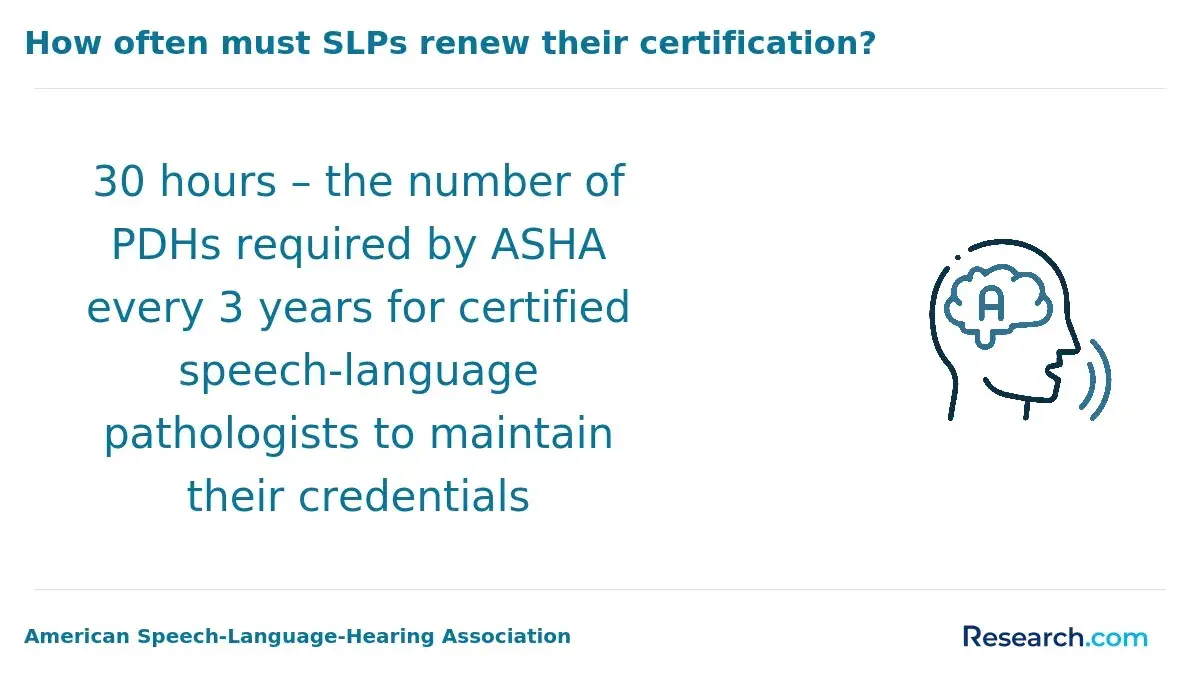
Students from unrelated fields may face an additional one to two years of prerequisite coursework before entering a master's program. Traditional master's programs generally span two years and include both academic study and supervised clinical hours required by the American Speech-Language-Hearing Association (ASHA). The average time to become a speech-language pathologist also includes completing a Clinical Fellowship Year (CFY), which provides nine months to a year of full-time supervised professional experience before licensure and ASHA certification.
Options for part-time study or programs for working professionals can extend this timeline to three or four years. Geographic factors also influence the process: according to the ASHA Supply and Demand Resource List, regional speech-language pathologist supply ratios vary significantly, highlighting the importance of fast-track speech pathology programs to meet workforce needs, especially in underserved areas.
Prospective students should evaluate program length, clinical placement opportunities, and licensure requirements carefully. To explore accelerated options, consider fast track speech pathology programs that may shorten your path into the profession.
Online versus campus-based speech pathology programs differ mainly in delivery and clinical experience. Online programs offer flexible virtual coursework suited for working professionals or those with scheduling or geographic constraints. Campus-based programs involve in-person classes with direct faculty interaction, fostering immediate feedback and peer collaboration. Both require rigorous clinical practicum hours, but campus programs often provide on-site clinical experiences at university-affiliated clinics. Online students must coordinate placements locally, which may be challenging depending on geographic access.
These differences between in-person and online SLP education are increasingly important as workforce shortages continue: 55.5% of respondents in the 2025 ASHA SLP Health Care Survey reported more job openings than available clinicians. This demand has led many schools to expand online and hybrid pathways while maintaining accreditation standards.
Key factors to consider include:
- Interaction style (virtual vs. face-to-face)
- Local access to clinical sites for online students
- Time management and self-discipline for remote learning
- Networking and campus resource availability
For those seeking asha accredited online SLP programs, evaluating personal circumstances alongside clinical placement logistics is crucial. Both program formats prepare students for certification and professional success, but understanding these distinctions ensures a better fit with individual career goals and life demands.
To practice speech-language pathology in the U.S., candidates must first earn a master's degree from a program accredited by the Council on Academic Accreditation in Audiology and Speech-Language Pathology (CAA). This ensures the curriculum meets national standards for knowledge and clinical training.
Graduates then complete a Clinical Fellowship Year (CFY), a supervised experience typically lasting 36 weeks full-time or the equivalent part-time. During this time, provisional certification-known as the Certificate of Clinical Competence in Speech-Language Pathology (CCC-SLP)-is awarded by the American Speech-Language-Hearing Association (ASHA). This allows professionals to practice under supervision.
Licensure requirements vary by state but usually involve passing the Praxis Examination in Speech-Language Pathology, administered by the Educational Testing Service. States use exam results, verified education, and CFY completion to grant full licensure for independent practice.
The Bureau of Labor Statistics projects about 13,300 annual job openings through 2034, driven by retirements and workforce changes. Accelerated pathways, including provisional certification and fast-tracked CFY models, help candidates enter the profession more quickly.
Speech pathology degree programs integrate foundational science with specialized clinical training to prepare students for diverse communication disorders. Core coursework typically includes anatomy, physiology, neurology related to speech and hearing, phonetics, language development, and audiology. Advanced classes focus on diagnosing and treating speech, language, and swallowing disorders such as articulation issues, stuttering, aphasia, and dysphagia.
Clinical practicum is a vital component, with many programs requiring around 400 supervised clinical hours. These practical experiences enhance skills in assessment, intervention, and client communication. Students also engage with evidence-based practice and research methods, which link scientific insights with therapeutic strategies.
Elective tracks in bilingualism and multicultural communication address the increased demand for professionals skilled in serving diverse populations. These include courses on cultural competence, second-language acquisition, and strategies designed for multilingual clients.
Preparation for certification exams like the Praxis, along with clinical fellowship requirements post-graduation, is integrated into the curriculum. Professional development in ethics, counseling, and interprofessional teamwork equips students to work effectively within healthcare and educational systems.
Admission to accredited speech-language pathology graduate programs typically requires a bachelor's degree from an accredited institution, often in communication sciences, linguistics, psychology, education, or related fields. A competitive GPA, generally at least a 3.0 on a 4.0 scale, is expected, although some programs may require higher.
Prerequisite coursework usually includes anatomy, physiology, phonetics, and language development to ensure foundational knowledge. While standardized tests like the GRE remain common, many programs waive them for applicants with strong academic records or relevant clinical experience.
Additional important components include:
- Two to three letters of recommendation from faculty or clinical supervisors
- A personal statement outlining career goals and motivation
- Relevant professional experience, volunteer work, or undergraduate research
- Background checks and health clearances due to clinical practicum requirements
Some programs offer direct-entry options for students transitioning from related fields, facilitating faster graduate study entry. According to ASHA Market Trends, employment for speech-language pathologists is projected to grow by 17% from 2025 to 2035, underlining the importance of meeting these admission standards to remain competitive in this expanding field.
Speech-language pathology programs in 2026 typically range from $20,000 to over $70,000 in total tuition, influenced by factors like public versus private institutions and residency status. Public universities generally offer more affordable tuition for in-state students, often between $20,000 and $40,000 for the full program. In contrast, private or out-of-state students may face costs exceeding $60,000. Accelerated or fast-track options can carry higher tuition premiums but may reduce the overall time and living expenses needed to complete the degree.
Financial aid is widely available through federal student loans, merit-based scholarships, work-study programs, and specific grants. Some speech pathology programs have partnerships with healthcare employers that offer loan forgiveness or tuition reimbursement, especially for graduates working in underserved or rural communities. State-based loan repayment programs also help reduce debt burdens for professionals committed to high-need areas.
With a mean annual wage for speech-language pathologists around $95,840 and higher earnings in states like Colorado reaching $114,410, the investment in education can be worthwhile. Prospective students should weigh program costs against potential salaries and available financial aid and consider eligibility for Pell Grants and early scholarship applications.
Employer tuition assistance during clinical placements or internships is an important benefit to explore. Choosing programs with clear cost breakdowns and strong financial aid support helps students manage expenses effectively while pursuing certification and licensure in speech pathology.
Speech-language pathologists (SLPs) play crucial roles across healthcare, education, and private practice by assessing, diagnosing, and treating communication and swallowing disorders. They serve diverse populations, including children with developmental delays and adults recovering from stroke or brain injury. Common roles include clinical therapists in hospitals, rehabilitation centers, schools, and nursing facilities, as well as positions in research, telepractice, and administration.
SLPs often collaborate within multidisciplinary teams-working alongside educators, psychologists, and medical professionals to create effective treatment plans. In educational settings, they develop individualized education programs (IEPs) tailored for students with speech and language impairments. Healthcare-focused SLPs may specialize in pediatric feeding, voice therapy, or neurological rehabilitation.
Career trajectories can lead to supervisory or managerial positions, academic roles, and private practice opportunities. Job prospects are growing due to the aging population and increased awareness of communication disorders, but regional shortages exist, with Western states notably underserved. According to the ASHA Supply and Demand Resource List, Nevada had 33.4 SLPs per 100,000 population compared to 101.0 in Arkansas, reflecting significant workforce imbalances that influence salary and workload.
Successful candidates should prepare for varied settings and complex patient needs-including severe cognitive impairments and bilingual populations-requiring cultural competence and specialized training. Aligning education and skills with these market realities can improve employment outcomes.
What is the job outlook and salary potential for speech-language pathologists?
The job outlook for speech-language pathologists (SLPs) is notably positive, with the U.S. Bureau of Labor Statistics projecting a 17% growth from 2025 to 2035, significantly faster than the average for all occupations. This increase reflects higher healthcare demands and an aging population, both driving the need for rehabilitation services.
Hospital-based SLPs, for instance, have seen increased caseloads post-COVID related to swallowing and voice recovery after extended intubation, according to Zippia Speech Language Pathologist Trends. This emphasizes the growing importance of SLPs in acute and critical care environments.
Salary for speech-language pathologists varies by experience, setting, and location. The median annual wage is about $97,870, with the top 10% earning over $120,000. Pediatric SLPs in schools or outpatient clinics usually earn between $70,000 and $85,000, while hospital or specialized rehabilitation center roles often exceed median salaries. Urban areas and regions with higher living costs tend to offer better pay.
Advanced certifications-such as board certification in fluency or swallowing disorders-can increase earning potential. Working in high-demand specialties and underserved regions offers further advantages. Prospective SLPs can plan their careers strategically by considering these factors to optimize financial growth and professional development.
Other Things You Should Know About Speech Pathology
Most U.S. graduates must pass the Praxis Subject Assessment in Speech-Language Pathology, usually the exam required for state licensure and the CCC-SLP. States also require a supervised clinical fellowship, commonly 36 weeks or 1,260 hours, before full licensure is issued.
Yes, clinical experience is a mandatory part of the training process for speech-language pathologists. Accredited graduate programs require supervised clinical practicum hours before graduation. This hands-on experience ensures candidates develop the necessary skills to assess and treat communication disorders effectively.
To enroll in a fast-track speech-language pathology program in 2027, candidates typically need a bachelor's degree in a related field, such as communication sciences. Some programs might also require prerequisite courses like anatomy or linguistics and a minimum GPA, typically around 3.0.
- U.S. Bureau of Labor Statistics - Speech-Language Pathologists https://www.bls.gov/ooh/healthcare/speech-language-pathologists.htm
- ASHA EdFind - Accredited Speech-Language Pathology Programs https://find.asha.org/ed/
- O*NET OnLine - Speech-Language Pathologists https://www.onetonline.org/link/summary/29-1127.00
- Idaho State University - Master of Science in Speech-Language Pathology (Online/Distance Education) https://www.isu.edu/slp/programs-offered/slp-graduate-program/
- University of Wisconsin-Eau Claire - Master of Science in Speech-Language Pathology (Online) https://www.uwec.edu/speech-language-and-hearing-sciences-department/graduate-program/speech-language-pathology-online
- California State University-Northridge - Master of Science in Communicative Disorders (Online) https://tsengcollege.csun.edu/programs/CDS
- Maryville University - Master of Science in Speech-Language Pathology https://www.maryville.edu/masters/speech-language-pathology/
- Baylor University - Master of Science in Speech-Language Pathology (Online) https://csd.robbins.baylor.edu/graduate/online-csd-graduate-program