2027 Should You Choose a BS in Business Administration or SHRM-CP for Your Next Career Step?
Audited and Verified:
Our Editorial and Data Verification Process
Research.com uses government datasets, official education statistics and primary institutional information to support its career and degree guides. Our review process checks factual accuracy, occupational definitions, source dates and the requirements associated with the credentials discussed.
How This Article Was Fact-Checked
Our editorial team verifies salary estimates, employment projections, education requirements and program information against original data providers and official organizations. Salary figures are checked against the relevant occupational definitions and reporting periods. Information about licensure, accreditation and required in-person training is reviewed separately.
Fact-checked and verified on:

Co-Founder and Chief Data Scientist
If your next career step involves human resources, a business administration degree and SHRM-CP certification can both look relevant - but they solve different problems. One provides broad undergraduate education; the other assesses HR-specific professional knowledge. The distinction matters whether you are entering the workforce, changing careers, or trying to advance without returning to college. This guide compares what each credential can support, what it takes to earn, and how to weigh the investment against the job you actually want.
Key Things You Should Know
- Choose the BS if you need a bachelor's degree or broad preparation for business roles; choose SHRM-CP if your near-term goal is to demonstrate HR knowledge and you can meet its eligibility rules.
- They are not substitutes: SHRM-CP does not award college credit or a degree, and a business degree does not award SHRM-CP certification.
- The U.S. median annual wage for human resources specialists was $75,940 in May 2025, but that occupation-wide figure is not an expected starting salary or a guaranteed return on either credential.
What is the difference between a BS in Business Administration and the SHRM-CP certification?
A BS in Business Administration is an undergraduate degree covering multiple business functions, typically alongside general education. SHRM-CP is a professional certification awarded by the Society for Human Resource Management after a candidate meets its rules and passes its exam. It focuses on applying HR knowledge and judgment; it is not a degree or a license to practice HR.
The comparison is most useful when tied to the requirement you need to satisfy. A job posting that requires a bachelor's degree may accept a business degree but not SHRM-CP in its place. A posting that prefers SHRM-CP calls for a separate credential, even if you studied HR in college.
| Decision factor | BS in Business Administration | SHRM-CP |
| Primary value | Broad academic preparation and a bachelor's credential | Evidence of assessed HR-specific knowledge |
| Best fit | Degree-required roles or flexibility across business functions | People pursuing or developing an HR career |
| What it cannot replace | HR certification or hands-on HR experience | A required bachelor's degree or hands-on HR experience |
For an experienced employee seeking people-management responsibilities rather than an HR position, neither option is automatically the best first step. Compare the target role's requirements with your actual supervisory experience and any employer training available. If a shorter undergraduate route is the issue, undergraduate leadership programs with shorter timelines are another option to evaluate - not a substitute for verifying degree requirements.
Which career paths can a BS in Business Administration or SHRM-CP support?
A business administration graduate can pursue roles such as operations coordinator, administrative specialist, recruiting coordinator, or entry-level analyst, depending on coursework and experience. SHRM-CP is more directly relevant to HR work involving recruiting, employee relations, HR operations, or workplace policy. An HR concentration within a BS can connect the two paths, but a concentration is not itself SHRM certification.
For a career changer, the strongest route often starts with an adjacent role. Customer-service or scheduling experience, for example, may support an application for recruiting coordination; payroll or records experience may support HR operations work. Document the relevant tasks you have performed, then look for opportunities to learn the HR duties you have not. Neither credential alone makes someone ready to manage a department.
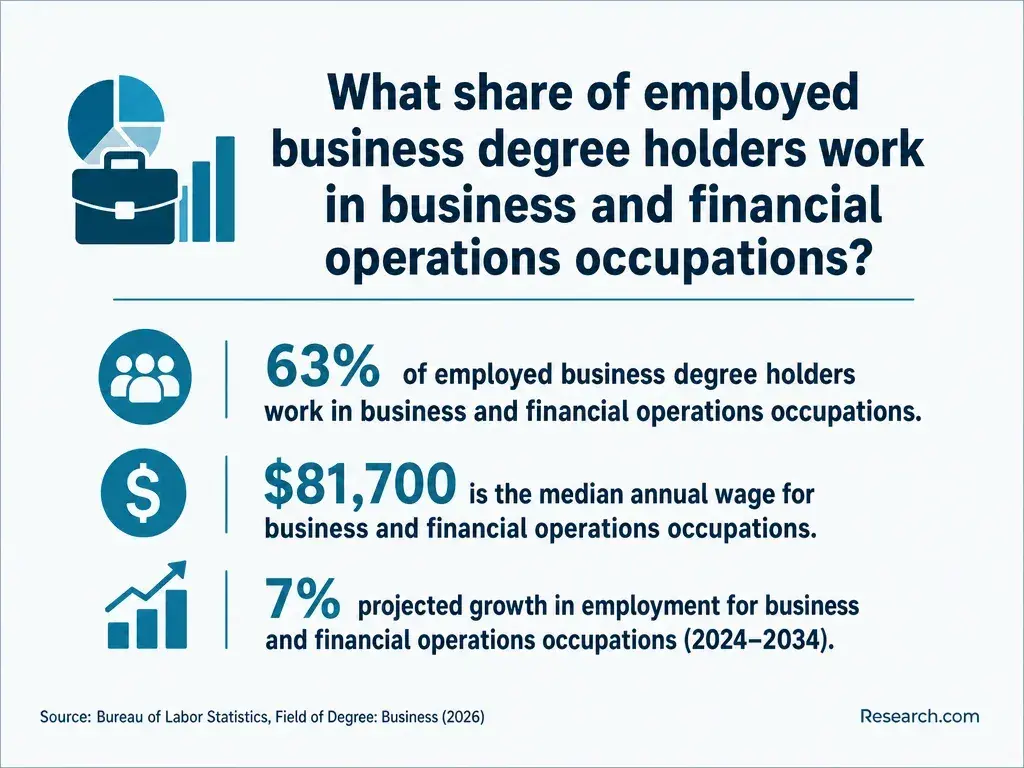
If your target is logistics or purchasing rather than HR, compare the business core with function-specific coursework. You can explore fast-track supply chain bachelor's programs alongside a general business degree, checking which courses and projects match the work you want to do.
What are the education and eligibility requirements for the SHRM-CP?
SHRM-CP does not require a bachelor's degree or prior HR work experience under SHRM's general eligibility criteria. It is intended for people who perform HR-related duties or are pursuing an HR career, and candidates are expected to have a working knowledge of HR practices. Eligibility to sit for the exam should not be confused with readiness to pass it - or with an employer's requirements for an HR job.
Before applying, check SHRM's current candidate rules, exam window, fees, identification requirements, and recertification obligations. Compare the exam's content areas with your experience: someone new to HR may need structured study and practical exposure, while an experienced practitioner may need targeted preparation rather than another degree.
If a bachelor's credential is also missing, consider whether a specialized HR degree is a better fit than general business. Reviewing human resources degree costs and options can help frame that separate education decision.
Delivery format does not change the basic distinction between a BS and SHRM-CP: the degree requires a sustained course of study, while certification requires exam preparation and assessment. Online study may make a BS feasible while working, but "online" does not necessarily mean self-paced. Live classes, group presentations, proctored exams, internships, and fixed deadlines can still shape your week.
Campus programs may offer easier access to in-person recruiting events and classmates, while online programs may reduce commuting. Compare the specific courses available in your remaining degree plan, not just the advertised format. Ask whether required HR electives and the capstone run when you need them, and whether a current job can be used for a project only with faculty and employer approval.
If you are weighing HR against project coordination, project management undergraduate transfer pathways offer another format-and-credit comparison. In every case, obtain a written evaluation showing how accepted credits apply to requirements.
Most programs combine general education with a business core that may include accounting, economics, finance, marketing, management, statistics, operations, and business law. The exact requirements and quantitative depth vary by school. Some offer an official HR concentration; others provide only HR electives. Check the catalog before treating an elective cluster as a named credential.
For an HR goal, look beyond an introductory management course. Relevant study may include staffing, employment law, compensation, organizational behavior, and ethical handling of employee information. Applied assignments can help you explain what you can do, but classroom work should not be presented as employer-approved HR practice.
If your work interests are more about schedules, budgets, and delivery than employee relations, compare the HR curriculum with budget-friendly online project management programs. Choose by the skills and credential the target employer seeks, not by similar-sounding course titles.
A full-time bachelor's path generally takes several academic years; a returning student's timeline depends on credits applied to the degree, required course sequencing, and enrollment pace. SHRM-CP preparation is usually a smaller time commitment, but its total investment includes exam fees, study materials, preparation time, and future maintenance requirements. Neither path has a reliable universal total cost.
For a degree comparison, request an official degree audit and estimate tuition for the remaining required courses. Add mandatory fees, books, technology, travel, and any income lost by reducing work hours; then account for grants or employer benefits only if you are eligible. Lower-tuition online business administration programs are worth comparing, but a lower advertised rate may not produce a lower completion cost if fewer credits apply or courses are offered less often.
If you already hold a bachelor's degree and need only HR knowledge for a defined role, compare the certification expense with the cost of a second degree. Reverse that recommendation if employers you are targeting require a particular degree or substantial HR coursework that you lack.
Schools commonly ask first-time applicants for prior academic records and transfer applicants for transcripts from each college attended. Business-major admission can have separate rules, including GPA thresholds or prerequisite courses in mathematics, accounting, or economics. The receiving institution decides whether prior credits transfer and which degree requirements they satisfy.
If you are returning to school, ask admissions about entry, the business department about major requirements, and an adviser or registrar for a degree audit. Confirm whether prior coursework fills general education, the business core, an HR concentration, or only electives. The distinction can change both cost and completion time.
Review entry conditions for prospective business administration students while gathering transcripts, then rely on each school's current catalog and written evaluation for your own eligibility. SHRM-CP eligibility is a separate decision governed by SHRM, not by a university admissions office.
Salaries attach to occupations and responsibilities, not to possession of a BS or SHRM-CP. The U.S. Bureau of Labor Statistics reports a May 2025 median annual wage of $75,940 for human resources specialists. That median includes experienced workers and different industries; it is not a forecast for a new graduate or newly certified candidate.
For comparison, the median for management analysts was $101,860, but those roles commonly call for relevant experience. A business degree does not put someone directly into the occupation at its median wage. Compare job postings for your location and experience level, noting whether they require a bachelor's degree, prefer SHRM-CP, or emphasize a track record of HR work.
Potential earnings matter alongside what you must spend to qualify. Use affordable online business program comparisons as a starting point, then calculate your own remaining cost rather than assuming an occupation-wide salary difference will repay tuition.
BLS projects employment of human resources specialists to grow 6% from 2025 to 2035. That indicates demand for the occupation nationally, not a prediction that every applicant - or every SHRM-CP holder - will find a job. Hiring still depends on location, sector, experience, and the duties an employer needs covered.
For someone considering business functions beyond HR, the comparison may point in another direction: BLS projects 18% growth for logisticians over the same period. Growth is only one factor; assess whether you want the work and have access to relevant training and entry-level experience. If logistics is a serious alternative, compare supply chain degrees by cost and length rather than choosing a general business degree solely for its breadth.
How can you choose an accredited business degree or reputable SHRM-CP preparation program?
For a BS, verify the institution's accreditation with the accreditor and confirm that it covers the school offering the degree. AACSB, ACBSP, and IACBE are business-focused accreditors, but their scope differs; verify whether the specific business school or program is covered rather than assuming every degree at the institution is. Then compare the current curriculum, required credits, course availability, student support, and written transfer evaluation.
For SHRM-CP preparation, start with SHRM's current exam information and compare any prep course against the tested content. Ask what materials, instructor support, practice assessments, and refund terms are included. A prep provider does not award SHRM-CP; passing the certifying organization's exam is the decisive step.
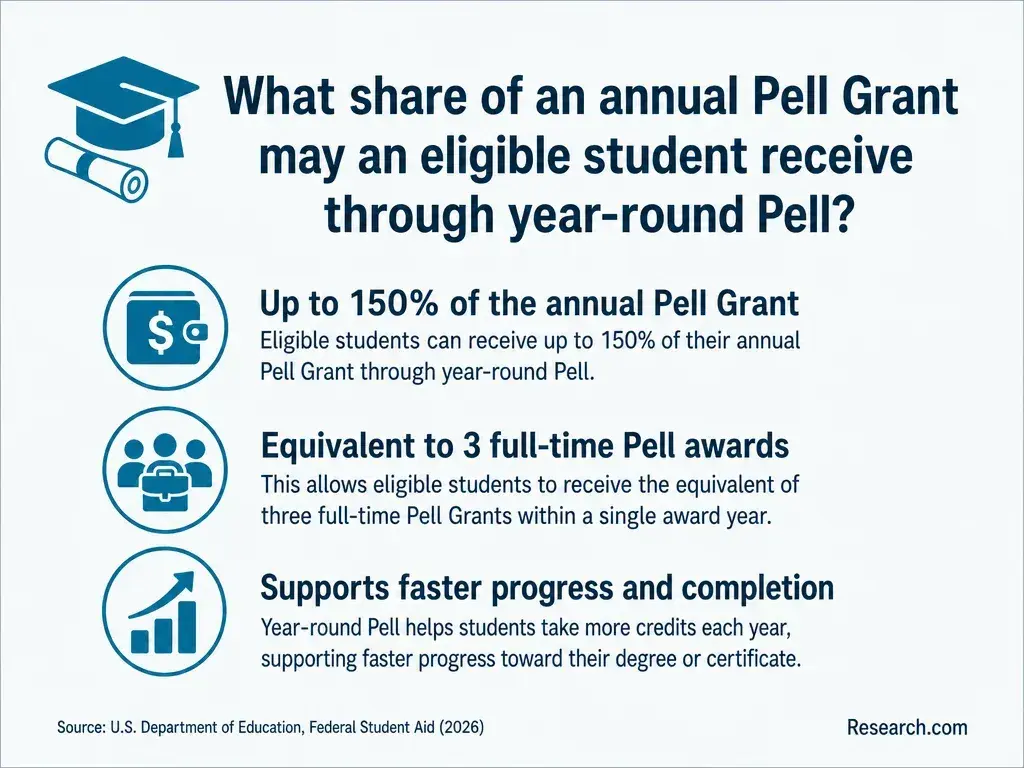
Before committing to a degree, confirm aid eligibility and your likely net cost. FAFSA planning for affordable business administration study can inform that comparison, but the school's financial-aid office must determine your individual package. Choose the option that closes a verified gap for your target role - not simply the one with the strongest marketing claim.
Other Things You Should Know About Business Administration
Do not list it as an earned certification before SHRM awards it. You can accurately state that you are preparing for the exam without implying that you have passed.
No. Schools differ in whether a concentration appears on the diploma, transcript, both, or neither. Ask the registrar how the completed concentration is officially recorded.
Possibly. Ask whether its education benefit covers degree tuition, certification exams, preparation courses, or some combination, and check reimbursement timing and repayment conditions.
Not automatically. An MBA is graduate education and may suit an experienced professional pursuing broader leadership responsibilities. It does not replace SHRM-CP when an employer specifically wants that certification.
- TEGL15-10a2.pdf | dol.gov https://www.dol.gov/node/160359
- What Is SHRM-CP vs. SHRM-SCP Certification? | Purdue Global https://www.purdueglobal.edu/blog/business/shrm-cp-vs-shrm-scp/
- The Value of SHRM-Aligned Programs in Advancing Your HR Career | The University of Scranton https://gradadmissions.scranton.edu/blog/articles/human-resources/value-shrm-aligned-programs.shtml
- What Is SHRM Certification? Requirements, Cost, and Benefits | Bryan University Online© https://bryanuniversity.edu/faq/society-for-human-resources-management-shrm-certification-all-you-need-to-know/
- What Jobs Can You Get With a Business Degree? | snhu.edu https://www.snhu.edu/about-us/newsroom/business/what-jobs-can-you-get-with-a-business-degree
- What Can I Do with a Business Administration Degree? | CTU https://www.coloradotech.edu/degrees/studies/business-and-management/articles/what-can-i-do-with-a-business-administration-degree
- SHRM Certification Exam Prep | walshcollege.edu https://walshcollege.edu/shrm-certification-exam-prep/
- How Much Does SHRM Certification Cost in 2027? | prepsaret.com https://prepsaret.com/shrm/how-much-does-it-cost-to-get-shrm-certified
- Business Administration Jobs: Roles, Skills & Career Paths | Florida Coastal University https://www.floridacoastaluniversity.com/business-administration-jobs-career-paths-skills-and-how-to-get-started/
- What Can I Do with a Bachelor's in Business Administration? | Rowan Blog https://rowanblog.com/2025/08/what-can-i-do-with-a-bachelors-in-business-administration-14-career-paths-to-explore/