2027 From Freelancing to Running a Service Business: When Does a BS in Business Administration Make Sense?
Audited and Verified:
Our Editorial and Data Verification Process
Research.com uses government datasets, official education statistics and primary institutional information to support its career and degree guides. Our review process checks factual accuracy, occupational definitions, source dates and the requirements associated with the credentials discussed.
How This Article Was Fact-Checked
Our editorial team verifies salary estimates, employment projections, education requirements and program information against original data providers and official organizations. Salary figures are checked against the relevant occupational definitions and reporting periods. Information about licensure, accreditation and required in-person training is reviewed separately.
Fact-checked and verified on:

Co-Founder and Chief Data Scientist
Freelancing can teach you how to win clients and deliver good work. Running a service business adds different responsibilities: setting prices that cover overhead, managing cash flow, building repeatable processes, and possibly supervising others.
A BS in Business Administration may help you develop those skills, but it also takes time and money away from the business. This guide helps freelancers and small-business owners weigh the degree against shorter options, identify useful coursework, and check whether a program fits their goals and workload.
Key Things You Should Know
- A BS in Business Administration makes the most sense when you need broad, sustained preparation for financial, operational, and people decisions - or a bachelor's credential for a specific career goal.
- If one immediate problem is limiting your business, such as bookkeeping or pricing, targeted training and professional advice may produce a more direct return than a full degree.
- Business degree earnings are not guaranteed: the U.S. median for human resources specialists was $75,940 in May 2025, an occupation-wide figure that does not describe a new graduate's expected pay.
When does a BS in Business Administration make sense for freelancers?
The degree is most useful when your work is changing from delivering a service yourself to designing and managing a business that delivers it consistently. That shift brings connected decisions about margins, staffing, customer acquisition, capacity, and risk. A broad business curriculum can help you see how one decision affects the others.
Your next goal should determine the education path. The comparison below separates a broad learning need from a specific, urgent problem.
| Goal | Likely better starting point | Why |
| Build a multi-person service firm or qualify for roles requiring a bachelor's degree | BS in Business Administration | Provides structured study across business functions and an undergraduate credential. |
| Fix pricing, bookkeeping, sales, or scheduling now | Focused course, adviser, or mentor | Targets the bottleneck without waiting to complete a degree. |
| Develop supervisors and improve team leadership | Leadership training or a relevant degree | The right choice depends on whether you also need broad business coursework and a bachelor's credential. |
A degree becomes less compelling if you already have the credential your target role requires and can address your business gaps directly. If leadership is the main goal, you might explore shorter organizational leadership bachelor's programs, then compare their remaining requirements with a business administration degree rather than assuming the advertised timeline will apply to you.
What can you learn in a BS in Business Administration program?
A BS in Business Administration typically combines general education with accounting, finance, marketing, management, operations, and quantitative coursework. Requirements vary by school. For a service-business owner, the value lies in applying those subjects together: estimating the cost of a project, setting a price, planning capacity, and checking whether the work generates enough cash to pay expenses on time.
Look for assignments that let you test business decisions, not just describe concepts. Managerial accounting can help you distinguish revenue from profit; operations courses can help you map handoffs and delays; marketing research can help you assess demand without treating a few client comments as representative evidence. A proposed business plan or forecast remains an estimate, not proof that a change will work.
Choose electives for your actual responsibilities. Hiring may make HR coursework useful, while recurring client projects may make operations or project management more relevant. If HR is becoming a substantial career goal rather than one part of running your firm, compare the business curriculum with online HR degrees for transfer students. Check whether either option has a formal concentration; a few electives do not create a separately awarded credential.
Can a BS in Business Administration help you start or grow a service business?
Yes, if you turn coursework into better decisions. A service firm must sell work, deliver it reliably, collect payment, and retain enough margin to keep operating. Courses can give you frameworks for each task, while your client work supplies questions worth investigating. The degree cannot supply customers, validate demand, or replace industry expertise.
A useful applied project might compare how two proposed service packages would affect estimated labor time, direct costs, and scheduling capacity. Keep assumptions separate from recorded results. If you use client or employee information, obtain any required permission and follow confidentiality, privacy, and school rules; a class assignment does not authorize disclosure of business records.
If your main constraint is coordinating complex client deliverables, budget-friendly online project management programs may be worth comparing with a general business degree. The narrower path may fit a specific skill gap, but it may offer less preparation for pricing, finance, and marketing decisions across the firm.
Your freelance experience may support a move into an employed business role, particularly when you can document responsibilities beyond delivering the core service. For example, client proposals can show sales coordination; scheduling contractors can show operational planning; and tracking campaign results can show marketing analysis. Employers will still assess the scale and quality of that work against the job's requirements.
Potential paths include operations coordinator, project coordinator, marketing coordinator, sales operations specialist, and administrative or HR support roles. Specialist and manager positions usually require more function-specific experience. A degree does not turn ownership of a small firm into automatic qualification to manage a large team or budget.
If your client work involves purchasing, inventory, or distribution, supply chain may be a more relevant direction. Compare the function-specific coursework in fast undergraduate routes into supply chain management with your experience and target job postings. Service-business experience transfers best when you can show the decisions you made, the tools you used, and the limits of your responsibility.
Generally, you do not need a business administration degree simply to freelance or own a service business. Requirements instead depend on where you operate, what you do, and how the business is organized. A locality may require business registration or permits, while a regulated service may require an occupational license held by the person performing the work. Confirm requirements with the relevant state and local authorities before offering a regulated service.
Keep academic credentials separate from professional permission. A business degree alone does not grant accounting licensure, a financial-services license, or another regulated credential. Nor does a project management bachelor's degree automatically confer a professional certification. If coordinating projects is your main goal and you have previous college study, project management bachelor's completion using existing credits is an education option to compare - not a licensing shortcut.
A bachelor's degree is commonly planned as a four-year full-time course of study, but a working freelancer's completion time depends on accepted credits, course sequencing, enrollment pace, and required terms of attendance. A school may accept previous credits without applying all of them to the business major. Request an official degree audit before treating an estimated completion date as reliable.
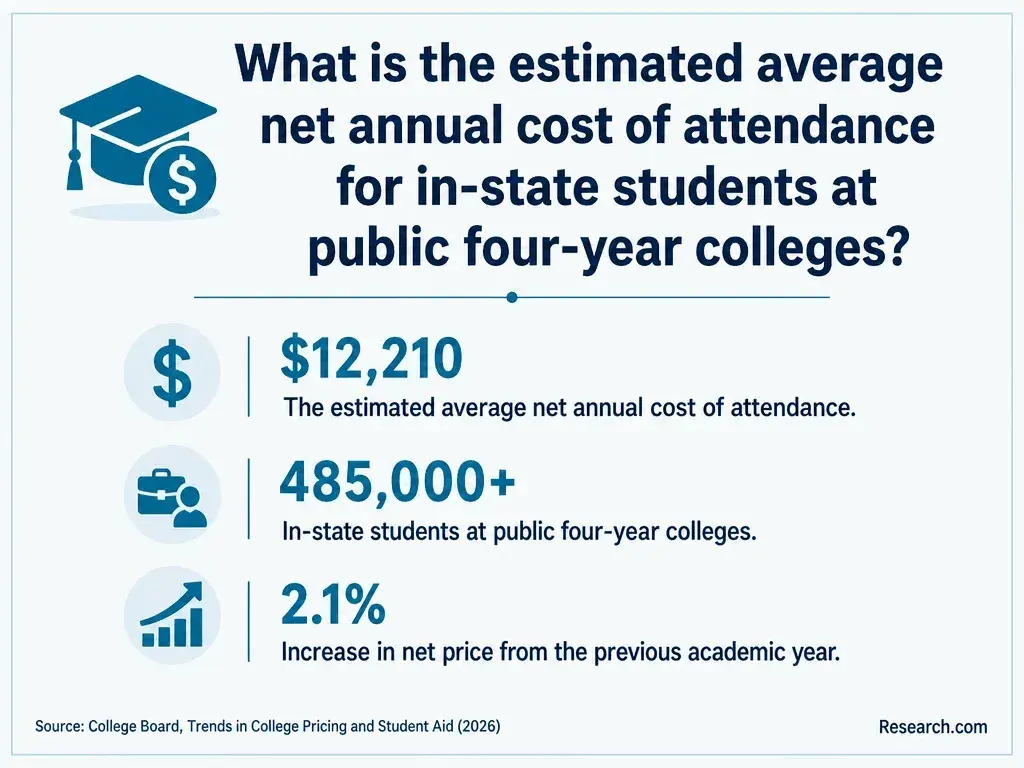
Compare the cost to finish, not just advertised tuition. Include required courses and fees, books or software, travel or proctoring, financing costs, and the billable hours you may give up. Also consider cash flow: employer reimbursement, if available, may arrive after you pay tuition and meet the employer's conditions.
Ask each school for a remaining-course plan and an aid estimate based on your enrollment level. Financial aid planning for low-cost business administration degrees can help frame that comparison, but verify eligibility, borrowing terms, and satisfactory academic progress rules with each institution. A cheaper per-credit price will not necessarily mean a cheaper degree if more courses remain.
Neither format is inherently better for a service-business owner. Online study may reduce travel and let you keep client appointments; campus study may offer more predictable in-person contact and networking. What matters is whether required activities fit the hours when your business needs you.
Check live sessions, group meetings, exam windows, presentation schedules, internships, and any campus visits before enrolling. An online course can still have fixed deadlines and synchronous obligations. If client demand varies by season, ask about part-time pacing, course availability, and leave or reentry policies rather than assuming you can pause without consequences.
For options designed around continued employment, review flexible online study for business administration career growth. Then request a sample term schedule: "flexible" is useful only if the actual assessments and deadlines work alongside your client commitments.
Start by confirming that the institution holds recognized accreditation and that the exact degree, delivery format, and campus or online division you intend to enter are covered. Then check whether the business school or program holds AACSB, ACBSP, or IACBE accreditation, if that distinction matters to you. Institutional and business-program accreditation are different; do not assume an accreditor covers every degree at a school.
Fit matters beyond accreditation. Compare the current catalog's required courses, relevant electives, transfer and residency rules, course rotation, advising, career support, and approved options for using your business in an applied assignment. Ask how a capstone is assessed and whether your own company is an eligible project setting. Existing work does not automatically satisfy an internship or earn academic credit.
A US online business college selection guide can help you assemble a shortlist. Make the final comparison using each school's published policies and a written evaluation of your remaining degree requirements, not a ranking alone.
Schools commonly ask first-time applicants for secondary-school records and transfer applicants for transcripts from previous colleges. A business major may have additional entry or progression requirements, such as minimum grades or specified introductory courses. Admissions rules and deadlines vary; professional success as a freelancer does not automatically waive academic requirements.
If you have college credits, ask for separate answers about admission, credits accepted, and credits applied to the degree. Prior accounting, mathematics, or statistics courses may need an equivalency review. If you already hold a bachelor's degree, ask about second-degree rules before starting another undergraduate program.
Submit transcripts early enough to compare written degree audits before committing. As you evaluate offers, lower-priced college options for business majors are useful only when the school confirms how much of your prior study meets its requirements.
What salary and job outlook can business administration graduates expect?
There is no single salary or growth rate for BS in Business Administration graduates. Outcomes depend on the occupation, location, industry, and experience a person brings to the role. Freelancers considering a switch to employment should compare a specific job offer with their current net business income, not with gross client revenue.
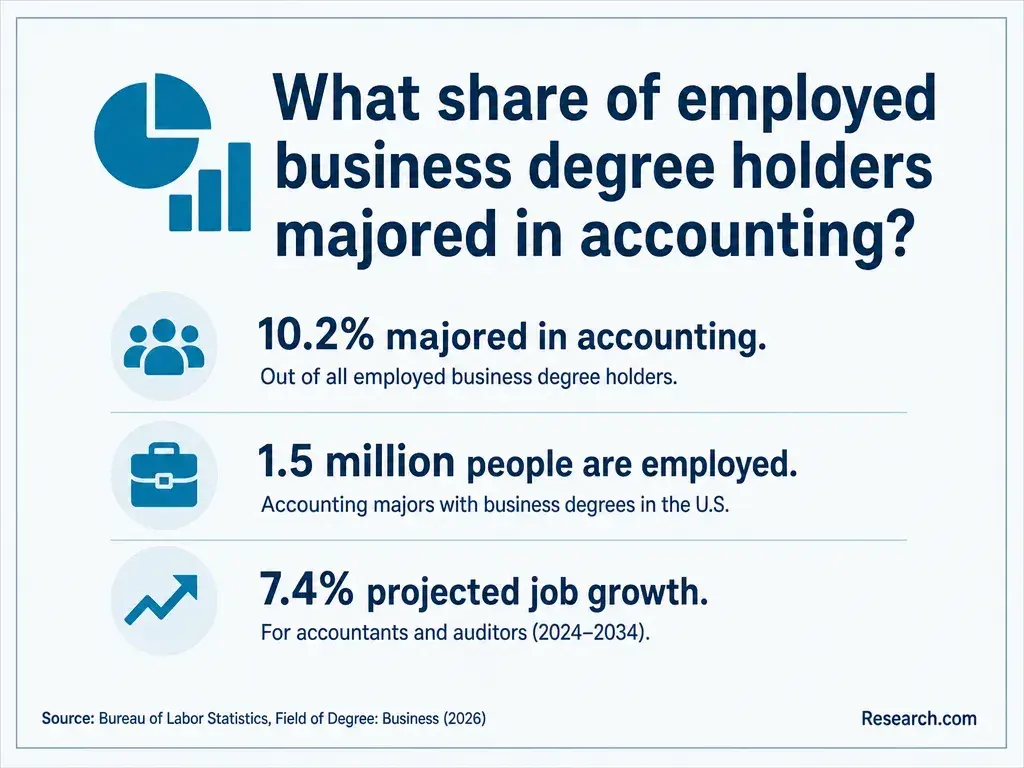
For one relevant occupation, the U.S. Bureau of Labor Statistics reports a May 2025 median annual wage of $75,940 for human resources specialists and projects 6% employment growth from 2025 to 2035. Those figures cover workers across the occupation; they are neither entry-level pay nor an outcome promised by a business degree. An HR-focused role may also require experience or coursework beyond a general business core.
To judge the degree's financial value, compare your remaining education cost and lost billable time with realistic opportunities in your target market. You can compare low-cost online business administration pathways, but use the school's confirmed completion plan and relevant job requirements - not an occupation-wide median - to make the decision.
Other Things You Should Know About Business Administration
Possibly, but only if the school offers an applicable internship, prior-learning, or work-based credit process and formally approves your work. Ask what documentation and supervision it requires.
Check the client agreement, obtain required permission, and remove confidential or personal information. When permission is unavailable, use a clearly labeled hypothetical example instead.
Not necessarily. Ask for the capstone schedule and workload in advance, then reserve time for research, feedback, and revisions alongside client deadlines.
Compare your skill gaps and target role with a certificate, selected undergraduate courses, or a suitable graduate program before committing to a second bachelor's degree.
- Fact Sheet 13: Employment Relationship Under the Fair Labor Standards Act (FLSA) | U.S. Department of Labor https://www.dol.gov/agencies/whd/fact-sheets/13-flsa-employment-relationship
- Manage your business - Small Business Administration https://www.sba.gov/counseling/manage-your-business/
- Cash flow management and its effect on firm performance - PMC https://pmc.ncbi.nlm.nih.gov/articles/PMC10281586/
- Independent contractor defined | Internal Revenue Service https://www.irs.gov/businesses/small-businesses-self-employed/independent-contractor-defined
- 10 Key Subjects Taught in a Bachelor of Business Administration Program | Carson-Newman University https://www.cn.edu/cps-blog/10-key-subjects-taught-in-a-bachelor-of-business-administration-program/
- Online vs Traditional Business Admin Degrees: What's Best? | UAGC https://www.uagc.edu/blog/online-vs-traditional-business-administration-degrees-whats-best-you
- Is an Online Business Degree Worth It? | American College of Education https://ace.edu/blog/what-employers-think-about-online-business-degrees/
- Benefits of a Business Degree | North Carolina Central University https://online.nccu.edu/blog/benefits-of-a-business-degree/
- Do You Need a Business Degree to Start a... - Campus https://campus.edu/blog/business/business-degree-for-entrepreneurs
- What AACSB Accreditation Means for Your Business Career | App State Online https://onlineprograms.appstate.edu/blog/why-aacsb-accreditation-matters-business-program/