2027 Can a BS in Business Administration Prepare You for a Workforce Scheduling Analyst Role? Skills and Entry Requirements
Audited and Verified:
Our Editorial and Data Verification Process
Research.com uses government datasets, official education statistics and primary institutional information to support its career and degree guides. Our review process checks factual accuracy, occupational definitions, source dates and the requirements associated with the credentials discussed.
How This Article Was Fact-Checked
Our editorial team verifies salary estimates, employment projections, education requirements and program information against original data providers and official organizations. Salary figures are checked against the relevant occupational definitions and reporting periods. Information about licensure, accreditation and required in-person training is reviewed separately.
Fact-checked and verified on:

Co-Founder and Chief Data Scientist
A workforce scheduling analyst turns staffing needs, employee availability, and operating constraints into workable schedules. A BS in Business Administration can build useful analytical and operational skills, but employers may also expect scheduling software experience and evidence that you can handle real staffing problems.
This guide is for students and career changers weighing the degree against a more direct route. It explains what the job involves, which courses and work samples matter, and how to judge education costs against the qualifications in jobs you want.
Key Things You Should Know
- A BS in Business Administration can prepare you for scheduling analysis if you pair operations and analytics coursework with spreadsheet skills, scheduling tools, and a relevant project or job experience.
- Entry requirements vary: some employers accept relevant operations or contact-center experience without a bachelor's, while others prefer a degree and familiarity with workforce management software.
- The Bureau of Labor Statistics reports a $101,860 May 2025 median wage and 10% projected 2025-2035 growth for management analysts, but that broader occupation is not a pay or hiring forecast for entry-level scheduling analysts.
Can a BS in Business Administration prepare you for a workforce scheduling analyst role?
Yes - but the degree is a foundation, not a job qualification by itself. Workforce scheduling analysts estimate staffing demand, build or adjust schedules, monitor coverage, and explain trade-offs to operations leaders. In a contact center, that might mean aligning agent coverage with expected call volume; in healthcare or retail, it might mean balancing service demand, shift rules, and employee availability. The exact duties depend on the employer.
Business administration is a reasonable choice when its curriculum includes operations, statistics, information systems, and applied spreadsheet work. The table shows where academic preparation connects to the role - and where you still need evidence of practical ability.
| Scheduling responsibility | Relevant degree preparation | Evidence beyond a course grade |
| Estimate coverage needs | Statistics, forecasting, and operations | A forecast that states its assumptions and compares predicted with observed demand |
| Build workable schedules | Operations, HR fundamentals, and quantitative decision-making | A schedule that accounts for availability, breaks, and stated coverage constraints |
| Explain staffing trade-offs | Business communication and managerial accounting | A concise explanation of service, labor-cost, and employee impacts |
If you already have scheduling, dispatch, or team-lead experience, targeted analytics training may close your gap more quickly than a new degree. If employers you want to work for require a bachelor's, compare that requirement with your existing credits and experience before choosing a program. For a broader education-versus-cost decision, review shorter business administration study options and career prospects without assuming that a shorter program covers the tools your target jobs use.
What skills do workforce scheduling analysts need to qualify for entry-level jobs?
The central skill is translating uncertain demand into a schedule people can use. An entry-level applicant should be able to clean staffing and workload data in spreadsheets, calculate coverage gaps, recognize when a forecast is unreliable, and communicate a proposed adjustment. Employers may also look for experience with a workforce management platform, reporting dashboard, or the scheduling system used in their industry.
Constraints matter as much as calculations. An apparently efficient schedule may fail because it ignores training time, absences, contractual rules, employee availability, or a supervisor's approval process. Analysts should know when to escalate a conflict rather than silently change a shift or assume that an optimization result overrides workplace policy.
A useful work sample could use invented or publicly available data to show a demand forecast, a proposed staffing schedule, and a short explanation of unmet coverage. Label assumptions and do not publish employee records. Students who need to build that sample alongside a job can look for business administration programs supporting continued employment, then check whether their assignments provide enough hands-on analytical work.
What education and experience are required to become a workforce scheduling analyst?
There is no single education rule for this job title. A bachelor's in business administration, operations, analytics, or a related field may satisfy employers seeking degree-level preparation. Other employers may prioritize experience in scheduling, contact-center operations, dispatch, retail staffing, or another setting that uses their workforce management tools. Read the qualifications and duties together: "analyst" can describe anything from schedule monitoring to substantial forecasting responsibility.
The most direct entry route depends on what you already do. These pathways differ chiefly in the evidence you can offer an employer.
| Starting point | Likely advantage | Gap to check in job postings |
| BS in Business Administration student | Operations and quantitative coursework | Industry-specific scheduling experience and software |
| Scheduler or operations employee | Knowledge of shifts, demand, and exceptions | Forecasting, reporting, or a stated degree requirement |
| Career changer from another function | Transferable data, customer-service, or coordination skills | Workforce terminology and evidence of scheduling decisions |
If your interest is primarily in project timelines rather than employee coverage, project scheduling may be a better target - and its employers may ask for different software and project experience. Students considering that degree route can compare transfer policies at online project management colleges; only the receiving institution can determine how previous credits apply.
Prioritize operations management for capacity and process constraints, statistics or business analytics for demand patterns and forecast error, and information systems for working with organizational data. Spreadsheet-heavy assignments are especially useful. HR management can clarify staffing practices, while managerial accounting can help you discuss labor-cost trade-offs without treating the cheapest schedule as automatically the best one.
Check the actual syllabus, not just the course title. Ask whether you will analyze time-based data, test assumptions, build models, and explain recommendations. A general management course may discuss staffing conceptually without teaching scheduling calculations. Likewise, an analytics concentration is valuable only if its available courses add relevant depth and can fit your remaining credits and timetable.
If you are more interested in recruiting, employee relations, or HR policy than coverage forecasts, an HR-focused degree may fit better. When comparing that path, check human resources bachelor's residency and transfer rules as well as the curriculum; a course accepted for credit may not satisfy a particular major requirement.
It can be, provided the online program offers substantive quantitative work and a feasible way to practice with data. Online delivery does not make a degree self-paced or guarantee access to scheduling software. Confirm how spreadsheet assignments are assessed, whether analytics courses include projects, and whether a capstone can address an approved operations problem.
Check live-class times, group work, exam proctoring, software access, deadlines, and any internship or campus requirements against your work schedule. Accelerated terms may shorten the calendar but concentrate assignments. When examining undergraduate programs with faster pacing, ask an adviser to map required business and analytics courses by term; a course offered infrequently can limit the benefit of acceleration.
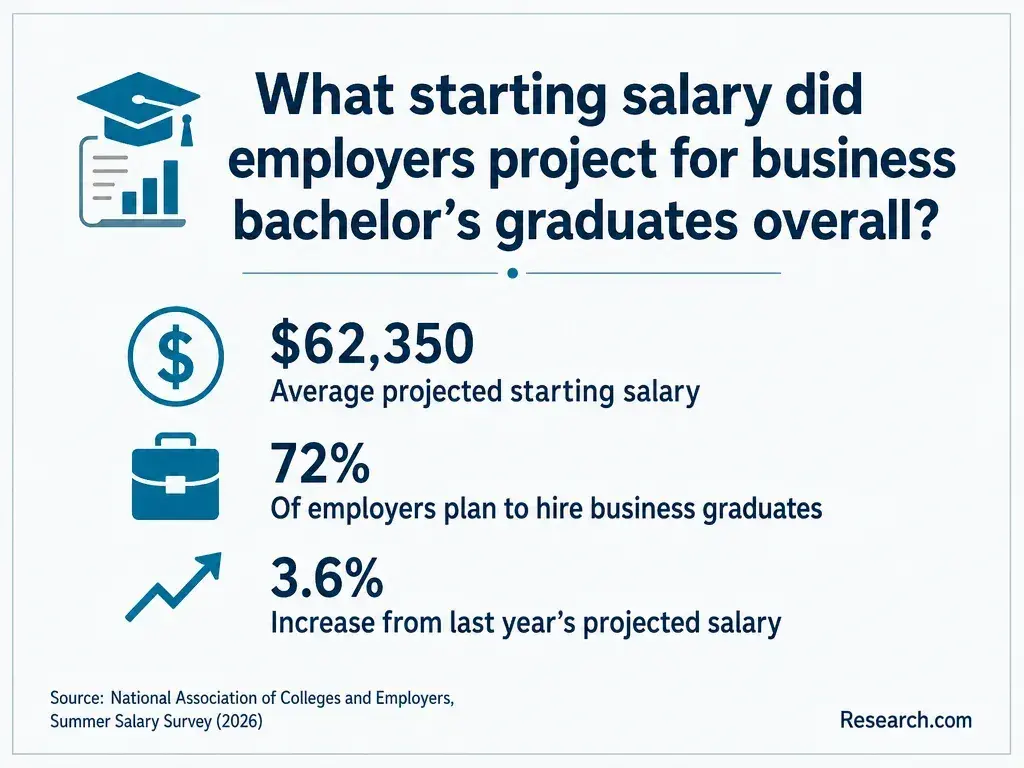
A student entering without college credit commonly plans around a four-year, full-time bachelor's pathway; part-time enrollment takes longer, while applicable transfer credits may shorten it. No single tuition figure accurately represents all BS in Business Administration programs. The useful comparison is the cost to finish your remaining requirements, not an advertised per-credit price alone.
Request a program-specific estimate covering tuition, mandatory and technology fees, books or software, and any travel or proctored assessments. Ask the school for a degree audit showing which prior credits meet general education, business-core, elective, and residency requirements. Then compare the remaining course sequence and likely enrollment pace. Employer reimbursement, if available, may depend on approval, grades, or when the employer pays you back.
For an initial price comparison, compare low-cost online business administration pathways, but obtain each institution's current charges and transfer evaluation before estimating your total. A lower sticker price can lose its advantage if more courses are required.
Requirements vary by institution and by whether you apply as a first-year, transfer, returning, or second-degree student. Schools typically require evidence of prior education, such as high school or college transcripts; a business major may have separate entry or progression rules. Mathematics, statistics, accounting, or economics preparation may be required before particular upper-level courses even if it is not required for initial university admission.
Before applying, ask admissions which records and deadlines apply to you, then ask a business adviser which prerequisites you must complete and when. If you have previous college work, request an official evaluation rather than assuming accepted credits will satisfy the major. Compare admission and credit policies alongside price when you explore affordable colleges for business study.
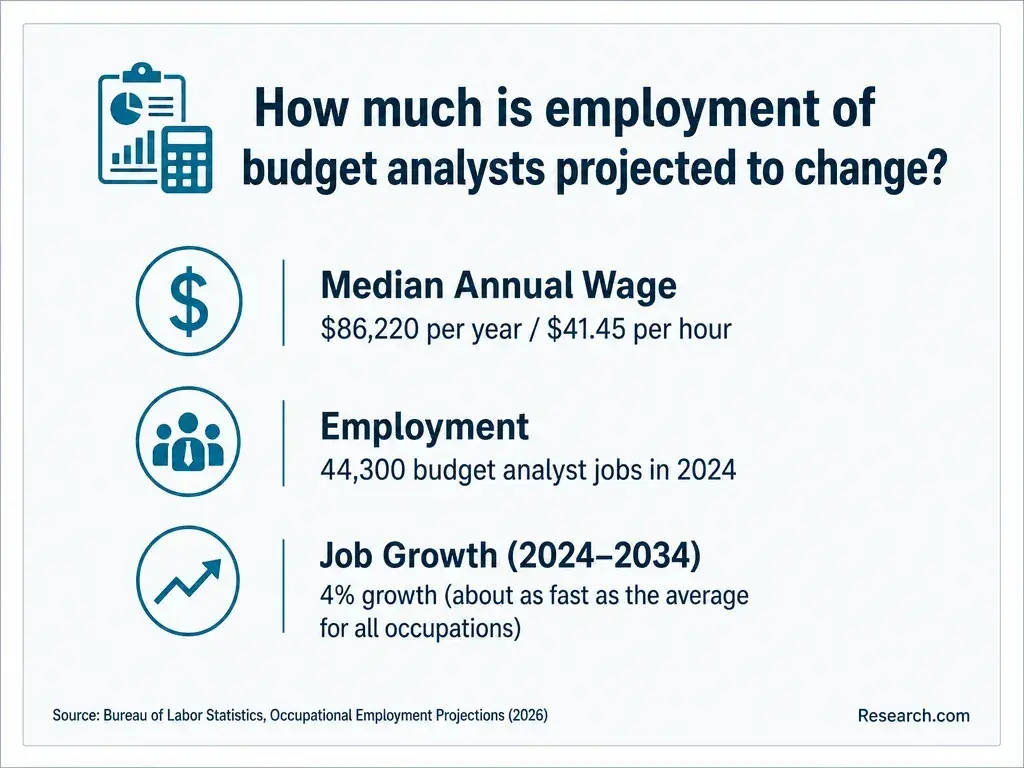
There is no single Bureau of Labor Statistics (BLS) wage figure for the exact title "workforce scheduling analyst." The closest BLS category depends on the work performed; many scheduling positions should not be classified as management analyst jobs. BLS reports a $101,860 median annual wage in May 2025 for management analysts, a broader occupation concerned with organizational efficiency. That is not the expected salary of a new scheduling analyst or a BS in Business Administration graduate.
For a realistic pay estimate, compare local postings whose duties match the scheduling work you want, and separate entry-level roles from senior workforce planning or consulting positions. Weigh any offered salary against your remaining education costs and current earnings. If you are also considering project-scheduling roles, financial aid packages for online project management bachelor's students are relevant to that alternative's cost - not evidence of what scheduling analysts earn.
BLS does not publish a separate national growth projection for workforce scheduling analysts. It projects 10% employment growth for management analysts from 2025 to 2035, but that forecast covers a broader occupation and cannot be applied directly to scheduling jobs. Employers' needs also differ by sector, staffing model, and whether scheduling is a dedicated analyst role or part of an operations position.
Search for both "workforce scheduling analyst" and related titles such as "workforce management analyst" or "capacity planning analyst," then compare the duties before treating them as the same opportunity. If your interests lean toward inventory flows and distribution rather than employee schedules, budget-friendly supply chain degrees with shorter schedules may be worth comparing as a distinct career route, not as a substitute qualification for every scheduling job.
Do workforce scheduling analysts need certifications or professional licenses?
Workforce scheduling analysis generally does not require a professional license. Employers may value training in their workforce management platform, advanced spreadsheets, analytics, or industry-specific scheduling rules, but a voluntary certificate does not replace demonstrated skill or a bachelor's requirement in a particular posting.
Choose training only after reviewing target jobs: a short software course may be the direct next step for an experienced scheduler, while a degree may matter more if otherwise suitable roles consistently require one. If a bachelor's is the missing qualification, compare American fast-paced business bachelor's degrees on remaining credits and course availability rather than assuming a certificate will meet the requirement.
Other Things You Should Know About Business Administration
Try workforce management analyst, scheduling coordinator, staffing analyst, capacity planning analyst, and real-time analyst. Check the duties: some positions primarily monitor daily coverage, while others build forecasts or long-range staffing plans.
Yes, particularly if you have tracked demand, adjusted shifts, reported service levels, or resolved coverage gaps. Describe those decisions and their scope accurately rather than presenting general customer-service experience as forecasting expertise.
Only with appropriate employer permission. Remove employee and customer information, check confidentiality rules, and consider building a separate example with invented data instead.
No. Remote analysts may need to monitor coverage during fixed operating hours or respond quickly to staffing changes. Check the posting's shift, time-zone, and on-call expectations.
- Filling the Holes: Work Schedulers as Job Crafters of Employment Practice in Long-Term Health Care - PMC https://pmc.ncbi.nlm.nih.gov/articles/PMC5053771/
- Data Analyst Career Path & Salary Guide by Level | UT Tyler https://online.uttyler.edu/degrees/business/mba/data-analytics/analyst-career-path-and-salary/
- What Can You Do With a Business Administration Degree? | snhu.edu https://www.snhu.edu/about-us/newsroom/business/what-can-you-do-with-a-business-administration-degree
- Why a Degree in Business Administration - OSIM | Naveen Jindal School of Management https://osim.utdallas.edu/voices/osim-articles/bs-business-administration-articles/why-a-degree-in-business-administration/
- Business Analyst Communication & Stakeholder Skills Guide | William & Mary Mason https://online.mason.wm.edu/blog/skills-for-a-successful-career-in-business-analytics
- How to Become a Business Analyst: Steps, Skills, and Salary | Touro University Worldwide https://www.tuw.edu/business/how-to-become-a-business-analyst/
- 13 High-Paying Jobs with a Bachelor's in Business Administration | PBA https://www.pba.edu/academics/outcomes/articles/degree-outcomes/13-high-paying-jobs-with-a-bachelors-in-business-administration/
- A Guide to Demand Forecasting in Supply Chain Management | Global Supply Chain Institute https://haslam.utk.edu/gsci/news/guide-to-demand-forecasting-in-supply-chain/
- Career Pathways and Starting Salaries - Career Advancement https://careeradvancement.uchicago.edu/career-toolkit/discover-your-passion/career-pathways-and-starting-salaries/
- Internship Opportunities & Career Benefits | Florida National University (FNU) https://www.fnu.edu/internship-opportunities-for-college-students-career-benefits/