2027 A Second BS in Business Administration After a Bachelor's in Biology: Credits, Cost, and Alternatives
Audited and Verified:
Our Editorial and Data Verification Process
Research.com uses government datasets, official education statistics and primary institutional information to support its career and degree guides. Our review process checks factual accuracy, occupational definitions, source dates and the requirements associated with the credentials discussed.
How This Article Was Fact-Checked
Our editorial team verifies salary estimates, employment projections, education requirements and program information against original data providers and official organizations. Salary figures are checked against the relevant occupational definitions and reporting periods. Information about licensure, accreditation and required in-person training is reviewed separately.
Fact-checked and verified on:

Co-Founder and Chief Data Scientist
A biology bachelor's degree can be an asset in healthcare, biotechnology, and other science-related businesses - but it does not automatically cover the accounting, finance, and operations courses in a business administration major. If you are considering a second bachelor's, the decision hinges on how your existing credits apply, what you would pay to finish, and whether the credential fits your target role.
This guide shows you how to get a usable degree audit, estimate the remaining commitment, and compare a second BS with shorter or more specialized routes.
Key Things You Should Know
- Your biology credits may satisfy general education and electives, but only the receiving school can determine which credits fulfill business requirements and how many you must still earn.
- Price the degree using required remaining courses, tuition, fees, and time away from work - not the number of credits a school initially accepts. A completed bachelor's also generally rules out federal Pell Grant eligibility.
- A second BS is most useful when you need substantial undergraduate business foundations or access to undergraduate recruiting. For a defined skill gap, an MBA, certificate, or relevant work experience may be more direct.
What Is a Second Bachelor's in Business Administration After Biology?
It is a separately awarded undergraduate degree earned after your biology bachelor's - not a conversion of your first degree. Your previous coursework may meet general education requirements, while you complete the new school's business core, any concentration requirements, and its minimum credits earned there, often called residency credits.
A BS in Business Administration typically provides broad preparation across business functions. A BBA or BS in Management may cover similar ground, but titles do not establish identical curricula or transfer policies. If your goal is specifically organizational leadership, fast-track online colleges for leadership majors offer a different curriculum to compare. Check which degree actually teaches the finance, quantitative, and operational skills your intended job requires.
How Many Credits Transfer From a Biology Degree to Business Administration?
There is no reliable universal credit total. A school may accept much of your biology transcript yet apply relatively little of it to the business major. The distinction is between credits accepted and requirements satisfied; the latter determines what you must take and pay for.
Use the school's official evaluation to sort previous courses into these categories. The examples show why an accepted course does not necessarily shorten the business sequence.
| Degree-audit category | Possible use of biology-degree coursework | What to confirm |
| General education | Writing, mathematics, social sciences, and other previously completed requirements | Whether a second-degree policy waives requirements rather than transferring each course |
| Business core or prerequisites | Statistics or economics, if the content meets the school's equivalency rules | Required course content, grade, and any recency rule |
| Concentration | Usually limited unless prior courses match an approved specialization requirement | Whether substitutions need department approval |
| Electives | Biology courses not used elsewhere | Whether elective credits reduce the remaining total or merely exceed it |
Request a written, program-specific audit from the transfer office or registrar and review it with a business adviser. Provide official transcripts and, for a disputed equivalency, the original syllabus. Ask which decisions are final, how to appeal a course classification, and which business courses must be taken at that institution. If HR is your intended specialization, compare HR bachelor's transfer policies as well; a specialized major may apply your remaining credits differently.
How Much Does a Second Business Administration Bachelor's Cost?
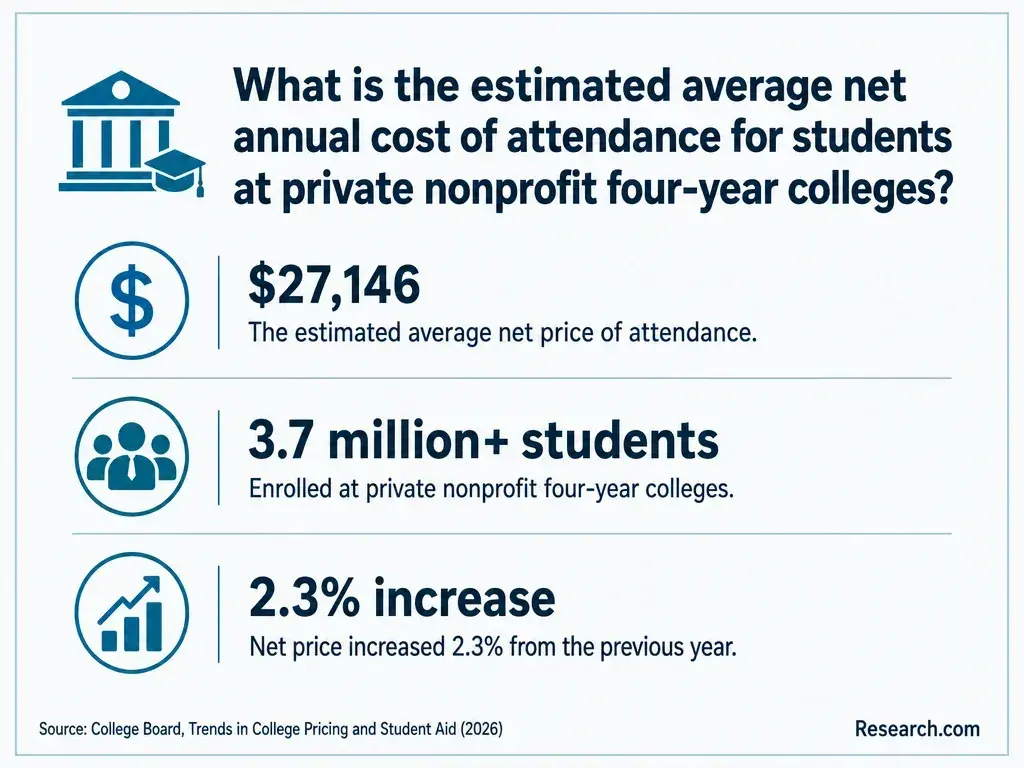
The useful figure is your total cost to completion, not published annual tuition. Calculate required credits at the applicable per-credit rate - or required terms at a flat-term rate - then add mandatory fees, books, software, travel, and any income you would forgo. Verify whether tuition changes by residency status, enrollment intensity, or program format.
Obtain itemized estimates from schools offering online business administration degrees at lower prices, then compare them against your individualized audits. A lower rate can lose its advantage if the school requires more courses, repeats introductory work, or offers a required course infrequently.
Complete the FAFSA if the institution participates in federal aid, but do not assume a second bachelor's carries the same aid package as your first. Students who already hold a bachelor's generally cannot receive federal Pell Grants; possible federal loan eligibility depends on applicable limits and individual circumstances. Ask the financial-aid office about remaining eligibility, satisfactory academic progress, and whether employer reimbursement arrives only after you have paid tuition.
Schools commonly request an application and official transcripts documenting your completed biology degree. Their rules may separately govern admission to the university, entry to the business major, minimum grades, and prerequisites. A biology background does not itself bar admission, but prior calculus or laboratory statistics will not necessarily substitute for a specified business statistics course.
Check college coursework required for business administration entry against each school's current catalog. Ask admissions whether you may enter before finishing accounting, economics, or other prerequisites; then ask the business department when those courses must be completed. Keep admission approval separate from the registrar's decision about degree credit.
Your timeline depends on the audited requirements, prerequisite order, course availability, and how many classes you can take while working. Even when general education is complete, sequential accounting or finance courses and a final capstone can prevent you from finishing as quickly as a simple credit count suggests.
Ask an adviser to map required courses by term, including summer offerings and the earliest possible capstone date. Accelerated study formats for bachelor's students may shorten the calendar, but they do not necessarily reduce required work or total tuition. Compare a realistic part-time plan with a full-time plan that accounts for lost earnings.
Neither format is inherently better for a biology graduate. Online study may preserve your current job and location; campus study may make in-person recruiting, team projects, and employer connections easier to access. In either format, confirm whether internships are available and whether a current job could support an approved project. Employment alone does not earn academic credit.
Before choosing an online school, ask about live meetings, group-work schedules, exams, campus visits, and access to career services. Also verify the institution's recognized accreditation and whether any claimed AACSB, ACBSP, or IACBE accreditation covers the relevant business program. If application costs matter while you compare formats, you can compare accredited schools with no application charge; an application fee is only one small part of the eventual cost.
Most programs build from accounting, economics, statistics or quantitative reasoning, marketing, management, finance, and operations toward strategy or a capstone. Exact requirements differ. Your biology training may help with data interpretation and evidence-based decisions, while financial statements, pricing, and organizational processes may be newer material.
Choose electives around the work you want to do rather than assuming a general business degree covers every function in depth. For example, HR courses may support a move toward staffing or employee operations, but an official HR concentration has defined requirements that differ from a few electives. Compare that additional coursework with the costs of an HR degree if HR, rather than general business, is your primary goal. A concentration does not itself award a professional HR credential.
Your strongest opportunities may sit where scientific knowledge and business work intersect: coordinating laboratory operations, supporting life-sciences sales operations, assisting with healthcare projects, or conducting market research for a science-related organization. The right entry point depends on your existing work experience. A biology degree plus new business coursework is not, by itself, evidence of management experience.
For each target job, compare its actual tasks with evidence you can show: a spreadsheet analysis, an approved process-improvement project, customer-facing work, or supervised project coordination. If project work is your clear destination, low-cost project management degree options provide a specialized comparison - but first check whether employers seek another degree or relevant project experience.
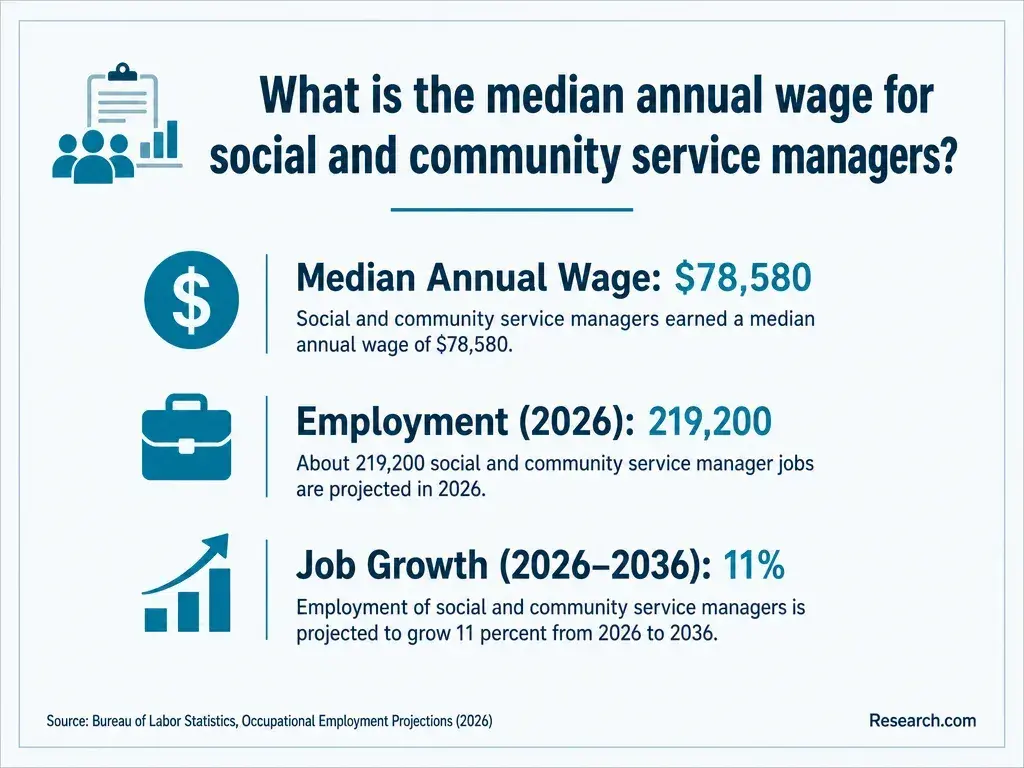
There is no single salary or growth rate for "business graduates." For one plausible destination, the U.S. Bureau of Labor Statistics reports a May 2025 median annual wage of $78,760 for market research analysts and projects 7% employment growth from 2025 to 2035. Those are occupation-wide figures, not starting pay or placement outcomes for biology graduates earning a second bachelor's.
Use an occupation's duties and hiring requirements - not its median alone - to judge whether it fits. A project management specialist role, for example, may call for experience that a new degree does not supply. If you are weighing a specialized project degree against business administration, an accredited online project management tuition guide can help you compare educational cost before treating an occupation-wide wage as a return on investment.
Is a Second Bachelor's Better Than an MBA, Certificate, or Minor?
A second BS makes the most sense when your target roles require substantial undergraduate business foundations or when a particular program offers relevant recruiting and applied work you can use. If you already have professional experience and need selected business skills, compare its remaining cost and duration with shorter options. An MBA may accept non-business graduates, but admissions requirements and the need for introductory preparation vary.
The comparison below focuses on what each route adds after a completed biology degree. None substitutes for checking the requirements of your target employers.
| Path | Best fit | Main limitation to check |
| Second business bachelor's | Broad undergraduate foundation and access to relevant undergraduate opportunities | Remaining major courses, residency credits, cost, and aid |
| MBA | Graduate business study aligned with existing professional experience | Admissions expectations, preparation needs, and fit for entry-level career switching |
| Certificate or targeted courses | A defined gap, such as accounting fundamentals or business analytics | Whether the credential has enough depth for the intended role |
| Minor | Someone still completing a first bachelor's | Usually not a standalone option after graduation; ask about nondegree enrollment instead |
Request a final audit and financial-aid estimate for the second BS, then price the MBA or targeted coursework using the same cost categories. You can compare business administration tuition and FAFSA eligibility, but submitting the FAFSA does not establish that you qualify for a particular grant or loan. Choose the route that closes a documented skill or hiring gap at a cost and pace you can sustain.
Other Things You Should Know About Business Administration
Possibly. Ask whether it admits second-degree students to business administration and whether its residency and repeat-course rules differ for returning graduates. Familiarity with your transcript does not guarantee a shorter path.
Not automatically. Laboratory management roles may require technical experience, supervisory responsibility, and employer-specific qualifications. Business courses can support budgeting and operations skills alongside - not in place of - that experience.
Only if the program approves the project and its learning objectives. Obtain any necessary employer permission before using internal records, customer information, or proprietary materials.
Check the program's prerequisites first. If neither is required for admission, introductory study may still help you test your interest, but do not pay for outside coursework expecting it to transfer without written confirmation.
- Accreditation in the U.S. | ed.gov http://www.ed.gov/laws-and-policy/higher-education-laws-and-policy/college-accreditation/accreditation-in-the-us
- Upper-Level Admissions - Trulaske College of Business https://business.missouri.edu/undergraduate-admissions/upper-level-admissions
- Eligibility Requirements - Office of Student Financial Aid https://financialaid.iastate.edu/getting-started/qualifying-for-aid/eligibility-requirements/
- Types of Business Degrees: Your Complete Guide | UWA Online https://online.uwa.edu/news/types-business-degrees/
- 10 Best Paying Business Master's Degrees to Consider | Pace University New York https://www.pace.edu/news/best-business-degrees
- 18 Careers You Can Pursue with an MBA (Aside from Business) | umn.edu https://online.umn.edu/story/18-careers-you-can-pursue-mba-aside-business
- What kind of aid am I eligible for as a second-degree student? | unc.edu https://studentaid.unc.edu/faq/what-kind-of-aid-am-i-eligible-for-as-a-second-degree-student/
- Second Bachelors Degree | California State University Long Beach https://www.csulb.edu/admissions/second-bachelors-degree
- 11 Types of Business Degrees and Career Pathways | National University https://www.nu.edu/blog/types-of-business-degrees/
- What Jobs Can You Get With a Business Degree? | snhu.edu https://www.snhu.edu/about-us/newsroom/business/what-jobs-can-you-get-with-a-business-degree