2027 Switching from General Business to Accounting During a BS in Business Administration: Credits and Timing
Audited and Verified:
Our Editorial and Data Verification Process
Research.com uses government datasets, official education statistics and primary institutional information to support its career and degree guides. Our review process checks factual accuracy, occupational definitions, source dates and the requirements associated with the credentials discussed.
How This Article Was Fact-Checked
Our editorial team verifies salary estimates, employment projections, education requirements and program information against original data providers and official organizations. Salary figures are checked against the relevant occupational definitions and reporting periods. Information about licensure, accreditation and required in-person training is reviewed separately.
Fact-checked and verified on:

Co-Founder and Chief Data Scientist
Switching from general business to accounting can bring your coursework closer to an accounting career - but it can also change which credits count toward graduation. If you are partway through a BS in Business Administration, the decision depends less on credits already earned than on the accounting requirements still ahead.
This guide explains how to read a revised degree audit, identify courses that could delay completion, compare a concentration with a separate accounting major, and check costs and CPA rules before filing a change-of-major request.
Key Things You Should Know
- Credits already earned may still count toward graduation without satisfying accounting-major requirements; obtain a revised degree audit before switching.
- Graduation timing depends chiefly on remaining prerequisite chains, course availability, and residency rules - not the number of credits your transcript shows.
- An accounting major is not universally required for the CPA exam. State-specific education rules control eligibility; the occupation-wide median pay for accountants and auditors was $83,680 in May 2025, not a starting-salary promise.
How many credits can you transfer when switching from business administration to accounting?
There is no universal number. If you change majors within the same university, your completed courses generally remain on your transcript, but the accounting degree audit determines which requirements they fulfill. If you move to another institution, its transfer office must first decide which credits it accepts; the accounting department then determines how those credits apply to the major.
The distinction matters because a course can count toward the degree without replacing an accounting requirement. This table shows where common business coursework might land; it is a planning guide, not an equivalency decision.
| Previous coursework | Possible application | What needs confirmation |
| General education and quantitative courses | General education or supporting requirements | Equivalency, minimum grade, and any required statistics or calculus content |
| Business core courses | Shared business core | Whether the accounting degree uses the same course and catalog requirements |
| Introductory accounting | Accounting prerequisite or major requirement | Coverage, course level, grade, and recency policies |
| General business electives | Open electives, if space remains | Elective limits and whether the new major has room for them |
Ask the registrar or transfer office for a course-by-course evaluation and the accounting adviser for a revised audit. Provide syllabi when a course appears similar but was not granted the needed equivalency. If you are weighing another specialization as well, project management bachelor's residency and transfer requirements illustrate why acceptance of a credit and its application to a particular major must be checked separately.
Will switching to an accounting major delay your graduation?
It might, even if all your credits remain usable. Accounting courses often form a sequence: an introductory course may be required before intermediate accounting, which may precede advanced coursework. A course offered only in certain terms can create a delay that a credit total alone will not reveal.
Compare two term-by-term plans under the same assumptions: finishing your current BS in Business Administration and completing the proposed accounting path. For each, mark prerequisites, courses offered in each term, minimum grades, residency requirements, and any capstone or internship. Ask the accounting adviser which courses can run concurrently and whether a required course is available online or in summer.
If accounting adds a term, compare that delay with finishing general business and taking targeted accounting courses afterward. Students trying to finish the existing degree sooner can explore shorter pathways to an online business degree, but an accelerated business schedule does not remove accounting prerequisites or establish CPA eligibility.
What accounting courses are required after changing your major?
Accounting majors typically move beyond the introductory financial and managerial accounting courses found in many business cores. Depending on the program, remaining work may include intermediate financial accounting, cost accounting, taxation, auditing, accounting information systems, and an advanced or capstone course. Business law, statistics, or other supporting courses may also be required.
Course titles alone are insufficient: an introductory class may not substitute for an intermediate class, and a business-law elective may not meet a specific accounting requirement. Request the accounting curriculum for your intended catalog year and mark each course as completed, approved equivalent, prerequisite still needed, or remaining requirement. That exercise reveals the actual sequence rather than an apparent credit shortfall.
If you stay in general business while adding accounting coursework, compare business administration admission prerequisites with the accounting sequence. Shared entry requirements do not mean the two majors have the same graduation requirements.
Start with the work you want to pursue. A general business degree offers breadth across functions; an accounting major allocates more required coursework to accounting methods and reporting. An accounting concentration within a BS in Business Administration may sit between them, but its official designation and depth vary by school.
The comparison below highlights how each path affects this specific switch. Use your school's degree audits - not the degree label alone - to determine the difference in remaining work.
| Path | Likely academic emphasis | Best reason to consider it | Main limitation to check |
| General business major | Broad business core and electives | You want flexibility and can add selected accounting courses | May leave gaps for accounting roles or CPA education rules |
| Business administration with an accounting concentration | Shared business core plus a defined accounting cluster | You want more accounting study without necessarily changing degrees | Concentration courses may not cover every required accounting subject |
| Separate accounting major | Deeper, more prescribed accounting sequence | You want sustained preparation for accounting work | Additional prerequisites or limited course availability may extend completion |
If your goal is budgeting for projects rather than preparing financial statements, an accounting major may be more specialized than necessary; compare the coursework and cost of alternatives such as lower-tuition online programs for project management. If your goal is accounting practice, choose based on relevant courses and experience opportunities, not the apparent prestige of a degree title.
Yes, an online program can evaluate prior business credits, but delivery mode does not change the central question: which accepted courses satisfy its accounting degree requirements? Ask for a written evaluation showing general education, business core, accounting major, electives, and credits that do not apply. Confirm its minimum credits taken at the institution and whether upper-level accounting courses must be completed there.
Online also does not necessarily mean self-paced. Before transferring, check when accounting courses run, whether lectures or exams require live attendance, how exams are proctored, and whether an internship or campus visit is required. Ranked school options for studying business online can provide comparison candidates, but verify that each candidate offers the accounting program you need rather than assuming its online business degree includes one.
A change within your university may require a formal major application rather than a new university application. Schools can set accounting-major GPA, minimum grades in introductory courses, prerequisite, or capacity requirements. A transfer to another school adds its institutional admission and transcript-evaluation processes. Meeting university admission requirements does not automatically secure admission to the accounting major.
Before withdrawing from your current path, ask the accounting department when you can enter the major, which courses must be finished first, and whether a pending application allows you to enroll in the next accounting course. Request the applicable catalog and change-of-major deadline in writing. If speed is driving the decision, compare ranked accelerated undergraduate business schools as a separate finish-your-current-degree option; advertised completion speed does not waive accounting-major admission rules.
The useful comparison is the cost to finish each path, not each program's advertised tuition rate. Multiply remaining billable credits or terms by the applicable charges, then add required fees, books, software, exam expenses, and any travel. Include the financial effect of an extra term and a changed work schedule, but do not assume the accounting degree will produce a salary increase that offsets those costs.
Ask financial aid to recalculate eligibility using the revised degree audit and enrollment plan. Courses outside the approved program may affect aid eligibility, and a major change can affect satisfactory academic progress. If you are comparing a separate project-management option, undergraduate project management grants and scholarship planning is relevant to that alternative - not evidence that its awards cover accounting. For an accounting switch, obtain the accounting school's own aid and tuition information before committing.
First verify the institution's accreditation and status through the accreditor and the U.S. Department of Education's institutional database. Then check whether the business school or accounting program claims additional accreditation from AACSB, ACBSP, or IACBE - and exactly which academic programs that recognition covers. Institutional accreditation and specialized business or accounting accreditation are different claims.
For a student who may seek CPA licensure, accreditation is only one check. Ask the relevant state board whether the institution and specific courses satisfy its education rules; do not infer eligibility from an accreditation logo. You can use economical online college programs in business to identify schools for comparison, then independently verify the accreditation scope and accounting curriculum of any program you shortlist.
Not necessarily. CPA exam eligibility and licensure are governed by the jurisdiction where you apply, and the rules can differ between sitting for the exam and receiving a license. A general business graduate may qualify through an appropriate mix of accounting and other coursework; an accounting major may still lack a particular required course or other licensure condition. A degree title alone settles neither question.
Before changing majors for this reason, identify your intended state board and compare its published education requirements with a course-by-course plan. Ask how courses will appear on your transcript, whether additional study after graduation would meet any gaps, and what experience or other conditions apply to licensure. For working adults considering whether to finish general business first, accelerated degree options for working adults are worth comparing only alongside a verified plan for completing the board's accounting requirements.
What accounting careers, salaries, and job outlook can you expect after graduating?
An accounting major can support applications for staff accounting, audit-associate, tax-associate, or related entry-level roles, depending on the employer and your experience. Work may involve preparing records, reconciling accounts, testing controls, or assisting with tax filings. Internships, accounting software practice, spreadsheets, and evidence of careful financial analysis can strengthen an application; graduation does not itself grant a CPA license or a job.
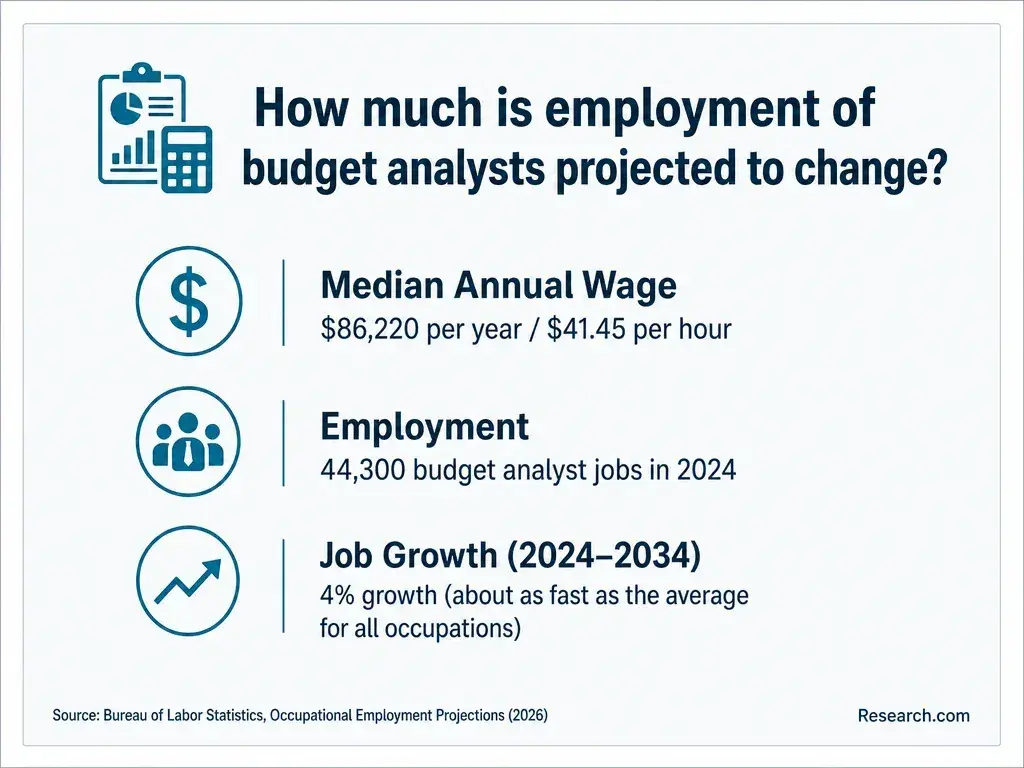
The U.S. Bureau of Labor Statistics reports a May 2025 median annual wage of $83,680 for accountants and auditors and projects 5% employment growth from 2025 to 2035. The median covers workers across experience levels and settings, so it is not the expected pay of a new graduate. If the work that interests you is coordinating budgets and schedules rather than accounting for transactions, assess that career separately before switching; lower-tuition online business administration programs may be a more relevant degree-completion comparison than another accounting program.
Other Things You Should Know About Business Administration
Often, but a return may require another major-change approval. Ask whether your original catalog requirements would still apply and whether accounting courses would fit your remaining electives.
Usually not. A new degree audit changes how courses fulfill requirements; it does not ordinarily erase grades or repeat-course history. Confirm your school's GPA and academic-renewal policies.
Employment alone normally does not waive a required course. Ask whether the school offers prior-learning assessment or an approved substitution, what evidence it requires, and whether any award counts toward the major.
That depends on the institution. A concentration may appear on the transcript rather than the diploma, so confirm its official designation before relying on it in applications.
- CPA Evolution - 150-hour Education Requirement https://www.op.nysed.gov/professions/certified-public-accountants/license-requirements/cpa-evolution-150-hour-education-requirement
- Staying Eligible | Federal Student Aid https://studentaid.gov/understand-aid/eligibility/staying-eligible
- Major Changes to CPA Exam and Licensure Requirements | ohio.gov https://acc.ohio.gov/wps/portal/gov/acb/home/news-and-events/all-news/upcoming-changes-to-certification
- Education Requirements | texas.gov https://www.tsbpa.texas.gov/applicants/education/
- CPA Exam Requirements | psu.edu https://harrisburg.psu.edu/business-administration/accounting-bs/cpa-exam-requirements
- Transfer Credit Procedures | Kettering College https://kc.edu/campus-resources/registrar/transfer-credit-information/course-equivalencies/
- Admissions | UC Davis Graduate School of Management https://gsm.ucdavis.edu/master-professional-accountancy/admissions
- Academic Programs Catalog - MSU RO https://reg.msu.edu/academicprograms/Print.aspx
- Degree Audit for Students - The Ohio State University https://registrar.osu.edu/student-hub/degree-audit-students/
- Undergraduate Academic Regulations | University of South Carolina https://academicbulletins.sc.edu/undergraduate/policies-regulations/undergraduate-academic-regulations/