2027 BS in Business Administration Curriculum: How to Evaluate Preparation in Healthcare Financial Basics
Audited and Verified:
Our Editorial and Data Verification Process
Research.com uses government datasets, official education statistics and primary institutional information to support its career and degree guides. Our review process checks factual accuracy, occupational definitions, source dates and the requirements associated with the credentials discussed.
How This Article Was Fact-Checked
Our editorial team verifies salary estimates, employment projections, education requirements and program information against original data providers and official organizations. Salary figures are checked against the relevant occupational definitions and reporting periods. Information about licensure, accreditation and required in-person training is reviewed separately.
Fact-checked and verified on:

Co-Founder and Chief Data Scientist
A business administration degree can teach budgeting and accounting without preparing you to interpret a hospital's reimbursement or service-line costs. That distinction matters if you want to work on the financial side of a healthcare organization.
This guide is for prospective and returning BS students comparing curricula, especially those who need to choose electives or evaluate transfer credits. It shows what healthcare financial basics should look like in coursework and applied assignments, where a general business degree may fall short, and what to verify before committing time and money.
Key Things You Should Know
- Look for financial and managerial accounting, budgeting, and an applied assignment involving healthcare payment, costs, or revenue, not just a course labeled "healthcare management."
- Check whether healthcare finance is required, available as an elective, or part of an official concentration; an elective alone does not create a credential.
- The U.S. median wage for accountants and auditors was $83,680 in May 2025, but that occupation-wide figure is not an expected starting salary for business graduates.
What Is a Business Administration Degree with Healthcare Financial Training?
It is a general business bachelor's degree that connects accounting, finance, analytics, and operations to healthcare decisions. Depending on the school, that connection may come through required courses, healthcare electives, an official concentration, or an approved project.
A BS in Business Administration is not itself a healthcare finance credential, and similar-sounding degrees can have different requirements.
The central test is whether students learn to distinguish care provided, amounts billed, payments expected, expenses incurred, and cash collected. Those figures answer different questions. A curriculum limited to general corporate finance may establish useful fundamentals but leave students to learn reimbursement and healthcare cost structures on the job.
Match the degree to the intended function. If you want to analyze provider budgets, prioritize healthcare payment and cost assignments. If purchasing and distribution interest you more than reimbursement, supply chain bachelor's options focused on completion speed offer a different specialization to compare; a faster pathway is useful only if its courses fit your goal.
Which Healthcare Finance Courses Should a Business Administration Curriculum Include?
Start with the degree audit, not the course titles in a promotional description. The table separates foundational courses from the healthcare-specific work that makes those foundations useful:
| Curriculum component | What to look for | Preparation gap if absent |
| Financial and managerial accounting | Financial statements, cost behavior, and budget variance analysis | Difficulty interpreting organizational results or explaining spending changes |
| Finance and quantitative methods | Cash-flow reasoning, spreadsheets, forecasting assumptions, and sensitivity analysis | Difficulty comparing options under uncertainty |
| Healthcare payment and operations | Provider reimbursement, payer mix, revenue cycle, and service costs | Limited understanding of why billed amounts and collections differ |
| Applied elective or project | A supervised budget, cost, or revenue-cycle case using permitted data | Few work samples showing that concepts can be applied |
Confirm prerequisites and course frequency: a healthcare elective that is rarely offered may not fit your graduation plan. If you are transferring credits, ask for a written audit showing which accounting and finance requirements they satisfy.
The same accepted-credit-versus-required-credit distinction matters when reviewing online undergraduate project management credit acceptance; credit awarded as a free elective may not replace a required healthcare finance course.
How Does Accreditation Affect a Business Administration Degree's Value?
Institutional accreditation concerns the college or university as a whole. Business-school or programmatic accreditation, such as AACSB, ACBSP, or IACBE accreditation, has a different scope.
Verify the institution's status and whether the specific business program is covered; neither type of accreditation guarantees that the curriculum teaches healthcare reimbursement or produces a particular job outcome.
For this decision, accreditation is a threshold check, followed by a curriculum check. Ask the program for its current catalog, healthcare course descriptions, and a sample degree plan. Comparing a different business specialty?
Guidance on comparing project management tuition and mandatory fees can help frame the separate cost question, but another specialty's accreditation or price says nothing about the healthcare finance content of this BS.
A prepared graduate should be able to build a basic operating budget, explain a variance, interpret financial statements, and question the assumptions in a forecast.
Healthcare-specific competence adds the ability to describe how payer contracts, reimbursement, denials, and collection timing affect expected revenue and cash flow. Knowing those terms is a starting point, not evidence of independent professional judgment.
Look for an assignment that makes students explain a decision rather than merely calculate a figure: for example, comparing the budget implications of two staffing plans while identifying unknown demand and payment assumptions.
Public or fictional data can support a classroom exercise. Real patient, employee, contract, or billing records require appropriate organizational permission and privacy safeguards.
These skills differ from procurement finance, which emphasizes purchasing costs, inventory, and supplier decisions. If that is your intended function, explore lower-cost supply chain completion routes alongside, not as substitutes for, healthcare reimbursement coursework.
Either format can teach healthcare financial basics if students complete comparable accounting work, receive feedback on their analyses, and can access the relevant electives.
Delivery mode alone does not establish quality. Compare actual assignments, faculty access, spreadsheet or data tools, and opportunities to work through healthcare cases.
For employed students, ask whether finance courses have live meetings, proctored exams, group presentations, or fixed project deadlines. "Online" does not necessarily mean self-paced.
If continued employment is essential, compare business administration degrees for working learners, then confirm the schedule of the specific healthcare-related courses you would take.
Schools set their own entry rules, and admission to the university may differ from admission to its business major. Applicants commonly need prior academic transcripts; transfer students may also need an evaluation of college coursework.
Some programs require particular mathematics or introductory business courses before upper-level accounting and finance. Ask which are admission conditions, which can be completed after enrollment, and which prior courses will satisfy degree requirements.
A returning student should send syllabi for potentially equivalent accounting or statistics courses and obtain an official degree audit before relying on a completion estimate. If a school offers online bachelor's programs with short sessions, verify that prerequisite and healthcare elective sequences still permit the advertised pace.
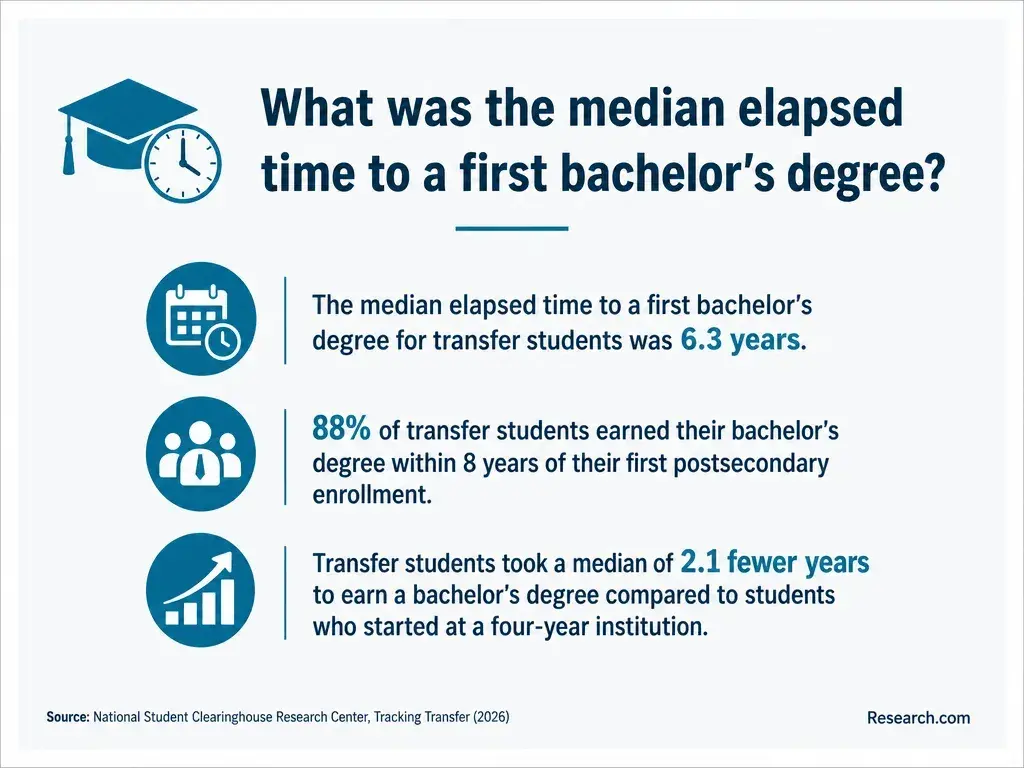
A traditional full-time bachelor's pathway is commonly planned over four academic years, but transfer credit, part-time enrollment, prerequisites, and course availability can change the timeline. The useful estimate is the school's approved plan for your remaining requirements, including any healthcare finance electives or concentration courses.
Compare total completion cost, not tuition alone: include mandatory fees, books or software, travel or proctoring, and the cost of an extra term if a needed course is unavailable.
An affordable advertised rate may lose its advantage if credits apply only as electives. Use online business administration school cost comparisons to identify candidates, then request a school-specific audit and written cost estimate before choosing.
Relevant early-career targets may include healthcare finance assistant, budget or revenue-cycle coordinator, billing operations analyst, and administrative roles that support financial reporting. Duties and degree preferences vary by employer.
A general business graduate with a healthcare budgeting project can show preparation, but may still need billing-system training, supervised experience, or deeper accounting knowledge.
Choose coursework backward from job descriptions: note whether employers emphasize spreadsheets, reimbursement, accounting entries, budget reporting, or collections workflows.
If a role instead calls for broad operations coordination, explore fast-track online business programs as a possible completion route. Speed matters less if it eliminates the finance courses or applied work your target role requires.
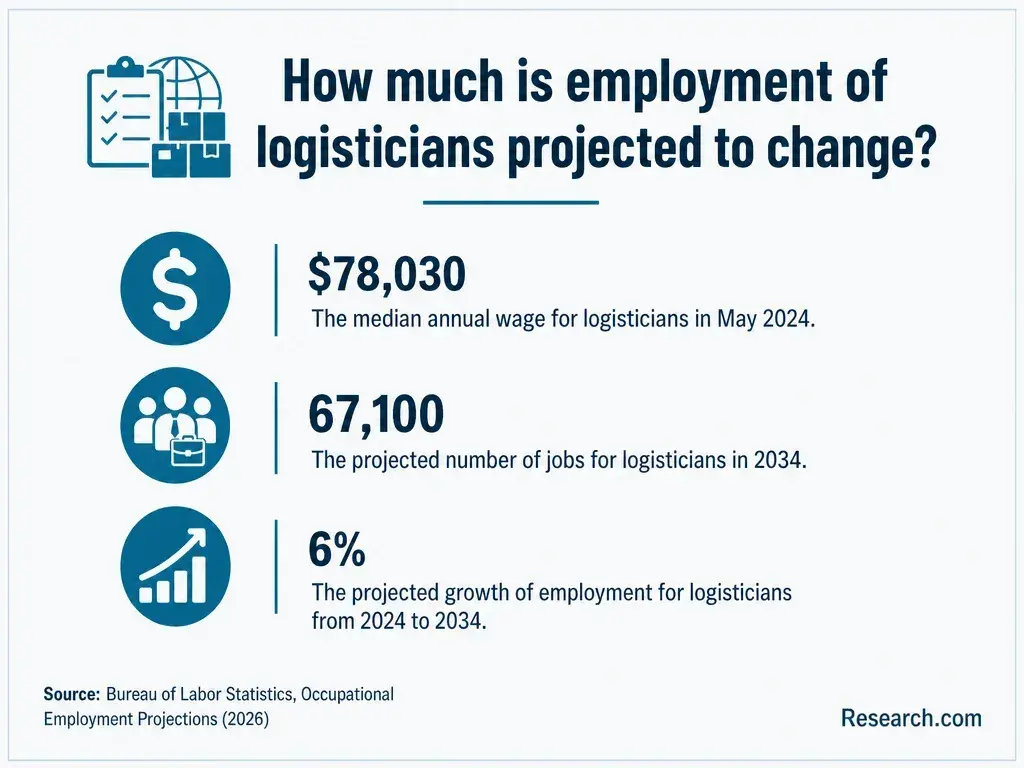
There is no single national salary for graduates of a healthcare-focused BS in Business Administration. As one occupational reference, the U.S. Bureau of Labor Statistics reports a May 2025 median annual wage of $83,680 for accountants and auditors and projects 5% employment growth from 2025 to 2035.
Those figures cover an established occupation across industries, not entry-level healthcare finance hires; accounting positions can also require more accounting coursework than a general BS provides.
For a realistic return-on-cost estimate, compare local postings for the exact entry roles you could pursue with your current experience and planned courses.
Weigh those prospects against your remaining degree cost, rather than applying an occupation-wide median to your expected first job. If cost is the main constraint, online business education on a smaller budget can inform a shortlist, subject to a school-specific curriculum and credit review.
Which Certifications or Licenses Do Healthcare Finance Professionals Need?
No single license is required for all healthcare finance roles. An employer may value training in revenue cycle or healthcare financial management, but eligibility for a professional certification depends on the issuing organization's rules and may require education, experience, an exam, or continuing education.
A business administration BS does not automatically qualify a graduate for CPA licensure; state boards determine those requirements.
Choose additional credentials only after identifying the target job's actual requirements. Someone aiming to supervise operations rather than specialize in financial analysis might compare three-year-or-less leadership degree pathways, while recognizing that leadership coursework does not replace healthcare finance training or managerial experience.
Other Things You Should Know About Business Administration
No. Accounting focuses on recording and reporting financial activity; finance also considers budgets, cash needs, forecasts, and resource decisions. Healthcare roles may combine elements of both.
Yes, if the school approves the topic and the work clearly shows financial reasoning, stated assumptions, and appropriate data use. A project proposal is not evidence of results achieved by a healthcare organization.
No. Published information and instructor-provided or fictional cases can support introductory analysis. Never use restricted billing, patient, or contract data without authorization.
Request the current degree plan, descriptions and offering schedules for healthcare-related courses, an official transfer-credit evaluation if applicable, and an estimate of remaining costs.
- Knowledge and Skills Needed for Future Health Administrators | nih.gov https://pmc.ncbi.nlm.nih.gov/articles/PMC11188648/
- Principles of Regulatory Compliance | Business & Finance Solutions https://www.finance.ucla.edu/corporate-accounting/principles-of-regulatory-compliance
- Bachelor of Science in Healthcare Administration Online | Mount saint vincent https://online.mountsaintvincent.edu/degrees/undergraduate/bachelor-healthcare-administration/
- Bachelor of Business Administration | Sullivan University https://www.sullivan.edu/business-administration/bachelor-degree
- How to Become a Healthcare Administrator | Online MPH and MHA Degrees From George Washington University https://onlinepublichealth.gwu.edu/resources/how-to-become-a-healthcare-administrator/
- Bachelor of Science in Health Services Administration | CUNY SPS https://sps.cuny.edu/academics/undergraduate/bachelor-science-health-services-administration
- Online Healthcare Administration Degree | Western Governors University https://www.wgu.edu/online-business-degrees/healthcare-administration-bachelors-program.html
- Accounting for Healthcare Management | Robert F. Wagner Graduate School of Public Service https://onlinemha.wagner.nyu.edu/insights/online-mha-curriculum-focus-accounting-for-healthcare-management
- Business Administration (BS) - San Luis Obispo | Cal Poly Academic Catalog https://catalog.calpoly.edu/business/undergraduate/business-administration-bs/
- Healthcare Finance 101: What Every Administrator Needs to Know | Nebraska Methodist College https://blog.methodistcollege.edu/healthcare-finance-101-what-administrator-needs-to-know