2027 Choosing a BS in Business Administration When You Want to Move from Healthcare Support into Business Operations
Audited and Verified:
Our Editorial and Data Verification Process
Research.com uses government datasets, official education statistics and primary institutional information to support its career and degree guides. Our review process checks factual accuracy, occupational definitions, source dates and the requirements associated with the credentials discussed.
How This Article Was Fact-Checked
Our editorial team verifies salary estimates, employment projections, education requirements and program information against original data providers and official organizations. Salary figures are checked against the relevant occupational definitions and reporting periods. Information about licensure, accreditation and required in-person training is reviewed separately.
Fact-checked and verified on:

Co-Founder and Chief Data Scientist
Healthcare support work gives you firsthand knowledge of scheduling, patient access, records, and the problems that slow a care team down. Moving into business operations means turning that knowledge into skills in budgeting, process improvement, staffing, and project coordination.
A BS in Business Administration may help, but the right choice depends on the role you want and what you already do at work. This guide shows you how to compare programs, build evidence of operational ability, and judge whether a degree - or a smaller step - fits your next move.
Key Things You Should Know
- A BS in Business Administration is most useful when the target role calls for broad business skills or a bachelor's degree; it does not, by itself, qualify you to manage a healthcare department.
- Choose coursework and projects around a specific transition, such as patient-access coordination, purchasing, HR operations, or project support. Confirm how prior credits apply before estimating completion time or cost.
- The U.S. median annual wage for human resources specialists was $75,940 in May 2025, according to the Bureau of Labor Statistics (BLS). That occupation-wide figure is not an expected starting salary for someone leaving healthcare support.
What is a business administration degree, and can it support a move into healthcare operations?
A BS in Business Administration is an undergraduate degree covering several business functions rather than training for one clinical occupation. Its courses commonly address accounting, management, operations, finance, and analysis. In healthcare, those skills can support decisions about appointment capacity, supply spending, employee workflows, and service performance.
The strongest transition is usually from support work into an adjacent operations role. A medical receptionist who already tracks scheduling problems, for example, can pair that experience with process analysis and spreadsheet skills. A patient care technician may know where handoffs fail but will need opportunities to learn the administrative systems and measures used to address them. Neither route makes clinical experience interchangeable with budget authority or supervisory experience.
Compare the degree with the job you actually want. If you need a broad credential for several possible operations functions, business administration can fit. If your goal is specifically organizational leadership, examine the curriculum and entry requirements of leadership bachelor's degrees with accelerated pacing. If a near-term internal move requires only stronger spreadsheet or scheduling skills, employer training may be a more direct first step.
What business operations careers can healthcare support professionals pursue with a bachelor's degree?
Titles vary among hospitals, clinics, insurers, and vendors. The useful comparison is between the work you have performed and the responsibilities in a posting - not whether the title contains "manager." The roles below show plausible directions and the evidence each calls for.
| Role direction | Typical work | Useful evidence from healthcare support work |
| Patient-access or operations coordinator | Monitor scheduling, referrals, service queues, and handoffs | Documented scheduling work, workflow observations, and careful use of operational reports |
| Project coordinator | Track tasks, deadlines, stakeholders, and implementation issues | Participation in a supervised rollout, training update, or process-change project |
| Purchasing or supply-chain assistant | Support orders, inventory records, vendors, and delivery follow-up | Supply tracking and an understanding of how shortages affect care delivery |
| HR operations assistant | Support onboarding, records, scheduling, and employee processes | Training coordination, confidential record handling, and staff communication |
Read postings for required software, degree language, and years of relevant responsibility. A bachelor's degree may help you qualify for consideration, while project management specialist, analyst, and manager roles can require more direct experience. If project coordination is your clear goal, compare a general business curriculum with low-cost project management degree options; check whether the specialized coursework is worth giving up broader business electives.
How do you choose an accredited business administration program for healthcare operations?
First, verify that the institution holds recognized institutional accreditation and that the exact BS program is offered in the format you need. AACSB, ACBSP, and IACBE are separate forms of business-focused accreditation; if a school advertises one, check the accreditor's listing to see what it covers. Accreditation does not establish that a program places graduates in healthcare jobs.
Then test program fit against your intended work. Look for operations, accounting, analytics, HR, or supply-chain courses; access to healthcare-related electives or projects; and career support for employed students. Ask whether an internship is required, whether current employment can support an approved project, and whether required courses run often enough for your schedule. A concentration listed in marketing materials should appear as an official requirement in the catalog if you intend to earn it.
Finally, compare what you would pay and complete, not just advertised tuition. Schools in a list of business administration college affordability and FAFSA participation options still need individual checks for current aid eligibility, fees, and remaining requirements. Request a written degree audit before treating prior healthcare or community-college coursework as a shortcut.
The business core can help you translate observations from care settings into decisions an operations team can evaluate. Accounting introduces costs and financial statements; statistics and spreadsheets help interpret service measures; operations courses examine capacity and process flow; and management coursework addresses teams, communication, and organizational change. Introductory courses provide a foundation, not proof that you can run a clinical department or perform specialist analysis independently.
For this transition, examine the assignments as closely as the course titles. A useful project might compare two hypothetical appointment workflows using stated assumptions and measures. An employer-based project is different: it needs academic approval and workplace permission before you use internal records. Never put patient information, identifiable employee data, or proprietary reports in a class submission or portfolio without authorization.
If you need to strengthen math or spreadsheet preparation before committing to a full schedule, short-term classes toward a bachelor's degree may be worth exploring. Confirm that a specific class will satisfy a requirement at your intended school before enrolling elsewhere.
Online study can reduce travel around shifts, but it is not necessarily self-paced. Ask about live meetings, group projects, exam proctoring, presentation times, and fixed weekly deadlines. For a healthcare worker whose hours rotate, an asynchronous lecture matters less if a required team meeting repeatedly conflicts with work.
A campus or hybrid program may offer easier access to classmates, faculty, and local employer events, but commuting and fixed meeting times add constraints. In either format, check whether internships or capstones require daytime availability and whether part-time students can take required courses in sequence. Compare accelerated online business degree programs by actual weekly workload and course availability, not calendar length alone.
Requirements depend on whether you apply as a first-year or transfer student and whether admission to the business major is separate from admission to the institution. Schools may request secondary-school records or prior college transcripts and may set GPA or prerequisite rules. Some require preparation in mathematics, accounting, economics, or statistics before upper-level business courses; do not assume healthcare coursework substitutes for those subjects.
If you have previous college study, send official transcripts and request an evaluation showing which credits satisfy general education, business core, electives, and residency rules. Acceptance of a course as transfer credit does not mean it fulfills a required business course. Ask admissions about application requirements, then ask an academic adviser to review the degree audit and course sequence. You can find online colleges with free admissions applications, but an application-fee saving should not outweigh program fit or the number of credits left to earn.
Completion time depends on applicable transfer credit, enrollment pace, prerequisites, required-course availability, and any internship or capstone. An accelerated calendar does not eliminate required work. For someone employed in healthcare, a slower schedule that preserves income and steady progress may be preferable to an intense term that is difficult to finish.
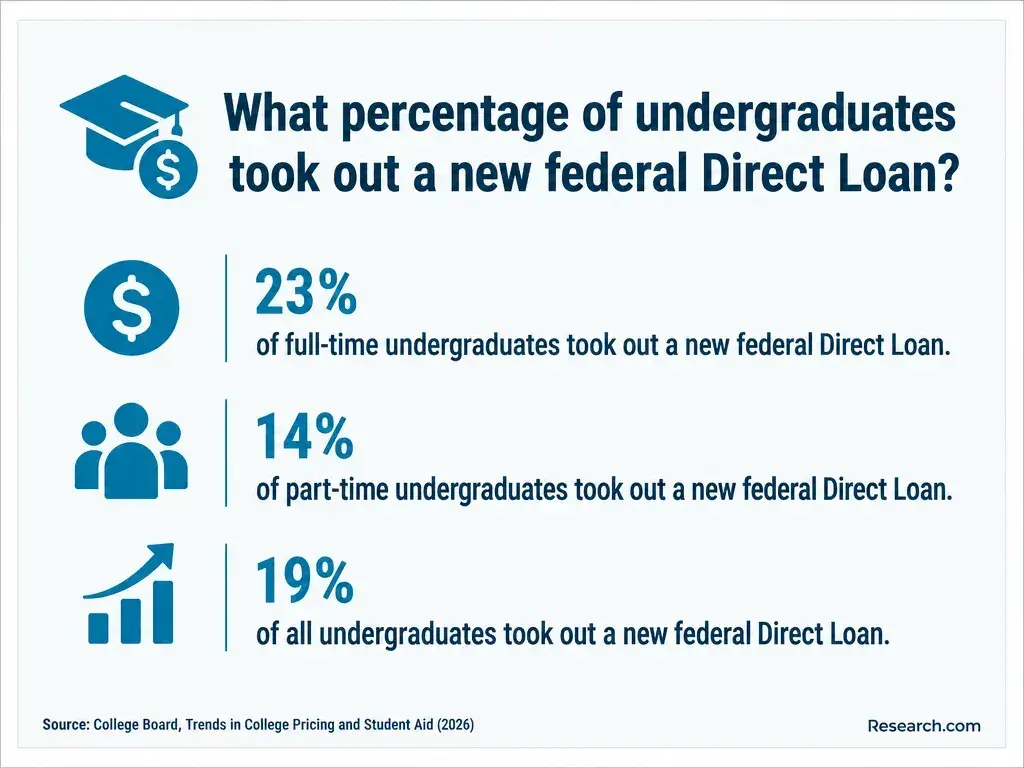
To estimate cost, obtain a degree audit and multiply remaining billable credits or terms by the school's current charges. Add mandatory fees, books, software, travel or proctoring, and any income you would give up by reducing work hours. Then compare grants, scholarships, loans, and employer tuition assistance; confirm reimbursement timing, grade conditions, and repayment rules. Compare shorter business administration college programs using the same assumptions about credits that actually apply to your degree.
There is no single salary for a business administration graduate entering healthcare operations. Pay depends on the occupation, location, employer, and responsibilities. As one reference point, BLS reports a May 2025 median annual wage of $102,320 for project management specialists across industries. That is an occupation-wide midpoint, not a healthcare-specific wage or a likely offer for a new project coordinator.
For a realistic estimate, collect local postings for the next role you could qualify for - not the role you hope to hold after several promotions. Compare their stated pay and requirements with your current compensation, including benefits and any tuition assistance. If you are considering a specialized project-management route, compare project management college costs after financial aid before assuming its potential pay difference justifies a different degree.
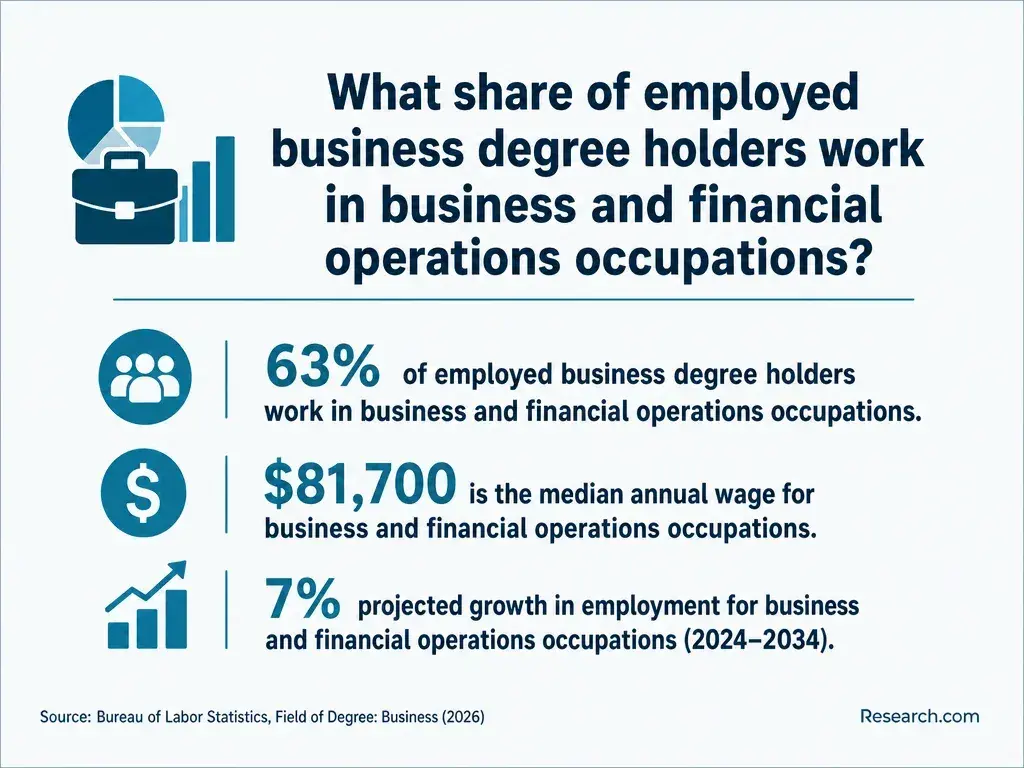
Outlook varies by occupation; "healthcare operations" is not one BLS job category. BLS projects 7% employment growth for project management specialists from 2025 to 2035. That national, cross-industry projection suggests opportunities in the function, but it cannot predict hiring at your local hospital or guarantee that a coordinator position will open.
Use job postings and internal conversations to identify which functions are hiring where you live. A current employer may offer an adjacent route through patient access, scheduling improvement, purchasing, or HR support; an external move may require more direct experience with the target function. If HR openings are a stronger match, compare credit acceptance at online HR schools before switching from a business administration plan. The better pathway is the one that connects your existing work to specific hiring requirements without unnecessary lost credits.
Do healthcare operations careers require licenses or professional certifications?
Many coordinator and administrative operations roles do not require an occupational license, but requirements depend on the job and state. A BS in Business Administration does not grant a clinical license, qualify someone for every regulated healthcare administrator role, or automatically confer an HR or project-management credential. Check the actual posting and the responsible licensing board or certifying organization before paying for a credential.
Voluntary certifications can be useful when employers recognize them and you meet their eligibility rules, which may include documented experience. For an HR-focused transition, understanding human resources degree levels can help you distinguish academic preparation from a separately awarded professional certification. Early in your move, demonstrated responsibility for a workflow or supervised project may be more immediately useful than collecting credentials without a target role.
Other Things You Should Know About Business Administration
It can, especially when you have handled scheduling, referrals, handoffs, or service problems. Describe the tasks and decisions you owned rather than relying on a patient-facing job title alone.
Ask your supervisor for a defined, supervised task, such as helping document a scheduling process or track an approved service measure. Agree on the scope and access permissions first.
Only if your employer permits it and you can protect patient, employee, and proprietary information. A de-identified explanation of your method and responsibilities may be safer than sharing internal documents.
An MBA is a graduate degree and generally requires a prior bachelor's degree. If you do not have one, first determine whether a bachelor's degree is needed for your target role; if you already have one, compare the MBA's cost and expected benefit with experience or targeted training.
- Transfer Resources - Texas Higher Education Coordinating Board https://www.highered.texas.gov/transfer-resources/
- The impact of electronic medical records on clinical... - PMC https://pmc.ncbi.nlm.nih.gov/articles/PMC12327706/
- Accreditation in the U.S. | ed.gov http://www.ed.gov/laws-and-policy/higher-education-laws-and-policy/college-accreditation/accreditation-in-the-us
- The Basics of School Accreditation - Study in the States https://studyinthestates.dhs.gov/schools/apply/the-basics-of-school-accreditation
- Cost of Attendance (Budget) | 2025-2026 Federal Student Aid Handbook https://fsapartners.ed.gov/knowledge-center/fsa-handbook/2025-2026/vol3/ch2-cost-attendance-budget
- Hybrid College Classes: What They Are & How They Work | beal.edu https://beal.edu/what-are-hybrid-college-classes/
- Option in Operations and Supply Chain Management | calstatela.edu https://ecatalog.calstatela.edu/preview_program.php
- Bachelor of Business Administration in Operations | walshcollege.edu https://walshcollege.edu/programs/bachelor-of-business-administration-operations/
- 8 Types of Business Degrees & Specializations | Bellevue University https://www.bellevue.edu/articles/types-of-business-degrees/
- Accreditation Process | AACSB https://www.aacsb.edu/educators/accreditation/accreditation-process