2027 Choosing a BS in Business Administration for Business Roles in Renewable Energy Businesses
Audited and Verified:
Our Editorial and Data Verification Process
Research.com uses government datasets, official education statistics and primary institutional information to support its career and degree guides. Our review process checks factual accuracy, occupational definitions, source dates and the requirements associated with the credentials discussed.
How This Article Was Fact-Checked
Our editorial team verifies salary estimates, employment projections, education requirements and program information against original data providers and official organizations. Salary figures are checked against the relevant occupational definitions and reporting periods. Information about licensure, accreditation and required in-person training is reviewed separately.
Fact-checked and verified on:

Co-Founder and Chief Data Scientist
Renewable energy companies need people who can manage purchasing, analyze costs, coordinate projects, and understand customers - not only people who design equipment. A BS in Business Administration can prepare you for those business functions, but its value depends on the role you want and the industry experience you can build alongside it.
This guide is for prospective and returning students weighing that path. It explains which courses and work samples matter, where graduates can realistically start, and how to compare programs without mistaking a broad business degree for a technical credential.
Key Things You Should Know
- A BS in Business Administration is a practical option for renewable energy operations, procurement, sales support, and project coordination when paired with relevant experience; it does not qualify graduates to design electrical systems.
- Choose coursework and applied projects around a target function. For supply-chain roles, the Bureau of Labor Statistics projects 18% growth for logisticians across all US industries from 2025 to 2035 - not a renewable-energy-specific hiring forecast.
- Before enrolling, verify accreditation, applicable transfer credits, industry-relevant project access, and total remaining cost. A renewable energy elective alone does not establish an official concentration.
What Is a BS in Business Administration for Renewable Energy Careers?
A BS in Business Administration is an undergraduate business degree that typically combines accounting, finance, marketing, management, operations, and quantitative coursework. For a renewable energy career, the aim is to apply those tools to organizations that develop, manufacture, install, finance, operate, or purchase technologies such as solar, wind, and energy storage.
There is no single standard "renewable energy business administration" curriculum. One school may offer an official energy-related concentration; another may offer only electives or a relevant capstone. Check the degree audit and catalog rather than relying on a program's promotional description.
A BS or BBA can be suitable for general business roles, while a specialized supply-chain, finance, or project management degree may offer more depth for a clearly defined function. Compare the full required course load and fees - not just the degree title - if considering a project-focused alternative; project management program fees explained provides a starting point for that comparison.
Someone seeking commercial or operational responsibility who can also learn how energy projects, customers, and regulations affect business decisions. Someone whose goal is equipment design, installation, or engineering should examine the relevant technical education and occupational requirements instead.
What Jobs Can You Get With a Business Administration Degree in Renewable Energy?
Employers hire for functions, not for a degree title in isolation. The table distinguishes plausible starting responsibilities from roles that generally require more technical knowledge, demonstrated results, or supervisory experience.
| Business function | Possible starting role and work | Common next-step requirement |
| Operations and supply chain | Operations or procurement coordinator; track orders, vendors, inventory, and installation schedules | Purchasing systems, contract knowledge, or larger-scale logistics experience |
| Projects | Project coordinator; maintain schedules, budgets, documentation, and stakeholder updates | Evidence of managing scope, risks, and delivery - not merely taking a project course |
| Commercial and customer work | Sales operations or marketing coordinator; maintain customer records, proposals, and campaign reporting | Product knowledge and measurable sales or marketing experience |
| Finance | Finance or billing assistant; reconcile records and support cost reporting | Stronger accounting, modeling, and employer-specific systems skills for analyst roles |
Renewable energy employers also employ HR staff, but a general business degree does not itself confer an HR credential. If people operations is your intended function, compare the curriculum against human resources degree planning basics and seek relevant HR work experience. An internship with an installer, utility, manufacturer, or developer can be especially useful when it produces evidence of a specific business task.
What Skills Do Renewable Energy Businesses Seek From Business Graduates?
Useful business skills become more convincing when a candidate can show how they apply to an energy company's work. A procurement applicant might explain a supplier comparison; a project applicant might present a schedule and risk log. Neither example should claim real company results unless the work was completed and can be shared with permission.
For many roles, the most transferable skills are spreadsheet analysis, cost awareness, clear written updates, customer communication, and coordination across teams. Sector knowledge adds context: equipment lead times can affect a project schedule, while financing terms can affect a customer proposal. Learn to distinguish a modeled estimate from an approved budget or observed result.
For project-oriented jobs, compare job postings with actual course assignments and your prior experience. If changing majors is under consideration, compare project management bachelor's credit transfer rules before assuming a more specialized degree will take less time than business administration.
The business core provides the foundation; electives and applied work determine how directly it serves an energy-sector goal. Accounting and finance help students read costs and cash flows. Operations and supply-chain courses address purchasing and delivery. Marketing and analytics support customer research and performance reporting. Economics and business law provide context for markets and contracts, though they do not substitute for specialized energy-law advice.
Review course descriptions for depth and sequencing. A renewable energy case in a general management class offers exposure; an approved internship or capstone may offer stronger evidence of applied work. Ask whether students can use public energy-market data, work with an approved industry partner, or complete a project relevant to their target function. Employer records require permission, and a classroom proposal is not proof of implemented results.
An accelerated calendar is useful only if required courses and projects remain available in the sequence you need. Use accelerated business bachelor's school comparisons to identify possibilities, then confirm each school's current course schedule and graduation requirements.
Choose the format that lets you complete relevant coursework and gain experience. Online study may make it easier to keep a job with an energy employer; campus study may provide more convenient access to local employers, student teams, and recruiting events. Neither format guarantees an industry internship.
Ask each program whether classes require live meetings, proctored exams, group presentations, campus visits, or an internship during business hours. Check whether an energy-focused elective is offered online and how often it runs. An asynchronous lecture can still have fixed weekly deadlines. For students balancing employment and study, flexible online study for business administration career growth is most useful when those scheduling details match the student's actual work week.
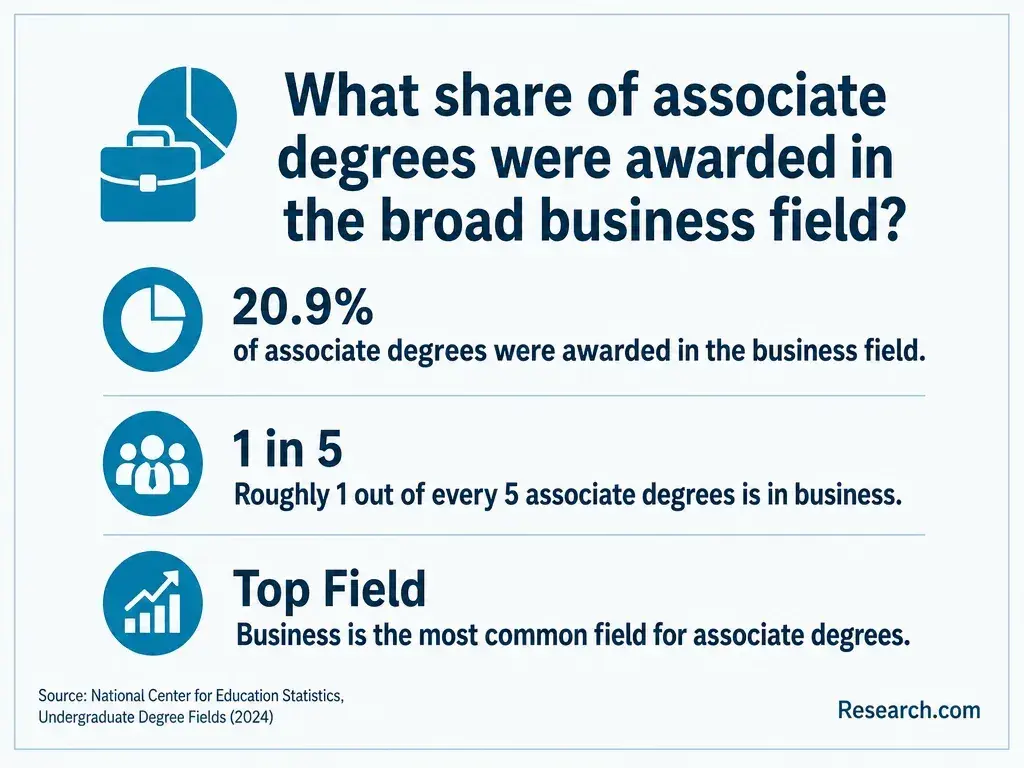
Requirements vary by institution and by whether you apply as a first-year or transfer student. Schools commonly request prior academic transcripts; some admit students to the university before they enter the business major. Mathematics, accounting, economics, or statistics courses may be prerequisites for particular upper-level classes rather than conditions for initial admission.
Send transcripts early and ask for a written evaluation showing where accepted credits apply: general education, business core, concentration, or electives. This matters if you hope to use previous study to finish sooner. The receiving institution has final authority over equivalencies and graduation requirements. For a closer look at possible preparation and documentation, consult the business administration degree admissions requirements guide, then confirm the policies for your chosen school and entry term.
A conventional full-time bachelor's path is commonly planned around four academic years, but a transfer student's remaining time depends on credits applied to requirements, prerequisite sequencing, and how often needed courses run. An optional energy elective that is offered infrequently can delay an otherwise complete plan.
For cost, compare a personalized remaining-degree estimate rather than advertised tuition alone. Include required credits, mandatory fees, books and software, possible travel, and the earnings or work hours you would give up for an internship. Ask the aid office about your eligibility and the effect of part-time enrollment; federal aid access does not mean every student receives the same award. Affordable business administration programs with federal aid access can help form a shortlist, but obtain a current school-specific cost and aid estimate before committing.
There is no reliable single salary for a BS in Business Administration graduate working in renewable energy. Pay depends on the occupation, location, employer, and experience - not simply on the industry or degree. As one occupational benchmark, the US Bureau of Labor Statistics reports a May 2025 median annual wage of $82,320 for logisticians across all industries. That median includes experienced workers and should not be treated as an entry-level offer from a renewable energy company.
Use the occupation closest to your intended duties when comparing wages. A procurement coordinator, sales representative, and financial analyst may work for the same solar company but have different pay structures and qualifications. The business administration education length and salary outlook guide can help frame the education-cost comparison; test any expected earnings against local postings for roles you could reasonably enter.
Growth in an occupation is more informative than assuming every renewable energy business role will expand at the same rate. The Bureau of Labor Statistics projects 18% employment growth for logisticians from 2025 to 2035 across US industries. That points to demand for supply-chain expertise, but it does not measure renewable energy hiring specifically or guarantee an opening for a new graduate.
Evaluate the market where you intend to work: compare postings from utilities, developers, installers, manufacturers, and suppliers, then record the recurring skills and experience requirements. If speed matters because you already have relevant work experience, fast-track undergraduate study options may be worth examining - but a shorter degree calendar will not replace the function-specific experience a posting requires.
How Do You Choose an Accredited Business Administration Program?
First verify the institution's recognized accreditation and confirm that the specific degree, delivery mode, and location match what you plan to attend. Business-school or programmatic accreditation from AACSB, ACBSP, or IACBE is a separate question: check the accreditor's listing for its scope rather than assuming every degree at a school is covered.
Then compare programs against a target role. Request the current catalog, a transfer-credit evaluation if applicable, an estimated remaining cost, and examples of internship or capstone requirements. Ask career services which energy-sector employers recruit students and how any reported outcomes were measured. Accreditation supports a credibility check; it is not evidence that graduates obtain renewable energy jobs.
Cost can break a tie between programs that meet your academic and career needs. Online business colleges with competitive costs can help identify schools to investigate, but compare your own remaining requirements and net cost before choosing.
Other Things You Should Know About Business Administration
No. An energy audit requires technical knowledge of buildings or energy systems, and employers may seek specific training or credentials. A business graduate could instead support audit scheduling, customer accounts, or project administration.
Yes. Utilities and cooperatives have purchasing, finance, customer-service, and operations functions. Their hiring requirements vary by role, so compare postings rather than assuming every position is a renewable energy job.
Not universally. Employers may provide product training, while particular activities or financing arrangements can carry separate state or employer requirements. Check the duties of the specific position before paying for a credential.
It can help with budgeting, marketing, and operations, but it does not replace technical expertise, insurance, permits, or applicable state and local contractor requirements. Verify those obligations before making a business plan.
- Map a Career in Energy https://www.energy.gov/cmei/map-career-energy
- Accreditation in the U.S. | ed.gov http://www.ed.gov/laws-and-policy/higher-education-laws-and-policy/college-accreditation/accreditation-in-the-us
- 10 Best Business Degrees for High Pay and Career Growth | Pace University New York https://www.pace.edu/news/best-business-degrees-undergrad-grad
- Business Administration - Craig School of Business | California State University, Fresno https://craig.fresnostate.edu/advising/degprog/businessadminmajor.html
- Internship and Co-op Support - Careers | Coles College of Business https://campus.kennesaw.edu/offices-services/careers/students/internships-co-ops.php
- Careers in Renewable | getintoenergy.org https://getintoenergy.org/careers-in-renewable/
- Project Development Associate, Contract - Job detail | TotalEnergies https://jobs.totalenergies.com/en_US/careers/JobDetail/Project-Development-Associate-Contract/83414