2027 From Payroll to Human Resources: When Does a BS in Business Administration Make Sense?
Audited and Verified:
Our Editorial and Data Verification Process
Research.com uses government datasets, official education statistics and primary institutional information to support its career and degree guides. Our review process checks factual accuracy, occupational definitions, source dates and the requirements associated with the credentials discussed.
How This Article Was Fact-Checked
Our editorial team verifies salary estimates, employment projections, education requirements and program information against original data providers and official organizations. Salary figures are checked against the relevant occupational definitions and reporting periods. Information about licensure, accreditation and required in-person training is reviewed separately.
Fact-checked and verified on:

Co-Founder and Chief Data Scientist
Payroll work can give you a strong foundation for human resources: you already handle sensitive records, deadlines, pay policies, and employee questions. Moving into recruiting, employee relations, or HR leadership, however, calls for skills that payroll work may not develop on its own.
This guide is for payroll professionals deciding whether a BS in Business Administration is the right next step. It shows where the degree can help, where a more focused option may be faster, and what to check before spending time or money.
Key Things You Should Know
- A BS in Business Administration makes the most sense when you need a bachelor's degree for target HR roles and want broader preparation in management, accounting, operations, and HR - not just payroll training.
- For a nearby move into HR operations, documented payroll experience plus targeted HR coursework or a credential may be more direct than completing a degree.
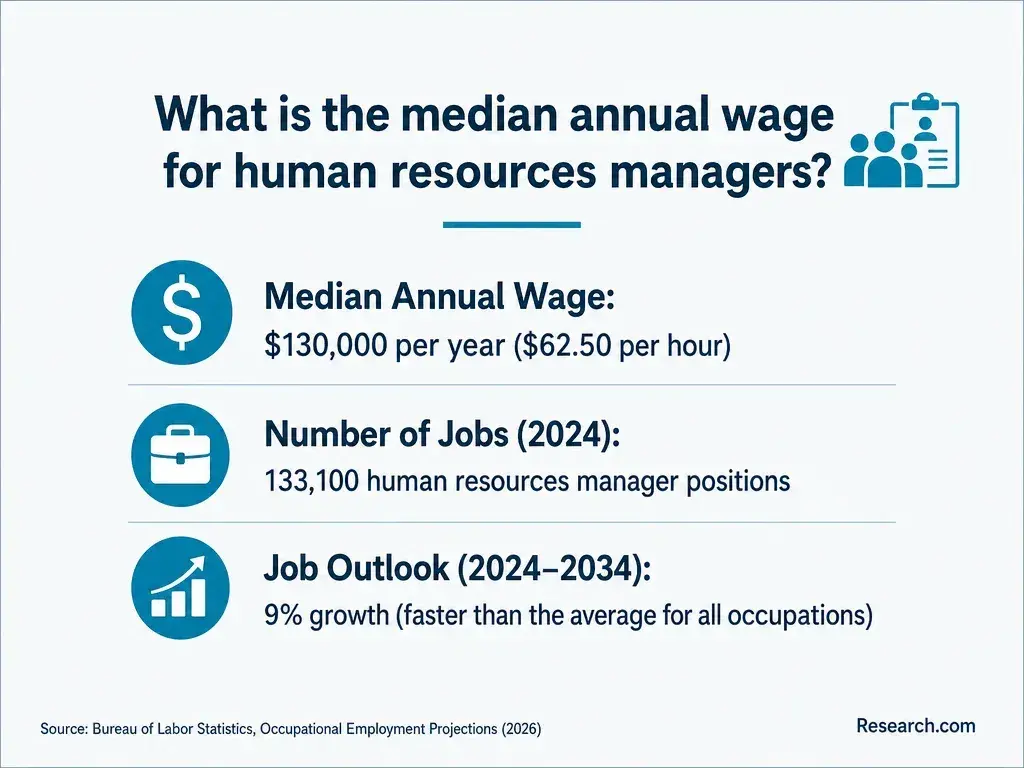
- The U.S. median annual wage for human resources specialists was $75,940 in May 2025, but that occupation-wide figure is not a starting salary or a predicted return on a business degree.
What Is a BS in Business Administration, and Who Is It For?
A BS in Business Administration is an undergraduate degree covering how organizations make financial, operational, and people-related decisions. Its broad business core can suit a payroll professional who wants to move beyond processing pay into HR operations, business operations, or eventually supervisory work. A BS is not the same credential as a BBA, although their coursework may overlap; compare actual requirements rather than relying on the degree title.
The degree is especially useful if job postings you intend to pursue call for a bachelor's degree and your existing education does not meet that requirement. If your goal is specifically organizational leadership rather than HR practice, compare the curriculum with leadership bachelor's degrees with accelerated pacing. A leadership degree may emphasize supervision more heavily, while a business administration program may offer broader accounting and operations preparation. Neither degree substitutes for HR experience.
When Does a BS in Business Administration Make Sense for Payroll or HR?
The deciding factor is the gap between your current work and your target job. Payroll experience can demonstrate accuracy, confidentiality, systems use, and familiarity with pay-related employee questions. It does not, by itself, demonstrate experience conducting interviews, advising on employee relations, designing training, or interpreting every employment policy.
The comparison below separates three common goals. It shows when a broad degree adds value and when a narrower route deserves consideration.
| Target move | Likely skill gap | Education decision |
| Payroll to HR assistant or HR operations | HR records, onboarding, benefits administration, and HR systems | Relevant work assignments and focused HR learning may be enough; check local job postings before committing to a degree. |
| Payroll to HR specialist | Recruiting, policy application, employee support, and broader HR judgment | A bachelor's degree may strengthen eligibility where employers require one; compare a business degree with an HR-specific bachelor's. |
| Payroll to HR management | People leadership, employee relations, planning, and accountability for HR decisions | A degree can support preparation, but employers generally also look for substantial HR and supervisory experience. |
If you already have college credit, ask each school for an official evaluation before comparing programs. An HR-specific degree might provide more relevant upper-level courses but accept fewer of your previous credits. Use compare HR bachelor's transfer policies as a starting point, then confirm how accepted credits apply to the major, not merely to total elective credit.
What Careers Can You Pursue With a Business Administration Degree?
For someone coming from payroll, the most credible next roles usually build on existing responsibility. An HR assistant or HR operations coordinator may maintain records, support onboarding, and answer routine policy questions. A payroll or benefits specialist may take on more complex administration. An HR specialist may work in recruiting, benefits, or employee relations, depending on the employer; a degree alone does not establish readiness for each specialty.
Broader business coursework can also support applications for administrative operations or project coordinator roles if you can show relevant work. For example, documenting a payroll-system rollout, reconciling exceptions, and coordinating with finance provides stronger evidence for a project role than listing a project management class alone. If that is the goal, compare the degree's project coursework with low-cost project management degree options and the experience requirements in actual vacancies.
HR manager is a later-career possibility, not a typical first job after graduation. Before selecting a program, collect several postings for the exact roles and locations you want. Separate requirements for a bachelor's degree from requirements for HR experience, particular software, or supervisory responsibility.
Business administration programs commonly combine accounting, finance, economics, statistics, management, marketing, operations, and business law with general education. For a payroll-to-HR move, the most useful additions may be human resource management, organizational behavior, employment-related law, compensation, information systems, and data analysis. Check course descriptions: a general management course may spend little time on HR practice.
An official HR concentration can provide a more coherent set of relevant courses than scattered electives, but its content and availability vary by school. Ask whether it appears on the academic record, requires extra credits, and includes an applied project. A carefully scoped project might analyze an onboarding workflow using approved, nonidentifiable process data; employee pay records should not become class materials without proper authorization.
Operations coursework can be useful when payroll problems stem from handoffs, scheduling, or inconsistent processes. If your real goal is a move into logistics or procurement rather than HR, low-cost shorter supply chain degree options may offer more functional depth than an HR-oriented elective plan.
A bachelor's degree often takes about four years of full-time study from the beginning, but a payroll professional's remaining time depends on completed coursework, transfer applicability, course sequencing, and enrollment pace. A school may accept a previous course as an elective without allowing it to replace a required accounting, statistics, or business course. Request a degree audit before treating an advertised completion timeline as your own.
Compare the cost to finish, not just the advertised tuition rate. Include remaining tuition and required fees, books or software, possible proctoring or travel costs, and the effect of studying part time. Ask your employer whether education assistance covers the program, when reimbursement occurs, and whether you must repay it if you leave. For an initial price screen, review inexpensive online business administration colleges, then obtain a school-specific estimate based on your evaluated credits.
A faster program is worthwhile only if its pace fits your work schedule and its total net cost makes sense. If a targeted course can qualify you for the next internal assignment, delaying a full degree may be the lower-risk choice.
Schools generally ask first-time applicants for evidence of secondary-school completion and transfer applicants for transcripts from prior colleges. GPA rules, admission to the business major, and prerequisites such as mathematics, accounting, or statistics vary. Admission to the university does not necessarily mean immediate admission to every upper-level business course.
For a working payroll professional, the practical first step is to gather all college transcripts and ask admissions and the business department which requirements remain. If you have no previous college study, ask which math preparation is expected before accounting or statistics. For a fuller account of qualifying for a business administration college program, use the school's current catalog and admissions office as the final authority.
An online degree can be a sound choice when the institution is appropriately accredited, the curriculum supports your goal, and you can complete its requirements. Delivery format alone does not establish - or diminish - what you learned. Employers may still want evidence that you can apply HR concepts, communicate professionally, and handle sensitive information.
Online does not necessarily mean self-paced. Ask about live classes, group assignments, exam proctoring, internship or campus requirements, and when required HR electives are offered. These details matter if payroll deadlines make certain weeks difficult. The shortest online business bachelor's program rankings can identify programs to investigate, but an advertised fast track may not match your transferred credits or available study hours.
Start with institutional accreditation: verify the school's current status with the accreditor and the U.S. Department of Education's accreditation information. Then check whether any claimed business accreditation from AACSB, ACBSP, or IACBE covers the relevant business school or program. Institutional accreditation and business accreditation describe different scopes; neither guarantees a job or that another school will accept every credit.
If you plan to seek federal student aid, confirm the institution's participation and your own eligibility rather than assuming accreditation alone settles the question. A list of business administration colleges participating in federal aid programs can help narrow your search, but verify participation, program eligibility, and current policies directly before applying.
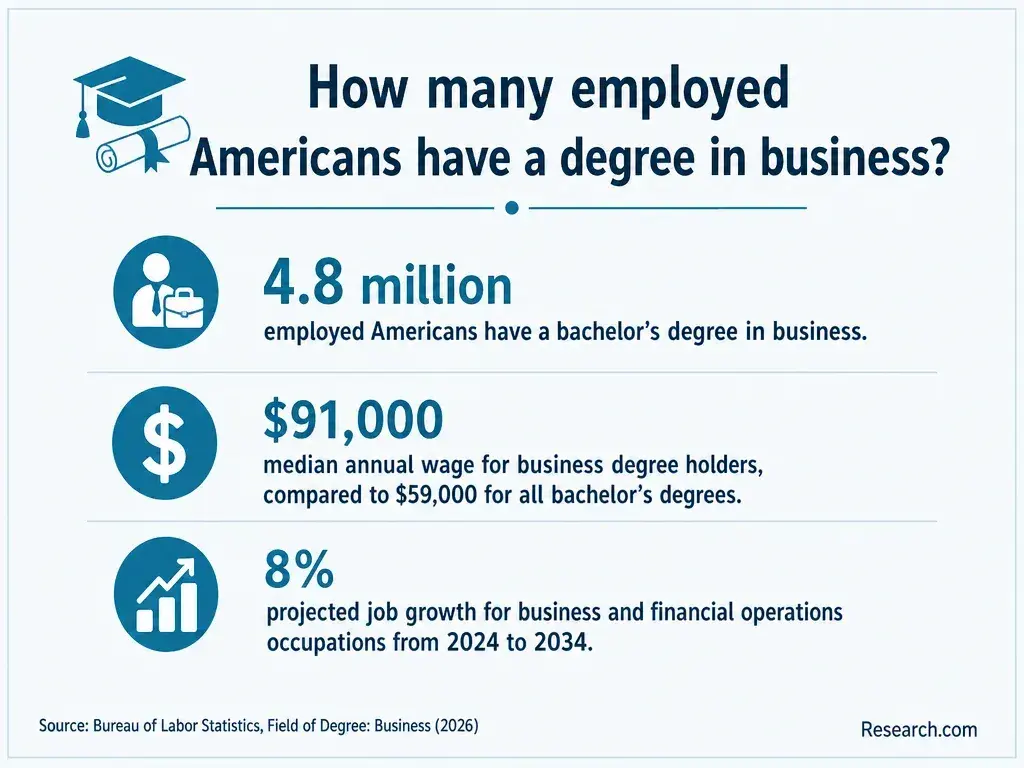
There is no single salary for business administration graduates. Pay depends on the occupation, location, employer, and experience - including the payroll and HR responsibilities you held before graduation. U.S. Bureau of Labor Statistics occupation-wide medians are useful benchmarks, not forecasts of what a new graduate will earn.
These BLS figures distinguish a plausible specialist target from a management role that normally requires considerably more experience. The wages are May 2025 national medians, and growth refers to projected U.S. employment change from 2025 to 2035.
| Occupation | Median annual wage | Projected employment growth |
| Human resources specialist | $75,940 | 6% |
| Human resources manager | $149,280 | 6% |
The manager figure should not be used to calculate the immediate payoff from enrolling. Instead, compare the likely pay and requirements of jobs you could realistically pursue next with your remaining education costs. Online business administration program cost-and-time comparisons can help frame that calculation, but your official degree audit and actual job prospects determine whether it is persuasive.
Do Payroll and Human Resources Careers Require Certifications or Licenses?
Payroll and general HR roles typically do not require a universal professional license. Employers may nevertheless prefer job-relevant credentials, and requirements can differ for specialized duties or industries. Payroll certifications and voluntary HR certifications are separate from a BS in Business Administration; check each certifying organization's current eligibility, examination, and renewal rules before assuming your coursework or work history qualifies.
If you want to remain in payroll or move into a closely related HR operations role, a focused credential or employer training may address the immediate skill gap at a lower cost. If a bachelor's degree is required for your longer-term target, compare that targeted expense with online business programs for cost-conscious students. The strongest choice is the one that meets a documented hiring requirement while building skills you can demonstrate on the job.
Other Things You Should Know About Business Administration
Possibly, if the school offers prior-learning assessment and your experience meets its documentation and evaluation rules. Employment alone does not award credit; ask what evidence is required and which degree requirement any credit would satisfy.
It can help if you want approved cross-training or tuition assistance. Ask about opportunities to support onboarding or benefits work, while keeping access to employee records within your authorized duties.
Ask both your instructor and employer first. You may need approval for the project scope and data use, and a hypothetical or anonymized case may be safer than using identifiable employee information.
Check target job postings before pursuing a second bachelor's. Your existing degree plus HR experience, selected courses, or a credential may meet the requirement more directly; ask schools how second-degree rules affect the cost if you still want one.
- Manage your business - Small Business Administration https://www.sba.gov/counseling/manage-your-business/
- Human Resources Degrees: How a Bachelor's in Business Administration Can Help Launch Your HR Career | Purdue Global https://www.purdueglobal.edu/blog/business/human-resources-degrees-launch-hr-career/
- What's the Difference Between an HR Generalist and an HR Specialist? | Villanova University https://www.villanova.edu/university/professional-studies/about/news-events/2025/0610.html
- What Can I Do with a Business Administration Degree? | CTU https://www.coloradotech.edu/degrees/studies/business-and-management/articles/what-can-i-do-with-a-business-administration-degree
- Which HR Certification Is Best? PHR, SHRM & More Compared (2026) | Bryan University Online© https://bryanuniversity.edu/faq/hr-certifications-how-to-choose-the-best-ones/
- Explore these 8 human resources certifications | Business | Capella University https://www.capella.edu/blog/business/human-resource-management-certifications-for-your-career/
- How Much Does a Human Resources Professional Make? | UTSA PaCE https://www.utsa.edu/pace/news/career-insight-how-much-does-a-human-resources-professional-make.html
- 10 Best Business Degrees for High Pay and Career Growth | Pace University New York https://www.pace.edu/news/best-business-degrees-undergrad-grad
- The Role of Human Resources | ACE Blog https://ace.edu/blog/the-role-of-human-resources/
- What Degree Do You Need for Human Resources? | snhu.edu https://www.snhu.edu/about-us/newsroom/business/what-degree-do-you-need-for-human-resources