2027 Online BS in Business Administration Admissions with An Application to a Concentration After Starting General Business: What to Check
Audited and Verified:
Our Editorial and Data Verification Process
Research.com uses government datasets, official education statistics and primary institutional information to support its career and degree guides. Our review process checks factual accuracy, occupational definitions, source dates and the requirements associated with the credentials discussed.
How This Article Was Fact-Checked
Our editorial team verifies salary estimates, employment projections, education requirements and program information against original data providers and official organizations. Salary figures are checked against the relevant occupational definitions and reporting periods. Information about licensure, accreditation and required in-person training is reviewed separately.
Fact-checked and verified on:

Co-Founder and Chief Data Scientist
Starting in general business can give you time to choose a specialty, but it does not necessarily reserve a place in a concentration. Some online BS in Business Administration programs let students declare a focus later; others require a separate application, prerequisite courses, or approval before advanced classes. For applicants and returning students, those differences can affect admission, transferred credits, graduation timing, and cost.
This guide shows what to confirm with a school before enrolling so you can keep your options open without assuming a later switch will be automatic.
Key Things You Should Know
- You may be able to enter general business first and apply to a concentration later, but confirm the concentration's separate eligibility rules, declaration deadline, and capacity.
- A bachelor's degree commonly requires about 120 semester credits; a concentration does not necessarily add credits, but late prerequisites or courses offered infrequently can delay completion.
- Ask for an official degree audit showing where prior credits apply and a term-by-term plan showing when the intended concentration's courses are available online.
What Is an Online BS in Business Administration With Concentrations?
An online BS in Business Administration generally combines general education with a business core and upper-level study. A concentration is an officially defined set of courses within the degree, such as marketing, finance, human resources, or operations. It is not a separate degree, and taking a few related electives does not necessarily earn the formal designation.
"General business" can mean an undeclared starting track or a complete degree option with broad electives. That distinction matters: moving from an undeclared track to a concentration may be routine, while changing from an established general-business curriculum may require a formal program change. Check the school's catalog for the exact degree title, concentration requirements, and how the designation appears on academic records.
For employees seeking advancement rather than a new specialty, online business administration pathways alongside an existing career may be worth comparing. The best fit depends on whether the added concentration courses develop skills needed for the next role.
Can You Apply to a Business Concentration After Starting General Business?
Often, yes - but admission to the university or general business major is not the same as approval for a concentration. A school may allow a simple declaration, require an application after prerequisite courses, restrict entry by GPA or available seats, or require students to choose a track at admission. Only that institution can confirm which policy applies to your enrollment term.
The following distinctions show why a general-business acceptance letter is not enough to plan a later switch.
| Stage | What it establishes | What remains uncertain |
| University admission | Permission to enroll at the institution | Business-major or concentration eligibility |
| Business-major admission | Entry to the degree or major | Access to a particular concentration |
| Concentration approval | Permission to follow its specified curriculum | Whether prior credits satisfy every requirement and when courses run |
| Graduation audit | Review of completed and remaining degree requirements | Final completion until all academic rules are met |
Before accepting an offer, get a written answer from admissions or the business department, then have an academic adviser apply it to your record:
- Ask whether the concentration is open to students who begin in general business and whether entry is automatic, competitive, or capacity-limited.
- Request its application window, minimum grades, prerequisite courses, and the earliest term you could enroll in its advanced classes.
- Submit previous college transcripts for an official evaluation showing credits applied to general education, the business core, concentration, electives, and residency requirements.
- Request both a general-business and a concentration degree plan, including a fallback if approval is denied or a required course is unavailable.
If your target is specifically logistics or procurement, compare the concentration's actual depth with shorter supply chain degrees and career value. A specialized degree may be more direct, but switching programs can also change which prior credits count.
What Admission Requirements Do Online Business Administration Programs Have?
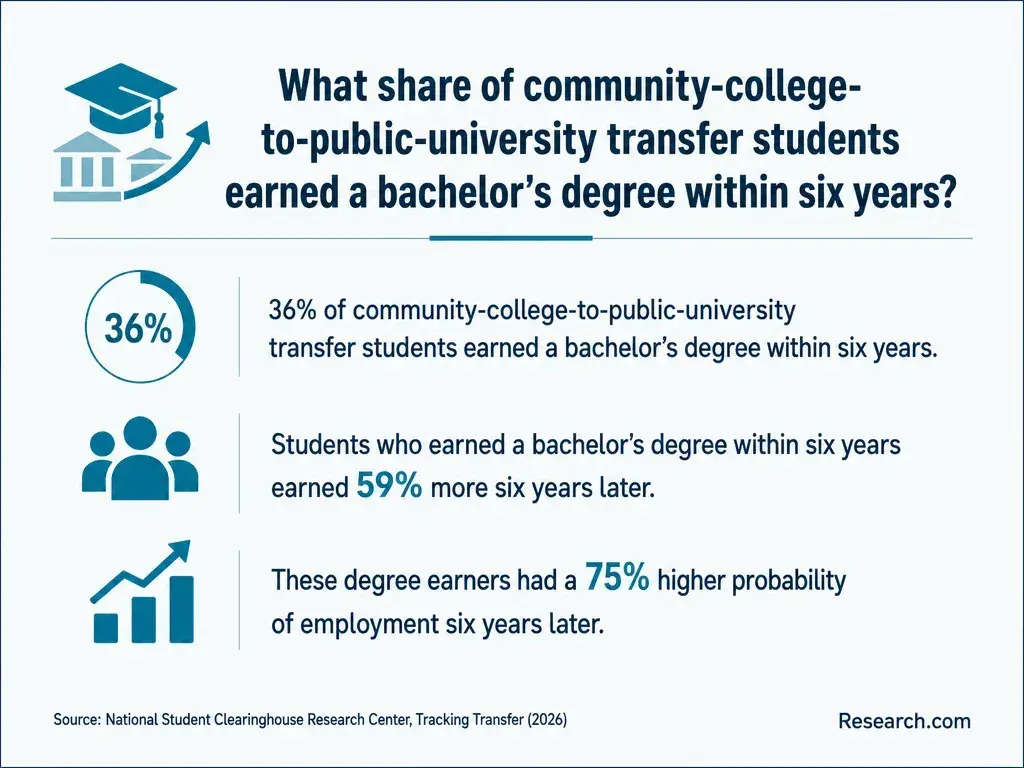
Schools commonly request prior academic transcripts and evidence that applicants meet their undergraduate admission standards. Transfer applicants may face different rules from first-time students. Some institutions admit students directly to business administration; others admit them to the university first and require specified grades or courses before entry to the major or a concentration. Tests, essays, minimum GPAs, and conditional-admission options vary by school.
For the later-concentration route, check when mathematics, statistics, accounting, economics, or introductory business courses must be completed - not merely whether they appear somewhere in the curriculum. An applicant from a non-business field may be admissible now but need foundation courses before entering a quantitative concentration. Previous work experience can strengthen an application, but it does not automatically replace graded prerequisites or earn college credit.
Request the current catalog requirements and ask admissions which documents establish eligibility. Ask the transfer office or registrar to evaluate prior coursework; the business department or concentration director should confirm eligibility for the intended focus. If HR is the goal, compare a general business concentration with HR degree requirements and job opportunities before deciding which application path matches the work you want to do.
The meaningful difference is usually how students access classes and support, not whether the academic requirements disappear. An online student may still have scheduled discussions, timed or proctored exams, team presentations, simulations, and fixed deadlines. Campus programs may make in-person networking and recruiting easier to access, while online delivery can reduce commuting and expand choices for people who work or provide care.
Ask for sample syllabi from both a core course and a concentration course. Confirm live-session times, group-work expectations, exam arrangements, required visits, accessibility support, and whether every required class is actually offered online. A program advertised as asynchronous may still require coordination with classmates.
If the main concern is fitting study around work rather than gaining a specific business specialty, compare completion times for organizational leadership degrees as a separate option. Compare required courses and scheduling obligations, not just the advertised finish date.
Requirements vary, but the business core often introduces accounting, economics, finance, marketing, management, operations, business law, and quantitative analysis. General education and a capstone or other integrative assignment may also be required. Concentration courses add depth in a function; they should not be confused with introductory exposure in the core.
For a later application, course sequence matters more than the concentration name. A finance or analytics track may require earlier statistics or accounting courses; a marketing track may require a research course before advanced electives. Compare the catalog's prerequisite chain with the online course schedule and your transfer evaluation. A course accepted as a general elective may not satisfy a required business-core or concentration course without an approved equivalency or substitution.
If project management is your intended specialty, compare the depth and additional coursework of a concentration with a dedicated program; project management program fees explained can also help frame the cost comparison. Neither a single project course nor a concentration by itself establishes eligibility for a professional certification.
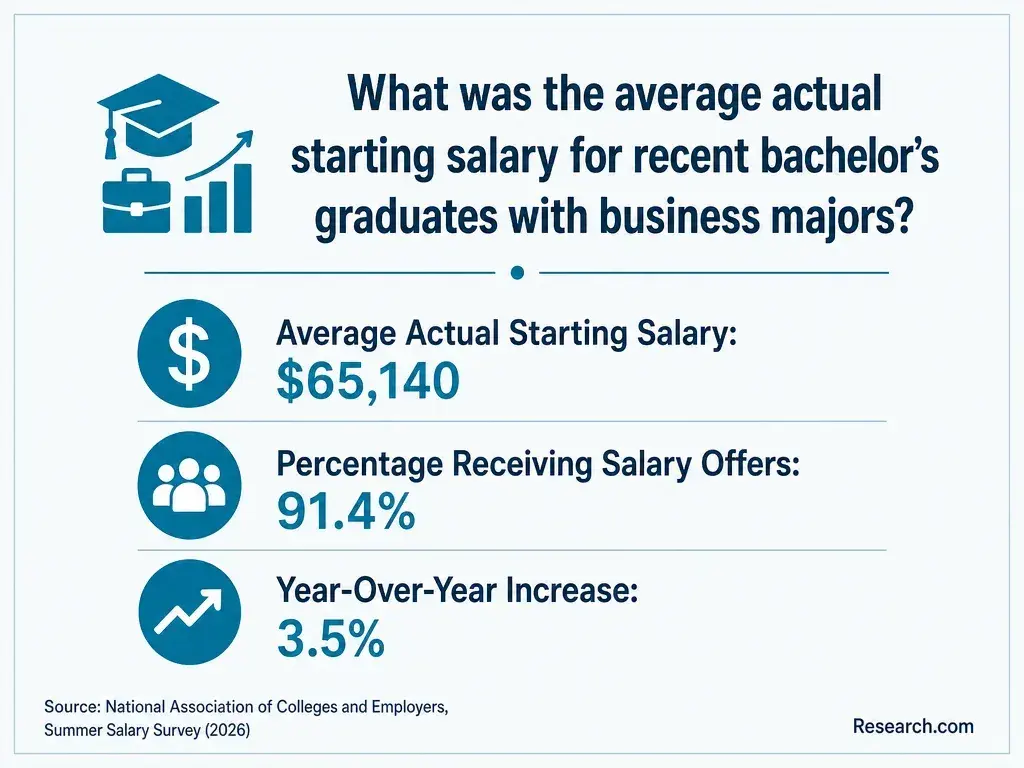
Completion time depends on applied transfer credits, enrollment pace, prerequisite chains, and how frequently required courses run. Online delivery alone does not shorten the degree. Starting in general business is most time-efficient when its early courses also count toward the intended concentration; a late decision can leave required courses for additional terms.
Ask an adviser to build two term-by-term plans using your evaluated credits: one for general business and one assuming approval for the concentration at the earliest permitted point. Check whether a required course runs every term, whether summer enrollment is possible, and what happens if the concentration application is unsuccessful. An accelerated schedule may reduce calendar time while increasing weekly workload.
For a broader comparison of compressed schedules, see quick online bachelor's pathways. Treat advertised timelines as conditional until a school evaluates your credits and confirms course availability.
Compare the cost of remaining requirements, not just the advertised tuition rate. Ask whether the school charges per credit or term, then include mandatory fees, books, software, exam arrangements, and any travel. A concentration may fit within the degree's existing elective space, or it may require additional courses or terms - particularly if prior credits do not meet its prerequisites.
Request separate written estimates for general business and the intended concentration based on the official degree audit. Include the effect of part-time enrollment, employer reimbursement timing, and any additional borrowing if graduation is delayed. Financial-aid eligibility and satisfactory academic progress depend on school and federal rules; confirm how a change of track affects your particular aid package with the financial-aid office.
If cost and speed are both priorities, compare shorter business administration college programs, but do not assume the shortest advertised option is cheapest for your transcript. The courses a school applies toward graduation determine the more useful comparison.
First, confirm the institution's current accreditation through the accreditor and the U.S. Department of Education's accreditation records. Then check whether any claimed AACSB, ACBSP, or IACBE business accreditation covers the relevant school or program; institutional and business-specific accreditation are different claims. Accreditation does not establish that a concentration is available online or that its graduates obtain particular jobs.
For this admissions decision, quality also means dependable advising and an executable course plan. Ask for the current catalog, concentration admission policy, online course rotation, faculty access, transfer-appeal process, and graduation requirements. If a school reports completion or employment outcomes, check which students were counted and whether the figures apply to online business students rather than the institution as a whole.
When evaluating both recognition and affordability, find accredited affordable business administration colleges with aid options, then verify each school's present accreditation scope and your own aid eligibility directly.
A business administration BS can support applications for roles in operations, marketing coordination, HR, procurement, sales, and project support. A concentration can make relevant coursework more visible, but employers also assess experience, software skills, communication, and evidence of completed work. New graduates should not assume that a management title follows automatically from the degree.
For context, the U.S. Bureau of Labor Statistics reports a $75,940 median annual wage for human resources specialists in May 2025. That occupation-wide median includes experienced workers; it is not a starting salary or an outcome attributable to an HR concentration. Use occupation data to understand a target role, then examine local job postings for entry-level requirements and opportunities to demonstrate relevant skills.
If supply chain is the intended career, a general business degree with operations electives may suit a broad business goal, while a dedicated program may provide more function-specific preparation. Fastest online supply chain bachelor's programs offer another timeline to compare, subject to your own transfer evaluation and the skills employers seek.
Which Certifications or Licenses Do Business Graduates Need?
There is no single license required for all business administration graduates. Requirements depend on the occupation and duties. Accounting licensure, certain financial-services activities, and other regulated work have rules separate from the award of a business degree; an accounting or finance concentration does not automatically meet them. HR and project management certifications likewise have requirements set by their issuing organizations.
Choose a concentration for its relevant learning, then check any desired credential with the certifying body or state regulator before relying on it as a pathway. If a project management credential is your goal, compare its eligibility rules and costs with further degree study; an online project management undergraduate funding guide is relevant only if another bachelor's program would meet a separate educational goal.
Other Things You Should Know About Business Administration
Some schools permit it; others allow only one or require additional courses. Ask whether courses can count toward both and whether a second concentration would delay graduation.
Not necessarily. Schools may record it on the transcript, diploma, both, or neither. Ask the registrar how your specific designation will be documented.
Only if the school has a prior-learning or approved-credit process that applies to those requirements. Keep training records, but do not assume workplace experience replaces a required course.
Usually that requires an approved program change and a new degree audit. Confirm which completed concentration courses would still count as general-business electives before switching.
- Texas Core Curriculum Application Guide https://reportcenter.highered.texas.gov/agency-publication/miscellaneous/waar-faq-texas-core-curriculum/
- Credit for Prior Learning - PA College Transfer https://collegetransfer.pa.gov/Administrators/Credit-for-Prior-Learning
- School-Determined Requirements | 2024-2025 Federal Student Aid Handbook https://fsapartners.ed.gov/knowledge-center/fsa-handbook/2024-2025/vol1/ch1-school-determined-requirements
- BBA Eligibility and Admission Criteria | cuny.edu https://zicklin.baruch.cuny.edu/academic-programs/undergraduate/ug-eligibility-admission-criteria/
- Limited & Controlled Access Program Applications | Palm Beach State College https://www.pbsc.edu/admissions/limited-controlled-access-program-applications.php
- What is a Major, Minor, or Concentration? | SUL ROSS https://www.sulross.edu/about/what-is-a-major-minor-or-concentration/
- B.S. in Business Administration | sonoma.edu https://business.sonoma.edu/programs/undergraduate/bs-business-administration
- Admission Requirements - Online BA in Business Administration https://extension.fullerton.edu/onlinedegrees/baba/requirements.aspx
- How to apply | Business Administration | BS BA https://online.missouri.edu/degrees-programs/mu/business/business-administration/bs-ba/admissions
- Online BBA | Business | University of Illinois Chicago https://business.uic.edu/online/degrees/bba/