2027 BS in Business Administration and Marketing: Which Prior College Courses Could Count Toward the Focus?
Audited and Verified:
Our Editorial and Data Verification Process
Research.com uses government datasets, official education statistics and primary institutional information to support its career and degree guides. Our review process checks factual accuracy, occupational definitions, source dates and the requirements associated with the credentials discussed.
How This Article Was Fact-Checked
Our editorial team verifies salary estimates, employment projections, education requirements and program information against original data providers and official organizations. Salary figures are checked against the relevant occupational definitions and reporting periods. Information about licensure, accreditation and required in-person training is reviewed separately.
Fact-checked and verified on:

Co-Founder and Chief Data Scientist
Your previous courses may shorten a BS in Business Administration and Marketing - but only if they satisfy requirements in the degree you plan to earn. For transfer and returning students, the distinction matters: a school can accept a marketing course without applying it to the marketing focus.
Before you commit to a program, you need to know which credits cover general education, the business core, and the focus itself. This guide shows you how to identify likely matches, request a useful evaluation, and compare your remaining time and cost.
Key Things You Should Know
- Writing, mathematics, statistics, and social science courses may cover general education; accounting, economics, and introductory business courses may cover the business core.
- Previous marketing courses count toward a marketing focus only when the receiving program approves their content, level, credit value, and place in its curriculum.
- A common bachelor's-degree planning benchmark is 120 semester credits, but accepted credits do not necessarily reduce the credits needed for the major, focus, or campus residency requirement.
What Prior College Courses Could Count Toward a Business Administration and Marketing Degree?
Prior coursework can fill several different parts of the degree. The useful question is not simply whether a course transfers, but which requirement it replaces. "Marketing focus" may mean an official concentration at one school and a set of electives at another, so check the exact degree title and catalog requirements.
This table shows common possibilities, not guaranteed equivalencies. It can help you sort your transcript before requesting an official review.
| Prior coursework | Possible application | Key uncertainty |
| English composition, communication, mathematics, and humanities | General education | Required subject area, course level, and credit value |
| Accounting, economics, statistics, and introductory business | Business prerequisites or core | Whether content matches the receiving course |
| Marketing principles, research, consumer behavior, and digital marketing | Marketing core or focus | Whether the focus permits that specific course and level |
| Other college-level courses | Open electives | Whether elective space remains after required courses are applied |
A course in project management, for example, might fill an open elective but not replace marketing research. If your strongest prior coursework is in that field, it may also be worth comparing programs designed to finish project management studies with transferred college credits rather than assuming a marketing focus makes best use of your transcript.
How Does Transfer Credit Work for a Business Administration and Marketing Program?
The receiving institution decides what credit it accepts and how that credit applies. Admission to the university, admission to its business program, transfer-credit acceptance, and satisfaction of graduation requirements are separate decisions. A preliminary credit estimate is therefore not a completed degree plan.
Use this sequence to turn a transcript into a dependable comparison between schools:
- Gather official transcripts from every college attended and the syllabi or course descriptions for business and marketing courses whose equivalencies are unclear.
- Ask the transfer office or registrar which credits are accepted, including any quarter-to-semester conversion, minimum-grade rule, or course-recency policy.
- Ask a business adviser or designated faculty evaluator to identify which accepted courses satisfy the business core and marketing focus, and request written decisions on disputed substitutions.
- Review the official degree audit for remaining prerequisites, required course sequences, elective space, and credits that must be earned at the receiving institution.
- If a course is assigned only elective credit, ask about the formal appeal process before enrolling in a replacement.
Do not assume an associate degree clears every lower-division requirement; applied associate degrees and transfer-oriented degrees can be evaluated differently. If your previous work is concentrated in personnel or HR, compare the resulting audit with online HR bachelor's programs accepting transfer credits. The better choice is the one that applies more of your credits to requirements you actually want to complete - not merely the one that accepts more credits overall.
Which General Education Courses Usually Transfer Into the Degree?
College-level composition, public speaking, mathematics, natural science, humanities, and social science courses are common candidates for general education credit. Their fit depends on the receiving school's categories: a speech course may meet an oral-communication requirement, while an additional writing course might count only as an elective.
Pay particular attention to mathematics. A program may require a specific quantitative course or business statistics, so a course accepted as general education may not also satisfy the prerequisite for later business classes. If most of your transcript is general education rather than marketing, compare how those credits apply across degree options, including shorter online bachelor's pathways in organizational leadership. A shorter advertised timeline is useful only if the evaluated requirements and course schedule support it for you.
Yes, when the courses match the receiving program's required content and level. Financial accounting and managerial accounting, for instance, are distinct courses; one does not automatically replace the other. Likewise, microeconomics and macroeconomics may be separate requirements, and a personal finance elective may not replace managerial finance.
Course sequencing matters as much as the credit award. If a transferred statistics or accounting course is not approved as the stated prerequisite, you may be unable to take a later marketing analytics or finance class on schedule. Compare that sequence - not just the advertised finish date - when considering online business bachelor's degrees with shorter timelines. Send syllabi when a course title is ambiguous, and obtain the major-level equivalency decision in writing.
They can, but a related title is not enough. An introductory principles course is more likely to match another introductory requirement than an upper-level focus course. Marketing research may need substantial coverage of research design and data interpretation; a digital marketing course may be evaluated for its treatment of campaigns, measurement, and responsible use of customer data. Schools may also limit how many focus courses can be transferred or require advanced work to be completed in residence.
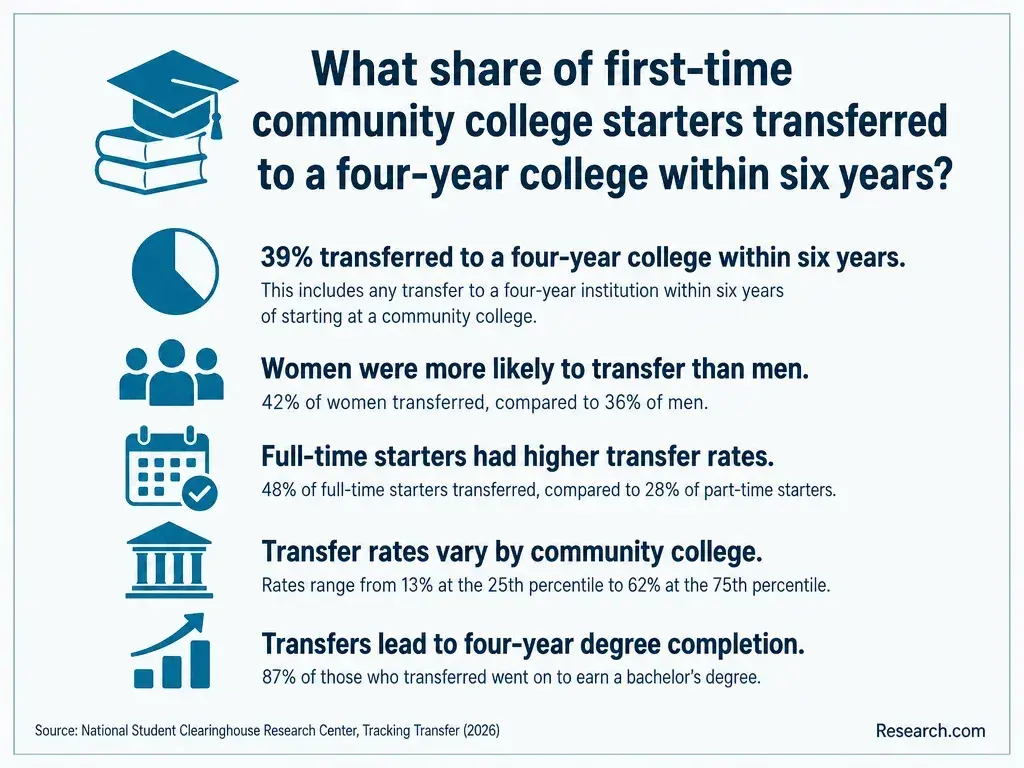
Compare the receiving program's required marketing courses with your syllabi and assignments, then ask which requirements each course would fulfill. If your previous courses are in advertising, sales, or communications, ask whether they meet a named focus requirement or only count as electives. When using US online business education program comparisons, check each school's current catalog for the actual marketing focus; the presence of marketing electives does not establish an official concentration.
Check that the institution holds recognized institutional accreditation, then confirm that the accreditation covers the institution and location or delivery arrangement in which you would enroll. Institutional accreditation and business-specific accreditation serve different purposes. AACSB, ACBSP, and IACBE accreditation may apply to a business school or defined programs; do not assume a marketing focus is separately accredited or that every degree at the institution is covered.
Accreditation alone does not tell you how your courses will transfer. Request the school's accreditation details alongside its written credit evaluation and degree audit. If you need to keep working while studying, use resources that compare business administration degrees for working learners as a starting point, then verify both accreditation scope and the program's scheduling requirements directly.
The credit-evaluation question is the same: accepted courses must still satisfy the degree's requirements. Delivery format changes how feasible the remaining courses may be. An online program might have scheduled live sessions, group presentations, proctored assessments, or marketing courses offered only in certain terms. A campus program may provide more predictable in-person access to instructors but require commuting and fixed meeting times.
Ask for a term-by-term schedule of your remaining required courses, including any capstone or internship. Compare that schedule with work and caregiving obligations before relying on fast-track undergraduate study options. Acceleration does not remove prerequisites or guarantee that every marketing-focus course will be available when you need it.
Many US bachelor's degrees use 120 semester credits as a planning benchmark, but the current catalog sets the actual total. Your remaining workload depends on where accepted credits apply, how many upper-level and in-residence credits are required, and when necessary courses are offered. Two schools accepting the same number of credits can leave you with different numbers of required courses.
For a meaningful cost comparison, obtain each school's official audit and price the remaining courses at its applicable tuition rate. Include mandatory fees, books or software, travel or proctoring where applicable, and the cost of any extra term caused by course sequencing. Financial aid eligibility and employer reimbursement also require separate confirmation. If you are weighing another field because it uses more of your credits, compare its financing on the same basis; for example, examine financial aid packages for online project management bachelor's students rather than comparing tuition figures alone.
Expect to provide transcripts from prior colleges and meet the institution's transfer-admission rules. The business school may have additional requirements, such as specified prerequisite courses or a minimum grade in them. Policies for older coursework, pass-fail grades, prior associate degrees, and applicants who already hold a bachelor's degree vary; none should be assumed from a general admissions page.
Before applying, ask admissions whether you can enter the business major immediately or must first complete prerequisites. Then ask the transfer office when a major-specific evaluation becomes available and whether it can be updated after your current courses finish. Admissions eligibility is only the first step toward an accurate completion plan. When comparing online business administration degrees at lower prices, check these entry and evaluation rules before estimating what the degree will cost you.
What Careers, Salaries, and Certifications Follow This Degree?
A business administration degree with a marketing focus can support applications for marketing coordinator, research assistant, sales-support, and related entry-level roles. Coursework in customer research, campaign planning, and data interpretation is more persuasive when paired with relevant work experience or a portfolio that respects employer and customer confidentiality. A focus does not, by itself, qualify a graduate for a marketing manager role.
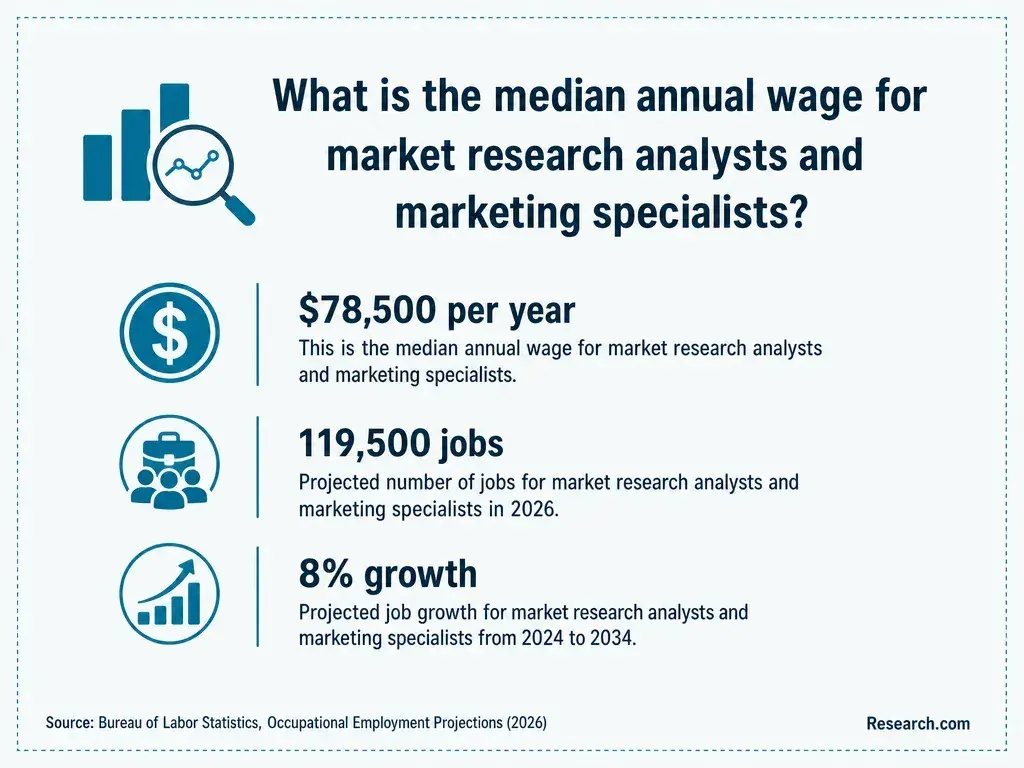
The US Bureau of Labor Statistics reports a May 2025 median annual wage of $78,760 for market research analysts. That is an occupation-wide median, not an expected starting salary for graduates; employers may also seek research and analytical skills beyond those in a particular business program. Marketing platform certificates may help demonstrate tool familiarity, but they are separate from the degree and do not replace practical experience. Weigh likely entry roles against your remaining education costs when comparing cost-effective paths to a business degree.
Other Things You Should Know About Business Administration
Usually, transferred courses award credit without importing grades into the new institution's GPA, but policies differ. Ask how transfer grades affect major admission and graduation honors.
Sometimes a course can meet both requirement categories, but its credits are typically counted only once toward the degree total. Check the official audit.
Get written preapproval first. A course that seems equivalent may otherwise transfer only as an elective or duplicate credit you already have.
Usually, subject to the school's policies. Ask for a revised audit before changing it: courses that fit marketing may not fulfill the new focus, and the change could affect your completion date.
- Accreditation in the U.S. | ed.gov http://www.ed.gov/laws-and-policy/higher-education-laws-and-policy/college-accreditation/accreditation-in-the-us
- Marketing (MKT) - The University of Texas at San Antonio https://catalog.utsa.edu/undergraduate/coursedescriptions/mkt/
- Business | Santa Monica College https://catalog.smc.edu/23-24/degrees-certificates-transfer/business.php
- Eligibility & Transfer Credit Guidelines - Penn Admissions https://admissions.upenn.edu/how-to-apply/transfer-applicants/eligibility-credit-guidelines
- Basic requirements | UC Admissions - University of California https://admission.universityofcalifornia.edu/admission-requirements/transfer-requirements/preparing-to-transfer/basic-requirements.html
- Transfer Credit Policies | Towson University https://www.towson.edu/admissions/undergrad/transfer/credit/policies.html
- Types of Transfer Credit | unl.edu https://creditevaluation.unl.edu/types-credit/
- Transfer Credit Policies | Transfer & Transition Services https://transfer.fiu.edu/transfer-101/credit-options/transfer-credit-policies/
- Focus Areas | University of Cincinnati https://www.business.uc.edu/faculty-research/marketing/degree-options/focus-areas.html
- Transfer Credit Procedures | Kettering College https://kc.edu/campus-resources/registrar/transfer-credit-information/course-equivalencies/