2027 From Training Coordination to Talent Development: When Does a BS in Business Administration Make Sense?
Audited and Verified:
Our Editorial and Data Verification Process
Research.com uses government datasets, official education statistics and primary institutional information to support its career and degree guides. Our review process checks factual accuracy, occupational definitions, source dates and the requirements associated with the credentials discussed.
How This Article Was Fact-Checked
Our editorial team verifies salary estimates, employment projections, education requirements and program information against original data providers and official organizations. Salary figures are checked against the relevant occupational definitions and reporting periods. Information about licensure, accreditation and required in-person training is reviewed separately.
Fact-checked and verified on:

Co-Founder and Chief Data Scientist
If you coordinate training schedules, track completions, or support onboarding, you may already understand how learning happens at work. Moving into talent development, however, can require more responsibility for diagnosing skill gaps, designing programs, and showing whether they work.
A BS in Business Administration may help you build that broader organizational perspective, but it is not always the shortest route. This guide explains when the degree adds value, what alternatives to compare, and what evidence to gather before committing your time and money.
Key Things You Should Know
- A BS in Business Administration makes the most sense when a bachelor's degree is a hiring or promotion requirement and you need broader business, analytical, and organizational skills, not just training-design skills.
- For a narrower move into instructional design or facilitation, a targeted course, certificate, and approved work samples may be more direct than a full degree.
- The U.S. Bureau of Labor Statistics projects 11% employment growth for training and development specialists from 2025 to 2035; that occupation-wide figure does not predict an individual graduate's prospects.
What is a BS in Business Administration, and who should pursue one?
A Bachelor of Science in Business Administration is an undergraduate degree covering how organizations manage people, money, operations, and decisions. Its exact curriculum varies by school. A BS may emphasize quantitative work, but the title alone does not establish that it offers more analytics or human resources coursework than a BBA or another business degree.
For a training coordinator, the degree is most useful when the next role calls for understanding budgets, organizational goals, performance measures, and change across departments. If your goal is specifically to create courses or facilitate workshops, compare the degree's actual learning-related courses with shorter training options.
If you want a bachelor's focused on supervising teams rather than broad business functions, online organizational leadership programs for quicker graduation offer another curriculum to examine; verify transfer-credit applicability before comparing completion times.
When does a BS in Business Administration make sense for career advancement?
The strongest case is a documented gap between your current responsibilities and a specific target job. Review several talent-development postings at employers you could realistically join. Separate requirements for a bachelor's degree from preferences for HR knowledge, learning technology, instructional design, data analysis, or years of experience.
The degree may be worth pursuing if it removes a bachelor's-level hiring barrier while letting you build skills you cannot readily gain in your current position. It is a weaker investment if you already hold a bachelor's degree and mainly need practice designing learning experiences or evaluating training. In that case, seek a supervised project, mentorship, or focused coursework first. If you must remain employed while studying, compare flexible business administration programs for career progression against your actual work schedule rather than assuming "online" means self-paced.
Before enrolling, ask your manager which new responsibilities you could take on now: interviewing stakeholders about skill needs, improving an onboarding process, or reporting on training participation. Those assignments can test the career move and give you evidence for applications, whether or not you pursue the degree.
What careers can you pursue with a BS in Business Administration?
Your experience may support a progression from training coordinator to training and development specialist, learning operations specialist, or HR specialist with training duties. These roles differ: a coordinator may manage enrollment and logistics; a training specialist may assess needs, develop or deliver instruction, and evaluate it; an HR specialist may handle recruiting, employee records, or other personnel processes. A talent-development manager generally needs substantial relevant experience and responsibility beyond a bachelor's degree.
Business coursework can also support a move into project coordination or operations, but the degree does not replace function-specific experience. If your interest shifts toward logistics rather than employee learning, compare supply chain degrees by cost and length alongside general business programs; a specialized curriculum may fit that target better.
Relevant courses may include management, organizational behavior, accounting, finance, statistics, operations, business communication, and business law. Together, they can help a training professional connect learning proposals to staffing needs, budgets, and organizational priorities. Check the catalog rather than assuming a general business core teaches instructional design, adult learning, or learning-management-system administration.
If talent development is your target, compare required courses, electives, and any formal HR concentration. For example, HR degree coursework and entry requirements can help you assess whether a dedicated HR pathway offers more relevant depth. An elective cluster is not necessarily an official concentration, and neither a concentration nor a class project proves you can independently run a workplace learning program.
A bachelor's degree is commonly planned as four years of full-time undergraduate study, but your remaining time depends on credits that apply to the degree, course sequencing, and enrollment pace. Prior coursework may be accepted as elective credit without satisfying the business core. Request a written degree audit before treating a school's transfer estimate as a completion date.
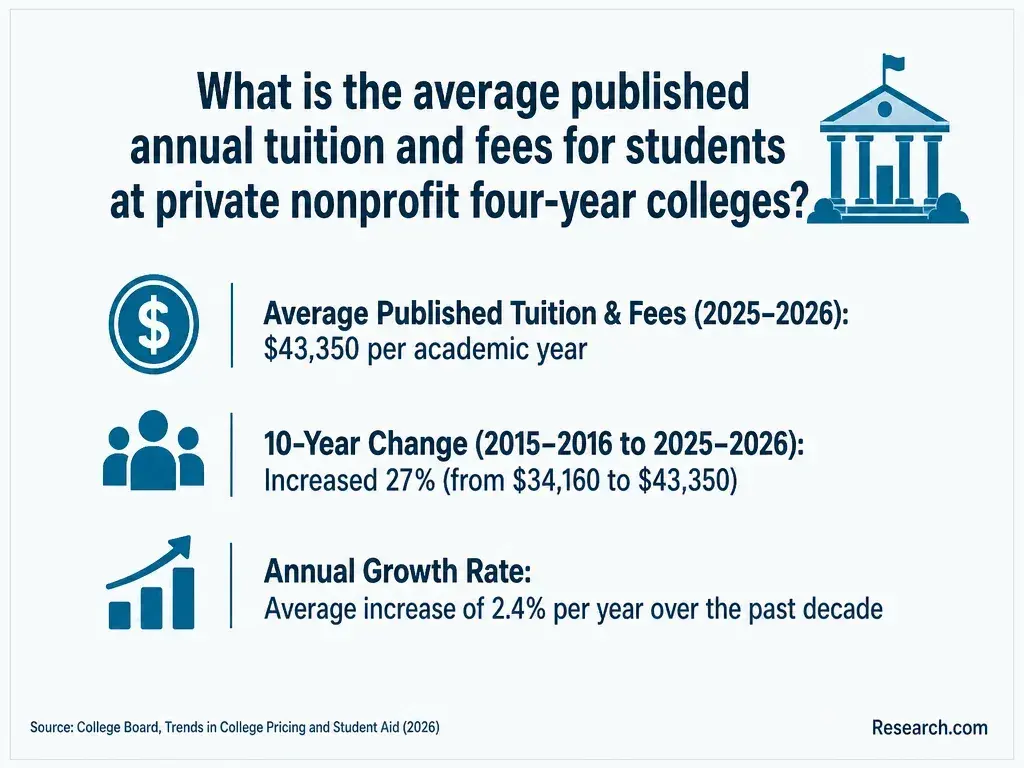
For cost, compare tuition and mandatory fees for remaining required coursework, then add books, software, possible travel, and borrowing costs. Account for lost work hours if classes conflict with your job. Compare the school's aid offer with employer tuition assistance, including reimbursement timing and any grade or continued-employment conditions. You can explore affordable colleges for business study, but an advertised tuition rate is not your total completion cost.
Requirements vary by institution and by whether you apply as a first-year or transfer student. Schools may request secondary-school records, college transcripts, or evidence that you completed particular prerequisites. Admission to the university, admission to the business major, and application of prior credits to graduation requirements can be separate decisions.
If you have previous college work, send official transcripts and ask which accounting, mathematics, statistics, economics, or general education requirements remain. Confirm any GPA and course-recency rules with admissions or the business department. If financing affects your decision, compare aid eligibility and school policies; a starting point is FAFSA-eligible online business administration colleges. Eligibility to apply for aid does not establish the amount you will receive.
An online degree can be credible when it is awarded by an appropriately accredited institution and provides the coursework, assessment, and support you need. Delivery mode alone does not establish quality, or guarantee scheduling flexibility. Ask whether courses require live attendance, group meetings, proctored exams, internships, or campus visits.
For someone working in training, also check whether projects can examine a workplace learning problem without using confidential employee information. Compare faculty feedback and access to career services, not just calendar speed. Accelerated study formats for bachelor's students may shorten the calendar, but compressed courses can increase weekly workload.
First, confirm the institution's accreditation in the U.S. Department of Education's accreditation database or the accreditor's directory. Then check whether any advertised AACSB, ACBSP, or IACBE business accreditation actually covers the school or program you are considering. Institutional and business-specific accreditation have different scopes; neither guarantees employment.
To judge fit, request the current catalog, a degree audit, course schedules, and any published completion or career outcomes with their cohort definitions. Ask how often HR-related electives run and who approves workplace projects. Online business degree rankings for US college applicants can help generate a comparison list, but verify each school's current policies directly before applying.
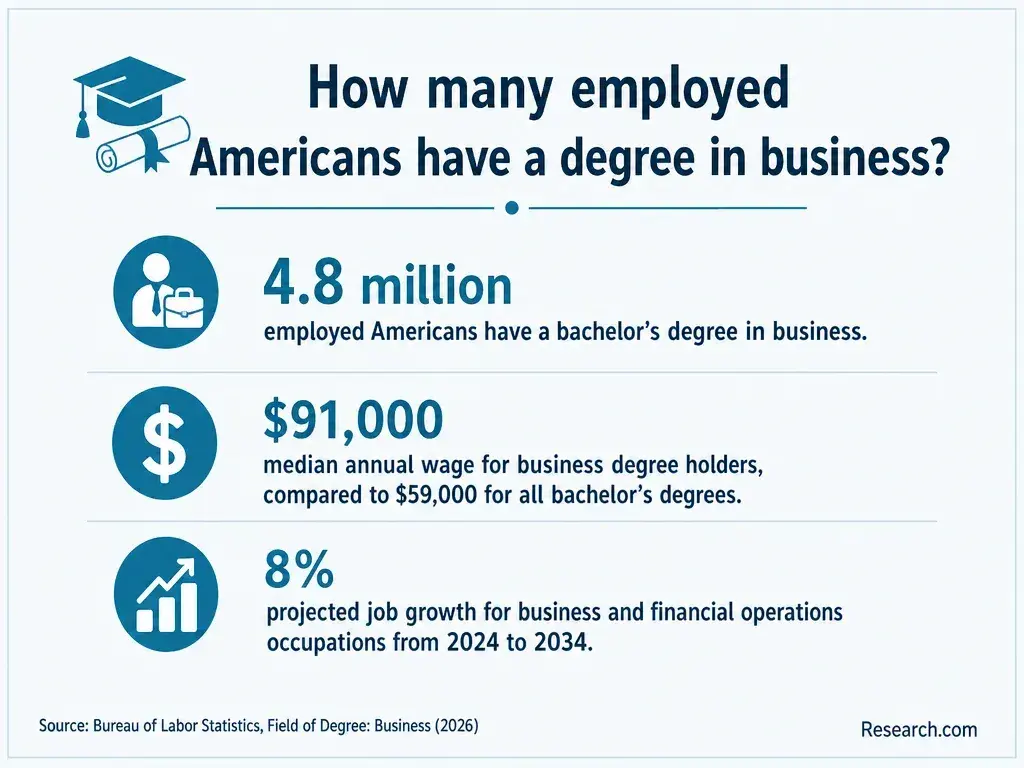
Pay depends on the occupation, location, employer, and your experience - not simply the degree title. The following U.S. Bureau of Labor Statistics figures describe entire occupations, including experienced workers. They are useful for comparing potential paths, not estimating your first salary after graduation.
| Occupation | Median annual pay, May 2025 | Projected employment growth, 2025-2035 |
| Training and development specialist | $69,280 | 11% |
| Human resources specialist | $75,940 | 6% |
| Human resources manager | $149,280 | 6% |
The manager figure is not a realistic starting-pay assumption for a coordinator completing a bachelor's degree. Use local postings to identify attainable next roles and their experience requirements. If finishing sooner could help you apply for bachelor's-required jobs, compare flexible fast-track routes in business education with standard pacing - but weigh workload and total cost as well as speed.
Which certifications or licenses do business administration careers require?
Training coordination and many talent-development roles do not have a universal professional license. Employers may value a voluntary HR, learning, or project-management credential, but eligibility rules can require particular experience, education, or an exam. A BS in Business Administration does not automatically award any of them.
Choose a credential only after checking target job postings and the issuing organization's current requirements. If your next role centers on managing learning initiatives as projects, you might estimate the cost of accredited project management study as an alternative educational route; a project-management degree and a professional certification are distinct qualifications.
Other Things You Should Know About Business Administration
Possibly, if a school offers prior-learning assessment and your documented experience meets its rules. Employment alone does not award credit; ask how the assessment works and which degree requirement any credit would satisfy.
Only share material your employer permits you to disclose. A redacted process map or independently created sample can demonstrate your thinking without exposing employee information or proprietary content.
That depends on the employer's policy. Check eligible programs, approval deadlines, reimbursement limits, grade requirements, and any repayment obligation before enrolling.
Search by responsibilities as well as titles. Compare postings for learning operations, training, organizational development, and HR roles, then focus on the duties and qualifications that recur in jobs you want.
- Fast Facts: Tuition costs of colleges and universities (76) | ed.gov https://nces.ed.gov/fastfacts/display.asp
- What Do Talent Development Specialists Do: Daily Work & Skills | Franklin University https://www.franklin.edu/career-guide/training-and-development-specialists/what-do-talent-development-specialists-do
- Learning and Development Careers | How to Get Into L&D Roles | University of North Carolina Wilmington https://flex-online.uncw.edu/blog/learning-and-development-career-path/
- Human Resource Management - Department of Business | Mississippi University for Women https://www.muw.edu/business/bba/humanresources/
- Human Resources Training and Development Coordinator | Portland Community College (PCC), Oregon https://www.pcc.edu/hr/employment/management-jobs/hr-training-and-development-coordinator-2/
- What Degree Do You Need for Human Resources? | snhu.edu https://www.snhu.edu/about-us/newsroom/business/what-degree-do-you-need-for-human-resources
- Exploring Careers in Talent Development | Webster University https://enroll.webster.edu/exploring-careers-in-talent-development/
- Training and Development Coordinator Job Description | acbsp.org https://careers.acbsp.org/career/training-and-development-coordinator/job-descriptions
- Explore Roles | td.org https://careerpathways.td.org/explore-roles
- Training & Development Specialist Job Description | LHH https://www.lhh.com/en-us/insights/job-descriptions/training-development-specialist