2027 Comparing Online BS in Business Administration Options for Students with a Hearing Accessibility Requirement
Audited and Verified:
Our Editorial and Data Verification Process
Research.com uses government datasets, official education statistics and primary institutional information to support its career and degree guides. Our review process checks factual accuracy, occupational definitions, source dates and the requirements associated with the credentials discussed.
How This Article Was Fact-Checked
Our editorial team verifies salary estimates, employment projections, education requirements and program information against original data providers and official organizations. Salary figures are checked against the relevant occupational definitions and reporting periods. Information about licensure, accreditation and required in-person training is reviewed separately.
Fact-checked and verified on:

Co-Founder and Chief Data Scientist
An online business degree can remove a commute without removing barriers to participation. Recorded lectures may lack accurate captions, live group projects may depend on audio, and remote exams may require a phone call. For deaf and hard-of-hearing students comparing online BS in Business Administration options, the deciding factor is how a program makes required learning activities accessible - not simply whether it calls itself flexible. This guide shows what to verify with disability services and the business department before enrolling, alongside the academic, cost, and career questions that affect the choice.
Key Things You Should Know
- Compare accessibility across the entire degree: live classes, recorded media, group work, presentations, exams, internships, and required software.
- Ask for a written explanation of how approved accommodations work in online business courses; an asynchronous label does not establish that every requirement is accessible.
- Do not treat occupation-wide pay as a graduate starting salary: the U.S. median for human resources specialists was $75,940 in May 2025, across workers at all experience levels.
What is an online BS in Business Administration for students with hearing accessibility needs?
It is a bachelor's degree in general business administration delivered primarily online, with access to course activities and services through appropriate accommodations. It is not usually a separate "accessible" degree. Students should expect the same academic learning outcomes as other students, while the means of participating - for example, captioned instruction or interpreted live discussion - may differ.
A BS typically combines business coursework with general education and may offer electives or a formal concentration. A BBA or specialized business degree can cover similar subjects, but its requirements and credential title may differ. If finishing quickly is a priority, fastest bachelor's-level business study options are a starting point for comparison, not evidence that every required class, assessment, or accommodation can be delivered on an accelerated schedule.
The strongest fit depends partly on communication preference. A student who uses American Sign Language may need qualified interpreting for live activities; another may rely on accurate captions, transcripts, assistive listening technology, or text-based interaction. Ask how the school handles the specific methods you use rather than assuming one solution serves everyone.
How do online business administration programs support deaf and hard-of-hearing students?
Support is a coordinated process involving disability services, instructors, academic advising, and the people who run online learning tools. Disability services typically determines accommodations through an individualized process; instructors then need a workable plan for applying them to each course. A responsive program also addresses problems during the term, such as a newly assigned video without captions.
The delivery format changes where barriers are likely to arise. Use this comparison to identify which course requirements need a closer review before choosing a program.
| Course format | Potential advantage | Accessibility point to verify |
| Mostly asynchronous | Lectures and discussions can be accessed on a flexible schedule. | Accuracy and availability of captions and transcripts; deadlines for recorded group work. |
| Scheduled live online sessions | Real-time questions and collaboration may be easier. | Interpreting or live captioning, speaker identification, and access to breakout rooms. |
| Accelerated online terms | Courses may be completed in a shorter calendar period. | Whether accommodations, media preparation, and group meetings can keep pace with compressed deadlines. |
For example, students weighing leadership bachelor's degrees with accelerated pacing against a general business BS should compare both the curriculum and the time available to arrange accessible live collaboration. A shorter term does not reduce the work required.
How can students verify online business degree accreditation?
First, verify the institution's current accreditation through the accreditor and the U.S. Department of Education's recognized-accreditor information. Confirm that the institution offering the degree - not merely a similarly named campus or partner - is covered. Institutional accreditation is especially important to questions about federal aid eligibility and how other institutions may evaluate credits, although neither aid nor credit transfer is automatic.
Next, check whether the business school or specific program claims AACSB, ACBSP, or IACBE accreditation, and verify its actual scope with that accreditor. These are distinct from institutional accreditation. Do not assume that every online program, concentration, or newly introduced degree is covered because the school displays a business-accreditation logo.
If you are comparing a general business BS with project management bachelor's routes for associate degree graduates, check each institution's accreditation separately. Then request an official transfer evaluation: accreditation does not establish that a particular accounting or statistics course will satisfy the new major's requirements.
U.S. colleges generally must provide qualified students with disabilities equal access under applicable disability law, but the appropriate accommodation is individualized. The useful question is how the school will make required activities accessible without changing essential academic requirements. Automatic captions alone may be inadequate when they misstate finance terms, omit speakers, or fail during a graded discussion.
Before committing, send disability services a sample course plan or descriptions of known requirements. The following requests test whether support extends beyond lectures:
- Ask how the school provides accurate captions or transcripts for required recordings and access to live sessions, including breakout rooms and guest speakers.
- Ask how interpreting, live captioning, or another approved communication method works for advising, office hours, team meetings, and presentations.
- Ask about accessible video-conferencing, simulations, telephone-based tasks, proctoring instructions, and alternatives when a tool itself creates a barrier.
- Ask whom to contact if access fails during a timed assessment or a required group activity, and how missed participation will be addressed.
Keep a written record of the accommodation process and timing, while avoiding unnecessary disclosure of medical details to classmates. In people-focused courses, such as those examined when students compare HR curricula and career directions, verify access to role-plays and collaborative exercises as carefully as access to lecture videos.
Most programs combine general education with accounting, economics, finance, marketing, management, operations, business law or ethics, and quantitative work such as statistics or analytics. The exact mix, mathematics prerequisites, and course sequence vary. A concentration is an officially defined set of requirements; a few related electives do not necessarily create one.
For accessibility, examine how students demonstrate these skills. An accounting course may use narrated spreadsheet demonstrations; marketing may require a recorded pitch; operations may involve a timed simulation; a capstone may require meetings and a presentation. Ask for recent syllabi and confirm which activities are essential, which tools are used, and how approved accommodations apply.
Students seeking a deeper operations focus can use an affordable supply chain degree planning guide to compare specialized study with a general business curriculum. Check whether the added depth aligns with the work you want and whether its software, projects, and scheduling are accessible.
Requirements commonly include evidence of secondary-school completion or prior college study and official transcripts. Transfer applicants may face separate rules for admission to the institution, admission to the business major, and application of credits toward graduation. Some programs specify mathematics, accounting, or other preparation; others include those courses after admission.
Ask admissions and the business adviser for the catalog rules that apply to your intended entry term. If you have prior credits, request a degree audit showing where each accepted course applies, not just a total of transferable credits. A guide to credit and eligibility rules for business administration admission can help you prepare questions, but the enrolling institution makes the final determination.
You can contact disability services while applying to discuss access to application events, placement assessments, and advising. You need not choose a program based only on whether its application form mentions accommodations; what matters is whether the school can explain a timely, individualized process.
A conventional full-time bachelor's pathway generally takes about four academic years, while transfer credit, part-time study, course availability, and accelerated terms can change the calendar. For a student who needs captioned course media or interpreting for recurring live sessions, a realistic pace also depends on whether the program can deliver those services when each course runs. Do not assume an accelerated term is easier or cheaper.
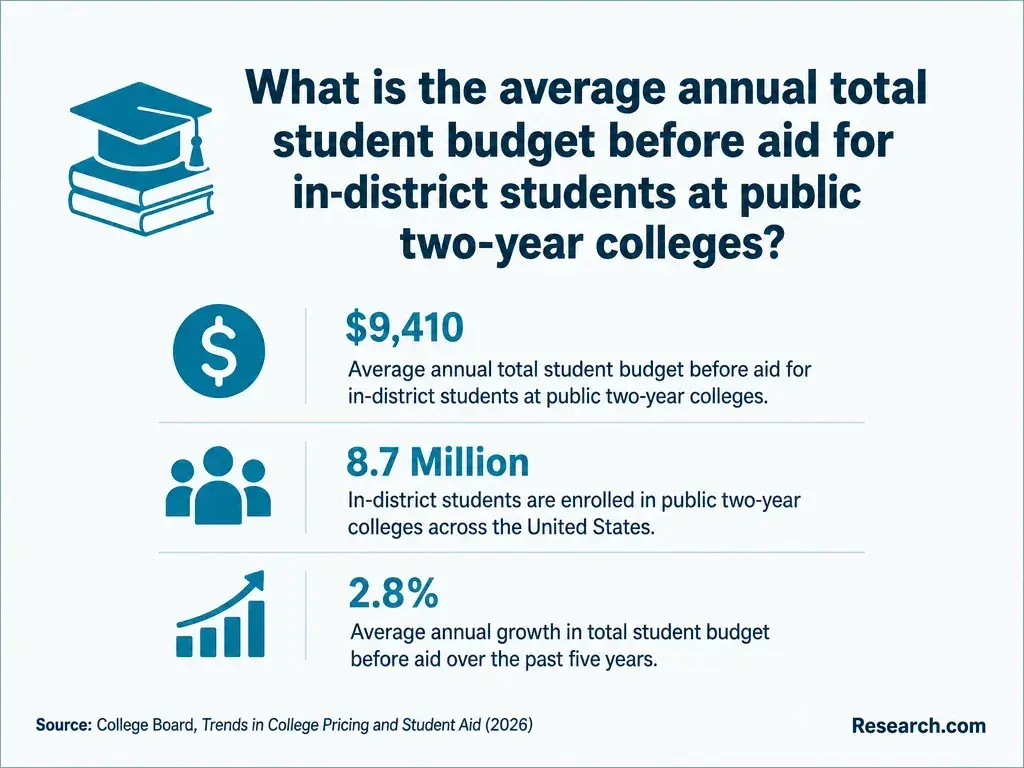
Compare the cost to finish, not just the advertised tuition rate. Request a written estimate of remaining required credits and include mandatory fees, books, software, proctoring, any campus travel, and borrowing costs. Ask whether tuition is charged by credit or term and whether an extra term would add fees. Accessibility services should be discussed directly with the school; do not assume a particular tool or service will be available without checking its policy.
To find inexpensive online business administration colleges, compare schools using the same transfer-credit assumptions and enrollment pace. A lower per-credit price may not produce a lower total if more of your prior coursework counts only as electives or required courses are offered infrequently.
Both formats can teach the same business concepts, but they place communication demands in different settings. Online study avoids routine travel and may offer replayable instruction. Campus study may provide easier access to in-person interpreting, assistive technology, informal faculty contact, and local recruiting - if those services are actually available for the courses and activities you need.
Neither format is automatically more accessible. An online program with mandatory uncaptioned live discussions may be a worse fit than a well-supported campus program; conversely, accessible recordings and text-based participation may make online study preferable. Compare the required schedule, accommodation delivery, internship arrangements, and support during exams in both formats. An online degree may still include fixed deadlines or occasional in-person requirements.
If speed influences your choice, compare online business degrees with compressed terms against campus schedules using the actual course sequence. Ask whether required business courses run often enough to maintain your planned pace and whether live or group obligations conflict with work or access arrangements.
A business BS can support applications for roles in operations, marketing coordination, HR, purchasing, and project coordination, depending on electives, experience, and employer requirements. Entry-level responsibilities often involve maintaining records, analyzing information, communicating with stakeholders, and supporting a team's work - not immediately managing a department. Internships or approved projects can help demonstrate those skills, provided their meetings, supervision, and tools are accessible.
For salary context, the U.S. Bureau of Labor Statistics reports a $75,940 median annual wage for human resources specialists in May 2025 and projects 6% employment growth from 2025 to 2035. Those figures describe the occupation nationally, including experienced workers; they are not a starting-pay estimate or an outcome specific to online business graduates. For an HR target, compare the degree's HR coursework with the duties in actual job postings.
Project coordination is another possible direction, but employers may seek demonstrated scheduling, budgeting, or industry experience. If that is your primary goal, compare the general BS with low-cost project management degree options and assess which pathway offers relevant, accessible applied work - not merely the more appealing degree title.
Do business administration graduates need licenses or professional certifications?
There is no general license required simply to hold a BS in Business Administration or apply for many nonregulated business roles. Specific work can have separate rules: accounting licensure, certain financial-services activities, and some other occupations require qualifications beyond a general business degree. Voluntary HR or project-management certifications have their own eligibility and examination rules; a course or concentration does not award them automatically.
Choose an additional credential only after checking the target role's job postings and the issuing organization's requirements. If project management is the goal, distinguish the cost and eligibility of a professional certification from those of another bachelor's degree. Resources on project management tuition fees and financial aid address the degree side of that comparison; neither route substitutes automatically for relevant work experience.
Other Things You Should Know About Business Administration
Yes. Contact disability services to discuss the online learning activities you need to access and how its accommodation process works. You can also request sample course requirements without committing to enrollment.
Generally, you can coordinate approved arrangements through the school without sharing medical details with classmates. Ask disability services how group members will receive the participation instructions they need.
Notify the instructor and disability services promptly, identify the assignment and deadline, and request an accessible version or an appropriate interim arrangement. Keep the correspondence in case the access delay affects your work.
Only if the program permits it and approves the role, learning objectives, supervision, and assessment. Employment by itself does not award internship credit; ask about approval before relying on your job to meet the requirement.
- ADA Requirements: Effective Communication https://www.ada.gov/resources/effective-communication/
- Captions and Transcripts | Section508.gov https://www.section508.gov/create/captions-transcripts/
- Auxiliary Aids and Services for Postsecondary Students with Disabilities | U.S. Department of Education http://www.ed.gov/laws-and-policy/individuals-disabilities/auxiliary-aids-and-services-for-postsecondary-students-with-disabilities
- Cost of Attendance (Budget) | 2025-2026 Federal Student Aid Handbook https://fsapartners.ed.gov/knowledge-center/fsa-handbook/2025-2026/vol3/ch2-cost-attendance-budget
- Understanding College Costs | studentaid.gov https://studentaid.gov/resources/prepare-for-college/students/choosing-schools/consider-costs
- Effects of captions, transcripts and reminders on learning and perceptions of lecture capture - PMC https://pmc.ncbi.nlm.nih.gov/articles/PMC9038223/
- Effective Communication - Institutional Accessibility and ADA Compliance https://accessibility.usc.edu/accessibility-at-usc/event-accessibility/effective-communication/
- Online B.S. in Business Administration for Transfer Students | sonoma.edu https://business.sonoma.edu/programs/undergraduate/bachelors-online-degree-completion-program
- Audio and Video | Digital Accessibility https://wsu.edu/digital-accessibility/core-concepts/audio-video/
- Bachelor of Science in Business Administration, Management - Palmetto College | University of South Carolina https://sc.edu/about/system_and_campuses/palmetto_college/online_programs/business_administration/