2027 BS in Business Administration Program Choice: A Supplier Comparison Project as a Capstone Option
Audited and Verified:
Our Editorial and Data Verification Process
Research.com uses government datasets, official education statistics and primary institutional information to support its career and degree guides. Our review process checks factual accuracy, occupational definitions, source dates and the requirements associated with the credentials discussed.
How This Article Was Fact-Checked
Our editorial team verifies salary estimates, employment projections, education requirements and program information against original data providers and official organizations. Salary figures are checked against the relevant occupational definitions and reporting periods. Information about licensure, accreditation and required in-person training is reviewed separately.
Fact-checked and verified on:

Co-Founder and Chief Data Scientist
A supplier comparison can turn a business administration capstone into a practical purchasing recommendation, but only if the program permits the project and the evidence is usable. This guide is for prospective and current BS in Business Administration students choosing a program or capstone option.
It explains what the project involves, which courses support it, how to compare academic requirements, and when a narrower supply chain pathway may fit better. You will leave with a way to evaluate both the degree and the proposed deliverable before committing time or money.
Key Things You Should Know
- A supplier comparison capstone should identify a purchasing decision, compare suppliers on consistent criteria, and document uncertainty; it is not proof that an employer approved a purchase.
- Confirm that the BS program accepts this capstone format and that you can use the necessary supplier information without breaching confidentiality or data-use rules.
- If procurement is your primary goal, compare the general business degree with a supply chain pathway; BLS projects 18% employment growth for logisticians from 2025 to 2035, but that outlook does not guarantee a job.
What is a business administration degree with a supplier comparison capstone?
A BS in Business Administration is an undergraduate degree covering multiple business functions. A supplier comparison capstone is a final applied project in which a student evaluates potential vendors for a defined organizational need and recommends a defensible next step. The capstone is an assignment within the degree, not a separate procurement credential or an automatic feature of every program.
The intended decision-maker might be a purchasing manager, small-business owner, or nonprofit operations lead. A manageable academic question is which supplier best fits a specified need under stated cost, delivery, quality, and risk constraints.
The output could be a decision memo with a comparison matrix, assumptions, evidence, and unresolved questions. It remains an academic proposal unless an organization separately authorizes its use.
Degree choice depends on how much breadth you want alongside the project. A general BS may suit students exploring several business functions; a supply chain degree may offer more procurement depth. If that depth matters more than the capstone title, compare shorter online supply chain bachelor's pathways, then check each program's actual courses and transfer-credit evaluation.
What does a supplier comparison project teach business administration students?
The project connects accounting, operations, and business judgment. Students learn to distinguish a low quoted price from a low total cost: freight, setup, maintenance, payment terms, and switching costs may change the comparison. They also practice defining quality and delivery measures before seeing which supplier scores best.
A strong deliverable follows a transparent sequence. These steps help keep the recommendation reproducible rather than turning it into an unsupported ranking.
- Define the product or service, required volume, time horizon, decision-maker, and nonnegotiable requirements.
- Identify permissible evidence, such as public catalogs, authorized quotes, published policies, or clearly labeled hypothetical data.
- Set evaluation criteria and their relative importance before comparing suppliers; explain whose priorities the criteria represent.
- Compare offers on the same basis, flag missing or noncomparable information, and test whether reasonable changes in assumptions alter the result.
- Recommend a supplier, a shortlist, or further information-gathering, with risks and approval steps stated separately.
For example, a supplier with the lowest unit price might still be less suitable if its delivery schedule cannot meet the buyer's deadline. That is a conclusion to investigate, not a result to invent.
Students interested mainly in coordinating the resulting purchase or rollout can also review affordable pathways to study project management; project planning and supplier selection overlap, but they are not the same skill.
How do you choose an accredited business administration program?
Start by checking the institution's current accreditation status with its recognized institutional accreditor. Then confirm the exact degree title, catalog requirements, and whether any advertised AACSB, ACBSP, or IACBE accreditation covers the relevant business school or program. Institutional and business-program accreditation have different scopes; neither establishes that a particular capstone topic is available.
Ask the business department for a recent capstone syllabus or project guidelines. Specifically, confirm whether students may propose a supplier comparison, whether the project requires a real organization, who approves its scope, what faculty supervision is available, and whether a presentation or team assignment is mandatory.
A program with an approved case-based option may be a better fit than one requiring employer records you cannot access.
Application convenience is a separate consideration. If comparing no-application-fee online college choices, verify accreditation and capstone policies independently rather than treating a waived fee as evidence of academic fit.
Most programs combine general education with a business core; exact requirements vary. Accounting helps students interpret costs and payment terms. Statistics and spreadsheet work support comparisons and sensitivity checks. Operations or supply chain coursework addresses purchasing, capacity, and delivery, while business law and ethics frame contracts and responsible information use.
Look beyond course names to assignments and sequencing. A program might offer an operations elective but schedule it after the capstone, or require a prerequisite that delays access. Ask an adviser whether you can complete relevant quantitative and operations courses before proposing the supplier project. An elective is not necessarily a formal concentration.
If the intended work is primarily scheduling vendors and managing implementation rather than evaluating bids, find project management programs with lower total costs as a comparison. Compare required coursework and remaining credits, not just advertised tuition.
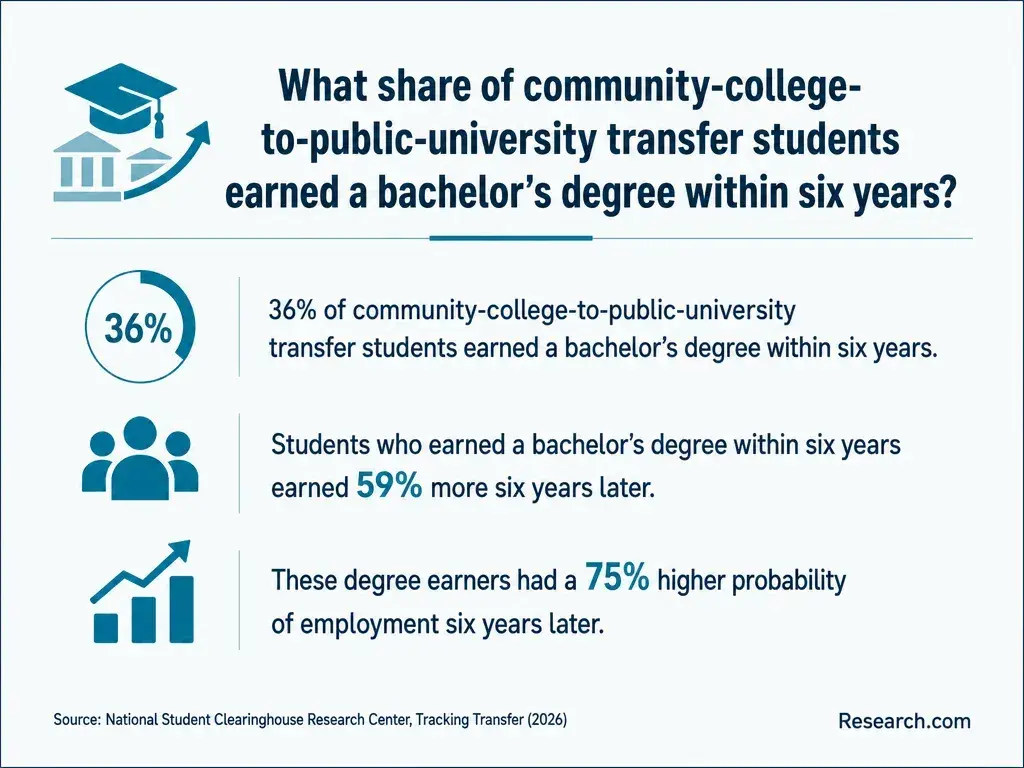
Requirements depend on the institution and whether you apply as a first-year or transfer student. Schools commonly request prior academic transcripts; some admit students to the university before they can enter the business major. Mathematics or other preparatory courses may affect when you can take upper-level business classes even if they do not prevent university admission.
Transfer students should request an official degree audit showing which accepted credits satisfy general education, business core, electives, and residency requirements. Accepted credit does not necessarily replace an accounting or statistics prerequisite. Ask admissions about eligibility, the business department about major entry, and an adviser about the capstone sequence.
Plan financing alongside admission rather than assuming an acceptance letter settles it. For a related example of application timing and aid categories, see project management bachelor's aid application planning; confirm the applicable aid process and deadlines with your chosen business program's financial-aid office.
Neither format is inherently better for a supplier comparison. Online study may make coursework easier to combine with employment, while campus study may offer convenient in-person faculty meetings or presentations. The decisive issue is whether the format supports the project work you can actually complete.
Check live meeting times, group-work expectations, presentation rules, software access, and any campus visits. An asynchronous course can still have fixed deadlines or team meetings. Students hoping to use workplace information should also ask whether faculty can supervise a project with redacted data and whether employer permission is required before sharing it.
For employed students, work-compatible business administration education options can help form a shortlist. Confirm the capstone schedule directly with each school; an online label does not guarantee a self-paced project.
A bachelor's degree commonly takes about four years of full-time study from the beginning, but transfer credit, course availability, enrollment pace, and prerequisites can change the remaining timeline. The capstone may be available only after specified core courses, so an attractive transfer estimate is not a completion plan.
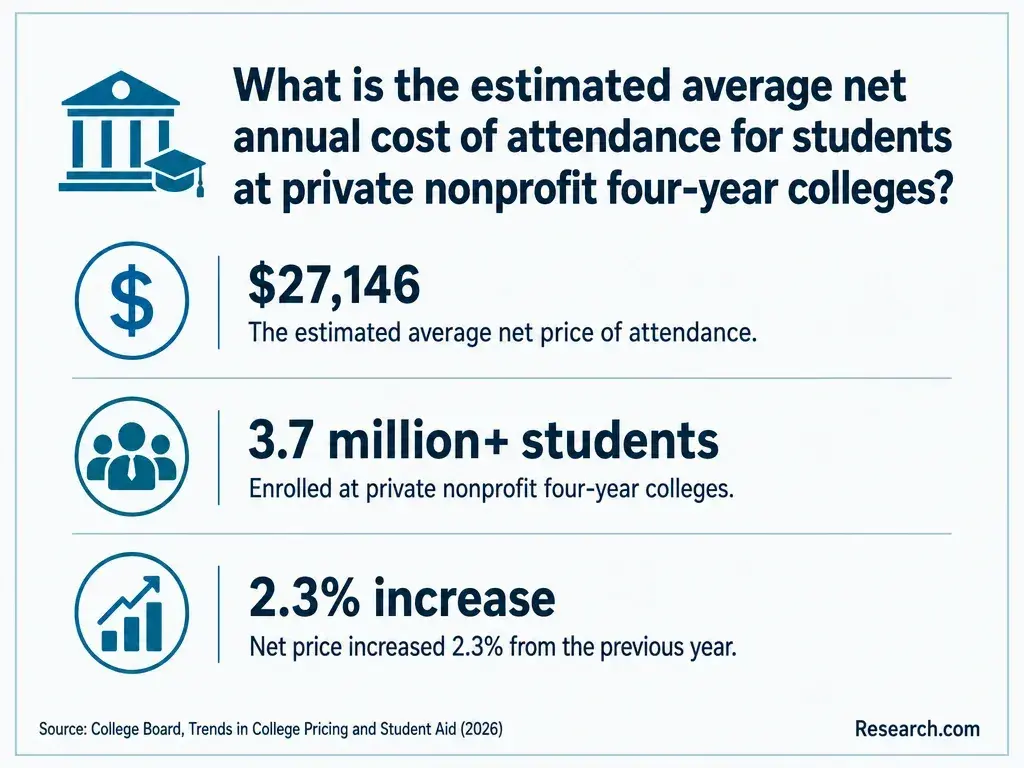
Compare costs using a school-issued estimate of remaining required coursework. Include tuition, mandatory fees, books or software, possible travel and presentation costs, and any income affected by your study schedule. A lower per-credit price can lose its advantage if more credits remain or required courses delay graduation.
Use budget-friendly online business schools as a starting pool, then request a personalized degree audit and cost estimate. Do not count anticipated transfer savings or aid until the institution confirms them.
A well-documented supplier comparison may provide a work sample for purchasing assistant, procurement coordinator, operations coordinator, or supply chain support applications.
Entry-level duties can include organizing quotes, checking order status, maintaining records, and communicating with vendors. The capstone demonstrates a method; it does not replace experience with purchasing systems, contracts, or an employer's industry.
Logistician roles are another possible longer-term direction. The U.S. Bureau of Labor Statistics projects 18% employment growth for logisticians from 2025 to 2035. That occupation-wide projection signals demand worth investigating, not the hiring outlook for a particular new graduate or procurement job.
If time to a first relevant role matters, accelerated online pathways for business students may be worth comparing. Check whether a faster schedule leaves room for an internship or a carefully supervised capstone; speed alone does not establish job readiness.
There is no single salary for BS in Business Administration graduates. Pay depends on the occupation, location, employer, responsibilities, and prior experience. For context, the BLS reports a May 2025 median annual wage of $82,320 for logisticians. That is the median across workers in the occupation, not an expected starting salary for graduates or a wage attached to this capstone.
When weighing program cost against potential earnings, compare realistic entry roles in your local market and review their stated experience requirements. A national comparison of accelerated business bachelor's schools may help identify programs to investigate, but finishing sooner does not establish a salary gain; compare total cost and likely time to qualification separately.
Do business administration graduates need certifications or licenses?
A supplier comparison capstone does not itself require a professional license, and a general business degree does not confer one. Employers may value procurement, supply chain, spreadsheet, or project-management training, but certification eligibility and value vary by credential and role. Check a credential provider's current requirements before paying for preparation.
If you already have a degree and need only purchasing skills, employer training, mentoring, or targeted coursework may be more direct than another bachelor's degree. If a bachelor's credential is required for your goal, find inexpensive online business administration colleges to compare but verify the remaining degree requirements and capstone option before treating the listed price as your cost.
Before enrolling or finalizing a project, ask the department to approve the proposed scope and confirm its assessment criteria. Then check data permissions with any organization involved and refine the comparison around evidence you can legitimately obtain.
Other Things You Should Know About Business Administration Programs
Possibly. Ask the instructor whether a clearly labeled hypothetical case meets the capstone's evidence and analysis requirements. Do not present fictional quotes as real offers.
Record the quote dates and validity periods. Treat an expired quote as historical evidence and state that a purchasing decision would require updated terms.
Follow your school's AI-use policy. Independently verify every factual claim, calculation, and cited supplier term, and do not enter confidential information into an unapproved tool.
Not necessarily. If evidence is incomplete or results are sensitive to assumptions, a justified shortlist or recommendation to obtain comparable quotes may be the stronger academic conclusion.
- Protecting Personal Information: A Guide for Business | Federal Trade Commission https://www.ftc.gov/business-guidance/resources/protecting-personal-information-guide-business
- Part 3 - Improper Business Practices and Personal Conflicts of Interest | Acquisition. GOV https://www.acquisition.gov/far/part-3
- Privacy and Data Sharing | ed.gov https://studentprivacy.ed.gov/privacy-and-data-sharing
- An Introductory Guide to Multi-Criteria Decision Analysis (MCDA) - Government Analysis Function https://analysisfunction.civilservice.gov.uk/policy-store/an-introductory-guide-to-mcda/
- Using rubrics | Center for Teaching Innovation https://teaching.cornell.edu/teaching-resources/assessing-student-learning/using-rubrics
- What Is a Capstone Project? Types, Examples, and Tips | SCU https://www.scu.edu/business/blog/business-concepts/what-is-a-capstone-project/
- Assessment Rubrics | Center for Teaching & Learning https://teaching.berkeley.edu/teaching-strategies/assessing-learning/assessment-rubrics
- Elements of rubrics - ANU Learning and Teaching https://learningandteaching.anu.edu.au/resources/elements-of-rubrics/
- What Is a Capstone Project? - Boston University Questrom https://www.bu.edu/questrom/blog/what-is-a-capstone-project/