
2027 From a Career Break to Business Operations: When Does a BS in Business Administration Make Sense?
Audited and Verified:
Our Editorial and Data Verification Process
Research.com uses government datasets, official education statistics and primary institutional information to support its career and degree guides. Our review process checks factual accuracy, occupational definitions, source dates and the requirements associated with the credentials discussed.
How This Article Was Fact-Checked
Our editorial team verifies salary estimates, employment projections, education requirements and program information against original data providers and official organizations. Salary figures are checked against the relevant occupational definitions and reporting periods. Information about licensure, accreditation and required in-person training is reviewed separately.
Fact-checked and verified on:

Co-Founder and Chief Data Scientist
Returning to work after a career break can reveal a difficult gap: you may have valuable experience, but not the degree or recent evidence an operations employer wants. A BS in Business Administration can help some returning professionals qualify for roles and rebuild practical skills; for others, targeted training and a well-planned job search are faster.
This guide explains how to judge the degree against your target role, previous college credit, schedule, cost, and realistic career prospects - so you can choose a path without treating another credential as the automatic answer.
Key Things You Should Know
- A BS in Business Administration makes the strongest case when your target operations roles require a bachelor's degree and you can use the program to build current, demonstrable skills - not merely explain a résumé gap.
- Prior college credit can shorten the path, but only an official degree audit can show which credits satisfy business requirements and how much study remains.
- Operations-adjacent careers have different entry barriers: the U.S. Bureau of Labor Statistics projects 18% employment growth for logisticians from 2025 to 2035, but that occupation-wide figure does not predict an individual graduate's prospects.
What Is a BS in Business Administration?
A Bachelor of Science in Business Administration is an undergraduate degree combining general education with subjects such as accounting, management, marketing, finance, and operations. Its breadth can suit someone returning to work who wants to coordinate processes, budgets, people, or projects without committing immediately to one narrow function.
The name alone tells you little about its depth. A BBA may cover similar ground, while a specialized supply chain or accounting degree may offer more relevant courses for a specific job. A BS in Management may emphasize organizational practice instead. If leadership is your principal goal, accelerated online organizational leadership school choices provide another curriculum to compare. Check actual requirements rather than assuming that any business degree leads directly to a management position.
When Does a BS in Business Administration Make Sense After a Career Break?
The degree makes sense when it solves a specific obstacle between your previous experience and a target role. For example, a former office coordinator who handled vendors and schedules may already understand operations but need a bachelor's credential for jobs they are finding, along with updated spreadsheet and process-analysis skills. The career break itself does not erase that experience; the task is to connect it to current requirements.
Compare the degree with the shorter routes below before committing. The distinction is whether you need a credential, a missing skill, or recent proof that you can do the work.
| Path | What it may add | Main limitation |
| BS in Business Administration | A bachelor's credential, broad business foundation, and opportunities for assessed projects | Substantial remaining coursework and expense if few previous credits apply |
| Targeted coursework or certificate | Focused preparation in spreadsheets, bookkeeping, procurement, or project coordination | May not satisfy a bachelor's-degree hiring requirement |
| Direct return through adjacent work | Recent references and evidence from responsibilities close to your previous role | May leave a formal education requirement unresolved |
Start with several real job postings, separating required qualifications from preferences. Then request a degree audit and compare remaining cost and study time with the responsibilities you could pursue now. Business administration degree cost versus career outlook is a useful comparison only when paired with your own credit evaluation and target jobs. If you already hold a bachelor's degree, ask whether a second bachelor's is more useful than focused coursework or experience.
What Careers Can You Pursue With a Business Administration Degree?
For a returner, the most credible first move is often an adjacent role - not an immediate leap into senior management. The table distinguishes jobs by their work rather than suggesting that one degree qualifies you for all of them.
| Role direction | Typical work | Experience that may transfer |
| Operations or administrative coordinator | Track schedules, vendors, records, and process problems | Office administration, customer service, or team coordination |
| Project coordinator | Maintain timelines, updates, documentation, and stakeholder communication | Event planning or responsibility for cross-team tasks |
| Procurement or supply chain support | Assist with orders, supplier communication, inventory, and reporting | Purchasing, logistics, or inventory experience |
| HR or marketing support | Handle function-specific records, communications, and routine analysis | Relevant people-facing or communications work |
Check postings for the tools and industry knowledge each role requires. A project coordinator position, for example, is different from managing an entire project budget. If project work is your clear destination, compare the business degree with online degree options in project management at lower cost; a specialized curriculum may be more relevant, although neither degree replaces evidence of completed work.
The most useful courses for a move into operations connect financial and organizational decisions. Accounting helps you read costs and budgets; operations and management examine workflows and responsibilities; statistics and spreadsheets support reporting; and business communication helps you present a recommendation clearly. Course titles and depth vary, so inspect syllabi or learning outcomes rather than relying on a program description.
Look for an assessed project that produces a work sample: a process map, an operating budget with stated assumptions, or a dashboard built from permitted data. If you want to use a current employer's problem, obtain academic approval and workplace permission before accessing or publishing records. An operations elective is not necessarily an official concentration, and a classroom exercise is not proof of an implemented improvement.
If your goal is specifically purchasing, inventory, or logistics, compare the business core with a specialized curriculum and shorter completion timelines for supply chain bachelor's students. A faster advertised timeline matters only if your credits apply and required courses are offered when you need them.
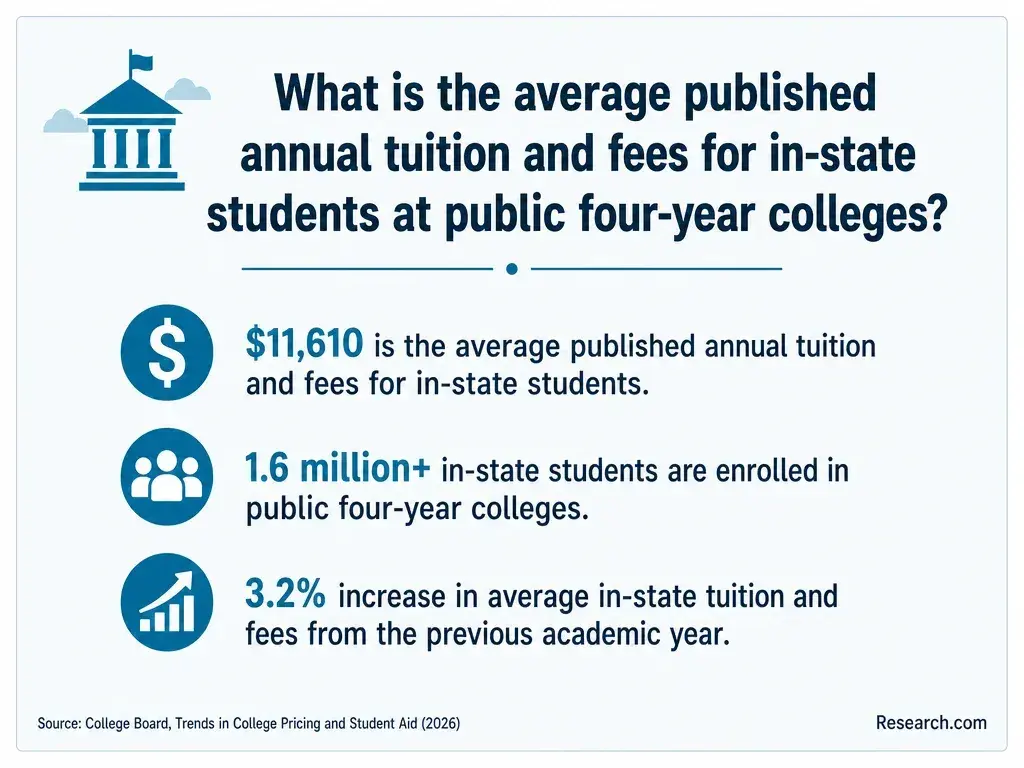
A student starting without college credit generally faces a multiyear bachelor's program. A returning student's timeline depends on credits applied to the degree, not just credits accepted by the institution. General education, business prerequisites, upper-level courses, residency rules, and course availability can all determine the finish date.
Request a written degree audit and a term-by-term course plan before estimating cost. Include tuition, required fees, books and software, any travel or proctoring expense, and the effect of reduced work hours. Financial aid and employer reimbursement can change cash flow, but eligibility and payment timing must be confirmed; loans remain a cost to repay. Compare like-for-like estimates when reviewing online business administration school cost comparisons, since a low advertised rate may not reflect your remaining courses.
Choose the format you can finish while meeting the program's actual obligations. Online delivery can remove a commute, but classes may still have live meetings, fixed deadlines, proctored exams, group presentations, or required internships. Campus study may offer easier in-person networking and support, but travel and class times can be harder to reconcile with a return to work.
Ask for sample schedules from required upper-level courses, not just introductory classes. Confirm whether part-time students can take those courses in sequence, pause enrollment if necessary, and access career services. Fast-track bachelor's degree options deserve extra scrutiny: a shorter calendar does not necessarily mean fewer assignments, lower total cost, or a manageable weekly workload.
Requirements vary by institution and by whether you apply as a first-time, transfer, returning, or second-degree student. Schools commonly review previous academic records; some business majors also require specified courses or standing before students enter the major. A career break alone does not establish whether you qualify or whether earlier coursework will count.
Gather transcripts from every institution attended, then ask admissions about reentry rules and ask a business adviser which mathematics, accounting, economics, or statistics courses must be completed or repeated. Request separate answers for admission and degree-credit applicability. If application expense is a concern, free application options at accredited online schools may reduce one initial cost, but the degree audit and full completion estimate matter much more.
First, verify the institution's current accreditation through the accreditor and the U.S. Department of Education's recognition information. Then check whether any advertised AACSB, ACBSP, or IACBE accreditation covers the specific business unit or program you would enter. Institutional accreditation and business-specific accreditation have different scopes; neither guarantees a job.
Quality for a returning student also means usable advising, predictable required-course availability, clear transfer decisions, and career services accessible to online or part-time students. Ask for written policies and definitions behind any published completion or employment outcomes. Apply those checks when you compare lower-cost business degree options; price alone cannot show whether a program offers a workable path to graduation.
There is no single salary or growth rate for "business administration graduates." U.S. Bureau of Labor Statistics figures describe occupations that include workers with different degrees and levels of experience. For example, logisticians had a May 2025 median annual wage of $82,320, with employment projected to grow 18% from 2025 to 2035. That may make logistics worth investigating, but it is not a starting-salary estimate or a promise that a general business degree qualifies you for a logistician opening.
For a sounder financial decision, identify local postings, such as transfer-friendly project management bachelor's degrees you could plausibly pursue after graduation, compare their requirements with your prior work, and weigh potential opportunities against your remaining education cost. Use occupation-specific evidence rather than a management salary when evaluating compare lower-cost business degree options.
Do Business Administration Graduates Need Licenses or Certifications?
Most general operations and coordination roles do not require a license solely because they involve business work. Particular activities can be regulated, however, and employers may prefer a function-specific certification. A BS in Business Administration does not itself grant accounting licensure, a financial-services license, or a project management credential; each has separate requirements.
Check the actual job posting and the responsible licensing board or certifying organization before paying for an additional credential. If your aim is project coordination rather than a bachelor's-required operations role, compare the cost and depth of a degree with targeted training and experience. Guidance on budgeting for online project management college study can help frame that comparison, provided you verify costs and aid for your own program.
Other Things You Should Know About Business Administration
Give a brief, truthful explanation, then connect your earlier responsibilities and recent preparation to the job. You do not need to disclose private circumstances that are unrelated to your ability to do the work.
Yes, when it involved relevant, verifiable responsibilities such as coordinating schedules, tracking a budget, or organizing an event. Describe what you did accurately without presenting unpaid work as a formal job title you did not hold.
Ask another person who directly observed your work, such as a colleague, client, or volunteer supervisor. Confirm their willingness to serve as a reference and follow each employer's stated rules.
Not necessarily. Apply for roles you already qualify for, and describe a degree in progress accurately if relevant. A suitable role may also provide current experience while you decide whether completing the degree remains worthwhile.
- Credit for Prior Learning | Transfer Credit Ohio https://transfercredit.ohio.gov/students/student-programs/Prior-Learning-Assessments
- Fast Facts: Employment after degree (1157) | ed.gov https://nces.ed.gov/fastfacts/display.asp
- Educational Attainment and Nonwage Labor Market Returns in the United States - PMC https://pmc.ncbi.nlm.nih.gov/articles/PMC10923559/
- Credit for Prior Learning - IU Indianapolis - Indiana University https://ctas.indianapolis.iu.edu/transfer/prior-learning/index.html
- Career paths in operations: roles, responsibilities and skills | Capella University https://www.capella.edu/blog/business/career-in-operations/
- 25 Transferable Skills Employers Look For | Business Career Center https://careerconnections.smeal.psu.edu/blog/2022/10/28/25-transferable-skills-employers-look-for/
- What Early-Career Earnings and Unemployment Rates Tell Us About the Returns on Bachelor's Degree Majors - CEW Georgetown https://cew.georgetown.edu/resource/cew-blog-major-payoff/
- Degrees and Certificates, Business and Management | Dallas College https://www.dallascollege.edu/study/business-management/
- Bachelor of Science in Business Administration | Purdue University Global Academic Catalog https://catalog.purdueglobal.edu/undergraduate/business-information-technology/business-administration-bs/
- Bachelor of Business Administration in Operations | walshcollege.edu https://walshcollege.edu/programs/bachelor-of-business-administration-operations/


