2027 Choosing a BS in Business Administration for Business Roles in Telecommunications Companies
Audited and Verified:
Our Editorial and Data Verification Process
Research.com uses government datasets, official education statistics and primary institutional information to support its career and degree guides. Our review process checks factual accuracy, occupational definitions, source dates and the requirements associated with the credentials discussed.
How This Article Was Fact-Checked
Our editorial team verifies salary estimates, employment projections, education requirements and program information against original data providers and official organizations. Salary figures are checked against the relevant occupational definitions and reporting periods. Information about licensure, accreditation and required in-person training is reviewed separately.
Fact-checked and verified on:

Co-Founder and Chief Data Scientist
Telecommunications companies need people who can manage customer accounts, analyze demand, coordinate projects, and keep complex operations running. A BS in Business Administration can prepare you for some of that work, but its value depends on the role you want and the evidence of skill you can build alongside the degree.
This guide is for prospective students, career changers, and telecom employees considering a bachelor's degree. It explains where a broad business program fits, when a specialized path may be better, and what to verify before enrolling.
Key Things You Should Know
- A BS in Business Administration fits telecom roles in sales operations, customer experience, marketing, procurement, and project coordination; it does not replace engineering training or managerial experience.
- Choose courses and applied work around a target function. A telecom-relevant internship or approved project can demonstrate more role readiness than an industry-themed elective alone.
- The U.S. median annual wage for market research analysts was $78,760 in May 2025, with 7% projected employment growth from 2025 to 2035. Those occupation-wide figures are not a telecom starting-salary estimate.
What is a BS in Business Administration for telecommunications careers?
A BS in Business Administration is an undergraduate degree covering business functions such as accounting, marketing, operations, management, and quantitative decision-making. For telecommunications, its most direct application is on the business side of a carrier, internet service provider, network-equipment company, or telecom vendor - not in designing networks or performing technical installation.
The degree can help you understand decisions such as how to price a service, forecast demand, assess a supplier, or improve an account process. It is not necessarily a telecom-specific credential. Compare the actual curriculum: a BS, BBA, and specialized business degree may share courses but differ in quantitative requirements, electives, and applied opportunities. If cost is a constraint, lower-priced accredited business administration study options can provide a starting set of programs to investigate; verify each school's current curriculum and total cost.
What telecommunications jobs can you get with a business administration degree?
Start with the work you have done, then identify a telecom role that uses it. Customer-service experience may support account or customer-experience work; purchasing or logistics experience may support procurement; and spreadsheet or campaign experience may support analytical or marketing work. The degree can strengthen those transitions, but employers assess the skills and experience required for each opening.
The table separates plausible entry routes from roles that generally require substantial additional responsibility. Job titles vary across companies.
| Role direction | Typical business work | Likely entry consideration |
| Sales operations or account coordinator | Maintain account records, support proposals, track sales activity | Customer communication and spreadsheet skills can matter alongside a degree |
| Marketing or customer insights coordinator | Support campaigns, research customer needs, report results | Work samples showing careful analysis are useful |
| Procurement or operations coordinator | Track orders, suppliers, inventory, or service processes | Operations experience and familiarity with purchasing workflows help |
| Project coordinator | Track schedules, costs, risks, and updates for business initiatives | Coordination experience differs from authority to manage major projects |
| Business manager | Own budgets, staff, performance, or a business unit | Usually requires a record of relevant results and leadership responsibility |
If your goal is specifically network-equipment sourcing or logistics, compare a broad business degree with shorter online supply chain degree pathways. A specialist program may offer deeper preparation, but check whether its credits, cost, and required experience fit the job you want.
How much do business professionals earn in telecommunications companies?
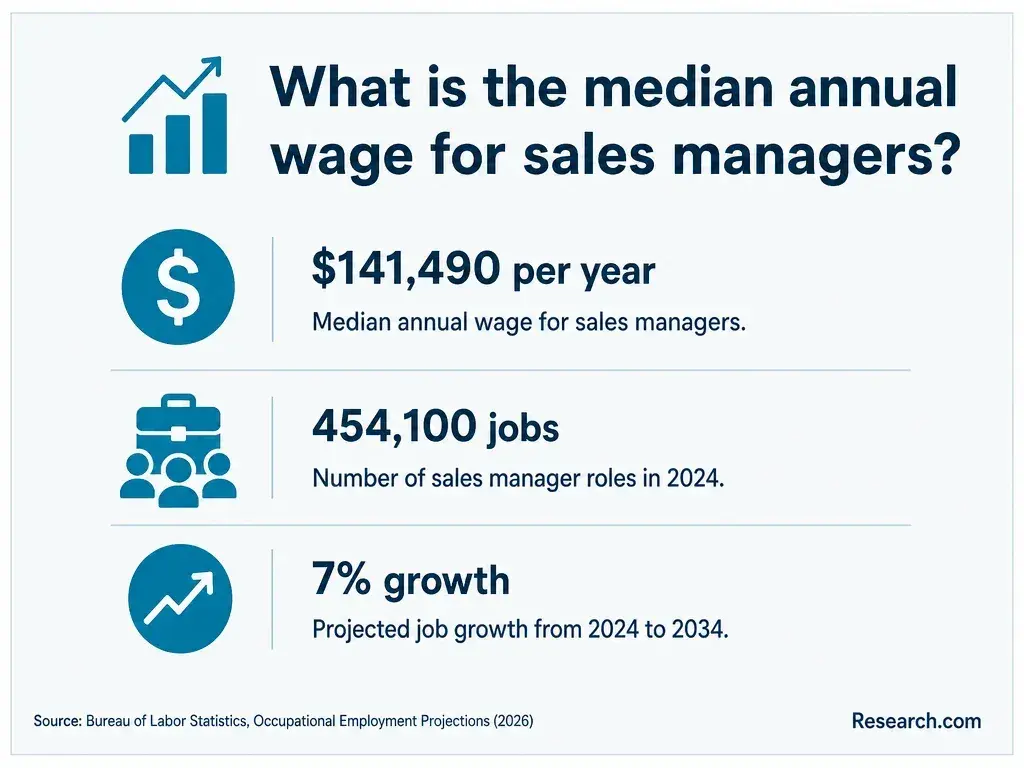
There is no single salary for a telecom employee with a business administration degree. Pay depends on the occupation, location, employer, experience, and level of responsibility. For a relevant benchmark, the U.S. Bureau of Labor Statistics reports a $78,760 median annual wage for market research analysts in May 2025 and projects 7% employment growth for that occupation from 2025 to 2035.
That median covers market research analysts across industries and experience levels; it is neither a telecom-only figure nor an expected first salary after graduation. It is most useful when comparing a target occupation with actual local job postings. Likewise, a manager's occupational wage should not be treated as the likely outcome of completing a bachelor's degree. When weighing tuition against possible earnings, business administration college costs and potential career outcomes offer comparison context, but base your own calculation on offers and opportunities you can verify.
The useful coursework depends on the telecom function you want to enter. Marketing and statistics can support customer research; accounting and finance can help you interpret margins and budgets; operations and supply chain courses can support purchasing and service delivery; and information systems or analytics can help you work with business data. Communication and business ethics matter when reporting findings or handling customer and company information.
Look beyond course titles. A strong assignment might ask you to explain assumptions in a demand forecast or compare supplier proposals, while a weaker match may offer only general discussion. Ask whether relevant electives have prerequisites, run often enough for your schedule, and count toward an official concentration rather than merely an informal focus. Neither a course nor a concentration establishes technical telecom expertise.
For someone committed to logistics rather than general business work, fast-track supply chain bachelor's programs are worth comparing. Check the actual remaining credits and course sequence before assuming a faster advertised pathway will be faster for you.
Neither format is inherently better for telecom careers. An online program may let an employed student continue building industry experience; a campus program may make local recruiting, team projects, and in-person faculty contact easier to use. What matters is whether you can complete the work and access relevant opportunities.
Before choosing online study, check live-session times, group meetings, exam proctoring, software, internship rules, and any required campus visits. "Online" does not necessarily mean self-paced. Ask campus programs the same practical questions about evening classes and required attendance. Students comparing business administration programs for studying around work commitments should test the schedule against their busiest workweeks, not just the advertised format.
Requirements vary by school and by whether you apply as a first-year or transfer student. Institutions commonly request prior-school transcripts and evidence that you meet their undergraduate admission standards. A business school may separately require introductory courses or a minimum academic standing before you enter the major. Admission to the university does not by itself establish that previous courses satisfy business requirements.
Request the current catalog requirements, then have the school evaluate any prior accounting, economics, mathematics, and statistics courses. If you are comparing application expenses, you can apply to accredited online colleges for free where a listed school currently waives its application fee; confirm the policy for your application term. A fee waiver is separate from admission, transfer-credit approval, and affordability after enrollment.
A conventional full-time bachelor's path often takes about four academic years, while transfer credit, part-time enrollment, prerequisite sequencing, and course availability can change the timeline. No quoted completion time is reliable until a school shows how your accepted credits apply to general education, the business core, electives, and residency requirements.
Compare a written estimate of remaining tuition and required fees, then add books, software, travel or proctoring, and potential time away from paid work. Ask when scholarships or employer reimbursement would actually reduce what you must pay. For a specialized project-management alternative, an online project management undergraduate funding guide can help identify aid questions, but compare both paths using your own credit evaluations and aid offers.
Verify that the institution holds accreditation from an accreditor recognized by the U.S. Department of Education. Then check whether the business school or specific program also holds relevant AACSB, ACBSP, or IACBE accreditation. Those are different checks: institutional accreditation does not establish business-program accreditation, and a business school's claim does not automatically cover every degree or location it offers.
Confirm the accreditor's listing and the exact program scope before enrolling. Business-specific accreditation can be a useful quality signal, but it does not prove telecom placement or outweigh a poor fit on cost, scheduling, or coursework. When reviewing accredited affordable business administration colleges with aid options, verify accreditation and financial-aid eligibility for the particular institution and program rather than relying on a comparison-page label.
Most general telecom business-support roles do not carry a universal occupational license. A job may nevertheless require employer training, product knowledge, or a preferred certification. Regulated financial activity, professional accounting, and some technical or field duties have separate rules; a BS in Business Administration does not grant those permissions.
Check the requirements for the specific role before paying for a credential. For HR work, for example, a general business degree, an HR-focused bachelor's degree, and a voluntary HR certification serve different purposes. Someone pursuing that function can evaluate transfer-friendly online HR colleges alongside business programs, then check job postings and the certifying organization's eligibility rules rather than assuming any degree confers certification.
How do you choose the best business administration program for telecommunications?
The best choice is the program that closes the gap between your current experience and a defined telecom business role at a cost and pace you can manage. A program does not need a "telecommunications" label if its courses, projects, and career access fit the work you intend to do.
Use this sequence to compare finalists against the same target job:
- Collect several relevant job postings and note their recurring tasks, tools, degree preferences, and experience requirements.
- Match those requirements to required courses, available electives, and supervised work you could realistically complete.
- Ask whether internships, co-ops, or employer-based projects are available and what academic approval and data permissions they require.
- Obtain a written credit evaluation, degree plan, scheduling information, and individualized cost and aid estimates.
- Compare the BS with a specialist degree or targeted training if your target function calls for greater depth than the business curriculum offers.
If project coordination is your primary goal, credit mapping for online project management programs provides a useful alternative to examine. Compare credits that actually satisfy each degree - not merely credits accepted by the institution - and remember that coursework alone does not confer project authority or a professional certification.
Other Things You Should Know About Business Administration
Business roles rarely require engineering-level knowledge, but basic familiarity with the company's services and terminology can improve your decisions and communication. Check postings for the technical knowledge your target role expects.
Yes. Document specific work such as resolving customer issues, interpreting sales reports, or improving a process. Corporate hiring teams will still assess whether you have the analytical and coordination skills the new role requires.
It depends on the position. A regional account role may involve customer visits, while an internal analyst role may involve little travel. Confirm the territory, on-site expectations, and travel frequency with the employer.
Use public or clearly labeled synthetic data to demonstrate your method. Do not present invented results as company outcomes or share customer, employee, or proprietary information without authorization.
- Employer Internship Benefits | Marshall University https://www.marshall.edu/cob/students/internships-jobs/employer-internship-benefits/
- What Can I Do with a Business Administration Degree? | CTU https://www.coloradotech.edu/degrees/studies/business-and-management/articles/what-can-i-do-with-a-business-administration-degree
- 17 types of business degrees and the jobs they can lead to - ASU Online https://asuonline.asu.edu/newsroom/online-learning-tips/types-business-degrees-jobs/
- Student internships and employment opportunities after graduation: A field experiment - ScienceDirect https://www.sciencedirect.com/science/article/pii/S0272775721000601
- What Can You Do With a Business Degree? | American Military University https://www.amu.apus.edu/area-of-study/business-administration-and-management/resources/what-can-you-do-with-a-business-degree/
- Transferable Skills in Business Administration Across Industries | The College of Westchester https://www.cw.edu/blog/how-business-administration-courses-build-transferable-skills-across-multiple-industries/
- BA vs. BS in Business Administration | New England College https://www.nec.edu/news/ba-vs-bs-business-administration
- What Jobs Can You Get With a Business Degree? | snhu.edu https://www.snhu.edu/about-us/newsroom/business/what-jobs-can-you-get-with-a-business-degree
- Business Management vs. Business Administration: Which Degree Is Right for You? | Cal Lutheran https://www.callutheran.edu/programs/articles/business-management-vs-business-administration/
- What Is Business Administration? Roles, Skills, and Careers | SCU https://www.scu.edu/business/blog/business-concepts/what-is-business-administration/