2027 Supply Chain Management and Logistics vs. Accounting for a Business Administration BS: Which Fits?
Audited and Verified:
Our Editorial and Data Verification Process
Research.com uses government datasets, official education statistics and primary institutional information to support its career and degree guides. Our review process checks factual accuracy, occupational definitions, source dates and the requirements associated with the credentials discussed.
How This Article Was Fact-Checked
Our editorial team verifies salary estimates, employment projections, education requirements and program information against original data providers and official organizations. Salary figures are checked against the relevant occupational definitions and reporting periods. Information about licensure, accreditation and required in-person training is reviewed separately.
Fact-checked and verified on:

Co-Founder and Chief Data Scientist
Choosing between supply chain management and logistics and accounting changes which problems you learn to solve - and which entry-level jobs you can credibly pursue. If you are planning or finishing a Business Administration BS, the distinction matters more than the concentration label: employers will look for relevant coursework, tools, and experience.
This comparison explains the work behind each path, the limits of national salary data, and the credential rules that could affect your choice. It also gives you a way to compare programs before committing time and tuition.
Key Things You Should Know
- Choose supply chain management and logistics if you want to improve purchasing, inventory, transportation, or fulfillment; choose accounting if you prefer financial records, reporting, controls, and tax-related work.
- BLS projects 2025-2035 employment growth of 18% for logisticians and 5% for accountants and auditors. Those occupation-wide forecasts describe different job markets, not a graduate's chance of being hired.
- Check the actual concentration requirements before enrolling: a Business Administration BS with accounting courses does not automatically satisfy CPA licensure rules, while logistics roles generally do not require a comparable license.
What is the difference between supply chain management, logistics, and accounting in business administration?
Supply chain management coordinates how an organization sources materials, plans demand, manages inventory, and delivers products or services. Logistics is a closely related, narrower focus on movement, storage, and delivery. Accounting records and interprets financial activity, prepares reports, and supports compliance and internal decisions.
Both concentrations may share a business core, but their daily decisions differ. A supply chain student might evaluate whether a delayed supplier requires an inventory change; an accounting student might determine how a transaction should be recorded and explained. Project management overlaps with both functions but is not a substitute for either. If coordinating deadlines and teams interests you more than purchasing or financial reporting, budget-friendly online project management programs offer a separate path to compare.
Which business administration concentration offers better career opportunities and earning potential?
Neither concentration is universally better. Supply chain management is a stronger fit if you want operational decisions with suppliers, inventory, and delivery constraints. Accounting offers a more defined progression through financial reporting, audit, or tax work, but some advanced goals require specific coursework, supervised experience, or licensure beyond a general business degree.
Start with the job you would apply for after graduation, not the highest-paying senior role in either field. Then compare local postings for required courses, software, internships, and experience. If supply chain is your leading option, supply chain college costs versus potential career outcomes can help frame the education-cost side of that decision; occupation-wide wages are not a personal return-on-investment forecast.
What coursework do supply chain management and accounting concentrations include?
Course titles vary, so compare required classes rather than assuming two concentrations with similar names provide equal depth. The table shows the subjects most relevant to the work each path prepares you to explore.
| Area | Supply chain management and logistics | Accounting |
| Typical advanced subjects | Procurement, operations planning, inventory, transportation, supplier relationships | Intermediate accounting, cost accounting, auditing, taxation, accounting information systems |
| Quantitative work | Demand estimates, inventory measures, spreadsheet or systems-based analysis | Reconciliations, financial statements, cost analysis, accounting rules |
| Useful applied evidence | A supervised process analysis or inventory-planning project | A supervised reporting, controls, or cost-analysis project |
An introductory accounting course in the business core is not equivalent to an accounting concentration. Similarly, one operations or project management elective does not establish a supply chain concentration. Check prerequisites and course rotation: a required advanced class offered infrequently can affect graduation timing. If you are considering a separate project management degree instead of an elective, compare its full curriculum and project management program fees explained, rather than treating the options as interchangeable.
Possible early-career supply chain roles include logistics coordinator, purchasing assistant, inventory analyst, and operations analyst. Their work may involve tracking shipments, comparing supplier terms, maintaining inventory data, or investigating delays. An accounting-focused graduate might pursue staff accountant, accounting associate, audit associate, or accounts-payable analyst roles, depending on the employer's degree and course requirements.
The distinction matters when building evidence for an application. Supply chain candidates can show spreadsheet analysis, process mapping, and communication with operational stakeholders. Accounting candidates can show accurate reconciliations, financial-statement knowledge, and careful handling of sensitive records. Internships or approved workplace projects can help, but an academic exercise should not be presented as a completed employer project. If you need to retain a job while preparing for either function, compare business administration programs supporting continued employment against the hours you can actually devote to relevant experience.
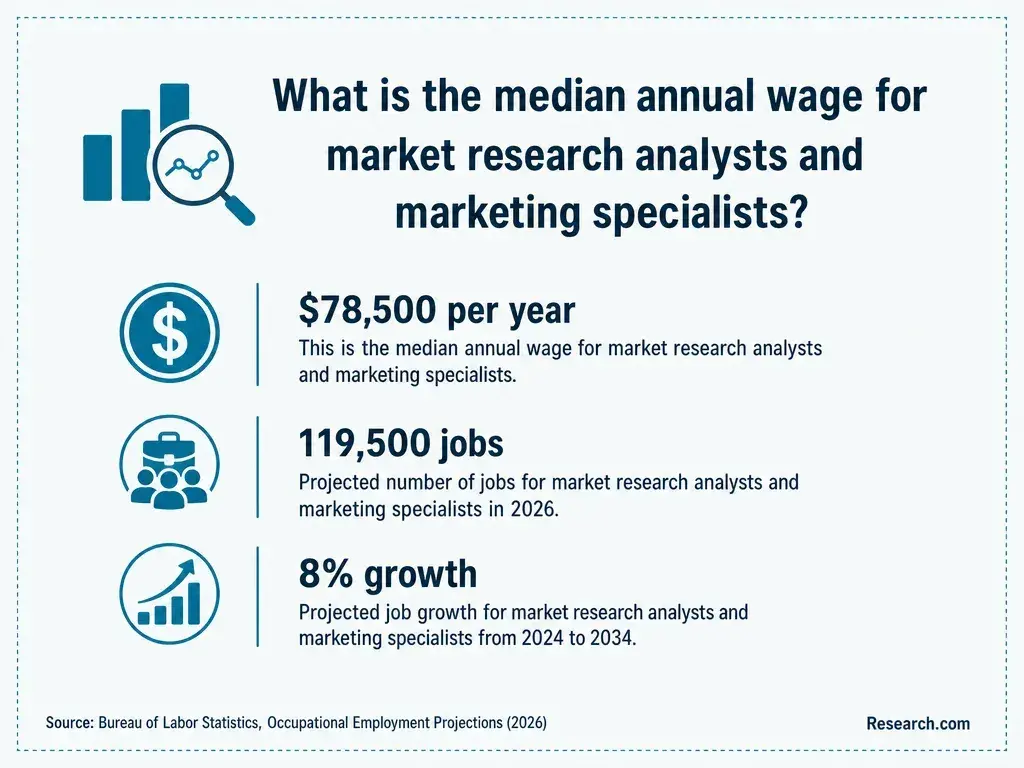
The closest broad BLS occupations provide a useful comparison, though neither captures every job available to a concentration graduate. These are national, occupation-wide medians - not starting salaries or outcomes for Business Administration BS graduates.
| BLS occupation | Median annual pay, May 2025 | Projected US employment growth, 2025-2035 |
| Logisticians | $82,320 | 18% |
| Accountants and auditors | $83,680 | 5% |
The pay figures are close, while projected growth is faster for logisticians. Neither difference settles the concentration choice: employers, locations, specialties, and experience levels vary, and many logistics coordinators do not hold logistician positions. Use local job requirements and your likely entry role alongside national figures. If speed and affordability are central to your decision, compare economical business administration degrees with quicker study routes without assuming a shorter program produces higher earnings.
A bachelor's degree is commonly useful for professional roles in both fields, but hiring requirements depend on the position. Supply chain certifications are generally voluntary and may be more valuable after you have experience with purchasing, planning, or logistics systems. They are separate from an academic concentration.
Accounting requires a more consequential distinction: a business degree may help you qualify for some accounting jobs, but it does not confer CPA eligibility. State boards set CPA education, examination, experience, and other requirements. If public accounting or licensure is your goal, ask the program for a course-by-course comparison with the requirements of the state where you intend to qualify. A specialized accounting major may be the more direct route if the business concentration omits needed advanced courses.
Project management is another possible destination for operations-focused students, not a credential automatically awarded by supply chain study. If you are weighing a separate bachelor's in that subject, federal aid for undergraduate project management study is relevant to comparing that alternative's financing - not to determining certification eligibility.
A bachelor's commonly takes about four years of full-time study from the beginning. Your actual timeline depends on accepted credits, prerequisites, required course availability, and enrollment pace. For a transfer student, the crucial number is not credits accepted but credits that satisfy the business core, chosen concentration, and graduation requirements.
Do not compare advertised tuition alone. Request a written degree audit and estimate remaining tuition, mandatory fees, books or software, travel, and any additional terms caused by course sequencing. Ask whether either concentration requires extra credits; an accounting track designed around CPA preparation may have a different course load from a general business concentration. Find inexpensive online business administration colleges as a starting point, then obtain institution-specific totals for your remaining requirements.
Neither format is inherently better. Online study can reduce travel and help employed students, while campus study may make it easier to attend in-person recruiting events or work with classmates and faculty. What matters is whether the format supports the practical work you need: accounting systems and supervised reporting practice, or supply chain software, operational cases, and employer connections.
Ask about live sessions, group projects, exam arrangements, internship access, and whether every concentration requirement is offered in your chosen format. Compressed terms can shorten the calendar only if you can sustain their workload and take required courses in sequence. Compare online business degrees with compressed terms against your work schedule rather than equating acceleration with flexibility.
Applicants typically submit prior academic records, but admission to the university, entry to the business major, and eligibility for advanced concentration courses may be separate decisions. A school may require satisfactory performance in introductory accounting, economics, mathematics, or statistics before upper-level study; requirements vary by institution.
If you have college credit, send transcripts for an official evaluation and ask which courses apply to the specific concentration. If you are applying from another discipline, do not assume your background rules out either path - or that a previously completed accounting course meets an advanced prerequisite. Application costs are one factor in comparing schools; accredited online colleges without application fees may help you identify options, but confirm each school's current fee and program requirements directly.
How can you choose an accredited business administration program?
First, verify the institution's accreditation and that the exact Business Administration BS and concentration are available in the format you intend to use. Business-school accreditation, such as AACSB, ACBSP, or IACBE accreditation, has its own scope; do not assume it covers a named program merely because a school displays an accreditor's name.
Next, request the current catalog, concentration course list, degree audit, and information on internships or recruiting. For accounting, check advanced-course coverage against your possible licensing goal; for supply chain, look for relevant analytical assignments and connections to operational employers. A list of ranked school options for studying business online can generate candidates, but your final choice should rest on verified curriculum, total completion cost, scheduling, and evidence of career support.
Other Things You Should Know About Business Administration
Possibly. Some schools permit two concentrations, while others limit overlap or require additional credits. Ask an adviser for a written plan showing every remaining course and its expected offering term.
Usually, subject to school policy. Change early enough to check whether completed electives still apply and whether new prerequisites could delay graduation.
That depends on the institution. Ask whether it appears on the diploma, transcript, or both, and use the school's official wording on your résumé.
Only if the program approves the work under its academic rules. Confirm supervision, learning objectives, assessment, and permission to use workplace information before relying on your job to meet a requirement.
- Understanding Credentials in Texas: Certificates & Certifications https://reportcenter.highered.texas.gov/reports/data/understanding-credentials-in-texas-certificates-certifications/
- Certification Procedures for Title IV of the HEA | ed.gov http://www.ed.gov/laws-and-policy/higher-education-laws-and-policy/higher-education-policy/ope-guidance-documents/frequently-asked-questions-certification-procedures-title-iv-of-hea
- Bachelor's Degree in Business: Administration or Accounting? | Bay Path University https://www.baypath.edu/news/bay-path-university-blogs/post/bachelor-s-degree-in-business-administration-or-accounting/
- Is Accounting a Good Career? Salary, Job Growth & Degree Options | Edison State Community College https://www.edisonohio.edu/blog/is-accounting-a-good-career-salary-job-growth-and-degree-options
- MS in Supply Chain Management - Traditional - Career Outlook | FAU Business https://business.fau.edu/masters-phd/supply-chain-management/traditional/career-outlook/
- Wondering Which Credentials are Right for You? Our Guide is Here to Help! | Continuing and Professional Education https://ce.arizona.edu/news/choosing-professional-credentials-guide
- 8 Things You'll Learn in a Bachelor's Concentration in Supply Chain Management | Walden University https://www.waldenu.edu/online-bachelors-programs/concentrations/supply-chain-management/resources/things-youll-learn-when-choosing-a-bachelors-concentration-in-supply-chain-management
- Job Industries That Require a License or Certification | Columbia Southern University https://www.columbiasouthern.edu/blog/blog-articles/2025/february/jobs-careers-require-license-certification
- Bachelor's in Business Administration Concentrations | Purdue Global https://www.purdueglobal.edu/degree-programs/business/business-administration-concentrations/
- Operations and Supply Chain Management Concentration | csueastbay.edu https://catalog.csueastbay.edu/preview_program.php