2027 BS in Business Administration and Construction Management: What Math and Data Skills Should You Compare?
Audited and Verified:
Our Editorial and Data Verification Process
Research.com uses government datasets, official education statistics and primary institutional information to support its career and degree guides. Our review process checks factual accuracy, occupational definitions, source dates and the requirements associated with the credentials discussed.
How This Article Was Fact-Checked
Our editorial team verifies salary estimates, employment projections, education requirements and program information against original data providers and official organizations. Salary figures are checked against the relevant occupational definitions and reporting periods. Information about licensure, accreditation and required in-person training is reviewed separately.
Fact-checked and verified on:

Co-Founder and Chief Data Scientist
A business administration degree can teach budgeting and analytics, but construction projects also demand reliable estimates, schedules, and job-cost decisions. If you are comparing a BS in Business Administration with construction management coursework - or a program that combines them - the distinction matters more than the degree title.
This guide shows which quantitative skills to look for, how to judge applied assignments, and what to verify about program format, cost, and career fit. You can use it to identify a curriculum that prepares you for the construction responsibilities you actually want.
Key Things You Should Know
- Compare assignments, not course titles: look for quantity takeoffs, estimates, cash-flow forecasts, schedules, and analysis of actual versus budgeted costs.
- A general business analytics course may build spreadsheet and statistics skills without teaching construction-specific measurement, bidding, or schedule control.
- The U.S. Bureau of Labor Statistics reports a May 2025 median wage of $102,320 for project management specialists, an occupation-wide figure - not an expected starting salary for graduates or a construction-manager wage.
What Is a BS in Business Administration and Construction Management?
There is no single standard degree with that exact name. A school might offer a BS in Business Administration with construction-related electives, a formal construction management concentration, or a separate BS in Construction Management with business courses. The distinction determines how much estimating, scheduling, and field practice you receive.
Broad business study suits someone aiming for purchasing, finance, or operations work across industries. A construction management major generally makes more sense when the target is project delivery, estimating, or site coordination. If your goal is a lower-cost general business credential rather than construction-specific preparation, you can compare lower-cost business degree options; check their construction offerings separately rather than assuming those courses are included.
What Math Skills Do Business Administration and Construction Management Programs Teach?
Business administration commonly emphasizes quantitative reasoning, statistics, accounting, and financial analysis. Construction management may add measurement-based estimating: calculating material quantities from drawings, applying unit prices, and testing how labor productivity or waste changes a bid. Neither degree title establishes the depth of a particular school's requirements.
The most useful comparison is what a student must calculate independently. The table separates related skills that are easy to mistake for equivalents.
| Skill | Business-focused application | Construction-specific application |
| Accounting and budgeting | Interpret statements and prepare operating budgets | Track costs against a project budget and assess forecast-to-complete |
| Statistics and spreadsheets | Summarize data and test assumptions | Compare productivity or cost patterns across jobs while accounting for differences between projects |
| Measurement and estimating | May receive little coverage | Read drawings, perform quantity takeoffs, and develop unit-cost estimates |
| Time and cash-flow calculations | Evaluate financing and business cash needs | Connect schedule changes, payment timing, and project cash requirements |
If you have prior algebra, statistics, or estimating coursework, request a written equivalency review. Accepted transfer credit may count only as an elective, not toward a required quantitative course; resources to compare project management bachelor's credit transfer rules can help you frame questions, but your receiving school decides applicability.
How Do Data and Analytics Skills Apply to Construction Management?
Construction teams use data to decide whether a bid is supportable, whether work is progressing as planned, and where a project may exceed its budget. Useful inputs include quantities, committed costs, invoices, labor hours, schedule updates, and approved change orders. A good undergraduate assignment connects those inputs to a decision rather than producing a dashboard without explaining what it means.
For example, a student might compare planned and recorded labor hours for a task, check whether the work completed is comparable, and revise a forecast. The gap does not by itself prove poor crew performance: weather, scope changes, missing time entries, and measurement errors could explain it. Ask whether courses teach data cleaning, assumptions, uncertainty, and communication with field staff - not merely software menus.
Workforce records also require care. If your interests lean toward hiring and employee development rather than project-cost analysis, choosing a degree in human resources is a different curricular decision. In either field, access to employee or company data requires permission and appropriate privacy safeguards.
A genuinely integrated curriculum might pair financial and managerial accounting, statistics, operations, and business law with construction materials, drawing interpretation, estimating, scheduling, contracts, and project controls. Course names alone are insufficient: inspect prerequisites, syllabi, required software, and the final assignments. Determine whether construction courses are required, optional electives, or part of a formally awarded concentration.
Look for a sequence in which measurement and accounting support estimating, and estimating supports scheduling and cost-control projects. An internship or capstone can strengthen that sequence if it requires supervised work and assessed deliverables; a classroom simulation is not the same as an approved placement. If your goal is general people management without takeoffs or project controls, faster bachelor's routes in organizational leadership may be worth comparing, provided their remaining credits and costs suit your situation.
Online study can work well for accounting, spreadsheets, scheduling exercises, and analysis of digital drawings. Campus or hybrid delivery may offer easier access to labs, equipment demonstrations, site visits, and local employers. Neither format is automatically better: the decisive question is how students practice and receive feedback on construction-specific work.
Ask an online program whether classes have live meetings, proctored exams, required visits, group deadlines, or an in-person internship. Ask a campus program how often field activities occur, rather than assuming every course includes them. Students comparing flexible formats can review online project management programs for smaller budgets, while checking whether any option actually teaches construction estimating and field coordination.
Requirements vary by institution and by whether you enter as a first-year or transfer student. Schools typically review prior academic records; some construction-focused curricula also sequence mathematics, drafting, or introductory technical courses before advanced estimating. A business administration major may have separate entry requirements after admission to the university.
Send transcripts and descriptions of any prior math, accounting, drafting, or trade coursework to the admissions and transfer offices. Then ask the department which courses satisfy major requirements, which remain prerequisites, and when they are offered. If financing affects where you can apply, resources to compare grants for project management undergraduates can help identify questions for each school's financial-aid office; eligibility is not determined by the degree's subject alone.
Completion time depends on applied transfer credit, prerequisite order, enrollment pace, and how often required construction courses run. Compare schools using an official degree audit, not an advertised fastest-possible timeline. A missing estimating prerequisite or a placement available only in a particular term can extend a plan even when many credits transfer.
Calculate cost from remaining required credits and the school's tuition rules, then add fees, software, books, travel or site-visit expenses, and any reduced work hours. Ask whether tuition is charged per credit or term and whether specialized courses carry extra fees. You can review business administration online programs with competitive tuition, but a cheaper general business degree is not equivalent if meeting your construction goal requires additional training.
First, confirm that the institution holds recognized institutional accreditation and that it covers the school offering your degree. Then check any claimed specialized accreditation against the accreditor's own listing and the exact program name. Business accreditors such as AACSB, ACBSP, and IACBE have defined scopes; their recognition of a business unit does not automatically cover a separate construction management degree.
Construction management programs may also cite field-specific accreditation. Verify its scope rather than treating accreditation as proof of job placement or eligibility for every credential. Institutional status also matters when evaluating aid: business administration college affordability and FAFSA participation provides a starting point for cost questions, but confirm each institution's current aid eligibility and your own circumstances directly.
Graduates may pursue estimating assistant, project coordinator, purchasing, or construction operations support roles, depending on technical preparation and experience. Construction manager positions involve responsibility for budgets, schedules, contractors, and project delivery; employers commonly expect substantial relevant experience before assigning that level of authority.
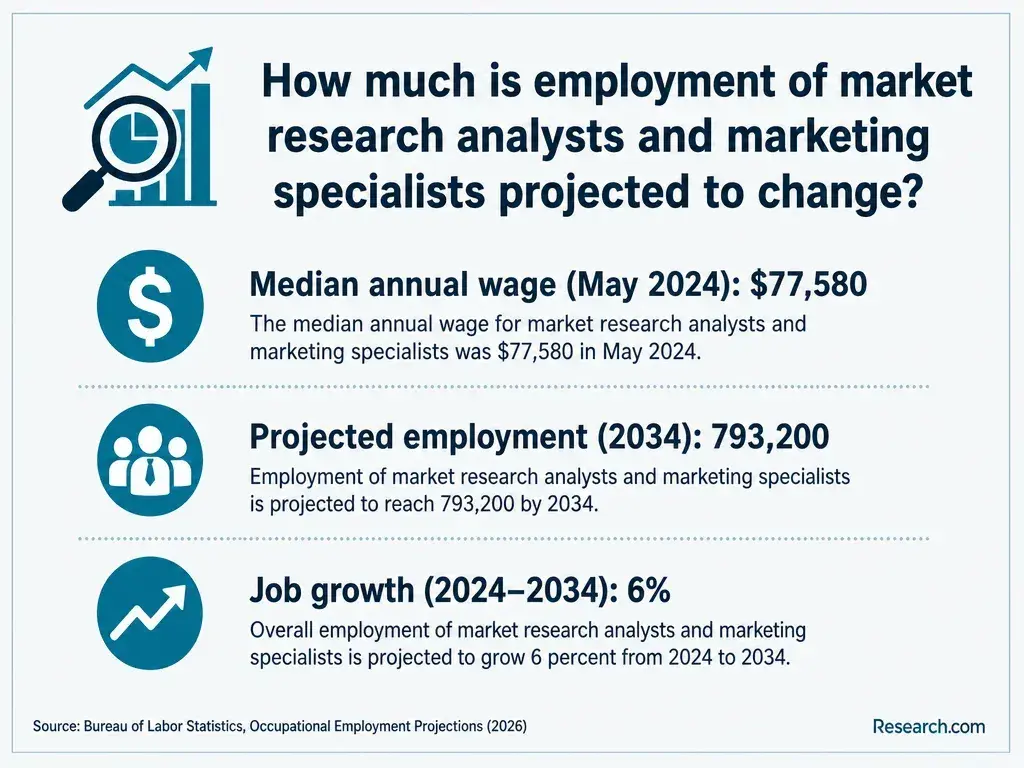
The U.S. Bureau of Labor Statistics reports a May 2025 median annual wage of $102,320 for project management specialists and projects 7% employment growth for that occupation from 2025 to 2035. Those figures cover workers across industries and experience levels. They are not construction-specific starting-pay figures or a prediction of what this degree will earn you.
For career value, compare local job postings with your prospective program's assessed work: can you show an estimate, schedule update, cost report, and clear explanation of their limitations? Relevant site or office experience can matter more than a broad degree label. If your target is cross-industry coordination rather than construction project delivery, compare cost-to-finish for shorter business administration programs against the added technical preparation a construction path would provide.
Do Construction Managers Need Licenses or Professional Certifications?
There is no single nationwide construction manager license. State and local rules for contractors, particular trades, and regulated design work differ, as do employer requirements. A business or construction management degree does not authorize someone to perform licensed engineering, architecture, or trade work.
Voluntary construction and project management certifications may help document knowledge or experience, but each issuer sets its own eligibility and examination rules. Check the credential's requirements against the jobs you want before paying for preparation. If an undergraduate degree is still necessary for your target role, investigate compare lower-cost business degree options only alongside the construction training you would still need; a certificate is not a substitute for a required degree, nor is a degree an automatic certification.
Other Things You Should Know About Business Administration
Yes. Use clearly labeled hypothetical inputs or legitimately public materials, state your assumptions, and avoid presenting simulated savings or forecasts as real project results.
Only if your program approves it under its experiential-learning rules. Ask what supervision, learning objectives, documentation, and assessments are required before relying on your current job.
Usually, spreadsheet accuracy, accounting basics, and interpreting estimates are more immediate priorities. SQL becomes useful when your coursework or target role involves querying substantial project datasets.
Often, if the faculty approves the scope and the project meets course objectives. Obtain permission before using employer records, drawings, prices, or other confidential materials.
- Global employability skills in the 21st century workplace - PMC https://pmc.ncbi.nlm.nih.gov/articles/PMC10637906/
- Top Skills Business School Grads Need in 2025 and Beyond | UC Davis Graduate School of Management https://gsm.ucdavis.edu/blog/what-employers-really-want-top-skills-business-school-grads-need-2025-and-beyond
- Math Requirements and Placement | our.ric.edu https://our.ric.edu/department-directory/office-new-student-programs/math-requirements-and-placement
- Accounting, Business Analytics, CIS & Law | Manhattan University Catalog https://catalog.manhattan.edu/undergraduate/business/accounting/
- A Guide To Experiential Learning, Internships, Capstones, and Practicums - UOnline - The University of Utah https://online.utah.edu/blog/posts/learning-experiences.php
- Rady School of Management | ucsd.edu https://catalog.ucsd.edu/courses/MGT.html
- Business Analytics (Major) | University of Notre Dame Academic Catalog https://catalog.nd.edu/undergraduate/business/-analytics-operations/business-analytics/
- Math Placement | Student Success | UNLV https://www.unlv.edu/studentsuccess/math-placement
- Program: Construction Management, B.S. | morgan.edu https://www.morgan.edu/construction-management-bs
- Introduction to Construction Estimating: Learning Objectives and Best Practices - Free Video Tutorial https://vdci.edu/learn/construction-estimating/introduction-to-construction-estimating-learning-objectives-and-best-practices