2027 BS in Business Administration Decision Guide: A Real Estate Focus or a State Licensing Course
Audited and Verified:
Our Editorial and Data Verification Process
Research.com uses government datasets, official education statistics and primary institutional information to support its career and degree guides. Our review process checks factual accuracy, occupational definitions, source dates and the requirements associated with the credentials discussed.
How This Article Was Fact-Checked
Our editorial team verifies salary estimates, employment projections, education requirements and program information against original data providers and official organizations. Salary figures are checked against the relevant occupational definitions and reporting periods. Information about licensure, accreditation and required in-person training is reviewed separately.
Fact-checked and verified on:

Co-Founder and Chief Data Scientist
If you want to work in real estate, a business degree with a real estate focus and a state licensing course solve different problems. One develops broader business skills; the other may satisfy an education requirement for entering licensed sales work. Choosing the wrong route can mean paying for coursework that does not move you toward your intended job. This guide compares the credentials, state rules, costs, and career paths so you can choose the next step that fits your experience and goals.
Key Things You Should Know
- Want to represent buyers or sellers soon? Start with your state regulator's licensing requirements. A real estate-focused bachelor's degree does not automatically replace approved prelicensing education or grant a license.
- Want broader business options? A BS in Business Administration can build finance, operations, and analytical skills, but its real estate focus may be a formal concentration, an elective cluster, or something else; verify the credential awarded.
- Compare total paths, not course prices alone. A bachelor's program is typically designed around four years of full-time study, while licensing education requirements vary by state. Prior credits, work commitments, and the job you want should determine the comparison.
What Is a Business Administration Degree With a Real Estate Focus?
It is an undergraduate business degree that pairs a general business core with real estate-related study. Depending on the school, that study might be an officially recorded concentration, a minor, or a selection of electives. A course titled "Real Estate" does not, by itself, establish a concentration, and the degree is not a state-issued real estate license.
The business core can be useful beyond property transactions: accounting helps you read operating statements, finance supports investment analysis, marketing informs customer acquisition, and management applies to brokerage or property operations. The real estate courses determine how much sector-specific depth you actually receive. Compare the required curriculum and credential shown on the transcript, not just the program's advertising.
If you mainly need broad business preparation and would take licensing education separately, compare inexpensive business administration degree options against focused programs. A less expensive general degree could be enough if the real estate electives add little to your target role.
Is a Real Estate Focus or Licensing Course Better for Your Goals?
For entry into licensed residential sales, the state-approved licensing route is usually the more direct first step. For work in property operations, investment support, development, or eventual business leadership, a degree may offer more relevant breadth - but it does not substitute for experience or a license when a role requires one.
This comparison separates the immediate qualification you need from the longer-term education you may value.
| Goal | Better initial route | Why |
| Begin representing buyers or sellers | State-approved prelicensing education | It addresses a licensing step; a degree alone does not authorize practice. |
| Explore finance, operations, and property-related roles | Business degree with relevant real estate courses | It develops transferable business skills alongside sector knowledge. |
| Work in sales now and preserve broader options | Licensing route first; evaluate a degree later | Early work experience can clarify whether the added time and cost of a degree are worthwhile. |
| Already hold a bachelor's degree | Licensing course or targeted study, depending on the job | A second bachelor's may duplicate education you already have. |
If you are changing careers, inventory your existing sales, customer service, budgeting, or operations experience before enrolling. For a broad business transition rather than a property-specific one, economical online college programs in business may be worth comparing with a real estate concentration. Neither route guarantees a client base, a salaried job, or advancement.
What Are the Real Estate Licensing Requirements in Your State?
Requirements depend on the state and the license sought. A real estate commission or other state licensing authority - not a university - decides which education providers and courses qualify, along with examination, application, background-check, and supervision requirements. Rules can also differ for sales agents, brokers, and other licensed activities.
Before paying for either pathway, verify the following directly with the regulator for the state where you intend to practice:
- Identify the license category and the activities it permits.
- Check the approved prelicensing curriculum, provider rules, and any eligibility conditions that apply to you.
- Confirm examination, application, background-check, and sponsoring-broker requirements, including the order in which they must be completed.
- Ask whether any college course qualifies for an education exemption or credit; obtain the regulator's answer before relying on it.
A role adjacent to real estate may not require a sales license, but the job title alone is not decisive: duties matter. For example, someone planning to use prior college credits in a project management bachelor's for development-project coordination should still check state rules before performing activities reserved for licensees.
Prelicensing education is designed around a state's entry-to-practice requirements. A business degree is assessed for academic credit and broad learning outcomes. The subjects may overlap, but overlap does not establish that a college class is approved prelicensing education.
Time and cost should be compared using the remaining steps to your goal. For a prospective agent, that means the approved course, examination, application, and any other required steps. For a degree seeker, it means all remaining credits, fees, scheduling constraints, and foregone work time - not just the real estate courses. Published prices cannot establish your total without a state-specific licensing plan and a school's evaluation of your prior credits.
The distinction is especially important if your interest is in commercial property. Someone drawn to warehouse operations rather than property transactions might compare economical supply chain study timelines instead of assuming that either real estate pathway teaches logistics. Start with the work you want to do, then choose the education built for it.
Expect variation. A program may combine accounting, finance, marketing, business law, statistics, and management with courses in real estate principles, finance, investment analysis, development, or property management. Some schools offer an internship or capstone; others do not. Read the catalog to distinguish required courses from electives and to check prerequisites and course availability.
Look closely at the assignments, not just the titles. Comparing property cash flows can help you practice investment reasoning; a supervised property-operations project can provide evidence of analytical work. Neither proves professional expertise, and a workplace project may require faculty approval and permission to use employer information.
If your actual goal is recruiting and employee relations within a brokerage, human resources college study options may provide more functional depth than real estate electives. Match the coursework to the tasks you hope to perform.
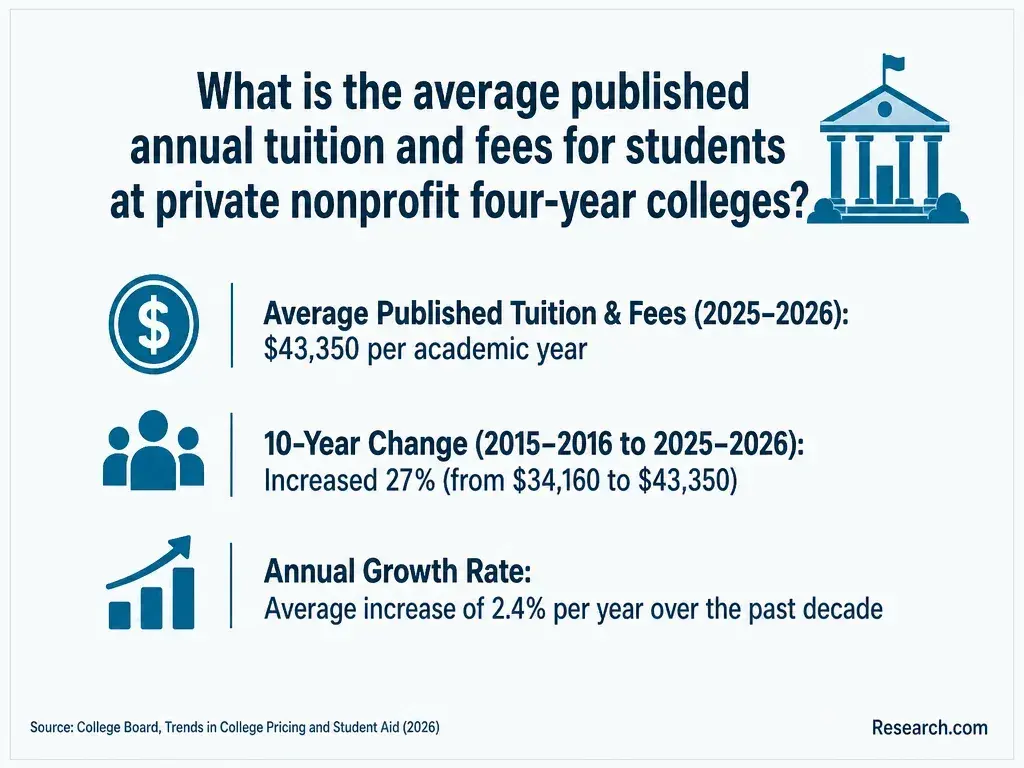
Potentially, but verify the exact school's degree and concentration before applying. An online BS in Business Administration may offer real estate electives without offering an officially designated online real estate concentration. Confirm whether every required course is available remotely and how often it runs.
Online also does not necessarily mean self-paced. Ask about live sessions, team assignments, proctored exams, software, internships, and any campus visits. If you work in real estate already, check whether an approved workplace project can fit your schedule; do not assume your current job automatically earns academic credit.
Some undergraduate programs with faster pacing may shorten the calendar, but they can increase weekly workload. Compare a realistic course load with client meetings, weekend work, and any licensing study you plan to do concurrently.
Bachelor's admission commonly involves a secondary-school credential or prior college record, but the school sets its own standards. Business-major entry, transfer evaluation, and concentration prerequisites may be separate decisions. Ask for a degree audit showing which accepted credits actually satisfy general education, business-core, and real estate requirements.
A bachelor's program is generally structured as a four-year full-time course of study; your remaining time depends on applicable transfer credits, course sequencing, and enrollment pace. Calculate cost from the credits you still need, tuition and mandatory fees, materials, travel or technology requirements, and any reduction in working hours.
A licensing course has a different cost structure and should not be compared with one semester of degree tuition as though that were the whole degree price.
If financial aid is central to the choice, compare FAFSA-accepting colleges for business administration students, then confirm the institution's aid eligibility and your individual award. Aid eligibility does not mean the degree will cost less than the licensing route.
First, verify the institution's recognized institutional accreditation and its status for your enrollment period. Then check whether the specific business school or program holds applicable AACSB, ACBSP, or IACBE accreditation; do not assume an institution-wide claim covers your degree. Accreditation supports evaluation of the education provider, but it does not approve a course for state real estate licensing.
Ask the school to identify the exact degree title, whether the real estate focus is formally recorded, and the accreditor's scope. Compare those answers when reviewing affordable online study routes in project management only if that is a genuine alternative for your intended property-development role: a different accredited degree still cannot replace licensing approval for regulated real estate work.
A real estate-focused business graduate might pursue brokerage support, property-operations coordination, leasing support, investment or market-research assistance, or development-project coordination. The tasks - and whether a license is needed - depend on the position and state. Sales practice requires the appropriate license; analyst and project roles generally require evidence of relevant skills, and more senior roles typically require experience.
For salary context, the U.S. Bureau of Labor Statistics reports a May 2025 median annual wage of $102,320 for project management specialists. That is an occupation-wide midpoint, not an expected starting salary for a real estate graduate or a measure of agent income. Use occupation data only after matching the job's actual duties and entry requirements to your target position.
If coordinating budgets, schedules, and stakeholders appeals to you more than selling property, compare project management schools with competitive tuition for operations-oriented work as well as real estate courses. Experience with spreadsheets, financial statements, client communication, and supervised projects will matter alongside the degree title.
What Job Outlook and Certifications Apply to Real Estate Graduates?
There is no single job-outlook figure for holders of a real estate-focused business degree. Outlook follows the occupation, not the concentration. BLS projects 7% U.S. employment growth for project management specialists from 2025 to 2035; that projection is relevant to a graduate considering project work, but it does not predict demand for real estate agents or guarantee a graduate a project role.
A state real estate license is separate from the degree. Voluntary industry designations and certifications are separate again and may have their own education, experience, membership, or examination rules. Check the issuing organization before paying for preparation, and prioritize credentials requested in actual postings for your target job.
For someone aiming to run a property-related team rather than conduct transactions, organizational leadership bachelor's routes of three years or less may be another comparison. Leadership coursework alone, however, does not confer a management position or a real estate license.
Other Things You Should Know About Business Administration
Compensation arrangements vary. Some agents work primarily on commission, so ask prospective brokers about payment terms, expenses, training, and support rather than planning around an occupation-wide median wage.
Not automatically. The destination state controls licensing and any reciprocity or recognition process. Check its regulator's requirements before relocating or serving clients there.
Possibly. Ask about eligibility, reimbursement timing, grade or completion conditions, annual limits, and repayment obligations before enrolling.
Often, if school rules permit it. Label it as academic work, state your assumptions, and remove any employer, client, or property information you lack permission to share.
- Requirements to Apply for a Real Estate Salesperson License | ca.gov https://www.dre.ca.gov/examinees/requirementssales.html
- Real Estate Board - DPOR - Virginia.gov http://www.dpor.virginia.gov/Boards/Real-Estate
- Become Licensed - Salesperson | LREC https://lrec.gov/become-licensed/salesperson
- Become a Real Estate Salesperson | Department of State https://dos.ny.gov/real-estate-agent
- Qualified Ed expenses | Internal Revenue Service https://www.irs.gov/credits-deductions/individuals/qualified-ed-expenses
- Understanding College Costs | studentaid.gov https://studentaid.gov/resources/prepare-for-college/students/choosing-schools/consider-costs
- Cost of Attendance (Budget) | 2025-2026 Federal Student Aid Handbook https://fsapartners.ed.gov/knowledge-center/fsa-handbook/2025-2026/vol3/ch2-cost-attendance-budget
- 11 Types of Business Degrees and Career Pathways | National University https://www.nu.edu/blog/types-of-business-degrees/
- 10 Best Business Degrees for High Pay and Career Growth | Pace University New York https://www.pace.edu/news/best-business-degrees-undergrad-grad
- What Can You Do With a Business Degree? | snhu.edu https://www.snhu.edu/about-us/newsroom/business/what-can-you-do-with-a-business-degree