2027 BS in Business Administration Curriculum: How to Evaluate Preparation in Contract Basics
Audited and Verified:
Our Editorial and Data Verification Process
Research.com uses government datasets, official education statistics and primary institutional information to support its career and degree guides. Our review process checks factual accuracy, occupational definitions, source dates and the requirements associated with the credentials discussed.
How This Article Was Fact-Checked
Our editorial team verifies salary estimates, employment projections, education requirements and program information against original data providers and official organizations. Salary figures are checked against the relevant occupational definitions and reporting periods. Information about licensure, accreditation and required in-person training is reviewed separately.
Fact-checked and verified on:

Co-Founder and Chief Data Scientist
A business law course on a degree plan does not necessarily mean graduates can recognize a risky contract clause or explain a purchasing agreement. If you are comparing BS in Business Administration programs, the useful question is what students actually study and practice.
This guide identifies the contract concepts worth looking for, shows how to examine syllabi and assignments, and explains when broader business preparation is enough - or when your intended role calls for more specialized training.
Key Things You Should Know
- Look beyond the course title: strong introductory preparation connects contract rules to realistic agreements, clause review, ethical judgment, and knowing when to seek legal advice.
- Check whether contract coverage is required, elective, or confined to a brief unit; then ask to see the syllabus and an example of an assessed assignment.
- Contract knowledge can support procurement and project work, but it does not authorize legal practice. BLS projects 18% employment growth for logisticians from 2025 to 2035; that occupation-wide figure is not a forecast for business graduates.
What Is Contract Basics in a Business Administration Curriculum?
Contract basics means learning how agreements are formed, what obligations their terms create, what can go wrong, and how a business should respond within its authority. In a BS in Business Administration, this is usually part of business law or the legal environment of business - not professional training to give legal opinions or represent clients.
The practical goal is to recognize questions before they become expensive mistakes: Does the proposed supplier agreement match the purchase order? Who may approve a change? What happens if delivery is late? Students should learn to document the issue, communicate clearly, and refer legal interpretation or negotiation outside their authority to appropriate counsel or supervisors.
Some programs require business law; others place related material in management, procurement, entrepreneurship, or an elective. Check the catalog and syllabus rather than assuming every degree has the same coverage. Course prerequisites can also affect when you can take business law; check prerequisites before applying to business administration programs, then confirm the requirements with each school.
What Contract Law Topics Should a Business Administration Degree Cover?
An introductory course should make the rules understandable enough to spot an issue and ask an informed question. Depth matters more than a long topic list: a brief lecture on contract formation is less useful than applying it to a disputed order or service agreement.
Look for coverage of offer and acceptance, consideration, authority to act for an organization, enforceability, performance, breach, and remedies. Students should also encounter terms that affect everyday decisions: scope of work, price and payment, delivery, changes, termination, confidentiality, and dispute resolution. A course may introduce the distinction between contracts for goods and services, including when the Uniform Commercial Code may apply, without turning students into legal specialists.
Context determines which examples are most valuable. Purchasing students benefit from supplier terms and delivery disputes; HR-oriented students may examine employment-related agreements alongside employment law. If employment documentation is your main goal, compare business-law exposure with HR degree coursework and entry requirements. Neither pathway replaces advice from a qualified attorney on a specific agreement.
How Can You Evaluate Contract Preparation in a Business Program?
Start with the current catalog, then request a recent syllabus for each course that claims to cover contracts. The comparison below separates evidence of introductory exposure from evidence that students practice applying it.
The table shows what different curriculum materials can establish - and what they cannot - so you can avoid giving a course title more weight than it deserves.
| Evidence | What it tells you | Important limit |
| Degree audit or catalog | Whether the course is required and when it fits in the degree | Does not show how much time contracts receive |
| Recent syllabus | Topics, readings, and assessments | Listed topics may receive little applied practice |
| Assignment description or rubric | Whether students identify terms, explain risks, and justify a response | A simulated review is not legal or workplace authorization |
| Internship or capstone policy | Whether supervised contract-related work is possible | Placement and project approval may not be guaranteed |
Use those materials to ask the department three questions: Is contract analysis assessed or merely mentioned? Can students review a realistic but appropriately anonymized agreement? Who provides feedback on the reasoning and communication? For a procurement goal, a short memo identifying unclear delivery and change terms may be more revealing than a multiple-choice test on definitions.
If you are transferring, ask for a written evaluation of whether prior business law satisfies the required course, not simply whether its credits are accepted. That distinction also matters when you compare credit acceptance at online HR schools as an alternative route.
First, confirm that the institution holds recognized institutional accreditation and that the degree is offered by that institution. Then check whether the business unit or program has applicable accreditation from AACSB, ACBSP, or IACBE. These are distinct checks: institutional accreditation does not establish business-program accreditation, and a school-wide claim does not show that a particular BS is within an accreditor's scope.
Accreditation can indicate external review of educational quality, but it does not guarantee a contracts course, a particular assignment, or employment. Verify the accreditor's listing and the program's current catalog, then use syllabi to judge the contract preparation itself. If cost is a constraint, compare accredited business administration degrees for limited tuition budgets without treating a low advertised price as evidence of suitable coursework.
Either format can support case discussions, clause-identification exercises, negotiation simulations, and written recommendations. What differs is how students participate and receive feedback. A campus class may hold live discussions; an online class may use discussion boards, recorded presentations, live meetings, or group documents. Online does not necessarily mean self-paced.
Ask whether case discussions are synchronous, whether group negotiations require scheduled meetings, and whether exams use remote proctoring. If an internship or workplace project involves an actual agreement, confirm faculty approval, employer permission, confidentiality rules, and what work can be submitted. Students cannot assume that access to company contracts grants permission to share them in class.
For a working student, the best format is one that leaves enough time for careful reading and feedback - not merely the shortest advertised calendar. When exploring US business bachelor's fast-track rankings, check the actual business-law course schedule and assessment requirements before deciding that an accelerated option fits.
Admission rules vary by institution and by applicant status. First-year applicants may be evaluated using secondary-school records; transfer applicants generally need previous college transcripts. A school may also have separate requirements for entry into its business major. Do not confuse admission to the university with approval to take a particular upper-level business course.
For contract preparation, the most useful admissions question is whether prerequisites or course sequencing delay business law or a procurement elective. Transfer applicants should submit prior syllabi when seeking a business-law equivalency and request an official degree audit showing where accepted credits apply. If you are comparing application costs, you can find online colleges with free admissions applications; application cost, however, says nothing about contract-course quality.
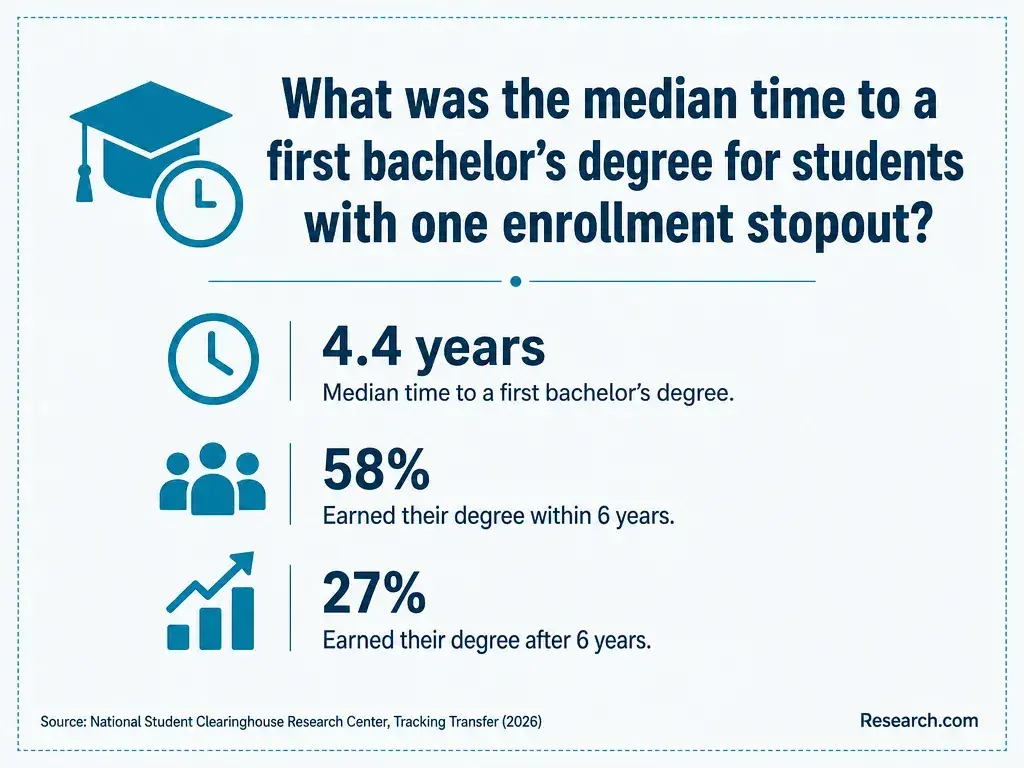
A bachelor's degree is commonly planned as four years of full-time study, but your remaining courses, transfer-credit applicability, enrollment pace, and course availability determine your actual timeline. A business-law course may fit within the required core; an advanced contracts or procurement elective may add time if it has prerequisites or is offered infrequently.
Compare the cost of finishing the degree you would actually take: remaining tuition and mandatory fees, books and technology, travel or proctoring, and any earnings affected by your schedule. Ask each school for a degree audit and a term-by-term course plan before estimating the total. A lower per-credit price can lose its advantage if more courses remain or a required course delays completion.
For a structured starting point, compare business administration tuition and completion time, then replace advertised estimates with figures based on your official credit evaluation. If contract literacy is your only educational goal and you already hold a suitable degree, a targeted business-law course or employer training may cost less than another bachelor's degree.
Contract literacy is useful where employees coordinate obligations, even when they do not draft or approve the final agreement. Procurement assistants may track supplier terms and purchase orders; project coordinators may document scope changes and deadlines; sales operations staff may check whether an order reflects agreed commercial terms. HR staff may administer employment documents under established policies.
These are different from being a contract attorney or automatically qualifying as a contracts manager. Entry-level applicants are stronger when they can show a supervised case analysis, accurate documentation, spreadsheet skills, and clear escalation of an issue beyond their authority. Someone targeting schedules and vendor deliverables might compare a general business degree with economical project management education online; the better fit depends on the role's broader requirements, not the word "contract" in a course description.
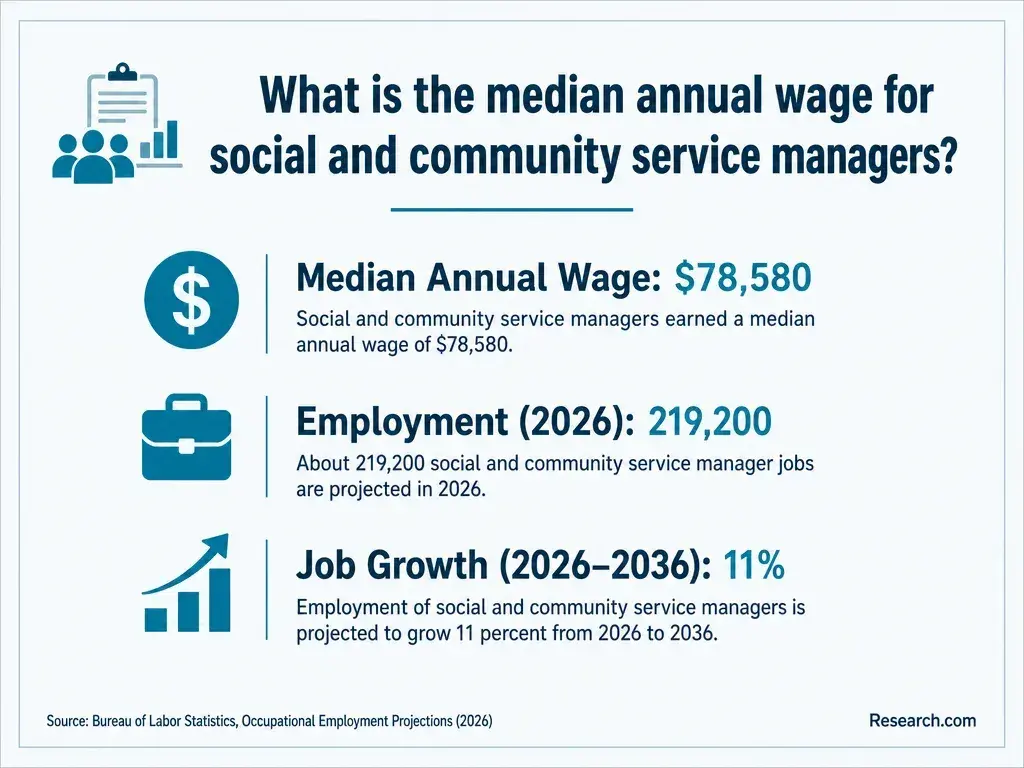
There is no single salary or growth rate for "business graduates who know contracts." Pay depends on the occupation, location, industry, and experience. As one relevant benchmark, the U.S. Bureau of Labor Statistics reports a $82,320 median annual wage for logisticians in May 2025 and projects 18% employment growth from 2025 to 2035. Those are occupation-wide figures, not entry-level pay or a promised outcome from a BS in Business Administration.
Logisticians work across supply-chain activities; contract awareness may help, but employers also assess operations knowledge and relevant experience. If that is your target, compare the actual coursework and costs of a general business degree with affordable supply chain programs and salary outlook. Use local job postings to identify required tasks before using any national median in an education decision.
Are Certifications or Licenses Required for Contract-Related Business Careers?
There is no general license to use contract knowledge in an ordinary business support role. Employers may value procurement, supply-chain, or project credentials for particular positions, but each credential has its own eligibility and experience rules. A business administration degree or a contracts elective does not automatically satisfy them. Providing legal advice or representing someone in a legal matter is different from identifying a business issue and referring it to counsel; attorney licensing follows separate state rules.
Before paying for another credential, compare job postings for your target role with what you can already document. If you need only introductory contract literacy, a focused course and supervised practice may be more direct than a degree. If you also need the broader bachelor's credential, flexible fast-track routes in business education may be worth investigating - but verify that their pace leaves room for the applied work you want to learn.
Other Things You Should Know About Business Administration
It can develop reading, writing, and analytical skills, but a business major is not required for law-school admission. Check each law school's admissions criteria and choose undergraduate coursework you can complete successfully.
Usually, a fictional or public example is safer than a real employer agreement. Follow course rules, obtain any required permissions, and remove confidential or personal information before sharing work.
It may help organize questions, but it can miss qualifiers or invent terms. Check every claim against the agreement and course materials, and do not upload confidential contracts to an unapproved tool.
Ask for time to read it and seek clarification from an appropriate contact. For advice about your rights or a consequential term, consult a qualified attorney rather than relying on a business course or a template.
- 16.104 Factors in selecting contract types. | Acquisition. GOV https://www.acquisition.gov/far/16.104
- 2 CFR Part 200 -- Uniform Administrative Requirements, Cost Principles, and Audit Requirements for Federal Awards https://www.ecfr.gov/current/title-2/subtitle-A/chapter-II/part-200
- Contract Drafting Course | McGeorge School of Law https://onlinelaw.pacific.edu/blog/practical-legal-skills-for-professionals-inside-mcgeorges-contract-drafting-course/
- Contract Law: From Trust to Promise to Contract | Harvard University https://pll.harvard.edu/course/contractsx-trust-promise-contract
- Capstone Experiences | Assessment and Curriculum Development Office https://manoa.hawaii.edu/assessmenttest/resources/how-to/capstone-experiences/
- Course prerequisites | Twin Cities One Stop Student Services https://onestop.umn.edu/registration/register-classes/course-prerequisites
- contract | Wex | US Law | LII / Legal Information Institute https://www.law.cornell.edu/wex/contract
- Course - Contract Drafting & Negotiation https://www.brooklaw.edu/courses/contract-drafting-negotiation/
- Business Law Bachelor of Science in Business Administration | Drake University Academic Catalog https://catalog.drake.edu/undergraduate/business/areas-study/law-business/business-law-bsba/