2027 How to Become a Medical Biller & Coder in Texas

Co-Founder and Chief Data Scientist
Becoming a medical biller and coder in Texas can be a practical way to enter healthcare without pursuing a clinical license. The work sits at the center of patient records, insurance claims, reimbursement, compliance, and revenue cycle operations. For students, career changers, and healthcare support workers, the main decision is not only whether the field is growing, but how to choose the right training, certification, and employer path.
Texas is a strong market for this career because of its large healthcare systems, expanding population, and continued need for accurate claims processing. State figures cited for this field show an 18% rise in demand, while national projections point to 9% job growth from 2023 to 2033. This guide explains the education options, certification choices, financial aid, salary expectations, job outlook, daily responsibilities, advancement paths, and common mistakes to avoid before you enroll in a program.
Quick Answer: How to Become a Medical Biller & Coder in Texas
- Texas does not require a state license for medical billing and coding, but employers often prefer applicants with national credentials such as CPC, CCS, or CBCS.
- The usual starting point is a high school diploma or GED, followed by a certificate, diploma, associate degree, or focused certification-prep program.
- Medical records specialists in Texas earn an average salary of over $48,000 per year, with entry-level roles often starting around $35,000 to $40,000 a year.
- Programs are available through community colleges, technical schools, and online providers, including options connected to Austin Community College, Houston Community College, Texas State Technical College, and Lone Star College.
- The best path depends on your timeline, budget, preferred work setting, and whether you want to focus on coding, billing, health information, compliance, or revenue cycle operations.
- Education requirements for medical billing & coding in Texas
- Certification requirements and employer expectations
- How to prepare for certification exams
- Financial aid options for Texas students
- Licensure requirements compared with licensed healthcare roles
- Reasons to consider this career in Texas
- Major employers for billers and coders
- Salary expectations in Texas
- How Texas programs compare with programs in other states
- Job outlook for medical billing & coding
- Challenges to understand before entering the field
- Alternative career paths
- Career advancement opportunities
- How Texas healthcare and education systems support this career
- Typical workday for a Texas medical biller and coder
- Soft skills needed for success
- Common mistakes to avoid
What are the education requirements for medical billing & coding in Texas?
The minimum educational foundation for medical billing and coding in Texas is typically a high school diploma or GED. Texas does not impose a separate state education requirement for this occupation, but most employers want applicants who understand medical terminology, anatomy, coding systems, insurance claims, privacy rules, and reimbursement workflows.
For most beginners, the practical path is to complete a focused certificate or associate degree program before taking a national certification exam. Certificate programs are usually the faster route and may be completed in as little as a year, depending on the school and schedule. Associate degrees take longer but can be useful if you want a broader health information, office administration, or healthcare management foundation.
Texas State Technical College offers a Medical Coding Certificate for students seeking a direct training route. Lone Star College offers preparatory coursework connected to recognized credentials such as the Certified Coding Specialist (CCS) and Certified Professional Coder (CPC). Austin Community College and Houston Community College are also commonly considered by students looking for structured, career-focused healthcare administration training.
| Education option | Best for | Main advantage | What to check before enrolling |
| Short-term certificate | Students who want the fastest route into entry-level billing or coding work | Focused training in terminology, claims, coding systems, and exam preparation | Whether the curriculum prepares students for CPC, CCS, CBCS, or another recognized credential |
| Associate degree | Students who want more long-term flexibility in health information, administration, or management | Broader coursework that may support future advancement | Transfer credit policies, online availability, total cost, and employer recognition |
| Online certification-prep program | Working adults, parents, and students outside major metro areas | Flexible scheduling and access from anywhere in Texas | Accreditation, instructor support, exam pass support, and whether hands-on coding practice is included |
| Employer-based training | Applicants already working in healthcare administration or patient access | May combine real workplace experience with skill development | Whether the training leads to a portable national credential |
When comparing schools, look beyond program length. A stronger program should include ICD-10, CPT, HCPCS, medical terminology, anatomy and physiology, reimbursement systems, insurance processing, compliance, electronic health records, and applied coding practice. If you prefer online study, reviewing accredited online medical billing and coding programs can help you compare flexible options.
Do you need certification to work as a medical biller & coder in Texas?
No state certification is legally required to work as a medical biller or coder in Texas. However, national certification can make a meaningful difference when applying for jobs because it gives employers evidence that you can read records, assign codes, understand billing rules, and follow documentation standards.
Certification is especially important if you want to work for hospitals, large physician groups, academic medical centers, insurance companies, or revenue cycle management firms. Some employers may hire non-certified applicants for entry-level billing or claims roles, but certified candidates often have a stronger case for coding-focused positions.
| Certification | Organization | Best fit | Why it matters |
| Certified Professional Coder (CPC) | AAPC | Physician offices, outpatient coding, professional services coding | Shows knowledge of procedure and diagnosis coding used in many non-hospital settings |
| Certified Coding Specialist (CCS) | AHIMA | Hospital, inpatient, and complex facility coding environments | Signals stronger preparation for coding across inpatient and outpatient records |
| Certified Billing and Coding Specialist (CBCS) | National Healthcareer Association (NHA) | Billing, claims, front-office revenue cycle, and administrative support roles | Useful for students who want a broader billing-and-coding credential rather than a coding-only focus |
Before selecting a certification, read job postings in your target city. If Houston hospitals repeatedly ask for CCS, that may influence your choice. If Dallas outpatient groups ask for CPC, that credential may be the better first step. Certification should match the work setting you want, not just the program a school promotes.
How can aspiring medical billers & coders in Texas prepare for certification?
The best way to prepare for certification is to combine structured coursework, timed practice exams, real coding scenarios, and consistent review of official coding guidelines. Passing an exam usually requires more than memorizing terms; you need to apply codes accurately under time pressure.
- Choose the right exam first. Decide whether CPC, CCS, or CBCS fits your intended workplace before buying study materials.
- Build the technical foundation. Review anatomy, physiology, medical terminology, ICD-10, CPT, HCPCS, insurance terminology, and compliance basics.
- Use official exam outlines. Study the topics published by AAPC, AHIMA, or NHA so you do not waste time on unrelated content.
- Practice with case-based questions. Work through charts, operative notes, diagnoses, and billing scenarios instead of relying only on flashcards.
- Join a study group. Local or online peer groups can help you compare code selection logic and stay accountable.
- Schedule review time before the exam. Many Texas community colleges and professional organizations offer review sessions or exam-prep seminars.
Texas students should also stay alert to payer rules, documentation expectations, and changes in coding guidelines. The article’s cited projections include a job growth rate of around 18% over the next several years, which makes skill currency important for new entrants. If you want a flexible study path, accredited online medical coding programs may be worth comparing before you commit.
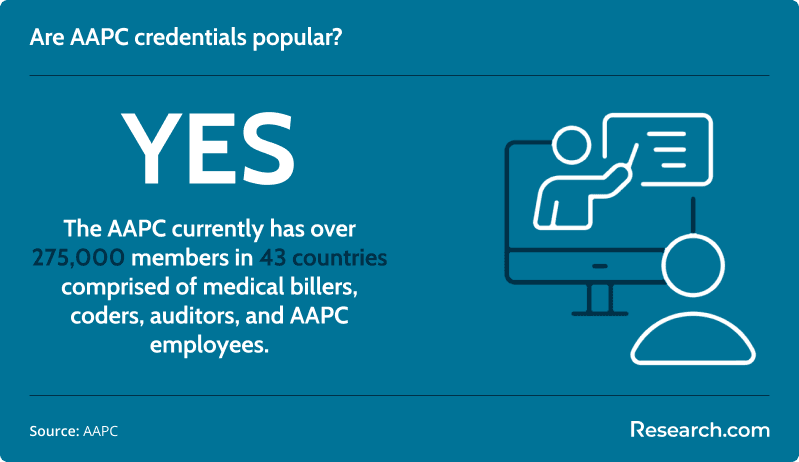
Are there financial aid programs for medical billers & coders in Texas?
Yes. Texas students may be able to use state grants, workforce funding, scholarships, school-based aid, payment plans, and federal aid when the program is eligible. The key is to confirm whether your specific certificate or associate degree qualifies because not every short-term training program participates in the same aid programs.
| Financial aid option | Amount stated | Who it may help | What to verify |
| Texas Public Educational Grant (TPEG) | Up to $5,000 | Students attending public colleges and universities in Texas, especially low-income students who qualify | Eligibility rules, application deadlines, and whether your program is covered |
| Texas Workforce Commission (TWC) Skills Development Fund | Amount varies | Eligible students pursuing workforce-oriented training, including some healthcare programs | Whether your school or training provider participates and what costs are covered |
| Health Occupations Students of America (HOSA) Scholarships | Up to $1,000 | Students involved in health sciences or related student organizations | Membership, application requirements, and scholarship deadlines |
| Texas Higher Education Coordinating Board Grants | Up to $1,500 | Students in health-related programs, often through community college pathways | Program eligibility, enrollment status, and required documentation |
When comparing costs, do not look only at tuition. Ask whether books, coding manuals, exam fees, technology fees, background checks, and certification review materials are included. If you want a longer academic pathway, compare online associate degree options in medical billing and coding to see whether a degree-based route fits your budget and schedule.
Is a license required to become a medical biller and coder in Texas, and how does it compare with licensed healthcare roles?
Texas does not require medical billers or coders to hold a state-issued license. This is one reason the occupation can be more accessible than many clinical healthcare careers. Instead of completing state board exams or supervised clinical hours, billers and coders generally prove readiness through education, experience, and national certifications such as CPC or CCS.
The distinction matters. Medical billing and coding is an administrative and technical healthcare role, not a direct patient care license. If you later decide to move into a licensed profession, the requirements become more formal. For example, students considering nursing should review how to get a nursing license in Texas, including the NCLEX-RN, Texas Board of Nursing application requirements, fingerprinting, and continuing education.
| Career type | Texas license required? | Typical credential signal | Work focus |
| Medical biller and coder | No | CPC, CCS, CBCS, education, and experience | Records, claims, codes, reimbursement, and compliance |
| Registered nurse | Yes | State licensure after meeting nursing requirements | Direct patient care, assessment, and clinical practice |
| Other licensed clinical roles | Usually yes | State license, clinical education, and exams | Patient-facing diagnosis, treatment, or clinical support |
Why become a medical biller & coder in Texas?
Texas can be a strong place to start this career because the state has large hospital systems, major physician networks, insurance-related operations, academic medical centers, and expanding outpatient care. Houston, Dallas, Austin, San Antonio, and other metro areas offer the widest range of healthcare employers, but remote and hybrid roles can also make the field accessible outside major cities.
- Healthcare scale: Texas has many large providers and complex healthcare organizations that rely on accurate records and claims processing.
- Multiple entry points: Students can begin through short certificates, community college programs, associate degrees, or healthcare office roles.
- Remote-work potential: Coding and claims work may offer more remote flexibility than many patient-facing healthcare jobs, depending on the employer.
- Career mobility: Billing and coding experience can lead toward health information, compliance, revenue cycle, claims review, and office management.
- Income stability: Texas medical records specialists earn an average salary of over $48,000 per year, though earnings vary by location, certification, and experience.
This path is best for people who like healthcare but prefer structured, detail-heavy, computer-based work. It may not be the right fit if you want hands-on patient care, fast physical movement throughout the day, or a role with minimal documentation pressure.
What are the top employers for medical billers & coders in Texas?
Medical billers and coders in Texas work for hospitals, physician groups, specialty practices, insurance companies, government contractors, academic medical centers, billing services, and revenue cycle management companies. Large healthcare systems can be especially valuable for new professionals because they often have defined departments, training structures, and advancement ladders.
- Texas Health Resources: A major healthcare system in Texas with a large network of facilities and ongoing need for administrative, coding, and revenue cycle support.
- Baylor Scott & White Health: A broad hospital and clinic network where coding, claims, documentation, and reimbursement accuracy support patient care operations.
- Memorial Hermann Health System: A large healthcare organization with diverse services, making it a potential fit for coders who want exposure to varied clinical documentation.
- UT Southwestern Medical Center: An academic medical center known for research and complex care, where billing and coding roles may involve advanced documentation and specialized departments.
When reviewing job postings, pay attention to whether the employer wants inpatient coding, outpatient coding, professional fee coding, billing, denial management, accounts receivable, or prior authorization experience. These are related but not identical roles.
How much do medical billers & coders earn in Texas?
Medical biller coder salary Texas figures average about $48,000 per year, with medical records specialists in Texas earning an average salary of over $48,000 per year. Actual pay depends on experience, certification, employer type, specialty, location, and whether the job focuses on billing, coding, auditing, or revenue cycle analysis.
| Career stage or factor | Salary information stated | What it means for job seekers |
| Entry-level roles | Around $35,000 to $40,000 a year | New workers may begin in billing, claims, patient accounts, or junior coding support roles. |
| Experienced billers and coders | Closer to $50,000 or more | Experience, accuracy, specialty knowledge, and certification can improve competitiveness. |
| Texas average | About $48,000 per year | This is a useful planning number, but it should not be treated as a guaranteed outcome. |
| Location effect | Houston and Dallas often offer higher salaries than rural areas | Large metro areas may pay more, but cost of living and competition can also be higher. |
| Certification effect | Certification can sometimes add several thousand dollars to salary | Credentials may strengthen applications, especially for coding-specific roles. |
If earning potential is one of your main decision factors, compare job ads before selecting a program. Look for the credentials employers request, the experience level they expect, and whether remote jobs require prior production coding experience. A structured online medical billing and coding certificate program can be useful if it prepares you for the credential most requested in your target market.
How do medical billing and coding programs in Texas compare to those in other states?
Texas programs can be attractive because the state has a large community college network, many healthcare employers, and a mix of in-person, hybrid, evening, and online options. Compared with higher-cost states such as California or New York, Texas is often viewed as a cost-conscious option, particularly for students who can attend public colleges or community-based programs.
| Comparison factor | Texas advantage | Potential limitation |
| Program access | Community colleges and technical schools are available across metro and regional areas. | Rural students may still need online or hybrid options if nearby campus choices are limited. |
| Cost | Public institutions may offer affordable tuition and flexible schedules. | Total cost can rise when exam fees, books, coding manuals, and technology fees are excluded from tuition. |
| Certification preparation | Many programs are designed around CPC, CCS, or related national credentials. | Not every program includes exam fees or dedicated review courses. |
| Healthcare employer access | Large health systems may create more opportunities for internships, entry-level jobs, and advancement. | Competitive metro markets may prefer certified or experienced applicants. |
| Related healthcare pathways | Students can combine administrative training with broader allied health interests, including medical assistant certification in Texas. | Students should avoid taking unrelated training unless it clearly supports their career goal. |
Texas may be a good choice if you want affordable public options, flexible scheduling, and access to large healthcare employers. A different state or national online program may make more sense if you need a specific credential track, already work remotely, or find a stronger scholarship package elsewhere.
What is the job outlook for medical billing & coding in Texas?
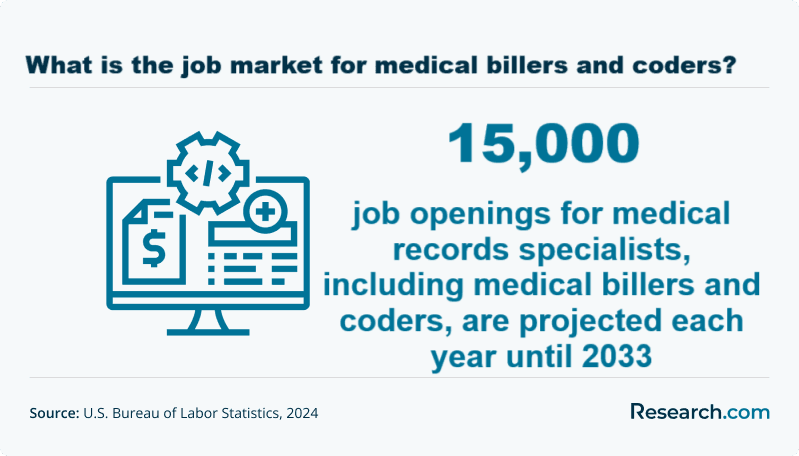
The outlook for medical billing and coding in Texas is positive, but students should read projections carefully. This article cites several demand indicators: an 18% rise in demand in Texas, national projected job growth of 9% from 2023 to 2033, and a medical billing and coding job outlook Texas estimate of 10-15% over the next decade. These figures point in the same general direction: healthcare organizations continue to need trained professionals who can manage records, codes, claims, and reimbursement processes.
Demand is supported by several practical realities. Healthcare systems need accurate documentation to receive payment. Insurance rules remain complex. Electronic health records have increased the amount of data that must be reviewed. Providers also need staff who can reduce denials, correct claims, and support compliance.
- Hospitals, clinics, physician groups, insurance companies, and billing firms all hire for related roles.
- Remote and hybrid options may be available, especially for experienced coders, but many entry-level positions still require onsite training.
- Students comparing healthcare careers should also review medical billing and coding salary and requirements before choosing a program.
The safest job-search strategy is to treat training and certification as only part of the plan. Build software familiarity, practice coding accuracy, learn denial workflows, and start networking with Texas employers before graduation.
What are the challenges for medical billers & coders in Texas?
Medical billing and coding is often described as an accessible healthcare career, but it is not easy work. The job requires precision, concentration, ethical judgment, and continuous learning. Before enrolling, students should understand the pressures that come with the role.
- High accuracy expectations: Incorrect codes or incomplete documentation can delay payment, trigger denials, or create compliance concerns.
- Changing rules: Coding guidelines, payer policies, documentation standards, and healthcare regulations can shift, requiring ongoing education.
- Technology demands: Billers and coders use electronic health records, billing platforms, coding tools, claim systems, and productivity dashboards.
- Workload pressure: Texas employers may need qualified staff quickly, and existing teams can face heavy claim volumes or tight deadlines.
- Entry-level competition: Remote jobs are appealing, but many remote coding positions prefer applicants who already have experience and certification.
If you are detail-oriented and comfortable working independently for long periods, these challenges may be manageable. If you dislike repetitive review, strict rules, or production expectations, another healthcare support role may be a better fit.
What alternative career paths can medical billers & coders in Texas pursue?
Medical billing and coding skills can transfer into several healthcare administration and health information careers. The best alternative path depends on whether you prefer data, leadership, claims, compliance, or broader operations.
| Alternative role | How billing and coding experience helps | Salary information stated |
| Health Information Technician | Uses patient data, record accuracy, privacy awareness, and documentation skills. | Around $50,000 a year in Texas |
| Medical Office Manager | Builds on billing, scheduling, staff coordination, patient accounts, and administrative workflows. | Average salary of about $65,000 |
| Claims Examiner | Applies claim review, insurance terminology, documentation analysis, and reimbursement knowledge. | Around $55,000 annually in Texas |
| Healthcare Compliance Officer | Uses knowledge of regulations, coding accuracy, audits, documentation, and risk prevention. | Average salary of about $70,000 in Texas |
If coding is your main interest, you may want to study the role in more depth through this guide on how to become a medical coder. If leadership appeals to you, look for roles involving denial management, revenue cycle supervision, quality review, or office administration.
What are the career advancement opportunities for medical billers & coders in Texas?
Advancement usually comes from combining experience, strong accuracy, specialized knowledge, and additional credentials. A new worker may begin in patient accounts, billing support, insurance verification, or entry-level coding assistance. With experience, the path can move toward specialty coding, auditing, denial management, revenue cycle analysis, compliance, team leadership, or healthcare administration.
| Career level | Possible roles | How to move forward |
| Entry level | Billing assistant, claims support, patient accounts representative, junior coder | Build accuracy, learn payer rules, become comfortable with EHR and billing systems. |
| Mid-career | Certified coder, denial specialist, revenue cycle specialist, coding quality reviewer | Earn or upgrade certification, specialize by setting, and document productivity results. |
| Advanced | Coding auditor, compliance analyst, revenue cycle supervisor, medical office manager | Develop leadership, reporting, training, compliance, and process-improvement skills. |
| Career pivot | Healthcare administration, allied health, clinical-adjacent education pathways | Consider whether additional education is needed for your target role. |
Some professionals eventually explore other healthcare careers to broaden their understanding of patient services and operations. For example, those interested in nutrition-focused patient care can review how to become a registered dietician in Texas before deciding whether a clinical pathway is worth the additional requirements.
How does the Texas healthcare and education system support careers in medical billing and coding?
Texas supports this career through community colleges, technical schools, online programs, workforce initiatives, and a healthcare market large enough to employ administrative and revenue cycle specialists across many settings. Many schools place billing and coding alongside broader health science, medical assisting, nursing, and health information programs, which can help students see how administrative roles connect to patient care and provider operations.
This structure can be useful for long-term planning. A student might begin with coding, move into health information or compliance, or later pursue a clinical or administrative degree. Students considering a bigger healthcare move can compare options at the top nursing schools in Texas to understand how nursing education differs from billing and coding training.
The most important step is to choose a program that matches your goal. If you want coding, prioritize coding depth and certification preparation. If you want office management, look for billing, insurance, scheduling, leadership, and healthcare administration content. If you want remote work, ask schools how graduates actually enter remote roles and whether employers usually require experience first.
What is the typical day like for a medical biller and coder in Texas?
A typical day depends on the employer and whether the role is focused on coding, billing, claims, denials, or revenue cycle support. In general, medical coders review patient documentation and convert diagnoses, procedures, services, and supplies into standardized codes such as ICD-10, CPT, and HCPCS. Medical billers use those codes and claim details to submit, track, correct, and follow up on insurance claims.
- Review patient records, provider notes, orders, and documentation.
- Assign or verify medical codes based on coding guidelines and payer requirements.
- Submit claims through billing systems or clearinghouses.
- Investigate claim denials, missing information, or payment delays.
- Communicate with clinicians, office staff, insurance representatives, or patients when clarification is needed.
- Use electronic health records, coding tools, billing software, spreadsheets, and reporting dashboards.
- Meet deadlines for claim submission, corrections, or productivity targets.
Some roles are fully onsite, especially in hospitals and clinics. Others may become hybrid or remote once the employee demonstrates accuracy and independence. Students comparing healthcare timelines may also explore how long it takes to become a pharmacist in Texas to see how this administrative pathway differs from a licensed clinical profession.
What soft skills are critical for thriving as a Medical Biller & Coder in Texas?
Technical coding knowledge is essential, but soft skills often determine whether someone performs well over time. Texas employers need billers and coders who can work accurately, communicate clearly, adapt to system changes, and handle pressure without sacrificing quality.
| Skill | Why it matters | How to build it |
| Attention to detail | Small documentation or code errors can affect reimbursement and compliance. | Practice chart review, use checklists, and review coding rationales after mistakes. |
| Communication | Coders and billers often need clarification from providers, insurance staff, or office teams. | Learn to ask specific, professional questions and document responses clearly. |
| Time management | Claim deadlines, productivity targets, and denial follow-up require organized work habits. | Use daily task lists, prioritize high-impact claims, and track recurring problems. |
| Adaptability | Software, payer rules, and coding guidance can change. | Complete continuing education and stay comfortable learning new systems. |
| Analytical thinking | Denials, documentation gaps, and claim errors require problem-solving, not just data entry. | Study denial patterns and learn why claims are rejected or delayed. |
| Professional judgment | Healthcare billing requires ethical handling of records, codes, and patient information. | Study compliance principles and avoid shortcuts that could create risk. |
These skills also support advancement into leadership or patient-focused administrative roles. Professionals considering advanced clinical pathways can compare requirements in this guide on how to become a nurse practitioner in Texas.
Common mistakes to avoid when choosing a Texas medical billing and coding path
The wrong program choice can cost time, money, and momentum. Before enrolling, slow down and compare the details that affect employability.
| Mistake | Why it can hurt you | Better approach |
| Choosing a program only because it is short | Fast training may not include enough coding practice or exam preparation. | Review the curriculum, credential alignment, and graduate support. |
| Ignoring accreditation and school reputation | Employers and aid programs may not recognize weak or unverified training. | Confirm institutional accreditation and ask which certifications the program prepares students for. |
| Looking only at tuition | Books, coding manuals, exam fees, and technology costs can change the true price. | Request a full cost breakdown before enrolling. |
| Assuming certification is optional in practice | Texas does not require certification by law, but many employers prefer or request it. | Read current job postings in your target city before choosing CPC, CCS, or CBCS. |
| Expecting immediate remote work | Many remote coding roles prefer experienced, certified applicants. | Be open to onsite or hybrid entry-level roles that build experience. |
| Relying only on rankings or marketing claims | A highly promoted program may not match your schedule, budget, or local employer needs. | Compare outcomes, support services, certification prep, and employer connections. |
Is medical billing and coding in Texas worth it?
Medical billing and coding in Texas can be worth it if you want a healthcare career with relatively accessible education requirements, no state licensure barrier, and opportunities in hospitals, clinics, insurance, and revenue cycle operations. It is especially suitable for people who are organized, detail-oriented, comfortable with technology, and interested in healthcare documentation rather than direct patient care.
It may not be the right choice if you want guaranteed remote work immediately, dislike repetitive documentation tasks, or are uncomfortable with strict accuracy expectations. The strongest candidates treat billing and coding as a professional skill set, not simply a quick certificate. They choose credible training, prepare seriously for certification, and build experience in the work setting that matches their long-term goal.
Related Articles for Nearby States
- 2027 How to Become a Medical Biller & Coder in Louisiana
- 2027 How to Become a Medical Biller & Coder in Oklahoma
- 2027 How to Become a Medical Biller & Coder in Arkansas
- 2027 How to Become a Medical Biller & Coder in New Mexico
- 2027 How to Become a Medical Biller & Coder in Kansas
- 2027 How to Become a Medical Biller & Coder in Missouri
- 2027 How to Become a Medical Biller & Coder in Colorado
- 2027 How to Become a Medical Biller & Coder in Mississippi
- 2027 How to Become a Medical Biller & Coder in Tennessee
- 2027 How to Become a Medical Biller & Coder in Arizona
References
- American Academy of Professional Coders. (n.d.) How long does it take to become a certified medical coder? AAPC.
- HFMA. (2024, August). 2024 Revenue Cycle Management Survey Summary of Findings. HFMA.org.
- O*NET Online. (2024). Texas Employment Trends: 29-2072.00 - Medical Records Specialists. O*NET Online.
- United States Bureau of Labor Statistics. (2024, April 3). Occupational Employment and Wage Statistics: 29-2072 Medical Records Specialists. BLS.
- Zippia. (2025, January 8). Medical Code Skills for Your Resume and Career. Zippia.
Key Insights
- Texas does not license medical billers and coders, but national certification is often the credential employers use to judge readiness.
- A short certificate can be enough for entry-level preparation, while an associate degree may offer more flexibility for health information or administration roles.
- CPC is commonly aligned with physician and outpatient coding, CCS is stronger for hospital coding, and CBCS is useful for billing-focused roles.
- Medical records specialists in Texas earn an average salary of over $48,000 per year, but pay varies by city, employer, certification, and experience.
- Do not assume an online or fast program is automatically the best value. Check accreditation, certification alignment, total cost, exam support, and employer expectations first.
- The field rewards accuracy, persistence, software fluency, and continuous learning. Those strengths matter as much as the initial credential.
Other Things You Should Know About Becoming a Medical Coder & Biller in Texas
In Texas, to work as a medical biller and coder in 2027, you will need a certification such as the Certified Professional Coder (CPC) offered by the AAPC or the Certified Coding Specialist (CCS) from AHIMA, demonstrating expertise and commitment in the field.
Texas billers and coders must follow HIPAA and Texas Medical Records Privacy Act rules when handling patient information. Records containing protected health information must be safeguarded, disclosed only for permitted purposes, and kept according to employer retention policies and Texas privacy requirements.
In 2027, it typically takes 6 months to 1 year to complete medical billing and coding courses in Texas. Program lengths can vary based on the institution and whether you choose full-time or part-time study options.