
2027 BS in Business Administration Program Choice: A Compensation Structure Comparison as a Capstone Option
Audited and Verified:
Our Editorial and Data Verification Process
Research.com uses government datasets, official education statistics and primary institutional information to support its career and degree guides. Our review process checks factual accuracy, occupational definitions, source dates and the requirements associated with the credentials discussed.
How This Article Was Fact-Checked
Our editorial team verifies salary estimates, employment projections, education requirements and program information against original data providers and official organizations. Salary figures are checked against the relevant occupational definitions and reporting periods. Information about licensure, accreditation and required in-person training is reviewed separately.
Fact-checked and verified on:

Co-Founder and Chief Data Scientist
A compensation structure comparison can turn a BS in Business Administration capstone into a useful decision tool - but only if the project compares pay options fairly and uses data the student is allowed to access. This article is for students choosing a program or shaping a capstone around salary, incentives, benefits, and organizational performance.
It explains how to scope the analysis, what coursework supports it, and which program policies to verify. The goal is to help you choose a project you can complete ethically, defend academically, and adapt into a portfolio sample.
Key Things You Should Know
- Choose a specific role, employer decision, and comparison period; compare total compensation and employer cost, not base salary alone.
- A strong capstone separates documented pay terms from assumptions, evaluates employee and organizational effects, and protects confidential data.
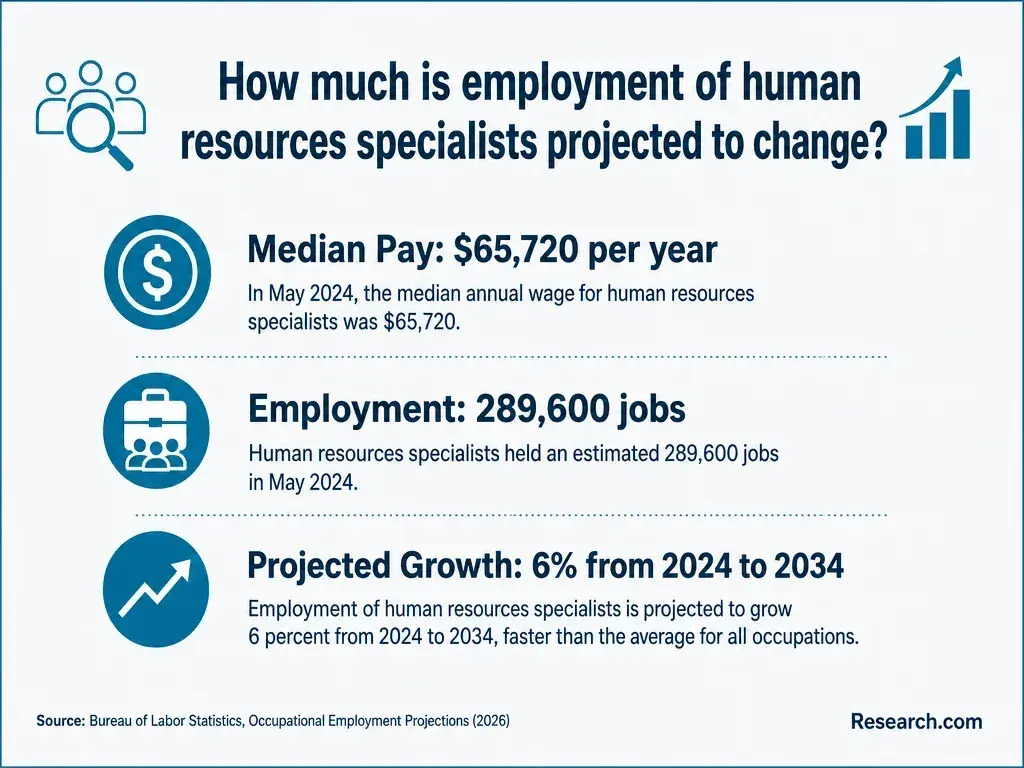
- Career pay figures are context, not a project outcome: the BLS reports a May 2025 median annual wage of $75,940 for human resources specialists, not an expected starting salary for business graduates.
What is a BS in Business Administration and how does it support career planning?
A BS in Business Administration is an undergraduate degree that typically combines accounting, finance, management, marketing, and quantitative coursework. Its exact requirements depend on the institution. For a student interested in compensation, the degree can provide a foundation for analyzing labor costs and incentives, but it does not make a graduate an HR specialist, compensation professional, or manager automatically.
Work backward from the role you want. An HR operations role may call for employee-record practices and communication; a compensation analyst role may require stronger spreadsheet, statistics, and job-evaluation skills. If your main goal is supervising teams rather than analyzing pay, compare the actual curriculum with organizational leadership degrees with faster completion options. A different degree title is useful only if its courses, remaining requirements, and applied work better fit your goal.
How do you compare compensation structures as a business administration capstone topic?
Frame the capstone as a decision for a defined audience: for example, an HR team considering whether a particular role should use a higher fixed salary or a lower fixed salary with performance-based pay. A compensation structure specifies how pay is assembled and earned. It may include base pay, commissions or bonuses, benefits, and rules that determine eligibility. State the role, location, comparison period, and decision criteria before calculating anything.
The table distinguishes structures a student could compare. It is a starting framework, not a claim that any option is best for a real employer.
| Structure | What varies | Central trade-off to examine |
| Predominantly fixed pay | Little pay depends on short-term results | Predictable earnings and costs versus limited direct incentive |
| Base pay plus individual incentive | Bonus or commission depends on defined individual measures | Clear performance link versus earnings volatility and possible metric gaming |
| Base pay plus team incentive | Variable pay depends on shared results | Collaboration versus uneven individual contribution or control |
Build an adaptable analysis in the following sequence. Use an employer-approved scenario or clearly labeled public and hypothetical inputs; do not imply that modeled results are observed results.
- Define the decision, stakeholders, job responsibilities, and alternatives that are genuinely comparable.
- Record each input, its source, access permission, comparison period, and uncertainty; distinguish target incentive pay from pay actually earned.
- Calculate employee-facing total compensation and employer cost under consistent assumptions, including relevant benefits and variable-pay conditions.
- Test how results change when performance, turnover, or staffing assumptions change; examine fairness, employee understanding, and incentives to sacrifice quality for volume.
- Present a conditional recommendation, unresolved legal or policy questions, limitations, and the evidence a decision-maker would need before implementation.
Do not treat a pay comparison as a legal compliance determination. Wage-and-hour rules, pay equity, tax treatment, and employer policies may require qualified review. If your interests are chiefly project scheduling and delivery rather than pay design, a project-management capstone may fit better; low-cost project management degree options offer a separate education pathway to compare, not a substitute for an approved business administration capstone.
What coursework prepares students to analyze pay, incentives, and organizational performance?
Look for coursework that connects compensation choices to measurable decisions. Managerial accounting supports cost comparisons; finance helps distinguish recurring obligations from uncertain payouts; statistics and spreadsheets support sensitivity analysis; and organizational behavior and HR courses help assess motivation, job design, and fairness. Business law can identify questions to refer for expert review, but an introductory course does not qualify a student to give legal advice.
Course titles alone are weak evidence of capstone readiness. Ask whether assignments require you to document assumptions, clean or interpret data, explain a model to a nontechnical reader, and defend its limitations. If leadership is the primary objective, compare those assignments with the curriculum - not just the completion timeline - of organizational leadership degrees with faster completion options.
Start by confirming the institution's recognized accreditation and the exact degree awarded. Then check whether any advertised AACSB, ACBSP, or IACBE accreditation covers the relevant business unit or program; institutional and business accreditation are different claims. Accreditation does not, by itself, establish that a compensation project is permitted or that graduates secure particular jobs.
Ask the business department for its current capstone description, rubric, sample project topics, data-use rules, faculty-supervision arrangements, and policy on employer-sponsored work. Confirm whether HR, analytics, or finance electives are available when you need them. A national guide to ranked online business colleges can help create a shortlist, but use each school's catalog and written answers to test whether its actual capstone supports this topic.
Requirements vary by school and entry route. First-year applicants generally document prior schooling; transfer applicants typically submit official college transcripts. A business major may also have separate entry requirements or course prerequisites. Ask admissions whether accounting, economics, mathematics, or statistics must be completed before entering the major or can be taken after enrollment.
If you have previous college credit, request an official evaluation showing what applies to general education, the business core, electives, and residency requirements. Accepted credit does not necessarily replace a required course. Application costs are a smaller but checkable part of the decision: colleges that waive online application costs may be worth considering, provided the degree and capstone still meet your needs.
Either format can support a compensation comparison. Online study may reduce travel, while campus study may make in-person faculty meetings and group work easier. Neither format guarantees access to employer pay data, a suitable faculty adviser, or an individually completed capstone.
Before enrolling, verify live-session times, group-meeting expectations, presentation format, software access, deadlines, and any campus visits. Students using a current workplace should also check whether the employer and school will approve the proposed work; employment alone is not academic approval. Compare these obligations against your actual weekly availability when reviewing work-compatible business administration education options.
A traditional full-time bachelor's pathway commonly spans about four academic years, but a student's remaining time depends on applicable transfer credit, course sequencing, enrollment pace, and capstone availability. Request a term-by-term plan rather than relying on an advertised completion estimate.
For cost, compare tuition and mandatory fees for the remaining required courses, then add books, software, travel, and any income you would give up to attend. Ask financial aid and your employer about eligibility and reimbursement timing before counting assistance as available cash. If a project-management degree is a serious alternative, paying for project management bachelor's study with grants is a separate comparison; aid possibilities do not establish your award or total net cost.
Relevant starting paths include HR assistant or specialist work, operations coordination, sales operations, and analyst-support roles. A compensation capstone is most useful when a target role calls for interpreting pay data, building spreadsheets, explaining trade-offs, or communicating with HR and finance stakeholders. Employers may still require function-specific experience or technical skills.
For applications, describe what you actually did: the question you framed, sources you were authorized to use, model you built, and limitations you communicated. Do not describe a classroom recommendation as an implemented employer policy. Students more interested in schedules, budgets, and delivery risks can compare project-coordination requirements with affordability checks for accredited project management programs before choosing a degree path.
There is no single salary for BS in Business Administration graduates. Pay depends on occupation, experience, location, industry, and responsibilities. The U.S. Bureau of Labor Statistics reports a May 2025 median annual wage of $75,940 for human resources specialists. That occupation-wide median includes experienced workers; it is not a starting-pay estimate or a return on this capstone.
Use occupation data to identify roles worth investigating, then compare local job postings and their stated requirements. An accelerated degree may change when you can apply, but it cannot establish a salary increase. If timing matters, assess American colleges offering fast-track business bachelor's against remaining credits, total cost, and your capacity to complete a rigorous project.
What certifications and licenses may strengthen business administration career prospects?
An HR or compensation-focused credential may become useful when its eligibility rules match your experience and target job. Check the issuing organization's current education, work-experience, examination, and renewal requirements before budgeting for one. A business degree or compensation capstone does not itself award a professional certification or authorize regulated work.
For an early-career student, an approved project and evidence of spreadsheet competence may be more immediately useful than pursuing a credential whose experience threshold they have not met. Compare that targeted investment with the full remaining degree cost; a business administration degree tuition savings guide can help identify cost questions, but the school must confirm your charges and credit evaluation. Before submitting a portfolio sample, remove personal and proprietary information, check ownership and publication rules, and obtain any required permissions.
Other Things You Should Know About Business Administration
Yes, as evidence of advertised pay ranges and stated terms - not proof of what employees receive. Record the posting date, location, role requirements, and any missing benefit or incentive information.
It can, if the jobs, locations, and responsibilities are comparable and the project accounts for different funding constraints and benefits. Avoid treating sector alone as the cause of a pay difference.
Only if the course permits it and the required organizational and academic permissions are in place. A public-data or hypothetical comparison is often more feasible than collecting sensitive employee responses.
Follow the course's AI-use policy. Verify every source and calculation, disclose tool use when required, and never enter confidential employee or employer information into an unapproved tool.
- Overview of the Privacy Act: Disclosures to Third Parties | United States Department of Justice https://www.justice.gov/opcl/overview-privacy-act-1974-2020-edition/disclosures-third-parties
- Fact Sheet 13: Employment Relationship Under the Fair Labor Standards Act (FLSA) | U.S. Department of Labor https://www.dol.gov/agencies/whd/fact-sheets/13-flsa-employment-relationship
- Compensation: A Glossary of Terms | The ILR School https://www.ilr.cornell.edu/institute-for-compensation-studies/compensation-glossary-terms
- What Is a Capstone Project? | National University https://www.nu.edu/blog/what-is-a-capstone-project/
- What Is a Capstone Project? - Boston University Questrom https://www.bu.edu/questrom/blog/what-is-a-capstone-project/
- What is a Capstone Project in College? | snhu.edu https://www.snhu.edu/about-us/newsroom/education/what-is-a-capstone-project
- How to Design a Strategic Compensation Plan That Works | CompLogix https://www.complogix.io/blog/compensation-plans/
- Which pay structure is best for your organization? | imercer https://www.imercer.com/articleinsights/types-of-pay-structures
- Types of Compensation: A 2026 Guide for HR | AIHR https://www.aihr.com/blog/types-of-compensation/
- Staying Competitive: The Types of Compensation You Need to Know About | BambooHR https://www.bamboohr.com/blog/types-of-compensation


