2027 A Second BS in Business Administration After a Bachelor's in Emergency Management: Credits, Cost, and Alternatives
Audited and Verified:
Our Editorial and Data Verification Process
Research.com uses government datasets, official education statistics and primary institutional information to support its career and degree guides. Our review process checks factual accuracy, occupational definitions, source dates and the requirements associated with the credentials discussed.
How This Article Was Fact-Checked
Our editorial team verifies salary estimates, employment projections, education requirements and program information against original data providers and official organizations. Salary figures are checked against the relevant occupational definitions and reporting periods. Information about licensure, accreditation and required in-person training is reviewed separately.
Fact-checked and verified on:

Co-Founder and Chief Data Scientist
An emergency management bachelor's can prepare you for planning, coordination, and high-stakes decisions, but it may leave gaps in accounting, finance, marketing, or business operations. If you want to move into a business role, a second BS in Business Administration is one option, not necessarily the fastest or least expensive one.
This guide shows how schools determine your remaining credits, what drives total cost, and when a certificate, specialized degree, graduate program, or work-based training may serve your goal better. You'll leave with specific questions to take to admissions and your target employers.
Key Things You Should Know
- A second business bachelor's usually does not mean repeating an entire degree, but accepted credits are not the same as credits that satisfy the business major; request an official degree audit before estimating time or cost.
- Many U.S. bachelor's degrees require around 120 semester credits in total, yet second-degree residency, business-core, and prerequisite rules, not the total alone, determine what remains.
- Choose a second BS when a target role calls for broad undergraduate business preparation; for a narrower skill gap, compare targeted coursework, a certificate, or a specialized pathway first.
What is a second bachelor's degree in business administration after emergency management?
It is a separately awarded undergraduate degree earned after your emergency management bachelor's. A BS in Business Administration typically combines business fundamentals with quantitative coursework and, at some schools, electives or a formal concentration.
A BBA or BA in Business may cover similar ground, but the degree title alone does not establish its requirements or value for a particular job.
Your first degree remains valid. Emergency management experience in logistics, procurement, budgeting, interagency coordination, or continuity planning may also give you a head start on business concepts. It does not automatically waive accounting or other required courses.
The useful question is whether the remaining curriculum fills gaps that matter for your next role. A framework for business administration degree return and completion planning can help you weigh that question against the cost of finishing.
How many credits are needed for a second business administration bachelor's degree?
There is no universal second-degree credit requirement. Many bachelor's programs are built around approximately 120 semester credits, but a school may accept much of your prior study while still requiring its business core, upper-division courses, concentration courses, and a minimum number of credits completed there.
Some schools also impose a separate minimum for a second bachelor's or do not admit second-degree students to every major.
An official evaluation should distinguish credits accepted from credits applied to general education, business prerequisites, the major, electives, and residency. An emergency management statistics course, for example, might fulfill a business quantitative requirement, count only as an elective, or require a syllabus review.
Comparing ranked programs for finishing a business bachelor's sooner is most useful after you know how each school applies your coursework - not just how many credits it accepts.
Send official transcripts and, for possible substitutions, course descriptions or syllabi. Ask the transfer office or business adviser for a written degree audit showing every remaining course, prerequisite, residency requirement, and expected course availability. Only the receiving institution can approve that plan.
How much does a second bachelor's degree in business administration cost?
Calculate cost from remaining required enrollment, not from the advertised price of a full bachelor's. Without a school-specific audit and tuition schedule, a reliable total cannot be quoted.
The following components reveal why two apparently similar programs can have different final costs:
| Cost component | What to verify |
| Tuition | Rate per credit, course, or term; any second-degree or online rate |
| Additional charges | Mandatory fees, books, software, proctoring, and campus travel |
| Extra enrollment | Prerequisites, residency credits, repeated courses, and delayed course offerings |
| Financing and work | Eligible aid, loan costs, employer reimbursement timing, and income lost to reduced hours |
Compare schools using the same assumptions: required credits multiplied by the applicable tuition rate, plus fees and other expenses, then subtract only aid you have been awarded. A previous bachelor's generally makes you ineligible for a federal Pell Grant, although other aid may be possible subject to eligibility and borrowing limits.
If a project management degree is a serious alternative, compare its curriculum and transfer evaluation separately; undergraduate project management grants and scholarship planning can inform that comparison, but funding for one program cannot be assumed for another.
Start with the role you want, the skills you already use in emergency management, and the qualification employers actually request. Broad business study is valuable when several functional gaps stand between you and a new career. A narrower goal may justify less schooling, or a different degree:
| Pathway | Best fit | Main limitation |
| Second BS or BBA in Business Administration | A career change requiring broad accounting, finance, operations, and management foundations | May repeat introductory material or cost more than targeted preparation |
| Business courses or undergraduate certificate | A defined gap, such as financial statements or marketing fundamentals | May not satisfy an employer's degree-field requirement |
| Specialized bachelor's | A clear target function, such as supply chain, HR, or accounting | Transfer fit and prerequisite depth may differ substantially |
| MBA or specialized master's | Graduate-level preparation when admission requirements, experience, and career goals align | Not a substitute for every undergraduate prerequisite or entry-level work sample |
| Employer training and documented projects | An adjacent move where your existing degree already meets hiring requirements | Results and role access depend on your workplace and employer |
For example, emergency logistics experience may support a move toward supply chain coordination. Before starting another general business degree, compare the specialized coursework and transfer policies of accelerated supply chain management bachelor's schools.
By contrast, an MBA may be worth investigating if you already have substantial responsibility and need graduate study rather than another undergraduate credential. Neither path substitutes for checking actual job postings and admissions rules.
Requirements vary, but expect a review of accounting, economics, finance, marketing, management, operations, business law, statistics or analytics, and a strategy or capstone course.
Your emergency management study may overlap most naturally with project coordination, risk, logistics, communication, and organizational leadership. Financial and commercial subjects are more likely to be new, though only a course-by-course evaluation can establish that.
Sequence matters: an accounting prerequisite can delay finance, and a capstone may require completion of most of the major. Ask whether an approved substitution removes a requirement or merely supplies elective credit.
If scheduling is the obstacle, short-term classes toward a bachelor's degree may help you investigate format options; shorter classes do not eliminate prerequisites, workload, or required courses.
Schools commonly request an application and official transcripts from every prior college. They may set a minimum prior GPA, require particular mathematics or business prerequisites, or conduct a separate review for entry to the business major.
Some do not offer a second bachelor's in business at all. Admission to the university, admission to the major, and approval of transfer equivalencies are distinct decisions.
Ask admissions whether second-degree applicants are eligible, which catalog applies, and when missing prerequisites must be completed. Ask the business department which courses can be reviewed for substitutions.
If your target is project coordination rather than broad business study, compare these answers with colleges accepting coursework toward project management bachelor's study; acceptance into either program does not establish how your emergency management credits will apply.
Neither format is inherently faster or easier. Online study can reduce travel, while campus classes may provide a predictable meeting schedule and direct access to classmates and local recruiting.
For an emergency management professional who works during incidents or rotating shifts, the deciding factor is the actual attendance and deadline policy, not the word "online."
Check whether classes require live sessions, group meetings, proctored exams, presentations, an internship, or campus visits. Confirm when required courses run, whether part-time enrollment is allowed, and what happens if work interrupts a term.
Compare those policies when reviewing online business administration programs with work-compatible schedules. An asynchronous lecture offers limited flexibility if a capstone team must meet at fixed times.
Check that the institution holds recognized institutional accreditation, then verify its status and the campus or online offering you intend to attend through the accreditor or U.S. Department of Education listings. Do not rely solely on a program advertisement.
The school's accreditation information should match its official name and the location or delivery arrangement under consideration.
Business-school accreditation from AACSB, ACBSP, or IACBE is a separate question: verify the accreditor's listing and whether the specific business school or program is within its stated scope. It does not replace an assessment of transfer policy, cost, or outcomes.
Lists of low-cost business administration degrees with federal aid options can be a starting point, but confirm both accreditation and your own aid eligibility directly before applying.
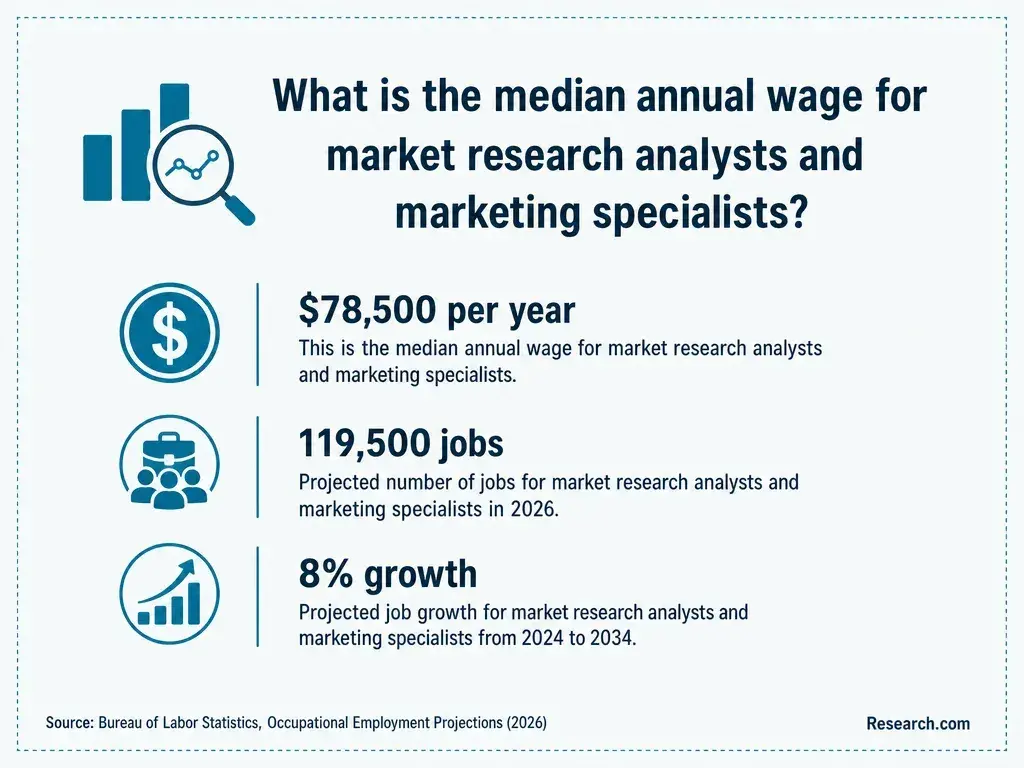
With an emergency management background, plausible adjacent paths include operations coordination, procurement support, project coordination, business continuity, and supply chain work. HR or marketing may also be possible, but those moves often require function-specific coursework and evidence of practical skill.
A second degree does not itself confer a manager title; employers assess responsibilities and results as well as credentials.
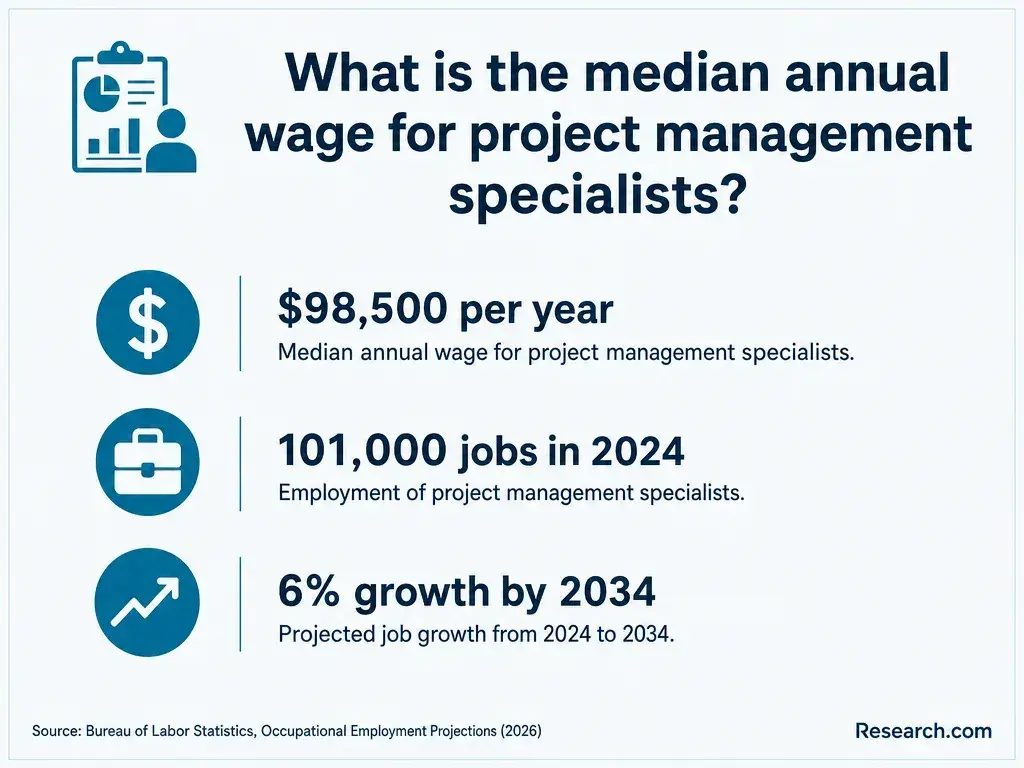
For salary context, the U.S. Bureau of Labor Statistics reports a May 2025 median annual wage of $102,320 for project management specialists and projects 7% employment growth from 2025 to 2035. That is an occupation-wide median, not an expected starting salary for someone with a new business degree.
Before choosing a pathway, compare job postings' required tasks with projects you can document and the coursework you still need. If HR is your target, human resources degree options for college transfers may be more directly relevant than a general business major.
Do business administration careers require licenses or professional certifications?
Many general operations, coordination, and administrative roles do not require a professional license. Specific work can be different: public accounting licensure, certain financial services activities, and some regulated occupations have separate requirements set by the relevant state or regulator. A BS in Business Administration does not automatically meet them.
Voluntary HR, supply chain, and project management certifications have their own eligibility rules, which may include experience or examinations.
If HR is your goal, compare HR degree coursework and entry requirements with the certification body's current rules rather than treating an HR elective or concentration as a credential. Confirm the exact requirement for your intended occupation before paying for a second degree.
Other Things You Should Know About Business Administration
No. Your first bachelor's remains an awarded credential; a completed second bachelor's is a separate award. Ask the new school how both will appear on its records and your transcript.
Possibly, but completion of training alone does not guarantee college credit. Ask the receiving school whether it recognizes the specific coursework and, if so, where any credit would apply.
Only if the program approves the project and your employer permits the work and data use. A proposed process or budgeting project is not automatically an approved academic capstone.
Often, subject to the school's enrollment rules. Confirm that the course would later apply to your intended program; non-degree enrollment may have different financial-aid eligibility.
- Eligibility Requirements | Federal Student Aid https://studentaid.gov/understand-aid/eligibility/requirements
- Accreditation in the U.S. | ed.gov http://www.ed.gov/laws-and-policy/higher-education-laws-and-policy/college-accreditation/accreditation-in-the-us
- Second Degree Student - UNCG Admissions - UNC Greensboro https://admissions.uncg.edu/admissions/other-student-types/second-degree-student/
- Degree Requirements - Undergraduate Bulletin 2026-2027 | Speech-Language-Hearing Center https://uca.edu/ubulletin/general-policies-information/degree-requirements/
- Second Bachelor's - UF Online - University of Florida https://ufonline.ufl.edu/apply/admissions-requirements/second-bachelors/
- Business Management vs Business Administration Certificate | Owen Graduate School of Management https://business.vanderbilt.edu/business-management-certificate/business-management-vs-business-administration-certificate/
- Why Is Accreditation Important? | ACE Blog https://ace.edu/blog/why-is-accreditation-important/
- Transfer Credit, Test Awards, Liberal Education (General Education) Requirements | Office of Admissions https://admissions.tc.umn.edu/admissions/transfer-admission/transfer-credit-evaluation/transfer-credit-test-awards-liberal
- Second Bachelor's Degree Admission - Academic Catalog https://catalog.ucdenver.edu/cu-denver/undergraduate/admissions/undergraduate-admissions/transfer-student-admission/second-bachelors-degree-admission/
- Can I get a second bachelor's degree? | Undergraduate Admissions https://admissions.unc.edu/faqs/can-i-get-a-second-bachelors-degree/