2027 Choosing a BS in Business Administration for Business Roles in Event Businesses
Audited and Verified:
Our Editorial and Data Verification Process
Research.com uses government datasets, official education statistics and primary institutional information to support its career and degree guides. Our review process checks factual accuracy, occupational definitions, source dates and the requirements associated with the credentials discussed.
How This Article Was Fact-Checked
Our editorial team verifies salary estimates, employment projections, education requirements and program information against original data providers and official organizations. Salary figures are checked against the relevant occupational definitions and reporting periods. Information about licensure, accreditation and required in-person training is reviewed separately.
Fact-checked and verified on:

Co-Founder and Chief Data Scientist
Event companies need people who can price services, manage vendors, market experiences, and keep complicated projects on budget. A BS in Business Administration can build those skills, but it is not the only route into the industry, and it may not provide enough hands-on event experience by itself.
This guide is for prospective students and early-career professionals weighing a business degree against more specialized preparation. It explains which roles the degree supports, what to look for in a program, and how to test whether the time and cost fit your career goal.
Key Things You Should Know
- A BS in Business Administration is a strong fit for event company operations, sales, marketing, and budgeting when paired with relevant event experience; it is not an automatic path to management.
- Prioritize applied work in vendor coordination, pricing, customer experience, and event logistics over a concentration name alone.
- The U.S. median annual wage for meeting and event planners was $61,160 in May 2025, according to the Bureau of Labor Statistics; that occupation-wide figure is not a starting salary for business graduates.
What is a BS in Business Administration for event business careers?
A BS in Business Administration is an undergraduate degree covering several business functions rather than training for one event job. In an event business, such as a venue, conference organizer, festival operator, or event services firm, graduates might apply accounting to budgets, marketing to ticket or client acquisition, and operations to vendor schedules.
The curriculum varies by school; a BS label does not guarantee particular event courses or more quantitative work than a BBA.
The degree makes particular sense if you want options across an event company's commercial and operational roles. If your goal is primarily on-site planning, a hospitality or event management program with substantial field experience may be more direct.
If purchasing and distribution are your main interests, compare the degree's operations courses with specialized supply chain education costs and career prospects. Neither route replaces experience managing real event constraints.
What careers can a business administration graduate pursue in event businesses?
Start with the work you want to do, not the title "event manager." Early roles usually involve supporting a budget, client account, campaign, or production schedule; responsibility for major contracts and teams generally comes later.
The distinctions below can help you judge whether a prospective program produces useful work samples for your target role:
| Role direction | Typical event-business work | Useful evidence of readiness |
| Event or operations coordinator | Tracks schedules, vendors, changes, and on-site issues | A supervised event plan, run-of-show document, or logistics experience |
| Sales or account coordinator | Responds to leads, prepares proposals, and supports client relationships | Customer-facing experience and a clear, costed proposal |
| Marketing coordinator | Supports promotion, audience research, and campaign reporting | Campaign samples with appropriately interpreted results |
| Purchasing or vendor coordinator | Compares suppliers, tracks orders, and monitors contract details | Spreadsheet analysis and documented vendor coordination |
A business degree can also support a move toward project coordination, but employers may prefer direct delivery experience for complex productions.
Students comparing that route with a specialized degree can examine cost-conscious project management college options and check whether either curriculum includes event-relevant projects.
The Bureau of Labor Statistics projects 6% employment growth for meeting and event planners from 2025 to 2035; that national outlook does not predict openings at a particular venue or firm.
What coursework prepares students for event business roles?
The most useful core courses connect a business decision to an event outcome. Managerial accounting and finance help with pricing, margins, and cash timing; marketing helps with audience and client acquisition; operations and project management address schedules, capacity, suppliers, and contingencies.
Business law can introduce contract concepts, while statistics and spreadsheets help students assess demand and costs. Introductory exposure is not a substitute for legal advice, advanced financial work, or production experience.
Check the actual course catalog and recent course schedule, not just the advertised concentration. An event, hospitality, marketing, or operations concentration is valuable when its required courses and applied assignments match your intended function without adding unwanted credits or delay.
A student focused on vendor logistics could also compare available electives with shorter completion timelines for supply chain bachelor's students; faster is useful only if the specialized curriculum fits the target work.
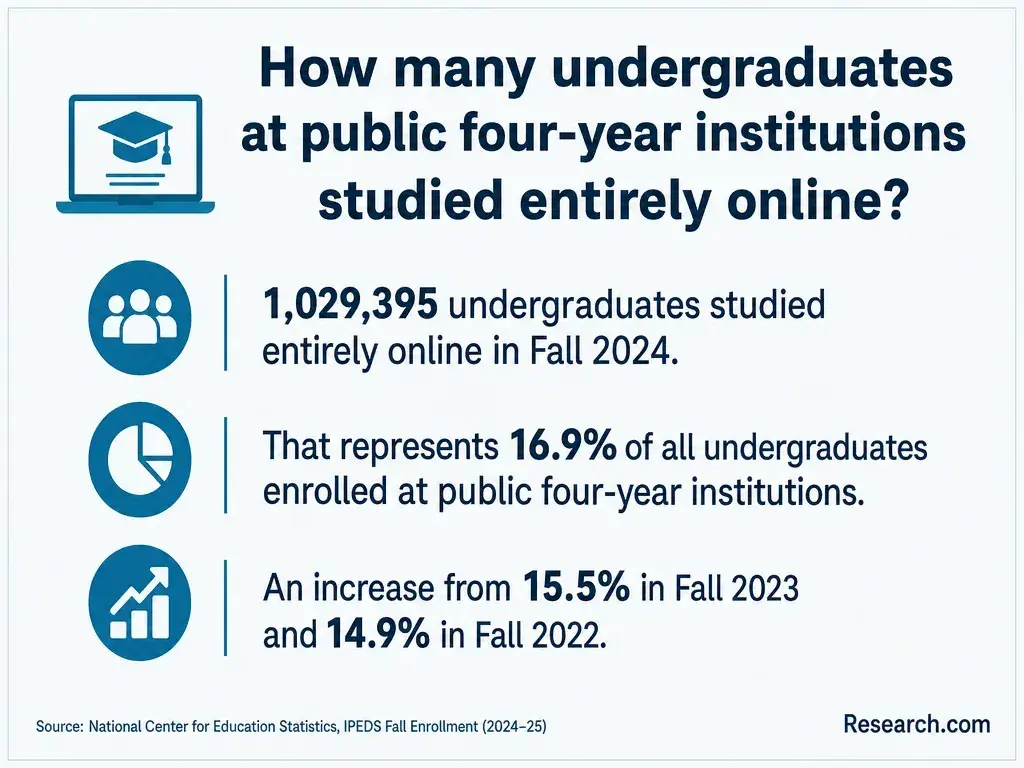
Online study may let someone working event nights or weekends avoid a commute, while campus study may offer easier access to local employers, group productions, and in-person recruiting. Neither format guarantees those benefits.
Online courses can still require live meetings, fixed deadlines, group presentations, or proctored exams that conflict with event shifts.
Before choosing a format, request a recent schedule for required courses and ask how internships and team projects work for students outside the school's area. When you compare leading American online business degree schools, give particular weight to documented scheduling rules and access to event-relevant work, not delivery mode alone.
Verify that the institution holds recognized institutional accreditation, then check whether any advertised business accreditation covers the school or program you would actually attend.
AACSB, ACBSP, and IACBE are business-focused accreditors, but their accreditation scopes differ; do not assume that an accredited business school means every named degree or location is covered.
Accreditation is a screening criterion, not evidence that graduates obtain event jobs. Compare the curriculum, internship access, advising, and total cost as well.
This matters when reviewing lower-priced college options for business majors: confirm accreditation and program details directly before treating a lower advertised price as a better value.
First-year applicants generally submit secondary-school records; transfer applicants generally submit records from previous colleges. A school may also have separate requirements for entry into its business major, including specified introductory courses or academic standing.
Requirements for mathematics, statistics, accounting, essays, and tests vary, so a general admission offer does not necessarily mean every business prerequisite is complete.
If you have college credits, request an evaluation showing where each accepted course applies: general education, business core, concentration, or electives. Ask an adviser which remaining prerequisites block upper-level courses.
For a more detailed preparation checklist, use business administration degree prerequisite planning, then confirm the rules in your prospective school's catalog.
A conventional full-time bachelor's path commonly takes about four academic years; transfer credit, part-time enrollment, course sequencing, and required internships can change the finish date. An accelerated calendar does not remove required coursework.
Ask each school for a degree audit and a term-by-term plan before relying on a completion estimate.
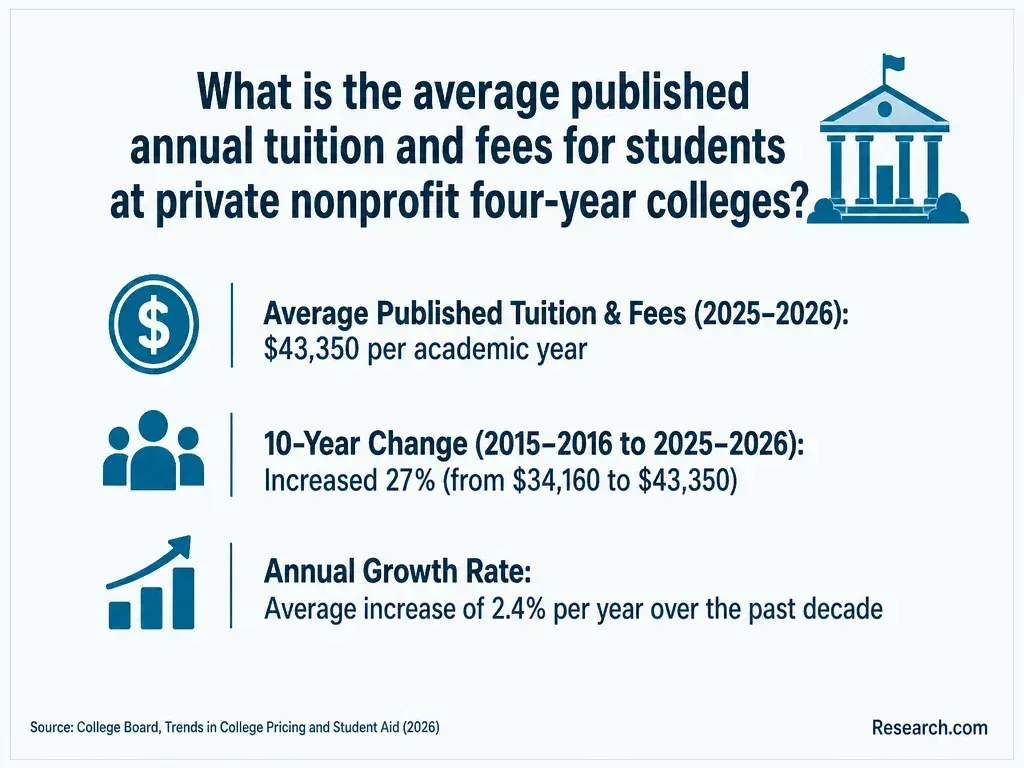
To compare cost, total the tuition for remaining required credits, mandatory fees, books or software, and any travel or internship expenses. Then account for aid, employer benefits if available, borrowing, and work hours you may have to give up.
Advertised tuition alone cannot establish your final cost. Use lower-tuition online business administration programs as a starting set of options, then request a school-specific cost estimate based on your evaluated credits.
Employers need evidence that you can communicate with clients, maintain a reliable budget or schedule, respond to changes, and coordinate people who do not report to you.
Spreadsheet fluency, clear proposals, vendor communication, and calm on-site problem-solving are especially transferable. Paid event work, volunteering, or an internship can provide evidence, but none automatically earns academic credit.
Look for an internship with defined tasks, supervision, and a chance to see both preparation and event delivery. Ask the program who approves placements and whether an accelerated course sequence leaves time for them; compare accelerated business programs on that point as well as speed.
For a portfolio, describe your own contribution and redact client details, prices, and other information you lack permission to share.
The Bureau of Labor Statistics reports a May 2025 median annual wage of $61,160 for U.S. meeting and event planners. The figure covers workers across employers and experience levels; it is neither an event-company-only wage nor what a new BS graduate should expect to earn.
Pay for sales, marketing, operations, and vendor roles also depends on the occupation, location, employer, and responsibilities, not simply possession of a business degree.
Compare local job postings for your intended entry role with the program's net cost and the experience you can gain while enrolled. If earlier completion matters financially, assess flexible accelerated bachelor's degrees against their weekly workload and any earnings you would forgo. Do not calculate a degree payoff by comparing an entry-level offer with the wage of an experienced manager.
Are certifications or licenses required for event business careers?
Many event coordination and business-support roles have no universal professional license. Voluntary event or project credentials may help demonstrate knowledge, but eligibility rules can require experience, education, or an exam; a business degree does not award the credential automatically.
A particular venue, regulated activity, or employer may impose separate training or permit requirements, so check the actual job and jurisdiction.
If a posting requires a bachelor's degree, a short certification is unlikely to satisfy that requirement. You can compare American fast-paced business bachelor's degrees if the degree requirement is your main obstacle. If you already meet the education requirement but lack event exposure, supervised work or targeted training may be the more direct next step.
Other Things You Should Know About Business Administration
Yes, but a degree is not required to start one. Before taking clients, assess your market, cash needs, contracts, insurance, and applicable local business rules; seek qualified advice where needed.
It can strengthen a job application if you can explain the business tasks you performed. Academic internship credit is separate and requires approval under your program's rules.
Yes. Employers may consider business, hospitality, marketing, or other education alongside relevant customer service, logistics, sales, and event experience. Check the requirements of specific openings.
Location can help with local placements and employer contacts, but it is not essential. Ask each program which event employers students can actually reach through its career services, coursework, and approved placements.
- What Internships Should Business Students Look For? | Lasell University https://www.lasell.edu/academics/lasell-insights/what-internships-should-business-students-get.html
- Event and Experience Management Major | vt.edu https://htm.pamplin.vt.edu/undergraduate/eemg.html
- 11 Types of Business Degrees and Career Pathways | National University https://www.nu.edu/blog/types-of-business-degrees/
- Why AACSB Accreditation Matters to Employers | College of Business Administration | CSUSM https://www.csusm.edu/coba/about/aacsb/accreditationmatters/aacsbemployers.html
- Choosing the Right BBA Program: Considerations for Selecting Your Business School | Carson-Newman University https://www.cn.edu/cps-blog/choosing-the-right-bba-program-considerations-for-selecting-your-business-school/
- AACSB Global Standards for Business Education https://www.aacsb.edu/educators/global-standards
- Business Administration vs. Business Management | Warner Pacific University https://www.warnerpacific.edu/blog/business-administration-vs-business-management/
- Hospitality vs. Business Administration Degree Comparison | NMSU Global Campus https://global.nmsu.edu/blog/agriculture-and-consumer-sciences/hrtm-vs-business-administration/
- Opportunities With a Business Administration Degree | Saint Mary's University of Minnesota https://www.smumn.edu/blog/what-doors-can-a-business-administration-degree-open/
- The Role of an Event Manager: Skills and Responsibilities | shms.com https://www.shms.com/en/news/role-of-event-manager/