
2027 How to Become a Substitute Teacher

Co-Founder and Chief Data Scientist
Substitute teaching is one of the fastest ways to enter a classroom, test whether education is the right career fit, and help schools keep instruction moving when regular teachers are absent. It also comes with important decisions: requirements vary widely by state and district, pay can differ by assignment type, and long-term substitute roles may require stronger credentials than daily substitute work.
This guide explains how to become a substitute teacher for 2026 planning, what the job actually involves, how long the process can take, what skills matter most, and how to decide whether substitute teaching is a short-term job, a bridge to full-time teaching, or a flexible long-term career. You will also learn how to compare district requirements, avoid common mistakes, and use substitute teaching experience to move into other education roles.
Key Insights
- Substitute teaching is a practical entry point into education. It lets you gain classroom experience, test career fit, and build school-based references without immediately committing to a full-time teaching role.
- Requirements are not uniform. Some states and districts accept candidates with a high school diploma or GED, while others require college credits, a degree, a permit, or a teaching credential.
- Background checks are non-negotiable. Fingerprinting and criminal history screening are standard because substitute teachers work directly with students.
- Daily and long-term substitute roles are different. Daily substitutes usually follow prepared plans, while long-term substitutes may need to plan lessons, grade work, and meet higher credential expectations.
- Pay should be evaluated realistically. Hourly or annual averages do not always reflect actual take-home income because daily substitutes may not work every school day or receive benefits.
- The strongest substitutes prepare for uncertainty. Bring backup activities, learn school procedures quickly, communicate professionally, and leave detailed notes for the returning teacher.
- Career growth depends on your goal. If you want full-time teaching, focus on certification. If you want leadership, special education, curriculum, or alternative education careers, choose training and degrees that match that path.
Quick Answer: How Do You Become a Substitute Teacher?
To become a substitute teacher, you usually need to meet your state or district’s minimum education requirement, pass a background check and fingerprinting, complete any required training or orientation, obtain a substitute permit if required, and apply through a school district or substitute staffing agency. Some states allow candidates with a high school diploma or GED, while others require college credits, a bachelor’s degree, or a teaching credential.
Demand remains strong because many schools are still dealing with staffing gaps. There are at least 49,000 vacant teaching positions nationwide as of school year 2024-2025, and a 2023 report from the National Center for Education Statistics found that over 30% of U.S. schools are facing teacher shortages. As a result, many districts rely on substitutes for daily absences, long-term vacancies, and emergency coverage.
Key Things You Should Know About Becoming a Substitute Teacher
- Substitute teachers are needed in many districts. There are at least 49,000 vacant teaching positions nationwide as of school year 2024-2025, which means schools often depend on substitutes to keep classrooms staffed.
- Pay varies by role, location, and assignment length. The average hourly wage for substitute teachers in the United States is approximately $20, equating to an annual salary of around $42,244. Long-term roles and additional certifications can lead to higher wages, and some states offer benefits for extended assignments.
- Many substitutes are new to the field. 44% of substitute teachers are new to the profession, with less than a year of experience in the role. For many people, substitute teaching is a practical way to explore education before committing to a full-time teaching path.
- Experience with children helps, even when it is not required. Prior work in tutoring, coaching, child care, youth programs, or classroom volunteering can make it easier to manage students and qualify for assignments.
- Requirements are local. State rules matter, but individual districts may set higher standards for long-term, special education, or subject-specific assignments.
- What does a substitute teacher do?
- How to become a substitute teacher for 2027?
- How long does it take to become a substitute teacher?
- What are the pros and cons of being a substitute teacher?
- What are the most important skills for a substitute teacher?
- How does a substitute teacher apply for a teaching job?
- What are the possible career paths for aspiring substitute teachers?
- How can substitute teachers advance their careers?
- What are effective continuing education options for substitute teachers?
- How can advanced leadership training benefit substitute teachers?
- What challenges do substitute teachers commonly face, and how can they overcome them?
- Can further education enhance your substitute teaching career?
- How can substitute teaching experience open doors to alternative educational careers?
- Why should substitute teachers consider interdisciplinary studies?
- What is the job outlook for substitute teachers?
- What is the average salary of substitute teachers?
- What are ideal resources for new substitute teachers?
What does a substitute teacher do?
A substitute teacher takes over a classroom when the assigned teacher is unavailable. The goal is not simply to supervise students. A good substitute keeps the class on schedule, follows the teacher’s lesson plans, manages behavior, documents what happened, and protects instructional time so students do not lose momentum.
The work can look different from day to day. One assignment may involve reading activities in an elementary classroom; another may require monitoring a high school science lab, supporting students with accommodations, or covering multiple periods across different subjects. Long-term substitute teachers may also plan lessons, communicate more regularly with families, grade assignments, and collaborate with department teams.
For candidates who want substitute teaching to lead to a permanent classroom role, it is useful to understand the steps to become a certified teacher, since daily substitute experience alone does not always meet full licensure requirements.
Core Responsibilities of Substitute Teachers
| Responsibility | What it means in practice | Why it matters |
| Following lesson plans | Reviewing the teacher’s instructions, delivering activities, distributing materials, and keeping students on task. | Students continue learning even when their regular teacher is absent. |
| Managing the classroom | Setting expectations early, redirecting behavior, applying school rules, and preventing disruptions. | Substitutes often work with students they do not know, so structure is essential. |
| Taking attendance | Recording attendance accurately and following school procedures for late arrivals or missing students. | Attendance records affect safety, accountability, and school operations. |
| Supporting student safety | Following emergency procedures, monitoring transitions, and being alert to health, behavioral, or accessibility needs. | Student safety is a primary responsibility in every assignment. |
| Communicating with staff | Asking questions when plans are unclear and reporting major classroom issues to the office or department lead. | Schools need substitutes who can work professionally within the building’s systems. |
| Leaving clear notes | Summarizing completed work, behavior concerns, unfinished tasks, student questions, and positive observations. | The returning teacher needs an accurate picture of what happened during the absence. |
Daily Substitute vs. Long-Term Substitute
Daily substitutes usually cover short absences and follow plans prepared by the classroom teacher. Long-term substitutes may cover extended medical leave, vacancies, or staffing shortages. These roles often involve more planning, grading, and communication, and they may require a stronger credential depending on the district.
| Assignment type | Typical duties | Best fit for | Possible credential expectations |
| Daily substitute | Follow prepared plans, supervise lessons, take attendance, and leave notes. | People seeking flexibility, part-time work, or early classroom exposure. | Often the lowest entry requirement, but rules vary by location. |
| Long-term substitute | Teach a class for an extended period, grade work, communicate with staff, and sometimes plan instruction. | Aspiring full-time teachers and experienced substitutes who want stable assignments. | May require a bachelor’s degree, permit, license, or subject background. |
| Specialized substitute | Support special education, bilingual classrooms, advanced subjects, or career and technical courses. | Candidates with relevant training, certifications, or professional experience. | Districts may require specialized credentials or documented expertise. |
How to become a substitute teacher for 2027?
The path to substitute teaching is usually shorter than the path to becoming a licensed full-time teacher, but it still requires screening, documentation, and district approval. The exact process depends on where you live, the grade levels you want to cover, and whether you are applying for daily or long-term assignments.
Step 1: Check your state and district requirements
Start with your state education agency and the school districts where you want to work. The minimum education requirement can vary substantially. Some states, including Colorado, Missouri, and Texas, allow some candidates to qualify with a high school diploma or GED. Other states, including California, New York, and Illinois, may require more college education, a permit, or an education degree depending on the role and local rules.
Do not assume that statewide minimums are enough. A district can require more than the state minimum, especially for long-term substitute jobs, special education assignments, or high-need subjects.
Step 2: Gather required documents
Most applications ask for proof of education, identification, references, and employment history. Some districts also ask for transcripts, test scores, a resume, availability preferences, or documentation of prior teaching, tutoring, child care, or youth leadership experience.
Step 3: Complete fingerprinting and a background check
All candidates must pass a criminal background check and fingerprinting before working with students. Processing time varies, so complete this step as early as possible after starting your application.
Step 4: Apply for a substitute permit or license if required
Some states require a substitute teaching permit, emergency permit, or short-term authorization. Requirements may include training, an exam, college credits, or proof of a degree. In shortage areas, emergency pathways may allow candidates to begin work without full teacher certification, but those pathways can be temporary and may have renewal limits.
Step 5: Complete required training or orientation
Training requirements differ by district. Some districts offer a short orientation on policies and scheduling systems, while others require training in classroom management, instructional strategies, student safety, mandated reporting, or technology platforms. Florida, for example, requires individuals without prior classroom teaching experience to complete training in instructional strategies and classroom management.
Step 6: Apply to districts or substitute staffing agencies
You can apply directly to school districts or through agencies that manage substitute placement. After approval, you may be added to an online scheduling system where you can accept assignments by grade level, school, subject, or date.
Substitute Teacher Requirement Checklist
| Requirement | What to verify before applying | Why it matters |
| Minimum education | High school diploma, GED, college credits, bachelor’s degree, or teacher preparation background. | Eligibility depends on state and district rules. |
| Background check | Fingerprinting, criminal history review, and any child safety screening. | Schools cannot place candidates in classrooms without clearance. |
| Permit or license | Whether your state requires a substitute certificate, emergency permit, or temporary authorization. | Working without the correct authorization can delay or prevent placement. |
| Training | District orientation, classroom management modules, safety training, or instructional preparation. | Training helps new substitutes handle unfamiliar classrooms more effectively. |
| Assignment limits | Maximum number of consecutive days, grade-level restrictions, or long-term assignment rules. | Some permits allow only short-term coverage unless additional requirements are met. |
How long does it take to become a substitute teacher?
The timeline depends on your state’s rules, the district’s hiring process, and how quickly your background check is completed. In places with minimal requirements, a candidate who already has the required education can sometimes finish the application, background check, and onboarding within a few days to a couple of weeks.
If your state requires a substitute permit, training course, exam, transcript review, or additional approval, the process can take several weeks to a few months. Long-term substitute roles may take longer because districts often review credentials more carefully before placing someone in a sustained instructional assignment.
| Scenario | Likely timeline | What can slow it down |
| District requires only basic eligibility and background clearance | A few days to a couple of weeks | Fingerprinting delays, missing documents, or limited onboarding dates. |
| State permit or training is required | Several weeks to a few months | Transcript processing, course completion, exam scheduling, or state review. |
| Candidate is seeking long-term or specialized assignments | Often longer than daily substitute approval | Credential verification, interviews, subject requirements, or district-level screening. |
What are the pros and cons of being a substitute teacher?
Substitute teaching can be a good match if you want flexible work, classroom experience, or a low-commitment way to explore education. It can be less suitable if you need predictable income, benefits, or a consistent daily routine. The value of the role depends on your goals.
| Pros | What this means for you |
| Flexible scheduling | You may be able to choose assignments based on your availability, preferred schools, or grade levels. |
| Exposure to different classrooms | You can experience multiple subjects, student age groups, teaching styles, and school cultures. |
| Lower entry barrier in some states | Some states and districts do not require full teacher certification for daily substitute roles. |
| Useful pathway into teaching | Strong substitutes can build relationships with principals and teachers, which may help when applying for full-time roles. |
| Chance to test career fit | You can learn whether classroom teaching suits your strengths before investing in a full teacher preparation program. |
| Cons | What to consider before applying |
| Income can be inconsistent | Daily assignments may fluctuate by season, district demand, and your availability. |
| Benefits may be limited | Many substitute positions do not include health insurance, paid time off, or retirement benefits. |
| Classroom management can be difficult | Students may test boundaries when their regular teacher is absent, especially if expectations are unclear. |
| Plans may be incomplete | You may need to adapt quickly when lesson plans, materials, or technology access are missing. |
| Pay is often lower than full-time teaching | The average hourly rate for a substitute teacher is $20, which is often below the compensation of certified educators. |
If your goal is a permanent teaching position, substitute teaching can be a practical first step, but it is not a substitute for licensure where licensure is required. Earning an online master's in education may support career advancement for candidates who want stronger credentials and broader teaching opportunities.
What are the most important skills for a substitute teacher?
Substitute teachers need more than subject familiarity. They must enter unfamiliar classrooms, interpret plans quickly, earn student cooperation, and communicate clearly with school staff. The following skills are especially important for new substitutes.
Classroom Management
Classroom management is often the make-or-break skill for substitutes. Studies have shown that teachers allocate approximately 40% of their classroom time to managing student behavior and organizing activities. For substitutes, the challenge can be greater because students may not know them and routines may not be automatic.
Strong classroom management means greeting students confidently, explaining expectations at the start, using the teacher’s established procedures when available, and addressing small disruptions before they grow. Candidates who want deeper preparation for younger learners may benefit from an online master's in early childhood education, particularly if they plan to work in elementary or early childhood settings.
Communication Skills
Substitute teachers must explain directions clearly, listen to students, ask staff for help when needed, and leave useful notes for the returning teacher. Successful instruction is often described as approximately 50% subject knowledge and 50% communication skills, which is especially relevant when a substitute has limited time to build trust.
Time Management and Organization
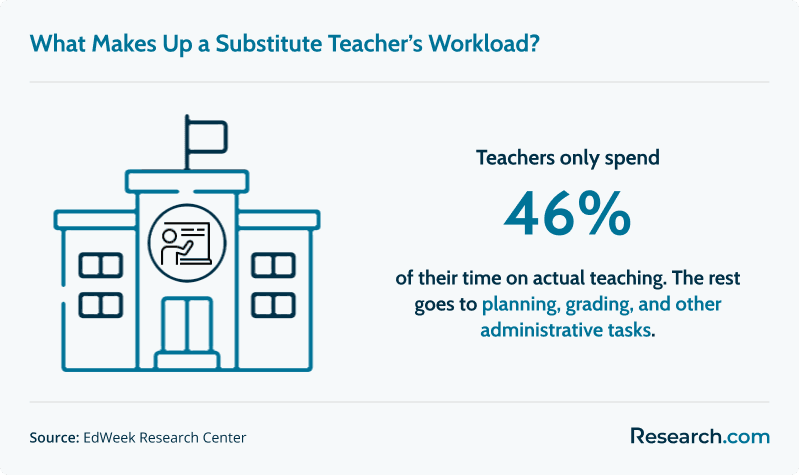
A national survey found that teachers work a median of 54 hours per week, but only 46% of their time in the school building is spent on actual teaching. Substitute teachers do not usually carry the same planning load as full-time teachers, but they still need to manage class periods, transitions, materials, attendance, and end-of-day reporting with limited preparation time.
Adaptability
Substitute assignments can change quickly. A teacher may leave detailed plans, or there may be missing materials, technology issues, schedule changes, or students who need extra support. Adaptable substitutes bring backup activities, stay calm, and focus on maintaining a productive learning environment.
Professional Judgment
Substitutes need to know when to handle a minor disruption independently and when to contact office staff. They also need to protect student privacy, follow school policies, and avoid making promises or disciplinary decisions outside their authority.
| Skill | What it looks like in the classroom | How to build it |
| Classroom management | Clear expectations, consistent redirection, and calm responses to disruptions. | Observe experienced teachers, take management workshops, and prepare routines. |
| Communication | Simple directions, respectful tone, active listening, and detailed notes. | Practice giving concise instructions and writing end-of-day reports. |
| Organization | Keeping attendance, lesson materials, timing, and assignments on track. | Use checklists, timers, seating charts, and a substitute folder. |
| Adaptability | Adjusting when plans, materials, or schedules change. | Prepare backup activities and learn common school technology tools. |
| Reliability | Arriving on time, accepting appropriate assignments, and following policies. | Maintain an accurate calendar and read district procedures before your first day. |
How does a substitute teacher apply for a teaching job?
Substitute teachers usually begin by applying to districts, charter school networks, private schools, or staffing agencies. If your longer-term goal is a full-time role, treat every substitute assignment as part of your professional record. Principals and teachers remember substitutes who arrive prepared, manage classrooms well, and communicate clearly.
You can also explore broader careers in education if you want to compare substitute teaching with other entry points into schools.
Application Steps
- Identify hiring channels. Search district websites, state education job boards, school network pages, and substitute staffing agencies. Some districts partner with organizations such as Kelly Education or ESS to handle substitute hiring.
- Prepare your documents. Collect transcripts, proof of education, references, identification, certification or permit documents, and any required background check forms.
- Submit applications strategically. Apply to districts where you can reliably commute and where your availability matches school needs.
- Complete interviews, training, or orientation. Some districts require an interview before approval. Others focus on onboarding, safety policies, classroom expectations, and scheduling systems.
- Join the substitute pool. Once approved, you may be added to a call list or online platform where you can accept daily or long-term assignments.
- Track your work history. Keep records of schools, grade levels, subjects, dates, and positive feedback. This can help when applying for long-term assignments or full-time teaching roles.
Questions to Ask Before Accepting Substitute Assignments
| Question | Why it matters |
| What is the daily pay rate and when are substitutes paid? | Pay schedules and rates can affect whether the role fits your budget. |
| Are long-term assignments paid differently? | Extended roles may involve more responsibility and may have different compensation rules. |
| Are benefits available after a certain number of days? | Some substitutes receive limited or no benefits, so confirm eligibility before relying on them. |
| What training is provided before the first assignment? | New substitutes need clear guidance on discipline, safety, technology, and reporting. |
| Can substitutes choose schools, grade levels, or subjects? | Assignment control affects comfort, commute, and classroom success. |
| What should substitutes do when no lesson plan is available? | This is a common real-world problem, and districts should provide procedures. |
What are the possible career paths for aspiring substitute teachers?
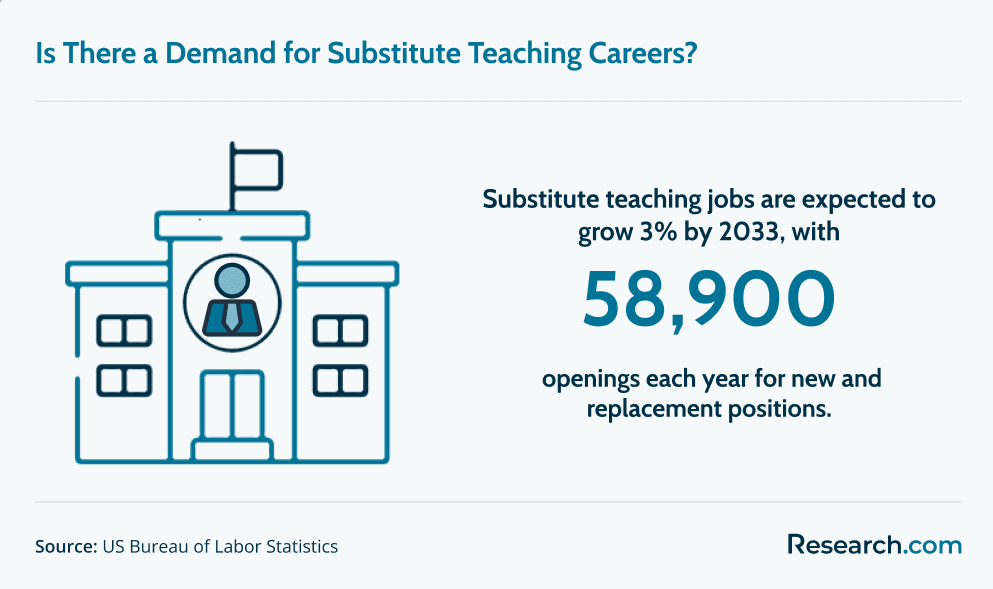
Substitute teaching can lead to several education careers because it builds classroom confidence, school-based references, and practical experience with students. O*NET reports a projected 3% job growth by 2033 and 58,900 annual openings, making substitute teaching a stable entry point for many people interested in education.
| Career path | How substitute teaching helps | What may be needed next |
| Full-time teacher | Builds classroom experience, school relationships, and evidence of reliability. | State certification, degree requirements, student teaching, or exams may be required. |
| Special education teacher | Provides exposure to inclusive classrooms, individualized supports, and collaboration with specialists. | Special education licensure or advanced preparation may be needed. |
| Instructional coach or curriculum developer | Helps educators understand different classrooms, learning levels, and instructional challenges. | Teaching experience, advanced education, and curriculum expertise are often expected. |
| Education consultant | Develops insight into school operations, instructional problems, and student support needs. | A strong professional network and proven education expertise are important. |
| School support or student services roles | Shows whether you enjoy working with students outside a traditional classroom teacher role. | Requirements vary by position and may include specialized credentials. |
Moving into full-time teaching is one of the most common goals. Candidates who already meet certification requirements and show strong classroom performance during substitute assignments may be more competitive when districts hire permanent teachers.
Special education can also be a high-need area. Public schools employed around 541,000 special education teachers across elementary and secondary levels, yet approximately 70% of schools report vacancies in special education teaching positions. Substitutes who are comfortable supporting diverse learners may consider the cheapest online special education master’s degree as one possible way to build advanced preparation.
Instructional leadership is another option. The demand for instructional coaches and curriculum developers is rising in 2025, with 59% of public schools reporting at least one instructional coach. Substitutes who later gain full teaching experience and demonstrate curriculum strengths may be able to move toward coaching or design roles.
Experienced educators may also consider consulting. The education consulting industry in the US comprises approximately 44,376 businesses as of 2024. Substitutes interested in leadership, school improvement, or instructional strategy may explore the cheapest online educational leadership programs to understand advanced pathways in school management and education systems.
How can substitute teachers advance their careers?
Substitute teachers advance by turning short-term classroom work into documented professional growth. That means accepting varied assignments, asking for feedback, building relationships with school leaders, keeping a record of successful placements, and pursuing credentials aligned with long-term goals.
If your goal is permanent classroom teaching, focus first on meeting your state’s certification requirements. If you want leadership or administration later, graduate study may eventually be relevant. Some educators explore advanced options such as 2 year Ed.D programs online, but doctoral study is usually more appropriate after you have clarified your career direction and gained substantial education experience.
Career Advancement Actions That Actually Help
- Request repeat assignments at schools where you perform well. Familiarity with students and staff can lead to stronger references.
- Keep a substitute teaching portfolio. Include grade levels covered, subjects taught, feedback, training certificates, and examples of classroom routines you use.
- Build relationships with department chairs and principals. Professional visibility matters when long-term assignments or full-time openings appear.
- Pursue credentials based on your target role. A future special education teacher, elementary teacher, instructional coach, and administrator will need different preparation.
- Learn school technology systems. Comfort with learning management systems, attendance platforms, and classroom tools can make you more useful on short notice.
What are effective continuing education options for substitute teachers?
Continuing education should solve real classroom problems. New substitutes often benefit most from training in classroom management, student engagement, trauma-informed practices, special education basics, school safety, and digital learning tools. Short workshops and district training can be enough for daily substitute work, while degree programs may make sense for candidates pursuing licensure or long-term advancement.
If you are considering a formal credential, compare accredited online teaching degree programs carefully. Check accreditation, field placement expectations, state licensure alignment, total cost, and whether online coursework fits your schedule.
| Education option | Best for | What to check before enrolling |
| District orientation | New substitutes who need local procedures. | Whether it covers discipline, emergency protocols, and scheduling systems. |
| Short professional development courses | Substitutes who want targeted classroom skills. | Course quality, relevance, and whether the district recognizes the training. |
| Undergraduate education coursework | Candidates who need college credits or want teaching foundations. | Transfer policies, cost, and whether credits apply to future programs. |
| Master’s programs | Aspiring licensed teachers or educators seeking advancement. | Accreditation, licensure alignment, practicum requirements, and total cost. |
| Doctoral or leadership programs | Experienced educators aiming for leadership, research, or administration. | Career fit, time commitment, tuition, and whether the degree is necessary for your goal. |
How can advanced leadership training benefit substitute teachers?
Leadership training can help substitutes who want to move beyond daily classroom coverage into mentoring, department support, administration, program coordination, or school improvement work. Useful leadership skills include conflict resolution, communication with stakeholders, decision-making under pressure, team coordination, and understanding how schools implement policy.
An online doctorate in leadership and management may be relevant for experienced education professionals pursuing senior leadership or organizational roles. For new substitutes, however, the immediate priority is usually classroom effectiveness, certification planning, and consistent work history.
What challenges do substitute teachers commonly face, and how can they overcome them?
Substitute teaching is rewarding, but the first weeks can be demanding. The biggest challenges usually come from limited preparation time, unfamiliar students, incomplete lesson plans, and inconsistent school procedures. Successful substitutes prepare for uncertainty rather than expecting every assignment to run perfectly.
| Common challenge | Why it happens | Better response |
| No clear lesson plan | The regular teacher may have been absent unexpectedly. | Contact the office or grade-level team, then use approved backup activities if available. |
| Students test boundaries | Students may behave differently with an unfamiliar adult. | Start with clear expectations, stay calm, and follow school discipline procedures. |
| Technology does not work | Substitutes may not have logins or classroom devices may fail. | Bring low-tech backup options and ask neighboring teachers for approved alternatives. |
| Different rules across schools | Each building may use different procedures for passes, phones, attendance, and emergencies. | Arrive early, read the substitute folder, and ask office staff for non-negotiable rules. |
| Unfamiliar subject matter | Daily substitutes may cover subjects outside their expertise. | Focus on facilitating the assigned work, maintaining order, and helping students use available resources. |
Substitutes who want to strengthen communication, writing, and instructional confidence may consider advanced study in a content area. For example, the cheapest online master's in English may be relevant for educators interested in language arts, writing instruction, or communication-heavy roles.
Can further education enhance your substitute teaching career?
Further education can help if it is tied to a clear goal. A degree or credential may improve your qualifications for long-term assignments, full-time teaching, special education, instructional leadership, or administration. It may not be necessary if your goal is flexible daily substitute work and your district already considers you eligible.
Before enrolling in a program, compare the cost with the career outcome you want. Ask whether the program leads to licensure in your state, whether field placements are required, whether credits transfer, and whether the credential is valued by local districts. Candidates interested in leadership or advanced education roles may review the best affordable EdD programs online, but they should do so with a realistic understanding of time, cost, and career fit.
How can substitute teaching experience open doors to alternative educational careers?
Substitute teaching builds transferable skills that apply across education: managing groups, communicating under pressure, adapting to new environments, supporting diverse learners, and working within school systems. Those skills can support movement into tutoring, instructional support, curriculum work, school operations, youth programming, education technology, or specialized information roles such as library science jobs.
The key is to document what you learn. Track the grade levels, subjects, school types, and student needs you have supported. Then connect that experience to the requirements of the alternative role you want.
Why should substitute teachers consider interdisciplinary studies?
Substitute teachers often move across subjects and grade levels, so broad academic preparation can be useful. Interdisciplinary study can help educators connect ideas from multiple fields, design flexible learning activities, and communicate with students who have different interests and learning styles.
Programs in interdisciplinary studies online may fit substitutes who want a broad academic foundation rather than a single-subject major. This path can be especially useful for people exploring education, training, nonprofit work, communications, or other roles where flexible problem-solving matters.
What is the job outlook for substitute teachers?
The job outlook for substitute teachers remains favorable in many areas because schools continue to face teacher absences, vacancies, and staffing shortages. Demand is strongest in elementary and secondary schools, where the majority of substitute teachers work.
The majority, 376,340, work in elementary and secondary schools, where the average annual wage is $44,650. Employment services hire around 41,800 substitute teachers to help districts fill temporary staffing needs. Child care services employ 8,570 substitutes, with a salary of around $33,820 annually. Educational support services and local government agencies also offer temporary substitute teaching positions.
If your goal is to move from substitute teaching into a permanent role, it can help to understand how fast can you become a teacher and what steps your state requires for certification.
| Employment setting | Employment or wage information stated | What it means for job seekers |
| Elementary and secondary schools | 376,340 workers; average annual wage of $44,650. | This is the main employment setting for substitute teachers. |
| Employment services | Around 41,800 workers. | Staffing agencies can be a practical route into multiple districts. |
| Child care services | 8,570 substitutes; salary of around $33,820 annually. | This may suit candidates interested in younger children or early learning settings. |
| Educational support services and local government agencies | Temporary substitute teaching positions are available. | These settings may offer additional routes beyond direct district hiring. |
What is the average salary of substitute teachers?
Substitute teacher pay depends on location, school level, assignment type, credentials, and whether the position is daily or long-term. Short-term substitute teachers earn a mean annual wage of $44,650, with an hourly wage of $21.46 in elementary and secondary schools. Those hired through employment services make $36,870 per year, or $17.72 per hour. Substitutes in child care services earn $33,820 annually, or $16.26 per hour.
The average hourly wage for substitute teachers in the United States is approximately $20, equating to an annual salary of around $42,244. However, annualized salary figures can be misleading for daily substitutes because many do not work every school day and may not be paid during breaks, holidays, or summer months.
| Setting | Hourly wage | Annual wage | Important note |
| Elementary and secondary schools | $21.46 | $44,650 | This setting employs the majority of substitute teachers. |
| Employment services | $17.72 | $36,870 | Agency-based work may cover multiple districts. |
| Child care services | $16.26 | $33,820 | Work may involve younger children and different classroom structures. |
| United States average estimate | Approximately $20 | Around $42,244 | Actual earnings depend on number of days worked and district policies. |
If you are weighing substitute teaching against a permanent teaching path, review the average salary for teachers with a master’s degree to understand how advanced credentials may affect long-term earning potential.
What are the ideal resources for new substitute teachers?
New substitute teachers should build a small toolkit before their first assignment: district procedures, backup activities, seating chart strategies, behavior scripts, emergency information, and a reliable method for leaving notes. The following resources can support preparation and professional growth.
- STEDI.org offers professional development for substitute teachers, including classroom management, engagement, and instructional support topics.
- The Master Teacher provides 25 self-paced online courses designed to be completed in 45 minutes or less, including courses on behavior and teaching strategies.
- National Education Association provides advocacy information, professional resources, and networking support for substitute teachers.
- ShareMyLesson gives educators access to shared lesson plans, activities, and classroom materials across grade levels and subjects.
New substitutes who plan to stay in education should also review the different types of teaching certificates so they can connect short-term work with future licensure or specialization goals.
Common Mistakes New Substitute Teachers Should Avoid
Many first-time substitutes focus only on getting approved, but success depends on preparation after approval. Avoid these common mistakes.
| Mistake | Why it causes problems | Better approach |
| Assuming requirements are the same everywhere | State, district, and assignment rules can differ. | Check each district’s substitute requirements before applying. |
| Looking only at the daily pay rate | A higher rate may come with fewer available days, longer commute, or no benefits. | Compare pay, schedule, commute, benefits, assignment volume, and payment timing. |
| Ignoring long-term substitute requirements | Extended assignments may require higher credentials than daily substitute work. | Ask districts what credentials are needed for long-term roles. |
| Arriving without backup activities | Lesson plans may be incomplete or technology may fail. | Bring approved, age-appropriate activities that support reading, writing, discussion, or review. |
| Trying to change the teacher’s system | Students rely on familiar routines, and sudden changes can create confusion. | Follow posted procedures and the teacher’s plans whenever possible. |
| Leaving vague notes | The returning teacher needs specific information to resume instruction. | Record what was completed, what was not, behavior issues, helpful students, and questions. |
Here's What Substitute Teachers Say About Their Jobs
-
: "
“Substitute teaching gives me control over my schedule while still letting me contribute in a real classroom. I may work with elementary students one day and cover a high school math class the next, so the work stays interesting.” – Jessica
"
-
: "
“Working as a substitute has helped me build practical teaching experience while I work toward certification. I have learned how to adjust quickly, manage different classrooms, and understand what schools need from reliable educators.” – Daniel
"
-
: "
“The flexibility is what drew me in, but the variety is what keeps me engaged. I get to work with different age groups, learn how schools operate, and stay connected to my community.” – Maria
"
References
- Bureau of Labor Statistics. (2023, May). Occupational employment and wage statistics: Substitute teachers (25-3031). U.S. Department of Labor. https://www.bls.gov/oes/2023/may/oes253031.htm
- High Speed Training. (n.d.). Essential communication skills for teachers. https://www.highspeedtraining.co.uk/hub/communication-skills-for-teachers/
- K12 Digest. (2023, February 8). A continuing international crisis: Teacher shortages. https://www.k12digest.com/a-continuing-international-crisis-teacher-shortages/
- Klein, A. (2024, March 18). Special education teacher shortage requires federal action, panel says. K-12 Dive. https://www.k12dive.com/news/special-education-teacher-shortage-panel-commission-civil-rights/733153/
- O*NET Online. (n.d.). Local employment trends for substitute teachers (25-3031.00). U.S. Department of Labor. https://www.onetonline.org/link/localtrends/25-3031.00
- Red Rover. (2023). 2023 substitute teacher survey results. https://7368913.fs1.hubspotusercontent-na1.net/hubfs/7368913/Infographics/RedRover2023SubSurveyResults%20%28800%C3%974000px%29.pdf
- ZipRecruiter. (2025). Substitute teacher salary insights. https://www.ziprecruiter.com/Salaries/Substitute-Teacher-Salary
Other Things You Should Know About Becoming a Substitute Teacher
Most states require at least a high school diploma or GED to qualify as a substitute teacher in 2027. Some districts or states require 60 college credits, a bachelor’s degree, or completion of a short district-approved training program before you can be hired.
In 2027, most states do not require specific exams to become a substitute teacher, but some may have unique requirements based on local regulations. It's crucial to check your state's Department of Education for specific guidance on any exam prerequisites.


