
2027 How to Become an Elementary School Teacher in Nebraska: Requirements & Certification

Co-Founder and Chief Data Scientist
Becoming an elementary school teacher in Nebraska is a licensing decision as much as it is a degree decision. You need the right education program, supervised classroom experience, required assessments, a state application, and a plan for renewing your credential after you begin teaching. The process can feel complicated because Nebraska has multiple certificate types, traditional and alternative preparation routes, online options, and separate rules for endorsements and professional development.
This guide explains the practical steps to become an elementary school teacher in Nebraska, including education requirements, licensure, online program acceptance, costs, financial aid, specializations, career paths, and job market considerations. It is designed for first-time college students, career changers, substitute teachers, paraprofessionals, and current educators who want to understand how Nebraska’s requirements fit together before choosing a program.
Quick answer: How do you become an elementary school teacher in Nebraska?
To become an elementary school teacher in Nebraska, you generally need to complete at least 120 credit hours, earn a bachelor’s degree, finish a state-approved teacher preparation program with student teaching, pass required Praxis assessments, clear the background and character review process, and apply for licensure through the Nebraska Department of Education. Online programs may be accepted if they meet Nebraska’s educator preparation and accreditation expectations.
Key things you should know about becoming an elementary school teacher in Nebraska
- The average time to complete the licensure process for an elementary school teacher in Nebraska is approximately 18 months when considering degree completion, teacher preparation, and required assessments within the licensing pathway.
- In the 2022-2023 academic year, the Nebraska Department of Education issued over 1,500 initial elementary teaching licenses, showing continued need for qualified educators across the state.
- The application fee for a Nebraska teaching license is $150, and the renewal fee is $90, so candidates should include licensing expenses in their education budget.
- Nebraska educators must complete 12 hours of professional development every five years to keep their license current and remain aligned with evolving instructional standards.
- Candidates must pass the Praxis Core Academic Skills for Educators tests in reading, writing, and mathematics. The average passing rates for these assessments in Nebraska hover around 80%, making preparation important but manageable for many candidates.
- What are the educational requirements for elementary school teachers in Nebraska?
- What is the licensure application and renewal process for elementary school teachers in Nebraska?
- What is the difference between traditional and alternative teacher certification programs in Nebraska?
- How long does it take to become an elementary school teacher in Nebraska?
- Are online education programs accepted for teacher licensure in Nebraska?
- How does an online elementary education program in Nebraska compare to an on-campus program?
- What is the average cost of elementary education programs in Nebraska?
- What financial aid options are available for aspiring elementary school teachers in Nebraska?
- How to choose the best elementary education program in Nebraska?
- What types of specializations are available within elementary education in Nebraska?
- What professional development opportunities can boost my long-term teaching career in Nebraska?
- How can I integrate arts education into my elementary teaching career in Nebraska?
- Is pursuing an advanced degree essential for my career advancement in Nebraska?
- How can additional interdisciplinary certifications strengthen my teaching impact in Nebraska?
- Can expanding my credentials to include preschool education improve my teaching impact?
- How can I transition to private school teaching in Nebraska?
- How can I pursue a cost-effective teaching credential in Nebraska?
- What career paths are available for elementary school teachers in Nebraska?
- What options are available for teachers looking to specialize in other areas, such as math education?
- What is the job market for elementary school teachers in Nebraska?
- How can I integrate special education training into my elementary teaching career in Nebraska?
What are the educational requirements for elementary school teachers in Nebraska?
Elementary teacher candidates in Nebraska typically begin by earning a bachelor’s degree in elementary education or a closely related education field. Nebraska requires aspiring teachers to complete at least 120 credit hours, and the degree must be paired with an approved teacher preparation program that qualifies graduates for the appropriate teaching endorsement.
A strong elementary education program should cover more than lesson planning. Candidates need coursework in child development, literacy instruction, mathematics methods, classroom assessment, differentiated instruction, classroom management, educational technology, and inclusive teaching practices. These courses prepare future teachers to work with children across multiple subjects rather than in one narrow content area.
Student teaching is also essential. This supervised classroom experience gives candidates the chance to plan lessons, manage routines, assess student learning, communicate with families, and receive feedback from an experienced teacher. For many candidates, student teaching is the point where they learn whether elementary education is the right long-term fit.
Nebraska also requires candidates to pass the Praxis Core Academic Skills for Educators tests, which evaluate reading, writing, and mathematics. Some candidates may also need Praxis Subject Assessments depending on their endorsement area and preparation route. Because testing rules can change, applicants should verify current exam requirements directly with the Nebraska Department of Education before registering.
After completing the degree, educator preparation program, student teaching, and assessments, candidates submit their licensure materials to the Nebraska Department of Education. The application process includes documentation such as transcripts, program verification, background checks, and evidence of good moral character.
| Requirement | What it means for candidates | Decision tip |
| Bachelor’s degree | You generally need a degree that supports elementary teacher licensure and includes at least 120 credit hours. | Choose a program that clearly states it leads to Nebraska elementary licensure. |
| Teacher preparation program | The program must include professional education coursework and supervised field experience. | Confirm state approval before enrolling, especially if the program is online or out of state. |
| Student teaching | You complete supervised practice in a real classroom setting. | Ask where placements occur and whether rural, urban, or diverse school settings are available. |
| Praxis exams | You must pass required assessments in basic academic skills and, when applicable, subject areas. | Plan exam preparation early so testing does not delay your license application. |
| State application | You submit required documents, pay the application fee, and complete background-related requirements. | Gather transcripts and program verification before graduation to avoid processing delays. |
What is the licensure application and renewal process for elementary school teachers in Nebraska?
Nebraska’s licensure process begins after you complete the required education and preparation steps. Candidates usually apply for an Initial Teaching Certificate first. This credential allows new teachers to begin working in Nebraska schools after the state confirms that they meet degree, preparation, assessment, background, and character requirements.
The Initial Teaching Certificate expires five years after issuance. As teachers gain experience and continue professional learning, they may become eligible for additional certificate levels, including the Standard and Professional Teaching Certificates. The Professional Teaching Certificate lasts for ten years, giving experienced educators a longer renewal cycle.
Renewal is not automatic. Nebraska educators must track professional development, submit renewal documentation, and pay applicable fees. The renewal fee is $90, while the application fee for a Nebraska teaching license is $150. Teachers should keep personal copies of transcripts, workshop certificates, district professional development records, and prior licensing documents.
If a certificate lapses, the teacher may need additional coursework, professional development, or teaching experience before the credential can be restored. For that reason, renewal planning should begin well before expiration. Waiting until the final months can create unnecessary risk, especially for teachers changing districts or returning after a career break.
Educators who want to move beyond classroom teaching may eventually consider graduate study in curriculum, literacy, administration, counseling, or library and information services. For example, candidates interested in school library roles can compare options such as an online master's in LIS, but they should verify how any graduate program connects to Nebraska endorsement or employment requirements.
| Licensure step | What to prepare | Common delay to avoid |
| Complete educator preparation | Official transcripts and program completion verification | Assuming a degree alone is enough without an approved preparation component |
| Pass required assessments | Praxis Core and any required subject assessment scores | Taking tests too late in the final semester |
| Submit application | Application forms, fee, background materials, and character documentation | Uploading incomplete or unofficial records when official documents are required |
| Maintain certificate | Professional development documentation and renewal fee | Not tracking the 12 hours of professional development required every five years |
| Restore a lapsed certificate | Additional credits, teaching experience, or other documentation if required | Assuming an expired certificate can be renewed instantly |
What is the difference between traditional and alternative teacher certification programs in Nebraska?
The main difference is the starting point. Traditional certification is usually built into an undergraduate elementary education degree. Alternative certification is generally designed for people who already hold a bachelor’s degree in another field and want to transition into teaching without repeating a full undergraduate education program.
Traditional certification programs
Traditional programs are often best for students who know early that they want to teach elementary grades. These programs combine general education, content knowledge, pedagogy, classroom observations, and student teaching into one planned sequence.
- Degree requirement: Candidates complete a bachelor’s degree in education or a related field that leads to teacher licensure.
- Course sequence: The curriculum usually includes child development, instructional methods, assessment, literacy, mathematics instruction, and classroom management.
- Student teaching: Candidates complete a substantial classroom placement, often during the final part of the program.
- Assessments: Candidates must pass the Praxis Core Academic Skills for Educators tests and required Praxis Subject Assessments.
Examples of traditional teacher preparation options in Nebraska include the University of Nebraska-Lincoln, which offers a Bachelor of Science in Education, and Creighton University, which provides teacher education grounded in a broader liberal arts framework.
Alternative certification programs
Alternative pathways can be a better fit for career changers, paraprofessionals, long-term substitutes, or professionals with strong academic backgrounds who want a faster route into the classroom. These programs may allow candidates to complete certification requirements while working, often with mentoring and structured coursework.
- Greater flexibility: Many programs are designed around working adults who cannot attend a traditional daytime undergraduate program.
- Shorter completion window: Some alternative routes can be completed in a shorter timeframe, sometimes within a year, depending on prior education and program design.
- Classroom-based training: Candidates may begin teaching while completing remaining certification requirements under supervision.
Examples include Teach Nebraska, which supports individuals with a bachelor’s degree who want to teach in high-need areas, and the Nebraska Department of Education’s Alternative Teacher Certification pathway, which helps qualified professionals enter classrooms where staffing needs are urgent.
| Pathway | Best for | Advantages | Trade-offs |
| Traditional certification | First-time college students and those committed to teaching early | Integrated degree, fieldwork, student teaching, and licensure preparation | Usually requires a longer full-time academic commitment |
| Alternative certification | Career changers and bachelor’s degree holders from other fields | May be faster and more flexible for working adults | Can be intensive because candidates may teach while completing requirements |
| Online licensure program | Students needing geographic or schedule flexibility | Can reduce commuting and expand access to approved programs | Requires careful verification of state approval, field placement, and student teaching arrangements |

How long does it take to become an elementary school teacher in Nebraska?
The full timeline varies by your starting point. A first-time college student usually needs about four years to complete a bachelor’s degree, followed by the required licensure steps. The broader process can take five to seven years depending on program structure, student teaching timing, assessment completion, and application processing. Candidates who already have a bachelor’s degree may be able to move faster through an alternative certification or graduate-level preparation route.
- Bachelor’s degree: A traditional undergraduate route typically takes four years and should include the coursework needed for elementary teacher preparation.
- Teacher preparation program: Candidates complete education coursework, field experiences, and student teaching. Depending on the program, this may be embedded in the bachelor’s degree or require an additional one to two years.
- Licensure exams: Preparing for and completing Praxis assessments can add several months, especially if retesting is needed.
- State application: After all requirements are complete, candidates submit materials to the Nebraska Department of Education. Processing may take several weeks to months, so early document collection matters.
If you are comparing state requirements before deciding where to teach, reviewing the Oklahoma teacher certification steps can help you understand how Nebraska’s process differs from nearby pathways.
| Candidate profile | Likely route | Planning consideration |
| High school graduate | Bachelor’s degree in elementary education with embedded teacher preparation | Choose a Nebraska-approved program early to avoid transfer or endorsement problems. |
| Community college transfer student | Two-year liberal arts or education foundation followed by transfer to a four-year program | Confirm that credits transfer into the teacher preparation sequence. |
| Bachelor’s degree holder | Alternative certification or graduate teacher preparation | Ask whether prior coursework satisfies prerequisite and endorsement requirements. |
| Substitute teacher or paraprofessional | Degree completion plus approved educator preparation | Use classroom experience as an advantage, but verify that paid experience does not replace student teaching unless the state allows it. |
Are online education programs accepted for teacher licensure in Nebraska?
Yes, Nebraska may accept online education programs for teacher licensure if the program meets state requirements. The key issue is not whether courses are online; it is whether the program is properly approved, accredited, and designed to lead to Nebraska licensure or a credential Nebraska recognizes.
- Accreditation matters: Look for recognition by an appropriate accrediting body, such as the Council for the Accreditation of Educator Preparation (CAEP), and confirm that Nebraska accepts the program for licensure.
- Student teaching must be real and supervised: Even if coursework is online, candidates usually need classroom-based field experience and student teaching. Ask how placements are arranged in Nebraska schools.
- Praxis requirements still apply: Online students must meet the same assessment expectations as campus-based candidates, including the Praxis Core Academic Skills for Educators tests and relevant subject assessments.
- Documentation is essential: You will need transcripts, program verification, test scores, and student teaching documentation when applying to the Nebraska Department of Education.
- Out-of-state online programs require extra caution: A program that leads to licensure in another state may not automatically satisfy Nebraska requirements. Ask both the school and the Nebraska Department of Education before enrolling.
Online programs can work well for rural students, working adults, parents, and career changers who need flexibility. However, the safest choice is a program that clearly explains its Nebraska licensure alignment in writing.
How does an online elementary education program in Nebraska compare to an on-campus program?
The better choice depends on your schedule, location, learning style, and need for in-person support. Online programs can make teacher preparation more accessible, while campus programs may offer stronger daily structure and face-to-face relationships with faculty and peers.
| Factor | Online elementary education program | On-campus elementary education program |
| Schedule | Often better for students balancing employment, caregiving, or distance from campus | Usually follows a more fixed class schedule with in-person attendance |
| Learning experience | May use recorded lectures, live virtual classes, discussion boards, and digital assignments | Relies more on classroom interaction, group work, and immediate in-person feedback |
| Fieldwork | Must still include classroom placements, often arranged locally | May have established partnerships with nearby school districts |
| Cost | Can reduce commuting and relocation expenses, though technology or online fees may apply | May include transportation, housing, parking, and campus-related expenses |
| Support | Best when the program provides strong advising, placement coordination, and licensure guidance | May offer easier access to faculty offices, tutoring, library services, and peer networks |
| Licensure risk | Requires careful confirmation of Nebraska approval, especially for out-of-state schools | Often more straightforward if the program is based in Nebraska and state-approved |
Both formats can be valid if they meet Nebraska standards. Before choosing, ask the program for its Nebraska licensure pass-through process, recent placement partners, student teaching expectations, and Praxis support.
What is the average cost of elementary education programs in Nebraska?
The cost of becoming an elementary school teacher in Nebraska depends on whether you attend a community college, public university, private university, online program, or alternative certification route. Students should look beyond tuition and calculate total cost, including fees, books, transportation, student teaching expenses, exams, background checks, and licensing.
The average salary for elementary education teachers in Nebraska falls between $23,850 and $45,270, depending on experience and location. Because earnings vary by district, school type, and years of service, candidates should compare program cost with realistic local salary expectations rather than relying on national averages alone.
- Tuition costs: Tuition for a two-year liberal arts program at community colleges in Nebraska typically ranges from $3,000 to $6,000 per year, depending on institution and residency status.
- Room and board: Students living on campus may pay between $8,000 and $12,000 annually for room and board, which can significantly increase the total cost of a four-year degree.
- Textbooks and materials: Textbook expenses average around $1,000 per year, though costs vary by course, format, and whether students buy new, used, rented, or digital materials.
- Credentialing fees: Candidates should plan for credentialing fees ranging from $100 to $300, including licensing and background-related expenses.
| Cost category | Amount stated | How to manage it |
| Community college tuition | $3,000 to $6,000 per year | Confirm transfer agreements before choosing lower-cost credits. |
| Room and board | $8,000 to $12,000 annually | Compare commuting, online, and campus housing options. |
| Textbooks | Around $1,000 per year | Use rentals, used books, open educational resources, and library copies when available. |
| Credentialing fees | $100 to $300 | Budget for licensing and background costs before the final semester. |
| Teaching license application | $150 | Set aside funds before submitting your state application. |
| License renewal | $90 | Plan for renewal costs throughout your teaching career. |
Students considering long-term advancement may also want to compare how graduate education affects career options. For a broader look at advanced education careers, review this guide to doctorate in education job prospects.
What financial aid options are available for aspiring elementary school teachers in Nebraska?
Future elementary teachers in Nebraska should build a funding strategy before selecting a school. The best approach is usually a mix of federal aid, state grants, institutional scholarships, private scholarships, and, when appropriate, loan forgiveness or repayment programs tied to public service or shortage areas.
1. Federal student aid: The Free Application for Federal Student Aid, or FAFSA, is the starting point for federal grants, loans, and work-study. Pell Grants do not have to be repaid if eligibility requirements are met. TEACH Grants can provide up to $4,000 per year for eligible future teachers who commit to teaching in high-need fields or underserved schools for at least four years after graduation.
2. Nebraska-based support: State programs can help reduce costs for students preparing for education careers. The Nebraska Teacher Shortage Loan Repayment Program offers up to $3,000 annually to certified teachers working in shortage areas, and the Nebraska Opportunity Grant supports lower-income students attending Nebraska colleges.
3. College and university scholarships: Nebraska institutions, including the University of Nebraska-Lincoln and Creighton University, may offer scholarships for education majors, student teachers, academically strong students, or candidates committed to underserved communities.
4. Private scholarships: Education organizations and foundations may provide awards for future teachers. Examples include scholarships connected to the American Association of Colleges for Teacher Education (AACTE) and the James Madison Memorial Fellowship Foundation.
5. Loan forgiveness: Teachers working in public schools may explore federal options such as Public Service Loan Forgiveness (PSLF), which can forgive remaining eligible loan balances after 10 years of qualifying payments. Some candidates may also investigate support connected to rural teaching, including the Nebraska Rural Teacher Scholarship.
If you are mapping out the full pathway, this broader guide on how to become a teacher in Nebraska can help you connect financing decisions with licensure steps.
How to choose the best elementary education program in Nebraska?
The best program is not always the cheapest, closest, or highest ranked. For teacher licensure, the most important question is whether the program reliably prepares you to meet Nebraska requirements and enter a classroom with confidence.
- Confirm approval and accreditation: Ask whether the program is recognized for Nebraska teacher licensure and whether graduates meet state endorsement requirements.
- Review the curriculum: Look for strong preparation in literacy, mathematics, child development, assessment, special education, classroom management, and technology-supported instruction.
- Evaluate field experience: Nebraska programs often require at least 12 weeks of student teaching, but more frequent early field placements can help you build confidence before the final semester.
- Ask about Praxis support: Programs with tutoring, practice exams, content review, and advising can help candidates avoid testing delays.
- Compare placement partnerships: Strong relationships with Nebraska school districts can improve the quality of student teaching and networking.
- Look at advising quality: Teacher licensure has many checkpoints, so responsive advising can prevent costly mistakes with courses, tests, and application documents.
- Calculate total cost: Include tuition, housing, books, fees, transportation, testing, background checks, and unpaid student teaching time.
- Ask about outcomes: Review job placement information carefully. In Nebraska, the demand for elementary teachers remains strong, with a projected growth rate of 4% over the next decade, but no program can guarantee employment.
Questions to ask before enrolling
- Does this program lead directly to Nebraska elementary teacher licensure?
- Is the program approved for the grade level and endorsement I want?
- Where do students complete classroom observations and student teaching?
- What Praxis exams are required, and what support does the school provide?
- How many credits can I transfer into the program?
- Are there extra fees for online courses, background checks, supervision, or student teaching?
- What happens if I move to another state after graduation?
- What percentage of graduates complete the program and obtain teaching positions?
What types of specializations are available within elementary education in Nebraska?
Specializations can help elementary teachers support specific student needs, qualify for additional roles, or build a stronger long-term career path. Before adding a specialization, confirm whether it requires a separate endorsement, graduate coursework, testing, or supervised experience.
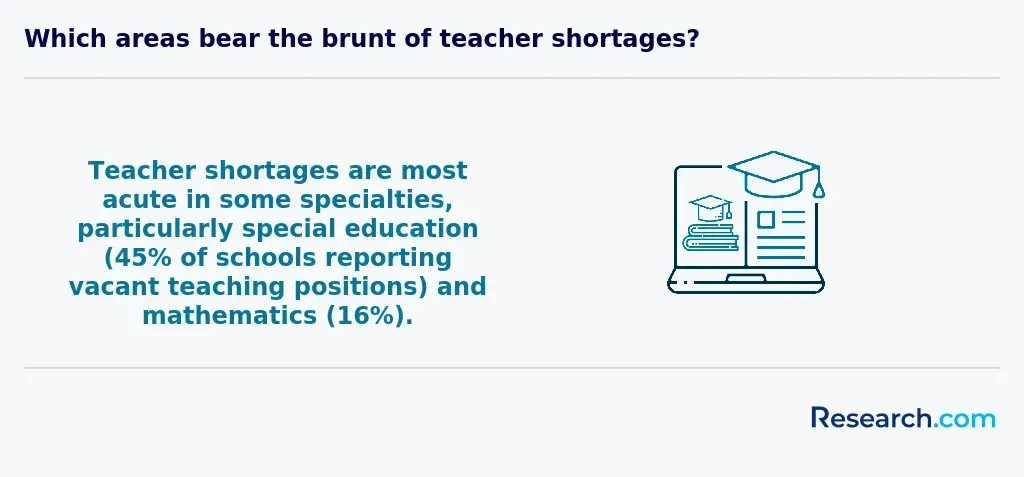
- Special education: This area prepares teachers to support students with diverse learning needs through individualized strategies, accommodations, and inclusive classroom practices. Approximately 14% of students in the U.S. receive special education services, making this specialization highly relevant.
- English as a Second Language (ESL): ESL preparation helps teachers support multilingual learners through language development, cultural responsiveness, and academic vocabulary instruction.
- Reading specialist: Literacy-focused preparation can help teachers diagnose reading challenges, design interventions, and support schoolwide reading improvement.
- STEM education: STEM-focused elementary teachers use inquiry, problem solving, technology, and hands-on learning to strengthen science, mathematics, engineering, and technology foundations.
- Curriculum and instruction: This broader specialization supports teachers who want to design stronger learning sequences, align standards and assessments, and improve instruction across subjects.
| Specialization | Best fit for teachers who want to... | Potential classroom impact |
| Special education | Support students with disabilities and learning differences | More inclusive instruction and stronger intervention planning |
| ESL | Work with multilingual learners | Better language access and culturally responsive teaching |
| Reading specialist | Focus on literacy development and intervention | Improved reading support in early and upper elementary grades |
| STEM education | Strengthen inquiry-based science and math instruction | More engaging problem-solving and hands-on learning |
| Curriculum and instruction | Improve lesson design and instructional systems | Stronger alignment between standards, teaching, and assessment |
What professional development opportunities can boost my long-term teaching career in Nebraska?
Professional development helps Nebraska teachers maintain licensure, improve instruction, and prepare for leadership or specialized roles. Useful options include district workshops, state-sponsored training, graduate certificates, online courses, mentoring programs, curriculum institutes, technology integration training, literacy workshops, and classroom management support.
Teachers who want to broaden student support skills may explore adjacent areas such as behavioral health, family support, and student wellness. For example, advanced coursework in counseling-related fields, including options such as a masters in addiction counseling, may be relevant for educators considering support roles, though it may not replace teacher licensure or school counseling requirements.
How can I integrate arts education into my elementary teaching career in Nebraska?
Arts integration can make elementary lessons more engaging, especially when students learn through drawing, movement, music, performance, storytelling, and visual analysis. Teachers can use the arts to support literacy, social studies, science observation, collaboration, and student expression without turning every lesson into a separate art class.
If you want to make arts education a larger part of your career, compare endorsement expectations, district hiring needs, and specialized preparation pathways. This guide on how to become an art teacher in Nebraska can help you understand what additional preparation may be needed for dedicated art teaching roles.
Is pursuing an advanced degree essential for my career advancement in Nebraska?
An advanced degree is not always required to grow as an elementary teacher, but it can be useful if your goals include curriculum leadership, instructional coaching, administration, specialized instruction, higher pay lanes, or doctoral study. The value depends on your district’s salary schedule, the program cost, and whether the degree aligns with your intended role.
Teachers comparing graduate options should distinguish between degrees focused on classroom teaching and degrees focused on broader education systems. A helpful starting point is this comparison of masters in teaching vs masters in education, which explains how the two paths can support different career objectives.
How can additional interdisciplinary certifications strengthen my teaching impact in Nebraska?
Elementary teachers often work with students who need communication support, behavior interventions, language development, and coordinated services. Additional interdisciplinary training can help teachers collaborate more effectively with specialists and understand student needs beyond standard classroom instruction.
Speech and language support is one example. Teachers are not speech-language pathologists unless they meet separate professional requirements, but learning about speech and communication development can improve classroom practice. For a role-specific overview, see this guide on how to be a speech therapist in Nebraska.
Can expanding my credentials to include preschool education improve my teaching impact?
Preschool preparation can strengthen an elementary teacher’s understanding of early childhood development, play-based learning, pre-literacy, social-emotional growth, family engagement, and school readiness. This can be especially useful for teachers working in kindergarten, first grade, early intervention, or mixed-age settings.
If you want to teach younger children or add early childhood expertise, review the steps for how to become a preschool teacher in Nebraska. Before enrolling in additional coursework, confirm whether your target role requires a separate endorsement, certificate, or early childhood-specific preparation.
How can I transition to private school teaching in Nebraska?
Private schools in Nebraska may use different hiring criteria than public schools. Some schools strongly prefer or require state licensure, while others focus on subject knowledge, religious mission fit, classroom experience, or school-specific training. Because requirements vary by employer, candidates should review each school’s expectations before assuming that public school licensure rules apply in the same way.
Private school teaching may offer smaller communities, distinct curriculum models, faith-based instruction, or alternative educational approaches. It can also involve different pay structures, benefit packages, and advancement systems. To compare this path more carefully, review how to become a private school teacher in Nebraska.
How can I pursue a cost-effective teaching credential in Nebraska?
The lowest-cost path is usually the one that avoids wasted credits, unapproved programs, delayed testing, and unnecessary borrowing. Start by comparing community college transfer options, in-state tuition, online programs, scholarships, district partnerships, and alternative certification routes for bachelor’s degree holders.
Cost should never be evaluated separately from licensure eligibility. A cheaper program that does not lead to Nebraska certification can become more expensive if you must complete additional coursework later. To compare lower-cost options, review this guide to the cheapest way to get a teaching credential in Nebraska.
What career paths are available for elementary school teachers in Nebraska?
Most elementary teachers begin in public or private K-12 classrooms, but the degree and license can support several related career directions over time. Your options may expand with experience, endorsements, graduate education, or leadership preparation.
- K-12 public and private schools: Classroom teaching remains the primary path for elementary educators. Opportunities may differ by district, grade level, subject need, and rural or urban location.
- Higher education: Some experienced teachers pursue graduate study and move into teacher preparation, college instruction, supervision, or education administration. This can be part of broader career advancement in education.
- Specialized education settings: Teachers may work in hospitals, correctional education, rehabilitation programs, or alternative schools serving students who need nontraditional learning environments.
- Community and vocational organizations: Educators can support tutoring, youth development, literacy programs, family engagement, after-school learning, or nonprofit education initiatives.
- Substitute teaching: Candidates who have completed at least 60 credit hours, including a professional education course, may pursue local substitute teaching as an entry point or flexible role.
What options are available for teachers looking to specialize in other areas, such as math education?
Teachers who discover a strong interest in a specific subject can add expertise over time. Mathematics is a common example because strong elementary math foundations affect later success in algebra, science, and technical fields. A teacher who wants to move into upper elementary or middle grades should verify grade-band requirements, endorsement rules, and any additional testing.
If you are considering a mathematics-focused teaching role, review the pathway for how to become a middle school math teacher in Nebraska. Expanding into math education can broaden your instructional range and help meet student needs in a subject where confidence often develops early.
What is the job market for elementary school teachers in Nebraska?
The Nebraska job market for elementary teachers is shaped by retirements, rural staffing needs, district budgets, enrollment patterns, and demand for teachers with additional endorsements. Nationally, employment of kindergarten and elementary school teachers is expected to remain relatively stable over the next decade, with overall employment growth projected at around 1% from 2022 to 2032.
- Openings still occur: Even when total employment growth is limited, schools need new teachers because educators retire, move, or change careers. Approximately 109,000 job openings are anticipated each year across the United States, mainly because of replacement needs.
- Salary varies widely: As of May 2023, the median annual salary for elementary school teachers in the U.S. was approximately $63,680. Nebraska salaries may differ by district, experience level, school type, and local cost of living.
- Urban and rural differences matter: Omaha and Lincoln may offer more district variety and competitive pay, while rural areas may have stronger hiring needs in certain schools or subject combinations.
- Licensure is the baseline: Most public school positions require a bachelor’s degree, approved teacher preparation, and a state-issued teaching license.
Teachers seeking broader creative or writing-focused development may also compare graduate programs such as low-cost online MFA programs, though those programs typically do not replace teacher licensure requirements.
How can I integrate special education training into my elementary teaching career in Nebraska?
Special education training can make an elementary teacher more effective with diverse learners, including students who need accommodations, individualized supports, behavior plans, assistive technology, or modified instruction. Even teachers who do not become special education teachers benefit from understanding individualized education programs, intervention strategies, and collaboration with specialists.
If you want a dedicated special education role or additional credential, review Nebraska-specific expectations in this guide on how to become a special education teacher in Nebraska. Confirm whether you need an endorsement, additional testing, supervised experience, or graduate coursework before committing to a program.
Other things you should know about becoming an elementary school teacher in Nebraska
How can I finance my teacher education in Nebraska?
Start with the FAFSA, then compare federal grants, state aid, scholarships, institutional support, and loan forgiveness programs. In the 2021-2022 academic year, over $120 billion was awarded in federal student aid. For the 2023-2024 academic year, the maximum Pell Grant award is $7,395.
- Federal aid: FAFSA completion may qualify you for grants, loans, and work-study. Pell Grants are especially valuable because they do not require repayment for eligible students.
- Nebraska Opportunity Grant: This state-funded program can support low-income students attending Nebraska colleges and can cover up to $2,000 per year.
- Teach Nebraska Scholarship: This scholarship supports students preparing for teaching careers in high-need areas, including elementary education.
- Private loans: Private loans can fill funding gaps, but candidates should compare interest rates, repayment terms, deferment rules, and borrower protections before signing.
- Teacher-focused scholarships: Organizations such as the National Education Association (NEA) may offer scholarship opportunities for education majors.
Nebraska is projected to need over 1,000 new teachers annually, so financing an education degree can be viewed as both a personal career investment and a response to school workforce needs. Still, candidates should borrow conservatively and compare total debt against expected starting pay.
What is the fastest way to become a teacher in Nebraska?
For students without a degree, the fastest standard route is usually a well-planned, accredited bachelor’s program in elementary education that leads directly to Nebraska licensure. For candidates who already hold a bachelor’s degree in another field, a Master of Arts in Teaching or an alternative certification route may be quicker, often taking one to two years depending on prerequisites and program design.
To avoid delays, choose an approved program, complete required fieldwork on schedule, prepare early for Praxis exams, and gather application documents before graduation. State processing can take several weeks, so waiting until the last minute can postpone your start date even if your coursework is complete.
What is the job satisfaction rate among elementary school teachers in Nebraska?
Recent surveys indicate that approximately 70% of elementary school teachers in Nebraska report being satisfied with their jobs. Many teachers point to student growth, supportive colleagues, family relationships, and strong school communities as reasons they remain in the profession.
At the same time, satisfaction does not remove the challenges. Turnover rates in Nebraska’s elementary schools hover around 10%, compared with a national average of 16%. Teachers commonly report pressure from paperwork, testing demands, limited resources, and expanding administrative responsibilities. One survey indicated that nearly 60% of teachers feel overwhelmed by paperwork and compliance requirements.
The most successful candidates enter the profession with realistic expectations: teaching can be deeply meaningful, but it also requires strong organization, resilience, collaboration, and ongoing professional learning.
Common mistakes to avoid when becoming an elementary teacher in Nebraska
| Mistake | Why it can hurt you | Better approach |
| Choosing a program without confirming licensure alignment | You may graduate without meeting Nebraska teacher certification requirements. | Ask the program and the Nebraska Department of Education to confirm eligibility before enrolling. |
| Looking only at tuition | Fees, housing, books, testing, and unpaid student teaching can change the real cost. | Build a full cost estimate before comparing programs. |
| Assuming every online program qualifies | Out-of-state or non-approved programs may not meet Nebraska standards. | Verify accreditation, state approval, and student teaching placement policies. |
| Waiting too long to take Praxis exams | A failed or delayed test can postpone licensure. | Use practice tests and schedule exams with enough time for retesting if needed. |
| Ignoring transfer credit policies | Some credits may not apply to teacher preparation requirements. | Get a written transfer evaluation before committing to a school. |
| Assuming salary outcomes are guaranteed | Teacher pay varies by district, experience, school type, and location. | Review local salary schedules and compare them with program debt. |
| Letting a license lapse | Restoring a certificate may require additional coursework or documentation. | Track renewal dates and professional development hours every year. |
Related Articles for Nearby States
- 2027 How to Become an Elementary School Teacher in Kansas: Requirements & Certification
- 2027 How to Become an Elementary School Teacher in South Dakota: Requirements & Certification
- 2027 How to Become an Elementary School Teacher in Iowa: Requirements & Certification
- 2027 How to Become an Elementary School Teacher in Colorado: Requirements & Certification
- 2027 How to Become an Elementary School Teacher in Missouri: Requirements & Certification
- 2027 How to Become an Elementary School Teacher in Wyoming: Requirements & Certification
- 2027 How to Become an Elementary School Teacher in Minnesota: Requirements & Certification
- 2027 How to Become an Elementary School Teacher in Oklahoma: Requirements & Certification
- 2027 How to Become an Elementary School Teacher in North Dakota
- 2027 How to Become an Elementary School Teacher in Illinois: Requirements & Certification
References:
- education.ne.gov (n.d.). Transition to Teaching Program Information. Nebraska Department of Education
- northeast.edu (n.d.). Education - Elementary. Northeast University
- bls.gov (17 Apr 2024). Kindergarten and Elementary School Teachers. BLS
Key Insights
- To teach elementary school in Nebraska, plan for a bachelor’s degree, at least 120 credit hours, an approved teacher preparation program, student teaching, Praxis exams, and a state licensure application.
- Online programs can be acceptable, but only if they satisfy Nebraska’s licensure expectations and include supervised classroom placements.
- The Initial Teaching Certificate expires five years after issuance, while the Professional Teaching Certificate lasts for ten years; teachers must also complete 12 hours of professional development every five years.
- Traditional certification is usually best for first-time college students, while alternative certification may suit bachelor’s degree holders changing careers.
- Total cost matters more than tuition alone. Include housing, books, testing, background checks, licensing fees, and the financial impact of student teaching.
- Specializations such as special education, ESL, reading, STEM, and curriculum and instruction can strengthen employability and classroom impact.
- The safest program choice is one that clearly leads to Nebraska licensure, has strong field placements, supports Praxis preparation, and offers transparent cost and outcome information.
Other Things You Should Know About Becoming an Elementary School Teacher in Nebraska
Future job prospects in Nebraska can encourage individuals to pursue a teaching career. A state forecast of stable job opportunities and competitive salaries in 2027 can influence candidates to enter the field, ensuring a steady demand for their skills.
In 2027, aspiring elementary school teachers in Nebraska need a bachelor's degree in education from an accredited institution and must complete a state-approved teacher preparation program. Following this, they must pass the Praxis Core Academic Skills for Educators tests and a background check to obtain certification.


