2027 How to Become an Art Teacher in North Dakota: Requirements & Certification

Co-Founder and Chief Data Scientist
Becoming an art teacher in North Dakota is not just a question of whether you enjoy making art. You need the right degree, supervised classroom experience, state licensure, a portfolio, and a realistic understanding of where art teaching jobs are most available. For many candidates, the biggest decisions are practical: which program meets state requirements, how to complete student teaching, whether rural schools offer better opportunities, and how salary compares with cost of living.
This guide is for future K-12 art educators, career changers, education majors considering an art endorsement, and current teachers who want to move into visual arts instruction in North Dakota. It explains the education path, licensing process, classroom preparation, salary expectations, rural teaching challenges, professional development options, and ways to grow beyond the entry-level classroom role.
Quick answer: how do you become an art teacher in North Dakota?
To become an art teacher in North Dakota, you generally need to complete a bachelor’s degree in art education or a related teacher preparation program, finish required art and pedagogy coursework, complete supervised student teaching, pass required state assessments such as the Praxis II Art Content Knowledge exam, clear the background check process, and apply for a teaching license through the state’s education licensing system. A strong art portfolio and classroom-ready lesson materials can also improve your job prospects.
Key things to know before choosing this path
- North Dakota has a notable need for art teachers, especially in rural districts. This can create openings for qualified candidates who are willing to teach outside larger cities.
- The average salary for art teachers in North Dakota is approximately $61,000 per year, though actual pay depends on district, experience, contract terms, and location.
- The employment outlook is cautiously positive. The Bureau of Labor Statistics projects steady demand for art educators, with a growth rate of about 4% over the next decade.
- North Dakota’s cost of living is relatively low compared with the national average, with a cost of living index around 90, where 100 is the national average. This can make an art teacher salary stretch further than it might in higher-cost states.
- Steps to become an art teacher in North Dakota
- Education requirements for North Dakota art teachers
- Certification and licensing process
- Student teaching, internships, and classroom experience
- North Dakota art standards and curriculum expectations
- Art teacher job market and salary expectations
- Professional development and continuing education
- Classroom management and teaching strategies
- First career steps for aspiring art teachers
- How state policy affects recruitment and retention
- Leadership education for art teachers
- Career advancement and specialization options
- Resources for new art teachers
- Rural North Dakota challenges and solutions
- Inclusive classroom certifications
- Expanding into other creative disciplines
- Using digital tools in art instruction
- Mentorship and career growth
- Moving into private school teaching
- Interdisciplinary teaching methods
- Library and information science transitions
- Future job outlook for art teachers
- Additional decision questions to ask before applying
How can you become an art teacher in North Dakota?
The most reliable path is to complete a state-recognized teacher preparation route that combines studio art, art history, teaching methods, classroom practice, and licensure requirements. Candidates who plan early can avoid common delays, such as taking the wrong coursework, missing a testing deadline, or choosing a program that does not align with North Dakota licensure.
| Step | What you need to do | Why it matters |
| Earn the right degree | Complete a bachelor’s degree in art education or a closely related education pathway, such as a Bachelor of Science in Education with an art education focus. | North Dakota teaching licensure depends on completing approved preparation in both content and pedagogy. |
| Complete required coursework | Plan for a program that typically includes at least 120 credit hours across general education, art content, and teacher education courses. | Coursework should build artistic skill and prepare you to teach students at different developmental levels. |
| Finish student teaching | Teach under supervision in a K-12 school setting, usually during the final stage of the preparation program. | Student teaching shows whether you can plan lessons, manage materials, assess work, and lead a real classroom. |
| Pass required exams | Complete state-required assessments, including exams that measure art content knowledge and teaching readiness. | Testing is part of the state’s process for verifying subject competency. |
| Build an art portfolio | Organize strong examples of your artwork, student-centered lesson ideas, and evidence of your creative process. | Many schools want to see that you can model artistic thinking, not only explain it. |
| Apply for licensure | Submit the required application materials, education records, exam scores, and background check documentation. | You cannot serve as a licensed public school teacher without completing the state licensing process. |
| Prepare for hiring | Create a teaching resume, sample lesson plans, portfolio materials, and references from supervisors or mentor teachers. | Art teaching openings can be competitive, especially in larger districts. |
If you are comparing requirements across states or considering relocation, reviewing other state pathways, such as teacher preparation requirements in Florida, can help you understand how North Dakota’s process differs.
What are the educational requirements for becoming an art teacher in North Dakota?
Most candidates need a bachelor’s degree that includes both visual arts preparation and teacher education. A studio-only art degree may not be enough by itself unless you also complete an approved teacher preparation route.
- Minimum degree: A bachelor’s degree is the usual entry requirement. Many candidates choose a Bachelor of Science in Education with an art education concentration, while others pursue advanced study later for leadership, college teaching, or specialized positions.
- Art education coursework: Your program should include studio courses, art history, design foundations, curriculum planning, assessment methods, and teaching methods for different age groups.
- Teacher preparation: An accredited educator preparation program is important because it connects your art training to classroom practice, student teaching, and licensure expectations.
- Accreditation: Candidates should verify institutional and program accreditation before enrolling. Recognized bodies may include the National Association of Schools of Art and Design and the Council for the Accreditation of Educator Preparation.
- Subject knowledge: Future art teachers must demonstrate that they understand the content they plan to teach. This may include required credit hours, portfolio review, and state exams.
| Education option | Best for | Important caution |
| Bachelor’s in art education | Students who know they want to teach K-12 art | Confirm that the program is designed for North Dakota teacher licensure. |
| Art degree plus teacher preparation | Students who already have strong studio art training | You may need additional education coursework and student teaching. |
| Master’s degree in education or art education | Licensed teachers seeking advancement or specialization | A master’s degree alone does not automatically replace initial licensure requirements. |
| Doctoral study | Educators interested in research, higher education, or administration | This is usually unnecessary for entry-level K-12 art teaching. |
Art teachers who later want to work with students who have complex learning needs may also explore related education roles, including special education coordinator careers.
What is the certification and licensing process for an art teacher in North Dakota?
Licensure is the point where your degree, field experience, testing, and background check come together. Candidates should check current state instructions before applying because forms, fees, and documentation rules can change.
In general, aspiring art teachers must complete an accredited teacher preparation program that covers art education, general education, and pedagogy. The program should include supervised student teaching so candidates can demonstrate classroom readiness before applying for a teaching credential.
The state requires candidates to pass the Praxis II exam in Art Content Knowledge. After completing education and testing requirements, candidates submit licensure materials that may include official transcripts, exam scores, proof of student teaching, and background check results.
North Dakota offers both initial and professional licenses. The initial license is valid for two years, and teachers must complete additional professional development to qualify for a professional license.
Licensing is not just a paperwork step. It affects where you can teach, whether your program qualifies you for public school employment, and how soon you can begin work. Candidates should budget for testing and licensing fees and ask programs how they support students through the application process.
How important is teaching experience and what are the internship opportunities for art teachers in North Dakota?
Classroom experience is one of the most important parts of becoming an art teacher because art classrooms are highly active learning environments. You are not only teaching concepts; you are managing supplies, demonstrations, cleanup routines, safety expectations, student critique, and differentiated creative work at the same time.
North Dakota requires candidates to complete student teaching as part of certification preparation. Student teaching typically places candidates in a K-12 setting for a supervised teaching experience with a mentor educator. This is where candidates learn how to move from lesson planning to actual instruction.
Internships and field placements may be available through universities, local school districts, community art organizations, museums, galleries, summer programs, and youth arts workshops. These experiences are especially useful for candidates who want more practice before taking full responsibility for a classroom.
To gain certification in North Dakota, candidates must complete a minimum of 1,500 hours of supervised teaching experience, including student teaching and any additional internships or volunteer work.
| Experience type | What you gain | How to make it stronger |
| Student teaching | Full classroom practice under supervision | Ask your mentor for weekly feedback and revise lessons based on student response. |
| University fieldwork | Early exposure to schools and teaching routines | Observe classroom management, not just lesson content. |
| Community arts volunteering | Practice teaching mixed-age or informal groups | Document activities for your resume and portfolio. |
| Summer camps or workshops | Experience planning short creative projects | Practice giving clear instructions and managing materials efficiently. |
| Museum or gallery education | Experience connecting artwork, history, and interpretation | Build lesson ideas that can transfer to K-12 classrooms. |
To get the most from student teaching, set specific goals for each unit, request direct feedback, reflect after every lesson, and collect evidence of student learning. A strong candidate can explain what worked, what did not, and how they adjusted instruction.
What are the standards and curriculum requirements for teaching art in North Dakota?
North Dakota art teachers are expected to teach visual arts in a way that develops creativity, technical skill, cultural awareness, visual communication, and critical thinking. State standards help teachers decide what students should understand and be able to do at each grade level.
One important feature of art education in North Dakota is the opportunity to connect visual arts instruction to local culture and history, including Native American art and history. This can make curriculum more relevant and help students understand art as part of community identity, not only as an individual activity.
Teacher preparation programs should help candidates align lesson plans with state content standards, design assessments, and evaluate both finished artwork and the creative process. In art education, assessment often includes planning, experimentation, critique, revision, craftsmanship, and reflection.
| Curriculum area | What art teachers should address | Practical classroom example |
| Creating | Students generate, develop, and refine original artistic ideas. | Students create a mixed-media project after testing materials in a sketchbook. |
| Presenting | Students prepare, display, and explain artwork. | A class exhibit includes artist statements and peer discussion. |
| Responding | Students analyze and interpret visual work. | Students compare composition, symbolism, and technique in selected artworks. |
| Connecting | Students link art to culture, history, community, and personal experience. | A unit incorporates local themes or Native American art and history with appropriate context. |
Educators who want to broaden their ability to support communication and learning across disciplines may also examine economical online speech pathology master's degree options as a complementary area of study.
What is the job market like and what are the salary expectations for art teachers in North Dakota?
The average salary for art teachers in North Dakota is approximately $61,000 per year. Pay can differ by district, years of experience, contract schedule, education level, and location. Teachers in Fargo or Bismarck may earn more than $65,000, while some rural positions may be closer to $50,000.
The state has a consistent demand for educators, including in arts-related roles. However, applicants should not assume every district has a dedicated art opening every year. Larger districts may attract more applicants, while rural schools may offer more immediate opportunities but require flexibility.
| Job market factor | What it means for candidates | Decision tip |
| Location | Urban areas may offer higher salaries, while rural areas may have greater need. | Compare salary with housing, commuting, and community fit. |
| Experience | New teachers usually start lower on district salary schedules. | Ask how prior experience, graduate credits, or endorsements affect placement. |
| School budget | Arts positions can be affected by local funding priorities. | Ask whether the school has a stable art program, dedicated room, and materials budget. |
| Benefits | Compensation often includes health insurance, retirement plans, and paid leave. | Review the full package, not just the base salary. |
-
: "
“I graduated from a local program at North Dakota State University, and salary was one factor I had to consider. In Fargo, the number of opportunities felt encouraging, but I still compared my starting pay with housing and living costs. What ultimately drew me in was the chance to help students build confidence through creative work.”
"
What professional development and continuing education opportunities are available for art teachers in North Dakota?
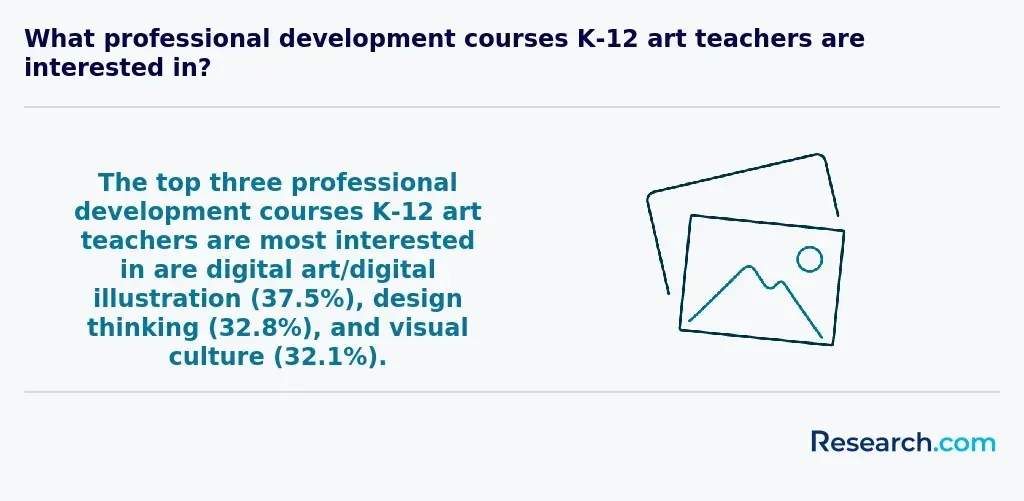
Professional development matters because art teachers must keep up with changing curriculum standards, digital tools, inclusive practices, assessment methods, and classroom safety expectations. It can also support license renewal and salary advancement when districts recognize continuing education credits.
North Dakota art educators can use university-based professional development courses, workshops, conferences, and online learning options. Organizations such as the North Dakota Art Education Association and the North Dakota Council on the Arts also provide learning and networking opportunities.
The North Dakota Council on the Arts offers a grant program that supports professional development for art educators. The initiative provides reimbursement grants of up to $1,000 for arts-related learning activities.
Valley City State University offers graduate-level courses for license renewal and skill development in online and face-to-face formats. North Dakota State University, the University of North Dakota, and other institutions may also offer continuing education options for K-12 professionals.
- Choose workshops that help you solve a real classroom problem, such as assessment, classroom management, digital media, or culturally responsive instruction.
- Keep documentation of completed courses, contact hours, and credits for license renewal records.
- Use professional organizations to find mentors, lesson ideas, conference opportunities, and district-level collaboration.
- Explore broader education career opportunities if you are considering leadership, curriculum, or student support roles later.
What are effective classroom management strategies and teaching methods for art teachers in North Dakota?
Art classrooms require clear routines because students move between demonstrations, materials, independent work, critique, cleanup, and storage. Strong management protects instructional time and makes creative risk-taking safer for students.
| Strategy | How it works in an art room | Why it helps |
| Teach routines explicitly | Show students how to enter, collect supplies, clean tools, store work, and transition. | Predictable routines reduce confusion and prevent behavior problems. |
| Use positive attention | Notice students who follow studio expectations, collaborate well, or persist through revision. | Specific praise reinforces the behavior you want repeated. |
| Differentiate assignments | Offer choices in medium, complexity, process, or final format when appropriate. | Students with different skills can still meet the same learning goal. |
| Model the process | Demonstrate brainstorming, mistakes, revision, and critique rather than only showing finished examples. | Students learn that art involves problem-solving, not instant perfection. |
| Build critique norms | Teach students how to give respectful, specific feedback. | Critique becomes a learning tool instead of a judgment exercise. |
| Reflect and adjust | Review which lessons created confusion, disengagement, or supply issues. | Better systems improve both behavior and learning outcomes. |
Art teachers can also collaborate with media specialists and other educators when designing research-based or exhibition-based projects. If you are interested in adjacent school roles, it may be useful to review library science career growth.

What steps should aspiring art teachers take to get started with their careers in North Dakota?
Start by mapping the requirements before you enroll in a program. Candidates should review how to become a teacher in North Dakota, compare approved teacher preparation options, and confirm that their chosen art education pathway includes student teaching and licensure preparation.
- Identify whether you want to teach elementary, middle school, high school, or multiple grade levels.
- Choose a degree program that includes art content, pedagogy, fieldwork, and student teaching.
- Ask the program how it prepares students for the Praxis II Art Content Knowledge exam.
- Begin building a portfolio that shows both your artistic skill and your teaching potential.
- Gain early experience through tutoring, camps, museum programs, after-school art clubs, or community workshops.
- Research districts where art teachers are in demand, especially if you are open to rural communities.
- Track licensure deadlines, background check requirements, and professional development expectations.
How do state policies affect art teacher recruitment and retention in North Dakota?
State policy influences how easy it is to recruit and keep art teachers. Compensation rules, district budgets, licensure pathways, mentoring programs, rural incentives, and professional development funding all affect whether candidates enter the field and whether experienced teachers stay.
Local school boards and state education agencies shape practical conditions such as salary schedules, staffing models, arts funding, and access to professional learning. In shortage areas, targeted supports such as signing bonuses, loan forgiveness programs, or dedicated arts funding initiatives can make hard-to-staff schools more attractive.
Alternative pathways and flexible preparation models may also help districts reach candidates who already have strong art backgrounds but need education coursework and supervised teaching. Anyone comparing subject-specific teaching routes may find it helpful to review related guidance on how to become an English teacher in North Dakota.
How can advanced leadership education empower art teachers in North Dakota?
Art teachers who want to move into department leadership, curriculum design, school administration, or district-level arts programming may benefit from advanced leadership education. Leadership training can strengthen skills in decision-making, budgeting, team collaboration, school improvement, and program evaluation.
For educators considering high-level leadership or organizational change roles, an online doctorate in organizational leadership may provide a broader framework for leading teams and managing institutional initiatives. This type of credential is not required for most art teaching roles, but it can support long-term advancement for educators who want to influence school systems beyond one classroom.
What are the career advancement opportunities and specializations for art teachers in North Dakota?
Art teaching can lead to several career directions. Some educators remain classroom teachers and deepen their expertise, while others move into leadership, curriculum, administration, community arts education, or specialized instructional roles.
| Advancement path | What the role may involve | Preparation to consider |
| Art department head | Coordinating curriculum, supplies, exhibits, and teacher collaboration | Experience, strong program organization, and leadership training |
| Curriculum coordinator | Designing district-level art curriculum and assessment guidance | Graduate education, curriculum experience, and standards expertise |
| Digital media specialist | Teaching design, photography, animation, or digital art tools | Additional training in digital platforms and media production |
| Special education collaboration | Adapting art instruction for students with diverse learning needs | Inclusive education coursework or related endorsement preparation |
| School administration | Moving into principal or district leadership roles | Additional educational leadership degrees |
| Policy or advocacy work | Serving on committees, school boards, or arts education initiatives | Experience in curriculum, community engagement, and public communication |
-
: "
“After graduating from North Dakota State University in Fargo, I began as a high school art teacher. I later focused on digital art, which helped me become department head within five years. Now I contribute to district curriculum work and help shape how students experience art across grade levels.”
"
What resources and support are available for new art teachers in North Dakota?
New art teachers should not try to build every lesson, policy, and classroom system alone. Professional associations, state agencies, universities, mentor teachers, museums, and online communities can provide practical support.
- North Dakota Art Education Association: Offers professional networking, conferences, workshops, and connections with experienced art educators.
- North Dakota Department of Public Instruction: Provides state standards, education guidance, and information that can help new teachers align instruction with state expectations.
- North Dakota Council of Teachers of English: Can support interdisciplinary collaboration, especially for art projects that involve writing, storytelling, critique, or visual literacy.
- Online teaching platforms: Sites such as Teachers Pay Teachers and Artsonia can provide lesson ideas, classroom display options, and examples of student-centered art activities.
- Local museums and galleries: These organizations may offer workshops, artist connections, exhibit opportunities, and curriculum support.
- University networks: Faculty members, cooperating teachers, and alumni can help candidates find job leads and early-career advice.
What are the challenges and solutions for aspiring art teachers in rural North Dakota?
Rural candidates may face limited access to nearby art education programs, fewer in-person networking opportunities, and longer travel distances for field placements or professional development. At the same time, rural schools may have stronger demand for teachers who can serve multiple grade levels, support extracurricular arts activities, and connect with the community.
| Rural challenge | Why it matters | Practical solution |
| Limited nearby programs | Candidates may not live close to a campus-based art education program. | Look for online or hybrid teacher preparation options that still meet licensure requirements. |
| Professional isolation | New teachers may have few art colleagues in the same district. | Join state art education networks and attend virtual workshops or regional events. |
| Multiple grade levels | Rural art teachers may teach elementary, middle, and high school students. | Prepare adaptable units that can be scaled by age and skill level. |
| Materials and budget constraints | Smaller schools may have limited supplies or dedicated space. | Ask about budgets during interviews and learn low-cost, high-impact project planning. |
| Community expectations | The art teacher may support exhibits, events, clubs, or local arts partnerships. | Build relationships with community centers, galleries, artists, and families. |
Online coursework, virtual advising, and accredited preparation programs can help rural candidates complete required training without relocating. Candidates should verify that any online program is accepted for North Dakota licensure before enrolling.
Future teachers who are also interested in general elementary instruction can review how to become an elementary school teacher in North Dakota and consider how an art specialization might fit with broader teaching goals.
Can art teachers leverage specialized certifications to enhance inclusive classroom practices?
Yes. Additional credentials can help art teachers design lessons that are more accessible to students with different physical, cognitive, emotional, and language needs. Inclusive art teaching may involve modified tools, alternative response formats, visual supports, flexible pacing, collaborative planning, and adapted assessment.
Teachers who want deeper preparation in this area may explore special education teacher certification in North Dakota. This can be especially useful for art educators who work closely with special education teams or teach in schools where inclusion is a major instructional priority.
Can art teachers broaden their career opportunities by integrating other creative disciplines?
Art teachers can expand their value by connecting visual arts with music, theater, media production, writing, history, design, and community arts. Interdisciplinary teaching can make lessons more engaging and may help teachers collaborate across departments.
For example, a teacher who understands music pedagogy may design projects that connect rhythm, pattern, performance, and visual composition. Educators interested in expanding into another arts discipline can review how to become a music teacher in North Dakota.
How can art teachers effectively integrate digital tools to enhance creative instruction?
Digital tools can support art instruction when they serve a clear learning goal. They should not replace drawing, painting, sculpture, critique, and hands-on exploration, but they can broaden what students create and how they present their work.
- Use digital design software to teach composition, typography, layout, and visual communication.
- Let students document process work through digital portfolios or virtual exhibitions.
- Teach responsible image use, copyright awareness, and ethical digital creation.
- Connect digital art to local history, cultural research, or community storytelling.
- Choose tools that match student age, device access, district policy, and curriculum standards.
Teachers who want to connect art with historical interpretation may also find value in exploring how to become a history teacher in North Dakota.
How can mentorship programs enhance career growth for art teachers in North Dakota?
Mentorship can shorten the learning curve for new art teachers. A strong mentor can help with lesson sequencing, classroom routines, supply ordering, grading practices, student exhibitions, and district expectations.
Effective mentorship is structured rather than casual. New teachers should ask for observation feedback, sample curriculum maps, advice on parent communication, and help understanding school culture. Mentorship through local associations, universities, or districts can also help rural teachers stay connected to a wider professional community.
Art educators who teach younger children may benefit from studying early childhood classroom approaches, including guidance on how to become a kindergarten teacher in North Dakota.
How can art teachers transition into private school roles in North Dakota?
Private schools may offer different curriculum flexibility, class sizes, faith-based or mission-driven expectations, and hiring processes. Some private schools may not follow the same staffing structure as public districts, but candidates should still understand licensure, accreditation, and subject-area expectations before applying.
Art teachers interested in this setting should prepare a portfolio, sample curriculum, classroom management philosophy, and examples of how they support schoolwide culture. More detailed pathway information is available in this guide to how to become a private school teacher in North Dakota.
What do graduates have to say about becoming an art teacher in North Dakota?
- Teaching art in North Dakota has given me the chance to know my students well. Smaller classes make it easier to provide individual feedback, and local support for creative projects has helped me try new ideas. Emily
- I worried at first about whether there would be enough art teaching jobs, but I found schools that genuinely valued arts education. Working with local artists has also helped me build richer projects for my students. Jordan
- What I enjoy most is helping students connect their own stories and community history to their artwork. North Dakota has a strong sense of place, and that makes art lessons feel personal and meaningful. Samantha
Can art teachers adopt interdisciplinary teaching methods to expand their impact?
Yes. Interdisciplinary teaching can make art more relevant by connecting it to math, science, history, language arts, technology, and community issues. For example, geometry can support pattern and perspective lessons, while science can connect to observation drawing, environmental art, or design thinking.
Strong interdisciplinary work should still protect the integrity of art learning. The goal is not to turn art class into another subject, but to help students see how visual thinking supports broader problem-solving. Teachers interested in cross-curricular strategies may review related guidance on how to be a middle school math teacher in North Dakota.
Can art teachers transition into library and information science roles in North Dakota?
Art teachers often build skills that transfer well to library and information science: visual literacy, program planning, exhibit design, research support, community engagement, and student-centered instruction. These skills can be useful in school libraries, public libraries, archives, museums, or educational resource roles.
A career transition usually requires understanding the credential expectations for library work. Art educators considering this path can start with how to become a librarian in North Dakota.
What is the future job outlook for art teachers in North Dakota?
The future outlook for art teachers in North Dakota appears steady, with demand shaped by teacher shortages, district budgets, rural staffing needs, digital art integration, and continued interest in arts education. Candidates who are flexible about location and prepared to teach across grade levels may find more options.
Technology will likely continue changing art instruction. Schools may expect teachers to support digital portfolios, media literacy, design tools, and creative technology while still teaching traditional studio skills. Teachers who can combine strong classroom management, inclusive practices, and modern art tools may be more competitive.
For broader teaching labor market context, review the job outlook for teachers in the next 10 years.
Common mistakes to avoid when planning your art teaching career
| Mistake | Why it can hurt your progress | Better approach |
| Choosing a program without checking licensure alignment | You may complete credits that do not lead smoothly to a North Dakota teaching license. | Ask the program directly whether graduates are eligible for North Dakota art teacher licensure. |
| Focusing only on tuition | Fees, testing costs, materials, travel, and student teaching expenses can affect total cost. | Compare the full cost of attendance and ask about scholarships or grants. |
| Waiting too long to build a portfolio | A rushed portfolio may not show your range as an artist or educator. | Collect studio work, lesson plans, reflections, and classroom examples throughout the program. |
| Assuming urban districts are always the best option | Larger districts may have more competition for limited openings. | Consider rural and regional schools where art teachers may be in higher demand. |
| Ignoring classroom management | Art rooms can become chaotic without clear systems for supplies, movement, and cleanup. | Practice routines during fieldwork and ask mentor teachers how they manage studio spaces. |
| Assuming salary outcomes are guaranteed | Pay varies by location, experience, education level, and district contract. | Review district salary schedules and benefits before accepting an offer. |
Questions to ask before enrolling in an art education program
- Is this program designed to meet North Dakota art teacher licensure requirements?
- How many supervised classroom hours are built into the program?
- Where do students usually complete student teaching placements?
- What support is available for the Praxis II Art Content Knowledge exam?
- Does the program help students build teaching portfolios and job application materials?
- Are online or hybrid courses available for rural students?
- What are the total costs, including supplies, testing, fees, and travel?
- How does the program prepare candidates to teach Native American art and history appropriately?
- What professional development or alumni mentoring is available after graduation?
- What percentage of graduates find K-12 teaching roles in North Dakota?
Evidence cited in this guide
- The North Dakota Department of Public Instruction reported that as of 2023, there are approximately 1,200 licensed art teachers in the state, reflecting steady demand for qualified educators in this field.
- According to a 2023 survey by the National Art Education Association, 78% of art teachers in North Dakota hold a bachelor’s degree in art education or a related field.
- The average salary for art teachers in North Dakota is approximately $61,000 per year, which is slightly below the national average for educators.
- In 2023, the North Dakota University System reported that only 15% of art education graduates found employment in K-12 schools within the state immediately after graduation.
- The state has seen a 10% increase in art education program enrollments over the past two years, indicating growing interest in the field.
Related Articles for Nearby States
- 2027 How to Become an Art Teacher in South Dakota: Requirements & Certification
- 2027 How to Become an Art Teacher in Minnesota: Requirements & Certification
- 2027 How to Become an Art Teacher in Montana: Requirements & Certification
- 2027 How to Become an Art Teacher in Nebraska: Requirements & Certification
- 2027 How to Become an Art Teacher in Wyoming: Requirements & Certification
- 2027 How to Become an Art Teacher in Iowa: Requirements & Certification
- 2027 How to Become an Art Teacher in Wisconsin: Requirements & Certification
- 2027 How to Become an Art Teacher in Colorado: Requirements & Certification
- 2027 How to Become an Art Teacher in Kansas: Requirements & Certification
- 2027 How to Become an Art Teacher in Illinois: Requirements & Certification
References:
- Minot State University (n.d.). Features of a Minot State Art Education Degree.
- North Dakota State University (2024). Distance and Continuing Education.
- North Dakota Department of Public Instruction (n.d.). K-12 Education Content Standards.
- North Dakota Council on the Arts (n.d.). Professional Development.
- University of North Dakota (n.d.). Professional Development for Educators.
- Valley City State University (2019). Extended Learning.
Key Insights
- Becoming an art teacher in North Dakota requires more than artistic talent. You need an appropriate degree, teacher preparation, student teaching, exams, licensure, and a classroom-ready portfolio.
- The most important program decision is licensure alignment. Before enrolling, confirm that the degree pathway prepares graduates for North Dakota art teacher certification.
- Rural schools may offer meaningful opportunities for candidates who are flexible, community-oriented, and prepared to teach multiple grade levels.
- The average salary for art teachers in North Dakota is approximately $61,000 per year, but local salary schedules, benefits, cost of living, and district resources matter as much as the headline number.
- Strong art teachers combine creative skill with structure: clear routines, inclusive lesson design, standards alignment, thoughtful assessment, and safe management of materials and studio space.
- Career growth is possible through digital media, curriculum leadership, special education collaboration, private school teaching, interdisciplinary work, and administrative or organizational leadership education.
Other Things You Should Know About Becoming an Art Teacher in North Dakota
To become an art teacher in North Dakota in 2027, you need a bachelor's degree in art education or a related field, complete a state-approved teacher preparation program, pass the Praxis exams, and apply for a teaching license through the North Dakota Education Standards and Practices Board.
To become an art teacher in North Dakota in 2027, obtain a bachelor's degree in art education, complete a teacher preparation program, and pass the Praxis Subject Assessment exams. Additionally, applying for a North Dakota teaching license is essential. Continuous professional development is also recommended for career advancement.
Yes, in North Dakota, art teachers need a teaching license. They must complete an approved teacher preparation program and pass relevant exams. Additionally, teachers must undergo background checks and adhere to ethical guidelines outlined by the North Dakota Education Standards and Practices Board.