2027 Cheapest Way to Get a Teaching Credential in Oklahoma: Requirements & Certification

Co-Founder and Chief Data Scientist
Getting a teaching credential in Oklahoma can be affordable, but only if you choose the right route before you start paying for coursework, exams, applications, and background checks. The lowest-cost option depends on your current education: a first-time college student, a bachelor’s degree holder changing careers, an out-of-state teacher, and an internationally trained educator will not follow the same path.
This guide explains the practical ways to reduce the cost of becoming a teacher in Oklahoma without choosing a program that fails to meet state requirements. You will learn what expenses to expect, how traditional and alternative certification routes compare, when online programs make sense, how to verify approval and accreditation, and what career and salary outcomes to consider before investing in a credential.
The goal is not simply to find the cheapest program. It is to find the least expensive legitimate path that leads to the teaching role you actually want.
Quick answer: What is the cheapest way to get a teaching credential in Oklahoma?
For many candidates who already have a bachelor’s degree, Oklahoma’s alternative certification route is often the most affordable path because it may let you begin teaching while completing certification requirements. For students who do not yet have a degree, the lower-cost route is usually to complete general education credits affordably, transfer into a state-approved teacher preparation program, use financial aid, and avoid private or out-of-state tuition when possible.
- You do not always need an education major to begin. A bachelor’s degree in any field can qualify some candidates for alternative certification, depending on the teaching area and state rules.
- State approval matters more than advertised price. A low-cost program is only useful if it satisfies Oklahoma certification requirements.
- Student teaching or supervised field experience is still important. Traditional programs commonly include a student teaching placement, often lasting around 15 weeks.
- Testing and background checks add real costs. Plan for application, fingerprinting, criminal history review, and exam fees before enrolling.
- Online coursework can lower indirect costs. Remote courses may reduce commuting, relocation, and scheduling costs, but field experience may still be in person.
- Scholarships, grants, loan forgiveness, and district support can change the total price. Always compare net cost, not just tuition.
- Cost to become a teacher in Oklahoma
- Teaching in Oklahoma as a foreign applicant
- Online teaching credential options in Oklahoma
- Using an out-of-state teaching credential in Oklahoma
- Teacher retirement timeline in Oklahoma
- Expired Oklahoma teaching credentials
- Credit hours for an Oklahoma teaching credential
- Teacher salaries in Oklahoma
- Oklahoma teacher job outlook
- Teacher career path in Oklahoma
- Advancing your education as an Oklahoma teacher
- Preschool teacher pathway in Oklahoma
- Using interdisciplinary studies in teaching
- Alternative careers for Oklahoma teachers
- Education-related careers beyond classroom teaching
- Professional development for long-term success
- Subject specialization for career growth
- Financial aid for aspiring Oklahoma teachers
- Fast-tracking the Oklahoma teaching credential process
- Music teacher education requirements in Oklahoma
- Preparing for Oklahoma teaching certification exams
- Middle school math teacher requirements in Oklahoma
- Common certification challenges
- How to confirm accreditation and program legitimacy
How much does it cost to become a teacher in Oklahoma?
The total cost to become a teacher in Oklahoma depends on whether you need a full bachelor’s degree, only certification coursework, testing, or credential review. The most important budget rule is to separate unavoidable state costs from program costs you can control.
| Cost category | Amount stated | How to reduce or manage the cost |
| Teaching certificate application | $50 | This is a required state fee, so include it in your certification budget from the beginning. |
| Criminal history check and fingerprinting | Around $59 | Complete it early and follow state instructions carefully to avoid repeat submissions. |
| Certification exams | Fees vary; Praxis exams may range from $90 to $209 depending on the test | Use official test frameworks, practice exams, and targeted study so you do not pay to retake exams unnecessarily. |
| Public university tuition for in-state students | About $8,000 annually | Compare public institutions, transfer-credit policies, and online options before committing. |
| Public university tuition for out-of-state students | May exceed $20,000 annually | If possible, establish residency eligibility, consider Oklahoma-based online programs, or compare alternative certification routes. |
| Foreign degree evaluation and documentation | $100 to $500 depending on provider | Confirm which evaluation services are accepted before paying. |
| Alternative certification program costs | Typically between $5,000 and $10,000 | Ask whether the price includes mentoring, coursework, test preparation, and placement support. |
The least expensive route is usually not the same for every applicant. If you are starting college, a public, state-approved teacher preparation program may be the safest path. If you already hold a bachelor’s degree, alternative certification may reduce both time and tuition. If you are comparing education careers beyond classroom teaching, it can also help to review related fields such as child development specialist careers.
How to compare the main low-cost pathways
| Pathway | Best for | Cost advantage | Watch out for |
| Traditional bachelor’s degree with teacher preparation | Students who do not yet have a bachelor’s degree | Certification requirements are usually built into the degree plan | Four-year tuition can be expensive if you do not use transfer credits or aid |
| Community college transfer plus public university | Cost-conscious students beginning college | General education credits may cost less before transferring | Courses must transfer cleanly into the teacher preparation program |
| Alternative certification | Career changers with a bachelor’s degree | May be faster and less expensive than earning a second degree | Not every subject area or background qualifies automatically |
| Online teacher preparation coursework | Working adults and rural students | Can reduce travel, relocation, and scheduling costs | Field experience, student teaching, and exams may still require planning |
| Out-of-state credential transfer | Licensed teachers moving to Oklahoma | May avoid repeating an entire preparation program | Testing, background checks, and state-specific review may still apply |
Can a foreigner get an Oklahoma teaching license?
Yes. A foreign applicant may be able to obtain an Oklahoma teaching credential, but the process depends on immigration status, employment authorization, credential evaluation, English proficiency, subject area, and whether the applicant is applying through a special pathway such as international visiting teacher certification.
To keep costs controlled, do not pay for coursework or credential evaluations until you have confirmed which documents the Oklahoma State Department of Education or your prospective employer will accept.
- Confirm employment authorization first. Applicants generally need an unexpired employment authorization document from United States Citizenship and Immigration Services. The authorization period can affect how long the credential remains valid.
- Review international visiting teacher certification if you teach world languages. This pathway may apply to candidates with a bachelor’s degree or higher from an accredited institution, a J-1 visa issued by the U.S. Department of State, at least three years of teaching experience in the target language, and advanced-low English proficiency under American Council on the Teaching of Foreign Languages standards.
- Secure an Oklahoma school offer when required. A job offer from an accredited public school district can support the credential process and may reduce uncertainty before relocation.
- Use approved document services only. Translation and evaluation costs can add up quickly, so verify accepted providers before paying.
- Compare lower-cost coursework options. If additional classes are needed, community colleges, public universities, and approved online options may be less expensive than private alternatives.
International educators who want to expand their academic options may also compare graduate-level education-adjacent programs such as the top online master's in library science, especially if they are considering school library, instructional resource, or education support roles.
Can I get my teaching credential online in Oklahoma?
Yes, parts of the Oklahoma teaching credential process can be completed online, especially coursework, application steps, and some exam preparation. However, “online” does not always mean fully remote. Student teaching, field observations, fingerprinting, and school-based placements may require in-person participation.
Online teacher preparation is most useful when it is state-approved, accredited, affordable, and designed for the certification area you plan to teach. Before enrolling, ask whether the program leads directly to Oklahoma licensure or whether it only provides general education coursework.
- Start with an accredited bachelor’s degree. If you do not already have one, choose a degree plan that aligns with Oklahoma teacher certification requirements.
- Enroll in a state-approved teacher preparation program. Online delivery is acceptable only if the program satisfies Oklahoma’s approval and field-experience expectations.
- Prepare for required exams. Praxis exam fees range from $90 to $209 depending on the assessment, so good preparation can prevent costly retakes.
- Complete the state application process. Much of the licensing paperwork can be handled through Oklahoma’s online systems.
- Consider alternative certification if you already have a degree. This can be a practical route for adults who cannot pause work to complete a traditional campus program.
If online study is central to your plan, compare program approval, tuition, field-placement support, and certification outcomes. Research.com’s guide to accredited online teaching certification can help you evaluate online teaching degree options more carefully.
Can I teach in Oklahoma with an out-of-state credential?
Yes, Oklahoma provides a pathway for teachers who already hold an out-of-state credential, but the credential must be reviewed. A full teaching certificate from another state may make the process easier, while incomplete, provisional, or nonstandard credentials may require additional evaluation by the Teacher Certification division.
The lowest-cost approach is to avoid repeating coursework until Oklahoma confirms what it will accept from your prior preparation and teaching experience.
- Submit evidence of your out-of-state certificate. Oklahoma will review whether your existing credential corresponds to the certification area you want to teach.
- Document your teacher preparation background. Your degree and educator preparation program should come from an accredited institution and align with your requested teaching field.
- Plan for competency testing. Applicants with out-of-state credentials may still be required to pass competency exams, and guidance for this pathway references three competency exams.
- Complete Oklahoma’s background review. Fingerprinting and a criminal history check through the Oklahoma State Bureau of Investigation and the Federal Bureau of Investigation are part of the process.
- Apply through the Oklahoma Educator Credentialing System. Keep copies of transcripts, certificates, test scores, and background-check documentation.
If your goal is to move into higher-paying leadership, specialist, or advanced education roles later, you may also want to compare the highest-paying master's in education jobs before choosing a graduate program.
How many years do you have to teach in Oklahoma to retire?
Oklahoma teachers can retire after a minimum of five years of service, but educators who teach for 20 to 30 years generally position themselves for stronger retirement benefits. Retirement planning matters when you are evaluating whether the cost of certification is worth it, because teaching is often a long-term career decision rather than a short credential purchase.
The retirement formula is based on final average salary and years of service. That means your certification path, subject area, district, advanced degrees, and length of employment can all affect long-term financial outcomes.
| Career stage | What to focus on | Cost and retirement implication |
| Before certification | Choose the least expensive legitimate route to licensure | Lower debt gives you more flexibility during early teaching years |
| First five years | Build classroom experience and meet renewal requirements | Five years is the minimum service period referenced for retirement eligibility |
| Mid-career | Consider endorsements, graduate study, or leadership roles | Salary growth may improve long-term retirement calculations |
| 20 to 30 years | Plan for maximum career stability and benefit growth | Longer service can increase financial security in retirement |
Teachers considering graduate study as part of their long-term financial plan may want to compare the top affordable online teaching degrees before borrowing for an advanced credential.
What happens if my Oklahoma teaching credential expires?
If your Oklahoma teaching certificate expires, you may need to renew it before you can continue teaching in a role that requires active certification. The renewal process is usually manageable, but waiting too long can create delays, especially if a new background check is required.
- A new background check may be required. If your certification has been inactive for more than a year, you should expect to complete a new background check.
- You can renew online or by paper application. Online renewal is available through the Oklahoma Education Single Sign-On system. A paper option is available through the Application for Renewal of Oklahoma Standard Certificate.
- The renewal fee is $50. The same fee applies whether you renew online or by mail.
- Paper renewals require correct payment format. If mailing the application, payment should be included as a check, cashier’s check, or money order payable to the Oklahoma State Department of Education.
- Different certificate types may follow different rules. CareerTech and other specialized credentials may have separate renewal procedures.
The most common mistake is treating renewal as an administrative detail instead of a professional requirement. Put the expiration date on your calendar, keep copies of all submissions, and begin the process early enough to handle background-check or documentation delays.

How many units is an Oklahoma teaching credential?
Oklahoma does not usually describe teacher certification only in “units.” For traditional candidates, the credential is typically built into a state-approved bachelor’s degree program requiring around 120 to 130 credit hours. Those hours usually include general education, subject-area coursework, education methods, classroom management, assessment, and supervised teaching experience.
An associate degree can be a cost-saving first step because it generally requires about 60 credit hours, but it does not qualify someone for a standard teaching credential by itself. The key is making sure those credits transfer into a four-year teacher preparation program without wasted coursework.
| Education level | Typical credit hours stated | Role in becoming certified |
| Associate degree | About 60 credit hours | May reduce early college costs, but does not independently qualify you for teacher certification |
| Bachelor’s degree with teacher preparation | Around 120 to 130 credit hours | Common traditional route to certification when completed through a state-approved program |
| Alternative certification after a bachelor’s degree | Varies by program and subject area | May require additional coursework, exams, mentoring, and supervised teaching while employed |
Before enrolling, ask the program for a degree map showing which courses satisfy certification requirements. This is one of the easiest ways to avoid paying for classes that do not move you closer to licensure.
How much do teachers in Oklahoma make?
Teacher pay in Oklahoma varies by district, years of experience, education level, subject area, and local salary schedules. The average salary for teachers in Oklahoma is around $42,000, while starting salaries typically begin at approximately $31,600.
Because salaries are not guaranteed, aspiring teachers should compare the cost of certification against realistic early-career earnings. A low-cost pathway can make the career more financially sustainable, especially during the first few years.
- Choose a lower-cost approved program. Public universities, transfer pathways, and alternative certification can reduce debt compared with higher-priced options.
- Look beyond tuition. Include fees, books, exam costs, transportation, lost work time, and background checks.
- Consider high-demand teaching fields. STEM, special education, and rural placements may improve hiring prospects, though pay still depends on district schedules.
- Use early classroom experience strategically. Volunteering, substitute teaching, internships, and paraprofessional work can strengthen your job applications.
- Evaluate graduate study carefully. Advanced education can support career growth, but the cost should make sense relative to your district’s pay structure.
What is the job outlook of teachers in Oklahoma?
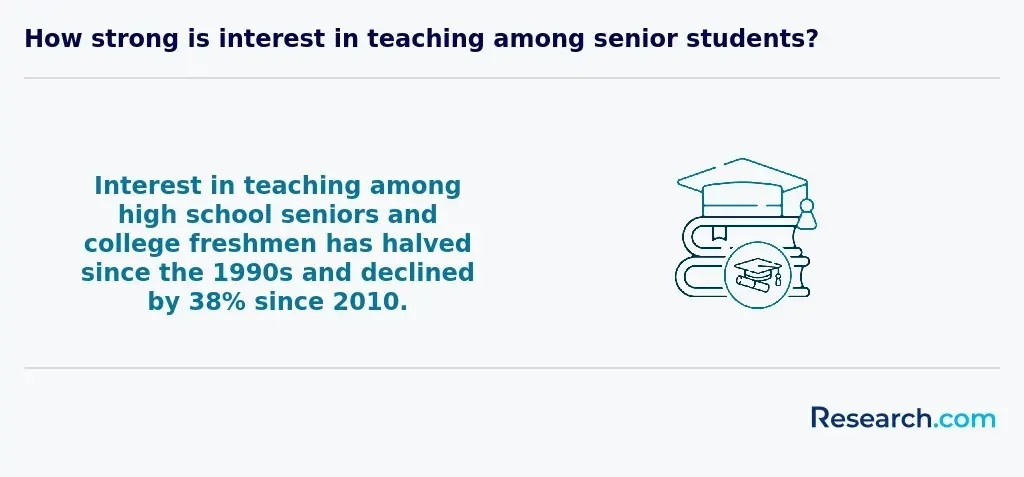
The employment outlook for high school teachers in Oklahoma follows national patterns described by the U.S. Bureau of Labor Statistics. Job opportunities for high school teachers are projected to decline slightly by about 1% from 2023 to 2033, while around 64,000 openings are expected nationally each year, largely because of retirements and career changes.
That means job openings still exist, but candidates should be strategic. The most affordable credential route is not always the best route if it does not prepare you for the subjects and locations where schools actually need teachers.
- Target shortage-prone fields. STEM, special education, and rural teaching positions are often more difficult for districts to fill.
- Choose endorsements intentionally. A credential aligned with school demand can be more useful than a general route with limited openings.
- Use alternative certification carefully. It can be cost-effective, but you still need strong preparation for classroom management and subject instruction.
- Build local connections. Field placements, substitute teaching, and district partnerships can improve hiring prospects.
- Stay adaptable with technology. Schools continue using online learning systems and digital instructional tools, so comfort with education technology is increasingly useful.
What is the career path of a teacher in Oklahoma?
A typical Oklahoma teaching career begins with certification and an entry-level classroom role, then expands through experience, endorsements, graduate education, leadership responsibilities, or specialized instructional work. Your first credential should be chosen with both immediate employment and long-term career movement in mind.
- Complete an approved preparation route. This may be a traditional bachelor’s program, online approved program, out-of-state credential review, or alternative certification.
- Pass required exams. Candidates should prepare for Oklahoma certification assessments, including Oklahoma Subject Area Tests and other required exams.
- Finish field experience or student teaching. Supervised classroom practice helps candidates demonstrate readiness for independent teaching.
- Apply for certification. Submit the application, fee, background check, transcripts, and test documentation through the appropriate state process.
- Start in a classroom role. Many teachers begin as elementary, middle school, high school, special education, or subject-specific teachers.
- Advance through experience or education. Options may include lead teacher, department chair, instructional coach, curriculum director, assistant principal, principal, or superintendent.
| Role | Typical next step | What helps you move forward |
| New classroom teacher | Experienced teacher or mentor teacher | Strong evaluations, classroom management, and instructional results |
| Experienced teacher | Lead teacher or department chair | Collaboration, curriculum planning, and subject expertise |
| Specialized teacher | Instructional coach or curriculum specialist | Endorsements, professional development, and demonstrated teaching effectiveness |
| Teacher leader | Assistant principal or principal | Graduate study, leadership experience, and administrative credentials when required |
How can you advance your education as a teacher in Oklahoma?
After earning an Oklahoma teaching credential, additional education can support specialization, leadership roles, and salary movement depending on district policy. The right next step might be an endorsement, graduate certificate, master’s degree, or leadership preparation program.
Before enrolling, compare the program cost with your actual career goal. A broad graduate degree may be useful for leadership, while a targeted endorsement may be more practical if you want to teach another subject or serve a specific student population. Teachers still building foundational qualifications may also compare a bachelor of education online degree with other preparation routes.
- Choose credentials tied to specific opportunities. Do not pay for extra coursework unless it helps with an endorsement, promotion, licensure requirement, or district salary lane.
- Ask about tuition support. Some employers may offer reimbursement or professional development funding.
- Prefer flexible formats if you are teaching full time. Online and hybrid programs can reduce commuting and scheduling barriers.
- Track renewal requirements. Professional development should help you remain current, not just add credits.
How can I become a preschool teacher in Oklahoma?
To become a preschool teacher in Oklahoma, candidates should look for preparation programs that include early childhood development, safety, play-based learning, family engagement, and developmentally appropriate curriculum. Preschool teaching can differ significantly from upper-grade instruction because it requires strong knowledge of young children’s social, emotional, cognitive, and physical development.
Field experience in early learning settings is especially important. If you are comparing routes, make sure the program prepares you for the age group and setting you plan to teach. For a step-by-step role guide, review how to become a preschool teacher in Oklahoma.
How can interdisciplinary studies enhance my teaching career?
Interdisciplinary study can help teachers connect subject knowledge to ethics, culture, communication, leadership, and community needs. This can be useful for educators who want to work in curriculum design, school leadership, private education, consulting, or specialized instructional roles.
For example, a theology degree may support work involving ethics, cultural literacy, community engagement, or faith-based education settings. The value depends on how clearly the additional field connects to your teaching assignment or long-term career direction.
What are alternative career options for teachers in Oklahoma?
Teachers in Oklahoma are not limited to traditional public school classroom roles. A teaching background can transfer into curriculum, training, education technology, private school instruction, consulting, administration, and student support services.
| Alternative role | Why teachers consider it | Additional preparation to investigate |
| Curriculum specialist | Focuses on lesson design, standards alignment, and instructional improvement | Curriculum experience, graduate coursework, or leadership training |
| Educational consultant | Supports schools, families, nonprofits, or education companies | Specialized expertise, portfolio evidence, and professional network |
| Private school teacher | May offer different curriculum models and instructional flexibility | School-specific hiring standards and subject qualifications |
| Education technology trainer | Helps teachers and schools use digital tools effectively | Technology certifications, platform expertise, and training experience |
If you are interested in nonpublic school settings, review private school teacher requirements in Oklahoma before assuming your public school credential will meet every employer’s expectations.
Can I fast-track my teaching credential process in Oklahoma?
You may be able to shorten the credential process in Oklahoma if you already have a bachelor’s degree, choose an approved alternative certification route, transfer previous credits efficiently, or enroll in an accelerated online teacher preparation option. Fast does not mean skipping state requirements; it means avoiding unnecessary duplication.
Before choosing an accelerated option, ask whether the program includes required field experience, exam preparation, mentoring, and certification support. A program that is fast but poorly aligned with Oklahoma requirements can become more expensive if you have to take extra coursework later. To compare accelerated formats, see Research.com’s guide to a fast-track teaching degree online.
How do I meet the music teacher education requirements in Oklahoma?
Music teachers in Oklahoma must combine general teacher preparation with specialized training in music theory, performance, pedagogy, and classroom instruction. Candidates may also need auditions, portfolios, ensemble participation, or performance-based assessments depending on the program.
The lowest-cost route is usually an accredited music education program that integrates certification requirements from the start. If you complete a general music degree first and later discover that it does not satisfy teacher preparation requirements, you may need additional coursework. For a focused pathway overview, review music teacher education requirements in Oklahoma.
What can I do to effectively prepare for Oklahoma's teaching certification exams?
Good exam preparation can save money because retakes add fees and delay certification. Start with the official test framework for your certification area, then build a study plan around the competencies most likely to appear on the exam.
- Identify every exam required for your pathway. Traditional, alternative, out-of-state, and subject-specific candidates may not have identical requirements.
- Use official frameworks first. Do not rely only on commercial study guides that may not match Oklahoma’s standards.
- Take a practice test early. Use the results to focus your study time on weak areas.
- Schedule exams strategically. Avoid taking too many assessments close together if preparation time is limited.
- Connect exam preparation to classroom practice. Pedagogy questions are easier when you understand lesson planning, assessment, and student needs in real settings.
Early childhood candidates can also use role-specific guides, such as How to become a kindergarten teacher in Oklahoma?, to connect certification expectations with actual classroom responsibilities.
What are the specific requirements for becoming a middle school math teacher in Oklahoma?
Middle school math teachers in Oklahoma need both mathematical content knowledge and training in how adolescents learn. Candidates should complete a regionally accredited bachelor’s degree with meaningful math coursework, educator preparation, supervised teaching experience, required certification exams, and background checks.
Because math is a subject where content gaps can become obvious quickly in the classroom, choose a program that provides both strong mathematics preparation and practical teaching methods. For a dedicated route guide, see middle school math teacher requirements in Oklahoma.
What common challenges should I anticipate during the certification process?
Most certification problems are preventable. They usually happen when candidates choose a program before checking state approval, misunderstand testing requirements, wait too long on background checks, or assume credits will transfer automatically.
| Common mistake | Why it can cost you money | Better approach |
| Choosing the cheapest program without verifying state approval | You may complete coursework that does not lead to Oklahoma certification | Confirm approval with official state sources before enrolling |
| Looking only at tuition | Fees, books, exams, travel, and lost work time can change the real cost | Calculate the full out-of-pocket and opportunity cost |
| Assuming online means fully remote | Fieldwork, fingerprinting, and testing may still require in-person planning | Ask exactly which requirements can be completed online |
| Waiting to schedule exams | Delays can postpone licensure and employment | Build testing dates into your certification timeline |
| Ignoring transfer-credit rules | You may repeat courses and pay twice for similar content | Request a written transfer evaluation before committing |
| Relying only on rankings or advertising | A well-marketed program may not fit your licensure area or budget | Compare outcomes, approval, costs, support, and certification alignment |
For a broader review of certification categories and requirements, consult "Oklahoma teacher certification requirements" before finalizing a program choice.
What do Oklahoma teachers say about lower-cost certification routes?
-
: "
“I chose an alternative certification program because I could complete online coursework while keeping my full-time job. The lower tuition mattered, but the biggest benefit was not having to stop earning income while I prepared to teach.” – Jean
"
-
: "
“The affordable route worked for me because I asked a lot of questions before enrolling. I wanted to know exactly which exams, documents, and classroom experiences were required before I paid for the program.” – Chris
"
-
: "
“I was worried about student loans, so I compared programs by total cost rather than tuition alone. That helped me choose a path that led to certification without taking on more debt than I could manage on a teacher’s starting salary.” – Lionel
"
How can I confirm program accreditation and legitimacy in Oklahoma?
Accreditation and state approval are non-negotiable. A program can be inexpensive, convenient, and online but still be a poor choice if it does not qualify you for Oklahoma certification or financial aid. Always verify legitimacy before you apply, pay a deposit, or register for classes.
Questions to ask before enrolling
- Is this program approved for Oklahoma teacher certification? Ask for the exact certification areas it supports.
- What accreditation does the institution hold? Confirm that the credential will be recognized by state and employer systems.
- Does the program include required field experience or student teaching? If not, ask how you are expected to complete it.
- What is the total cost? Include tuition, fees, books, technology, exams, background checks, and placement expenses.
- What support is provided for certification exams? Ask about pass-rate transparency, advising, and retake preparation.
- Will my existing credits or degree count? Get transfer and prerequisite decisions in writing.
- What happens if state rules change? A reputable program should explain how it keeps candidates aligned with current requirements.
If your plan depends heavily on online coursework, review how to become a teacher in Oklahoma for additional guidance on online credential pathways.
What other careers can I pursue with a background in education in Oklahoma?
An education background can lead to roles outside traditional teaching, particularly in student services, therapy support, training, curriculum, and educational administration. One example is speech-language pathology, which involves assessing and treating communication and swallowing disorders.
To become a speech-language pathologist, candidates must follow a separate licensure route that includes graduate preparation, clinical experience, and the Praxis exam in speech-language pathology. If that path interests you, review the requirements for an SLP license in Oklahoma.
How can I leverage ongoing professional development for long-term career success in Oklahoma?
Professional development should do more than satisfy renewal expectations. Used well, it helps teachers improve instruction, qualify for leadership opportunities, adapt to curriculum changes, and remain competitive for specialized roles.
- Choose training connected to your classroom needs. Prioritize workshops and courses that improve instruction, assessment, classroom management, or student support.
- Build a specialization over time. A scattered list of workshops is less useful than a clear development plan tied to a subject, grade level, or leadership goal.
- Use mentorship and peer networks. Experienced teachers can help you avoid common classroom and career mistakes.
- Document your growth. Keep records of professional development, certifications, and leadership activities for renewal and advancement conversations.
Teachers interested in strengthening history instruction can explore role-specific guidance such as how to become a high school history teacher in Oklahoma.
How can I specialize in a subject to boost my teaching career in Oklahoma?
Subject specialization can improve your usefulness to schools, especially when your expertise aligns with staffing needs. It can also open doors to curriculum development, department leadership, dual-role assignments, or advanced teaching opportunities.
Specialization works best when it is intentional. Choose a content area you can teach well, verify the endorsement or certification requirements, and compare the cost of additional coursework with the employment benefit. Educators considering history specialization can start with how to become a history teacher in Oklahoma.
What financial aid opportunities are available for aspiring teachers in Oklahoma?
Financial aid can make a major difference in the true cost of becoming a teacher in Oklahoma. The best approach is to combine multiple sources: federal aid, institutional scholarships, state programs, district support, and loan forgiveness where eligible.
- Oklahoma Teacher Loan Forgiveness Program: This program offers loan repayment assistance for teachers who commit to teaching in high-need areas for a required period. It can forgive up to $5,000 in federal student loans for eligible teachers.
- Oklahoma teacher scholarships: Scholarship options include the Oklahoma Future Teacher Scholarship for students pursuing education degrees, especially those planning to teach in high-need areas. Oklahoma Promise Scholarship support may also be available to low-income students who meet academic and financial eligibility rules.
- Federal TEACH Grant: The TEACH Grant can provide up to $4,000 annually for eligible students who agree to serve in a high-need field at a low-income school for the required period. If the service obligation is not met, the grant can become repayable, so read the terms carefully.
- Institutional scholarships: Universities such as the University of Oklahoma and Oklahoma State University may offer education-specific scholarships based on merit, need, subject area, or commitment to shortage fields.
- Alternative certification funding: Some alternative programs offer reduced tuition, scholarships, discounts, or payment plans. Since these programs typically cost between $5,000 and $10,000, funding support can significantly affect affordability.
- Scholarship and grant packages: Some scholarship and grant opportunities for educators can exceed $25,000, but eligibility, availability, and service conditions vary.
If you are still comparing program types, Research.com’s overview of the easiest teaching degree options can help you think through speed, affordability, and fit.
Related Articles for Nearby States
- 2027 Cheapest Way to Get a Teaching Credential in Texas: Requirements & Certification
- 2027 Cheapest Way to Get a Teaching Credential in Kansas: Requirements & Certification
- 2027 Cheapest Way to Get a Teaching Credential in Arkansas: Requirements & Certification
- 2027 Cheapest Way to Get a Teaching Credential in Colorado: Requirements & Certification
- 2027 Cheapest Way to Get a Teaching Credential in New Mexico: Requirements & Certification
- 2027 Cheapest Way to Get a Teaching Credential in Nebraska: Requirements & Certification
- 2027 Cheapest Way to Get a Teaching Credential in Louisiana: Requirements & Certification
- 2027 Cheapest Way to Get a Teaching Credential in Iowa: Requirements & Certification
- 2027 Cheapest Way to Get a Teaching Credential in Mississippi: Requirements & Certification
- 2027 Cheapest Way to Get a Teaching Credential in Tennessee: Requirements & Certification
References:
- bestcolleges.com (14 Aug 2024). How to Become a Teacher in Oklahoma. https://www.bestcolleges.com/education/certification/oklahoma
- sde.ok.gov (12 Jul 2024). Alternative Paths to Teacher Certification. https://sde.ok.gov/alternative-paths-teacher-certification
- teachoklahoma.org (17 Apr 2015). Traditional Path for Oklahoma Teacher Certification. http://teachoklahoma.org/get-certified
- accreditedschoolsonline.org (18 Mar 2024). How To Get a Teaching Credential. https://www.accreditedschoolsonline.org/education/certification
- oklahoma.gov (01 Jul 1992). Teachers’ Retirement System and You. https://oklahoma.gov/content/dam/ok/en/trs/documents/TRS-Overview.pdf
- oklahomawatch.org (21 Apr 2014). Teacher Salaries, by District. https://oklahomawatch.org/2014/04/21/which-schools-pay-teachers-the-most-and-least
- bls.gov (29 Aug 2024). High School Teachers. https://www.bls.gov/ooh/education-training-and-library/high-school-teachers.htm
- teach.org (n.d.). Find Your Teacher Career Path. https://www.teach.org/explore/career-paths
Key Insights
- The cheapest valid path depends on your starting point. First-time college students usually need a state-approved bachelor’s teacher preparation program, while bachelor’s degree holders may save time and money through alternative certification.
- State approval is the first affordability test. A cheap program becomes expensive if Oklahoma does not accept it for certification.
- Budget beyond tuition. Application fees, fingerprinting, background checks, certification exams, books, transportation, and credential evaluations can materially change the total cost.
- Online programs can reduce indirect expenses, not eliminate all in-person requirements. Field placements, student teaching, and background processes may still require local coordination.
- Alternative certification can be cost-effective for career changers. It is especially useful for candidates who already have a bachelor’s degree and want a faster route into the classroom.
- Financial aid and service-based programs can lower net cost. Scholarships, grants, institutional aid, TEACH Grant funding, and loan forgiveness should be reviewed before borrowing.
- Choose your subject area strategically. STEM, special education, rural teaching, and other high-need areas may improve employability, although salaries still vary by district and experience.
- Do not wait on exams, background checks, or renewal tasks. Administrative delays can postpone certification, employment, and income.
Other Things You Should Know About Getting a Teaching Credential in Oklahoma
In 2027, aspiring teachers in Oklahoma can take advantage of federal and state grants, scholarships such as the Oklahoma Future Teachers Scholarship, and financial aid options offered by universities to minimize costs while earning a teaching credential.
Yes, aspiring teachers in Oklahoma can obtain a teaching credential through alternative certification pathways in 2027. The State Department of Education offers programs for those with a bachelor's degree in any field, allowing them to teach while completing necessary education coursework.
To obtain the cheapest teaching credential in Oklahoma in 2027, complete a bachelor's degree in education, pass the Oklahoma General Education and Subject Area exams, and apply through the Oklahoma State Department of Education. Alternative certification routes, like Teach Oklahoma, can reduce overall costs compared to traditional programs.