
2027 How to Become a Middle School Math Teacher in Oklahoma: Requirements & Certification

Co-Founder and Chief Data Scientist
If you want to teach middle school mathematics in Oklahoma, the decision is not just “which degree should I earn?” You need to know which preparation route fits your background, which exams and state steps are required, how student teaching works, what districts expect from math teachers, and how to avoid paying for a program that does not move you toward certification. This guide explains the Oklahoma pathway for future middle school math teachers, including education requirements, licensing steps, classroom preparation, salary considerations, alternative routes, and practical questions to ask before enrolling in a program.
It is written for first-time college students, career changers, substitute teachers, paraprofessionals, and degree holders who are considering math teaching in Oklahoma. By the end, you should be able to compare certification options, understand the sequence of requirements, and plan a realistic route into the classroom.
Quick answer: How do you become a middle school math teacher in Oklahoma?
To become a middle school math teacher in Oklahoma, you generally need a bachelor’s degree, completion of a state-approved teacher preparation program, passing scores on the required Oklahoma mathematics subject assessment, a fingerprint-based background check, and a teaching license issued through the Oklahoma State Department of Education (OSDE). Candidates with a non-education bachelor’s degree may be able to use an alternative certification pathway, but they still need to meet state testing, background check, and professional preparation requirements.
Key things to know before choosing this career
- Oklahoma needs math teachers in many communities. Many districts report difficulty hiring middle school math teachers, and rural areas can face the greatest recruitment challenges.
- Salary varies by district and experience. As of 2023, the average salary for middle school math teachers in Oklahoma is approximately $50,000 per year, while broader estimates commonly fall between approximately $40,000 and $55,000.
- STEM demand supports the role. Oklahoma’s focus on stronger STEM instruction keeps math teachers central to school staffing plans.
- Location affects purchasing power. Oklahoma’s cost of living is relatively low compared with the national average, and housing costs in Oklahoma City and Tulsa are significantly lower than in many other states.
- Education funding changes matter. Recent budget increases aimed at teacher salaries and classroom resources signal continued attention to teacher recruitment and retention.
- Steps to becoming a middle school math teacher in Oklahoma
- Education requirements for Oklahoma middle school math teachers
- Certification and licensing process
- Student teaching, internships, and early classroom experience
- Oklahoma math standards and curriculum expectations
- Job market, salary, and benefits
- Professional development and continuing education
- Classroom management and math teaching strategies
- Career advancement and specialization options
- Legal and ethical responsibilities
- Dual certification in math and special education
- Other Oklahoma teaching careers connected to math education
- Technology integration in middle school math classrooms
- Financial aid and funding options
- Resources for new middle school math teachers
- Teacher well-being and classroom effectiveness
- Most cost-effective pathway
- Mentorship benefits for new math teachers
- Recent legislative changes
- Alternative certification routes
- Interdisciplinary studies and math teaching
- Music strategies for math engagement
- Parent and community partnerships
What are the steps to becoming a middle school math teacher in Oklahoma?
The standard route is a sequence: earn the right degree, complete approved educator preparation, pass the required assessment, clear the background check, and apply for licensure. The exact plan depends on whether you are starting college, already have a bachelor’s degree, or are moving from another teaching field.
| Step | What you need to do | Why it matters |
| Earn a bachelor’s degree | Complete an education degree or a related degree with sufficient mathematics preparation. | Oklahoma requires formal academic preparation before standard teacher licensure. |
| Complete teacher preparation | Finish a state-approved program that includes pedagogy, classroom practice, and supervised teaching. | This proves you are prepared to teach adolescents, not just solve math problems. |
| Pass the required exam | Take and pass the Oklahoma Subject Area Test in Mathematics for Middle School. | The test verifies subject-area competency for the grade band you want to teach. |
| Apply through OSDE | Submit transcripts, test scores, program verification, and required forms to the Oklahoma State Department of Education. | Your license cannot be issued until the state reviews your documentation. |
| Complete fingerprinting | Undergo a fingerprint-based background check. | Oklahoma requires this safety screening for educators working with children. |
| Pay required fees | Budget for licensing and testing costs; the fee for a standard teaching license is approximately $50. | Fees are part of the certification process and should be included in your planning. |
If you are still comparing undergraduate options, an accelerated bachelor's degree online may be worth reviewing if it fits your schedule, transfer credits, and certification goals. Before enrolling, confirm that the program can lead to Oklahoma teacher certification.
How long does the process take?
For first-time college students, the route usually follows the length of a bachelor’s program plus state testing and licensure processing. For career changers who already hold a bachelor’s degree, an alternative pathway may shorten the timeline, but it does not remove the need for testing, background checks, or supervised teaching preparation.
What are the educational requirements for becoming a middle school math teacher in Oklahoma?
Oklahoma middle school math teachers need both math content knowledge and teacher preparation. A strong program should prepare you to teach ratios, proportional reasoning, algebraic reasoning, geometry, statistics, and problem solving while also training you in adolescent development, assessment, classroom management, and inclusive instruction.
- Bachelor’s degree: You need a bachelor’s degree in education or a closely related field with mathematics preparation. This is the foundation for meeting Oklahoma middle school math teacher qualifications.
- Approved teacher preparation: Your program should be recognized for educator preparation and aligned with state licensure requirements.
- Mathematics coursework: Look for courses that strengthen both conceptual math knowledge and the ability to explain math to young adolescents.
- Pedagogy coursework: Effective middle school teachers need training in lesson design, assessment, differentiation, classroom culture, and student motivation.
- Subject competency: You must demonstrate mathematics competency by passing the required subject assessment.
- Accreditation: Attend an appropriately accredited institution. Accreditation affects licensure eligibility, transfer credit, financial aid, and employer confidence.
- Graduate study: A master’s degree is not the entry-level requirement, but some teachers pursue graduate education for salary movement, specialization, or leadership. If that is your goal, compare online master's in education programs carefully for licensure relevance and cost.
| Student background | Likely education route | Best fit |
| No college degree yet | Bachelor’s degree with teacher preparation | Students who want the most direct traditional route |
| Bachelor’s degree in math or a related field | Alternative certification or post-baccalaureate teacher preparation | Career changers with strong content knowledge |
| Current teacher in another subject | Additional endorsement or certification steps | Licensed teachers who want to add middle school math |
| Paraprofessional or substitute teacher | Degree completion plus educator preparation | School employees who want to move into certified teaching roles |
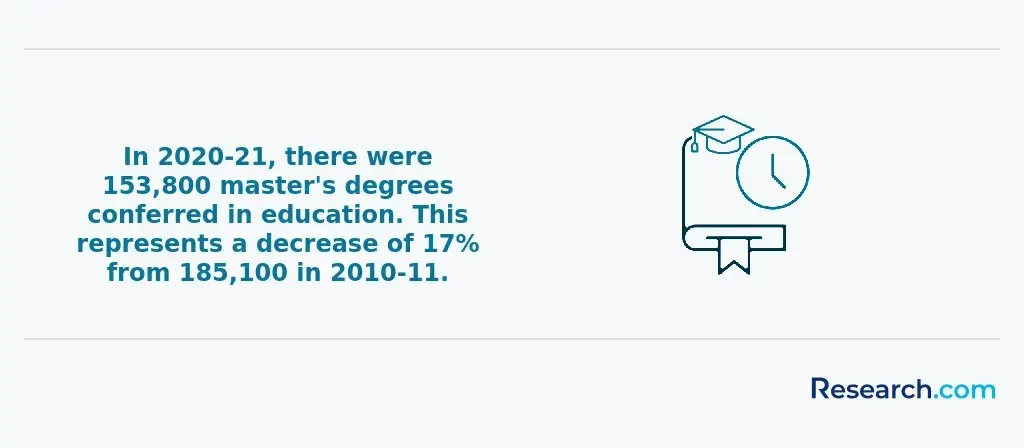
National education-degree trends are also useful context. In AY 2020-21, there was a decrease of 17% in the number of master's degrees conferred in education: only 153,800 degrees were conferred compared to AY 2010-11, when there were a total of 185,000 conferred in the USA, shown below.
If you want to understand how teacher licensure can differ across states, the Wisconsin teacher licensure process offers a helpful comparison point. Do not assume, however, that another state’s process applies to Oklahoma.
What is the certification and licensing process for a middle school math teacher in Oklahoma?
Certification is the state’s formal confirmation that you meet Oklahoma’s requirements to teach. A degree alone is not enough; the state must verify your preparation, testing, and background check.
- Complete an eligible degree: Your academic program should include appropriate math preparation and educator training.
- Finish teacher preparation: Approved educator preparation programs usually include fieldwork, methods courses, and student teaching.
- Pass the subject test: Prospective middle school math teachers must pass the Oklahoma Subject Area Test for Mathematics.
- Submit the application: Candidates apply to OSDE after completing education and exam requirements. The application fee is around $50.
- Clear the background check: A fingerprint-based screening is required and may involve additional vendor costs.
- Maintain certification: After licensure, teachers are expected to keep up with professional development and state renewal expectations.
| Licensing item | What to verify before you apply |
| Degree | Does the transcript show the required academic preparation? |
| Teacher preparation | Is the program approved for Oklahoma educator certification? |
| Testing | Have you passed the required Oklahoma mathematics subject assessment? |
| Background check | Have you completed fingerprinting through an approved process? |
| Application | Are all documents, fees, and verification forms ready before submission? |
If you are comparing math-focused academic routes before entering teacher preparation, review program quality, transfer policies, and licensure alignment rather than relying only on a list of the best mathematics degrees.
How important is teaching experience and what are the internship opportunities for middle school math teachers in Oklahoma?
Classroom experience is where future teachers learn how middle school students actually think, struggle, collaborate, and respond to instruction. Oklahoma candidates typically complete a supervised student teaching placement, often lasting one semester, as part of teacher preparation. This experience helps you practice lesson planning, formative assessment, behavior routines, parent communication, and differentiation for students who may be several grade levels apart in math readiness.
Where can you gain teaching experience?
- University-based placements: Education programs commonly coordinate fieldwork and student teaching through partnerships with local schools.
- School district opportunities: Districts may allow aspiring teachers to volunteer, tutor, substitute, or assist in classrooms, which can help build experience before student teaching.
- Alternative certification internships: Some routes for degree holders include supervised teaching or mentoring while candidates complete required preparation.
- Tutoring and after-school programs: Math tutoring, intervention programs, and academic clubs can strengthen your resume and help you learn how students reason through math problems.
According to data from DataUSA, Western Governors University awarded the most education degrees, conferring 12,454 degrees. Grand Canyon University awarded the second-highest number of education degrees at 8,555, followed by the American College of Education with 4,301 degrees awarded, shown in the graph below. These figures show how large online and education-focused institutions contribute to the national educator pipeline.
How to make student teaching count
- Teach, do not just observe: Ask to lead warm-ups, small-group instruction, full lessons, and assessments when appropriate.
- Request specific feedback: General encouragement is helpful, but targeted feedback on questioning, pacing, and classroom routines is more valuable.
- Track evidence of growth: Keep sample lesson plans, reflection notes, and assessment examples for interviews.
- Build professional relationships: Mentor teachers, department chairs, and principals can become references and job-search contacts.
What are the Oklahoma standards and curriculum requirements for teaching middle school math?
Middle school math teachers in Oklahoma must align instruction with the Oklahoma Academic Standards for Mathematics, which were established in 2016. These standards describe what students should know and be able to do by grade level and emphasize mathematical reasoning, problem solving, procedural fluency, and real-world application.
- Core content areas: Middle school math instruction commonly involves number operations, algebraic reasoning, geometry, data analysis, and proportional reasoning.
- Instructional focus: Teachers should move beyond memorized steps and help students explain why procedures work.
- Application: Oklahoma’s standards support practical uses of mathematics, so teachers should connect lessons to measurement, budgeting, patterns, data, and everyday decision-making.
- Flexibility: Teachers can adapt lessons for student needs while still meeting grade-level expectations.
- State resources: The Oklahoma State Department of Education provides standards documents and guidance that teachers can use for lesson planning and curriculum alignment.
| Curriculum priority | What it means in a middle school classroom |
| Conceptual understanding | Students explain ideas, models, and relationships instead of only copying procedures. |
| Procedural fluency | Students practice accurate and efficient methods for solving problems. |
| Mathematical reasoning | Students justify answers, critique reasoning, and choose strategies. |
| Real-world application | Students connect math to practical scenarios, data, measurement, and problem solving. |
| Differentiation | Teachers adjust support for students who need intervention, enrichment, or language support. |
Teachers who later want to move into curriculum leadership, teacher education, or district-level roles may also explore EdD career opportunities, especially if they are interested in instructional leadership or education policy.
What is the job market like and what are the salary expectations for middle school math teachers in Oklahoma?
The employment outlook for Oklahoma middle school math teachers is generally positive because math remains a high-need instructional area in many districts. Job opportunities may be strongest for candidates who are flexible about location, willing to work in rural communities, or able to support intervention, special education collaboration, or STEM initiatives.
- Average salary: As of 2023, the average salary for middle school math teachers in Oklahoma is approximately $50,000 per year.
- Typical range: Salaries can range from approximately $40,000 to $55,000 depending on district, experience, education level, and local pay schedules.
- Location differences: Larger districts in Oklahoma City or Tulsa may offer different compensation structures than smaller rural districts.
- Benefits: Public school roles often include health insurance, retirement plans, and paid time off, which can make the full compensation package more valuable than salary alone.
- Advanced education: Additional graduate study can support advancement, though candidates should weigh tuition costs carefully. A low tuition online MFA, for example, may be valuable for some educators but is not the most directly aligned credential for middle school math certification.
According to the National Center for Education Statistics, the most prevalent teaching positions that needed to be filled in public schools for the 2023-24 academic year included 71% of general elementary teacher positions, 70% of special education teacher positions, 77% of physical science teacher positions, and 76% of foreign language teaching positions, shown in the figure below.
These national staffing figures show that teacher shortages extend across multiple subjects and grade levels. For math-focused candidates, the practical takeaway is to watch district vacancy pages early, prepare application materials before peak hiring season, and consider schools where math intervention or STEM support is a priority.
-
: "
One Oklahoma teacher described the trade-off this way: salary mattered, but benefits, demand for math teachers, and the chance to work in a needed subject area made the position feel more stable than she expected.
"
What professional development and continuing education opportunities are available for middle school math teachers in Oklahoma?
Professional development helps math teachers stay current with standards, assessment practices, technology tools, and intervention strategies. It also supports license renewal and career growth, especially for teachers who want to become instructional coaches, department leaders, or curriculum specialists.
- Online coursework: Programs such as “Proportional Reasoning with Ratio Tables” for grades 4-8 give teachers flexible training in specific math concepts and instructional tools.
- STEM workshops and conferences: Events such as the K-12 STEM Teacher Conference can help educators strengthen lessons on multiplicative thinking, unfinished learning, and applied mathematics.
- Collaborative learning: Professional learning communities allow math teachers to compare student work, discuss pacing, and improve common assessments.
- State and university support: Oklahoma State University’s Center for Research in STEM Teaching and Learning and similar organizations offer teacher-focused resources and professional development.
- Graduate or specialist study: Some teachers pursue advanced education for leadership or specialization. An online master's in LIS may support school library or instructional resource roles, though math teachers should verify whether it matches their advancement goals.
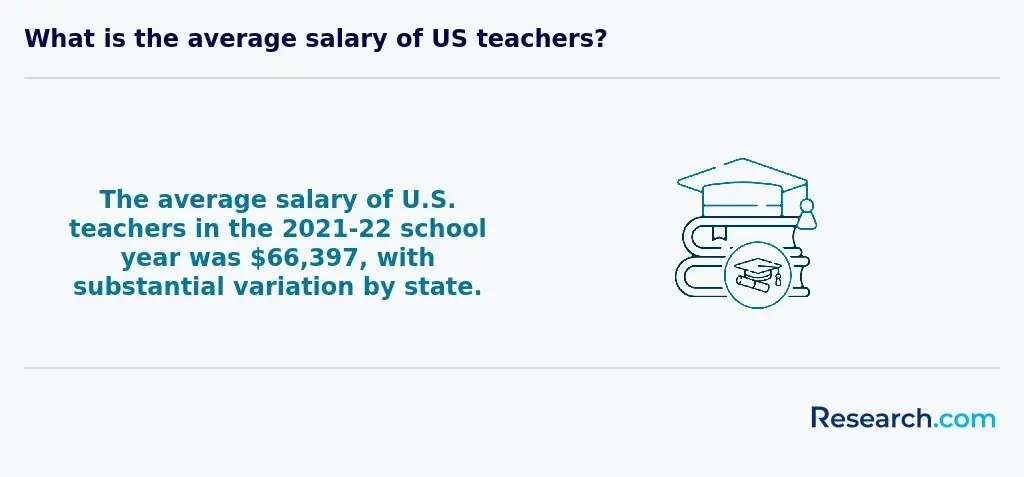
Professional learning can also affect long-term earnings and advancement. The average of U.S. teacher salaries in AY 2021-22 was around $66,397, varying by state, as shown below.
What are effective classroom management strategies and teaching methods for middle school math teachers in Oklahoma?
Middle school math classrooms work best when routines are predictable, instruction is active, and students feel safe making mistakes. Math anxiety is common at this age, so effective teachers combine structure with encouragement, clear explanations, and frequent checks for understanding.
- Set routines early: Teach students how to enter class, start warm-ups, use materials, work in groups, ask for help, and submit assignments.
- Use interactive instruction: Hands-on models, whiteboards, math games, and digital tools can make abstract ideas easier to see and test.
- Differentiate without lowering expectations: Use tiered practice, small groups, visual supports, and extension problems so students can access grade-level concepts.
- Connect math to real decisions: Budgeting, measurement, sports statistics, maps, recipes, and local data can make fractions, ratios, decimals, and equations more meaningful.
- Check understanding often: Exit tickets, quick writes, error analysis, and short quizzes help teachers respond before misconceptions become habits.
- Build a respectful classroom culture: Students are more willing to explain their thinking when mistakes are treated as part of learning.
Some classroom management claims are often presented with specific figures. For example, the original source material cited reductions in disruptive behavior by up to 30%, a 50% increase in retention when students actively participate, and a 20% increase in student achievement from ongoing assessment. Treat such numbers as context-dependent rather than guaranteed outcomes; implementation quality, student needs, and school support all matter.
| Common classroom challenge | Better teacher response |
| Students say they are “bad at math” | Use growth-focused feedback and show multiple solution strategies. |
| Wide skill gaps in one class | Use quick diagnostics, small groups, and targeted practice. |
| Off-task group work | Assign roles, set time limits, and require visible products. |
| Students memorize without understanding | Ask students to model, explain, and compare methods. |
| Low homework completion | Use in-class practice, short assignments, and feedback cycles. |
What are the career advancement opportunities and specializations for middle school math teachers in Oklahoma?
Middle school math teaching can lead to several career paths beyond the classroom. The right route depends on whether you prefer instructional leadership, administration, specialized student support, or curriculum work.
- Department leadership: Experienced teachers may become math department chairs or grade-level leaders.
- Instructional coaching: Math coaches support other teachers with lesson design, data analysis, and instructional strategies.
- Special education or gifted education: Additional preparation can help teachers serve students with specialized learning needs.
- STEM specialization: Teachers may focus on STEM projects, math competitions, robotics integration, or applied problem solving.
- Administration: Teachers who earn a Master’s degree in Educational Leadership may pursue assistant principal or principal roles.
- Curriculum development: Some educators help design district pacing guides, assessments, intervention materials, or state-level instructional resources.
-
: "
An Oklahoma teacher summarized the advancement path this way: moving from classroom teacher to curriculum specialist required extra credentials and careful time management, but it allowed her to shape math instruction beyond her own classroom.
"
Salary and advancement should also be viewed in a broader labor-market context. The teacher pay gap has been growing since the mid-1990s, with U.S. teachers earning on average 23.5% less than other college-educated workers, shown below.

What legal and ethical considerations must Oklahoma middle school math teachers follow?
Oklahoma teachers are responsible for student safety, fair instruction, professional conduct, and compliance with state and district rules. These expectations apply whether you are a first-year teacher, a long-term substitute, or a department leader.
- Valid certification: Teachers must hold the appropriate credential issued by the Oklahoma State Department of Education.
- Background checks: Fingerprinting and screening are part of the state process for educators.
- Curriculum compliance: Math instruction should align with the Oklahoma Academic Standards for Mathematics.
- Mandatory reporting: Educators must report suspected child abuse or neglect according to Oklahoma requirements and district procedures.
- Equity and access: Teachers should provide fair learning opportunities for students with different backgrounds, abilities, language needs, and support plans.
- Professional boundaries: Communication, grading, discipline, and relationships with students must remain professional and consistent with school policy.
- Bullying and discipline: Teachers should follow district procedures while maintaining a safe and respectful classroom environment.
Can dual certification in math and special education expand my career opportunities?
Yes. Dual preparation in math and special education can make a teacher more flexible and valuable to districts that need inclusive instruction, intervention support, and collaboration across general and special education settings. This route is especially useful for teachers who want to work with students who have individualized education programs, learning disabilities, or significant gaps in math foundations.
Dual certification is not the easiest route, because it requires additional preparation and careful attention to state requirements. However, it can broaden job options and strengthen classroom practice. If this path interests you, review how to become a special education teacher in Oklahoma and compare those requirements with the math teaching pathway.
What other teaching careers are available in Oklahoma for those interested in math education?
Not every educator who enjoys math needs to teach middle school. Some teachers prefer younger learners, older students, special education, STEM enrichment, tutoring, curriculum development, or instructional technology.
- Elementary teaching: This path lets teachers build early number sense, place value, measurement, and problem-solving habits.
- Preschool teaching: Early childhood educators introduce counting, patterns, shapes, and mathematical language. Learn more about how to become a preschool teacher in Oklahoma.
- High school math: Teachers who prefer algebra, geometry, statistics, or advanced math may explore secondary certification.
- Math intervention: Interventionists support students who need targeted help with foundational skills.
- STEM program coordination: Some educators move into robotics, coding, data, or applied STEM roles.
How can technology integration enhance classroom engagement for middle school math teachers in Oklahoma?
Technology can improve math instruction when it helps students visualize ideas, practice skills, receive feedback, or explain their reasoning. It should not replace strong teaching or become a distraction.
- Interactive displays: Teachers can model graphs, geometric transformations, and problem-solving steps.
- Math software: Digital tools can help students explore equations, patterns, shapes, and data sets.
- Online assessments: Quick checks can help teachers identify which students need reteaching or enrichment.
- Adaptive practice: Carefully chosen platforms can provide targeted review, but teachers should monitor whether students understand the concepts.
- Digital collaboration: Shared workspaces allow students to compare strategies and critique reasoning.
Technology integration is not limited to math. Educators who want to see how digital tools apply across disciplines can compare approaches used by a high school history teacher in Oklahoma.
What financial aid and funding options can help support my teaching journey in Oklahoma?
Teacher preparation can involve tuition, fees, testing costs, books, transportation for field placements, and unpaid student teaching time. Financial planning should begin before enrollment, not after the first bill arrives.
- Federal aid: Complete the FAFSA if you are entering an eligible degree or certification program.
- Scholarships: Look for awards for education majors, STEM educators, first-generation students, and Oklahoma residents.
- Grants: Some institutions and public programs offer need-based or field-specific grants.
- Loan forgiveness: Teachers in qualifying schools or shortage areas may be eligible for certain loan forgiveness options, depending on program rules.
- Employer support: Paraprofessionals and school employees should ask districts about tuition assistance, grow-your-own programs, or paid pathways.
- Low-cost program selection: Compare total cost, not only advertised tuition. Include fees, travel, exam costs, and time away from work.
If you are returning to college, Research.com’s guide to an easy teaching degree can help you think through flexible formats, transfer credits, and adult-student planning.
What resources and support are available for new middle school math teachers in Oklahoma?
New teachers need more than a license. They need lesson materials, mentors, assessment support, behavior systems, and colleagues who can help them interpret standards and respond to student needs.
- District mentors: Many Oklahoma districts pair new teachers with experienced educators who can help with planning, routines, and school expectations.
- Oklahoma Council of Teachers of Mathematics: Professional groups can provide networking, workshops, and subject-specific resources.
- National Council of Teachers of Mathematics: NCTM resources can support lesson design, mathematical practices, and professional learning.
- State guidance: OSDE materials help teachers align lessons with Oklahoma standards.
- Local teacher teams: Grade-level and department teams can help new teachers share materials, analyze student data, and solve common classroom problems.
- Online resource marketplaces: Sites such as Teachers Pay Teachers can provide ideas, but teachers should review all materials for accuracy, standards alignment, and accessibility.
How can prioritizing teacher well-being enhance classroom effectiveness in Oklahoma?
Middle school math teaching can be demanding. Teachers manage grading, planning, student behavior, parent communication, testing pressure, and the emotional work of supporting adolescents. Well-being is not a luxury; it affects clarity, patience, consistency, and long-term retention.
- Set sustainable routines: Use planning templates, reusable lesson structures, and grading boundaries.
- Work with colleagues: Shared assessments and common planning reduce isolation and duplicated effort.
- Use school support systems: Counselors, administrators, intervention teams, and special education staff should be part of the support network.
- Protect recovery time: Burnout often grows when teachers treat every evening and weekend as work time.
- Seek role fit: Some educators may find a better match in elementary, intervention, or specialist roles. If you are considering a related path, review how to become an elementary teacher in Oklahoma.
What is the most cost-effective pathway to become a middle school math teacher in Oklahoma?
The lowest-cost route depends on your current education level. A first-time student may save money through transfer credits, community college coursework, in-state tuition, scholarships, or an online bachelor’s program that leads to certification. A bachelor’s degree holder may save time and tuition through an approved alternative certification pathway.
| Pathway | Cost advantage | Main caution |
| Traditional bachelor’s degree | Clear route for students starting college | Can take longer and require more total tuition |
| Transfer-friendly program | Reduces repeated coursework | Credits must apply to the certification plan |
| Online teacher preparation | May help working adults keep employment | Must include approved fieldwork and meet Oklahoma requirements |
| Alternative certification | Useful for degree holders changing careers | Still requires exams, training, and state approval |
| District grow-your-own route | May include local support or employment connection | Availability varies by district |
For a focused cost comparison, review the cheapest way to get a teaching credential in Oklahoma. When comparing programs, ask for a written breakdown of tuition, fees, testing costs, student teaching requirements, and expected time to completion.
How do mentorship programs benefit new middle school math teachers in Oklahoma?
Mentorship can make the first teaching years more manageable. A strong mentor helps a new math teacher turn theory into routines, lessons, assessments, and classroom decisions.
- Lesson planning support: Mentors can help new teachers pace units and align lessons with Oklahoma standards.
- Classroom management guidance: Experienced teachers can suggest routines that work with middle school students.
- Feedback on instruction: Mentors can observe lessons and offer specific suggestions on questioning, modeling, and student engagement.
- Emotional support: New teachers often need reassurance and problem-solving help during difficult weeks.
- Retention support: Structured mentoring can improve confidence and job satisfaction during the transition into full-time teaching.
Mentoring is also emphasized in other state pathways. For example, elementary school teacher requirements in Pennsylvania show how guidance and professional development can help educators move from preparation into practice.
How are recent legislative changes impacting middle school math teaching careers in Oklahoma?
Policy changes can affect certification procedures, school funding, teacher pay, accountability expectations, curriculum rules, and district staffing decisions. Aspiring teachers should not rely on old program brochures or informal advice. Requirements can change, and the state source should always be checked before committing money or time.
- Check OSDE updates: Review current certification pages and state board communications.
- Ask programs for current approval status: A program should be able to explain how it meets Oklahoma requirements.
- Monitor district hiring priorities: Funding and policy shifts can influence math intervention, STEM, and special education staffing.
- Stay aware of accountability changes: Assessment and reporting expectations can shape classroom instruction.
To compare how state certification benchmarks are explained in another subject, review Oklahoma English teacher certification requirements.
Are there alternative certification routes for middle school math teachers in Oklahoma?
Yes. Oklahoma offers alternative certification options for some candidates who already hold a bachelor’s degree but did not complete a traditional teacher education program. These routes can be practical for career changers, especially those with math, science, engineering, finance, data, or technical backgrounds.
Alternative certification is not a shortcut around quality standards. Candidates still need to satisfy state eligibility rules, pass required assessments, complete training, clear a background check, and meet OSDE expectations. Before choosing this route, review the teaching certificate requirements in Oklahoma.
Questions to ask before entering an alternative certification program
- Am I eligible with my current bachelor’s degree and transcript?
- Which math exam do I need to pass?
- Will I receive mentoring while teaching?
- How much coursework is required?
- What happens if I do not pass the exam on the first attempt?
- Does the pathway qualify me specifically for middle school math?
Common mistakes to avoid when planning your Oklahoma math teaching pathway
| Mistake | Why it causes problems | Better approach |
| Choosing a program only because it is fast | A quick program is not useful if it does not meet Oklahoma certification requirements. | Confirm licensure alignment before enrolling. |
| Looking only at tuition | Fees, testing, books, travel, and unpaid student teaching can change total cost. | Compare full program cost and financial aid. |
| Assuming online means easier | Online programs may still require fieldwork, exams, and strict deadlines. | Ask how student teaching and supervision work. |
| Ignoring accreditation | Unrecognized programs can create licensure, transfer, and aid problems. | Verify institutional accreditation and educator preparation approval. |
| Waiting to prepare for the math exam | Testing delays can postpone licensure or hiring. | Build exam preparation into your program timeline. |
| Relying only on rankings | Rankings may not reflect your transfer credits, location, budget, or licensure needs. | Use rankings as one input, not the final decision. |
| Assuming salary outcomes are guaranteed | Pay depends on district schedules, experience, education, and local funding. | Review actual district salary schedules before applying. |
What do graduates have to say about becoming a middle school math teacher in Oklahoma?
- Allison: Teaching middle school math in Oklahoma has been deeply meaningful for her because she enjoys watching students understand difficult concepts and values support from colleagues and the community.
- Jonas: He found that middle school math allows creativity, collaboration, and flexible lesson design, especially when students have different levels of readiness.
- Whitney: She appreciated opportunities to use grants, technology, and hands-on learning while helping students build stronger critical thinking skills.
How can interdisciplinary studies enhance teaching effectiveness for middle school math teachers in Oklahoma?
Interdisciplinary learning can help math teachers design lessons that feel less isolated from real life. Ethics, history, science, economics, art, and cultural studies can all give students more reasons to care about mathematical thinking.
For example, a teacher might connect ratios to music, geometry to architecture, data analysis to community issues, or budgeting to personal finance. Even a field such as a theology degree can broaden a teacher’s perspective on ethics, culture, and discussion-based learning, although it is not a direct substitute for math teacher preparation.
Can integrating music education strategies enhance math engagement in Oklahoma classrooms?
Music can support math engagement when teachers use rhythm, patterns, fractions, sequencing, and proportional thinking intentionally. This is especially useful for students who benefit from multisensory learning or need concrete examples of abstract ideas.
- Rhythm and fractions: Beats and note values can reinforce part-whole relationships.
- Patterns: Musical sequences can support algebraic thinking and prediction.
- Ratios: Tempo, intervals, and sound patterns can lead to proportional reasoning discussions.
- Engagement: Music-based examples can help some students participate more confidently.
Teachers interested in cross-disciplinary methods can compare requirements and practices in music teacher education requirements in Oklahoma.
How can engaging parents and community partners enhance math learning outcomes in Oklahoma classrooms?
Parent and community partnerships can make math more visible outside the classroom. Students are more likely to see the value of math when families, local businesses, libraries, and community organizations help connect lessons to real tasks and future opportunities.
- Family math nights: Schools can help parents understand current math methods and support practice at home.
- Community tutoring: Volunteers, colleges, and local organizations may support after-school math help.
- Real-world projects: Local data, business budgets, maps, construction, agriculture, and sports can become meaningful math examples.
- Career connections: Guest speakers can show how math appears in trades, healthcare, technology, finance, and engineering.
- Better communication: Regular updates help families understand student progress before problems become severe.
If you are comparing grade-level options, you may also want to review how to become a high school math teacher in Oklahoma.
Key Insights
- The core Oklahoma pathway is straightforward but document-heavy: bachelor’s degree, approved teacher preparation, required mathematics testing, fingerprinting, application, and state licensure.
- Program choice matters. Before enrolling, verify accreditation, Oklahoma approval, student teaching arrangements, transfer policies, total cost, and exam preparation support.
- As of 2023, the average salary for middle school math teachers in Oklahoma is approximately $50,000 per year, with common estimates ranging from approximately $40,000 to $55,000 depending on district and experience.
- Math remains a practical teaching field because many districts report shortages, especially in rural areas and STEM-related staffing needs.
- Alternative certification can help career changers enter teaching, but it still requires state approval, testing, training, and background checks.
- Student teaching and mentoring are not box-checking requirements; they are where future teachers learn classroom pacing, behavior routines, differentiation, and adolescent communication.
- Teachers who add special education, STEM, instructional coaching, or curriculum expertise may expand their career options.
- National data show broader pressure on the education workforce: in AY 2020-21, education master’s degrees declined by 17%, with 153,800 degrees conferred compared with 185,000 in AY 2010-11.
- In 2022 in the U.S., Western Governors University awarded the most education degrees, conferring 12,454 degrees, followed by Grand Canyon University at 8,555 and the American College of Education with 4,301 degrees awarded.
- The most prevalent teaching positions that needed to be filled in public schools for AY 2023-24 included 71% of general elementary teacher positions, 70% of special education teacher positions, 77% of physical science teacher positions, and 76% of foreign language teaching positions.
- The teacher pay gap has been growing since the mid-1990s, with U.S. teachers earning on average 23.5% less than other college-educated workers.
- The best next step is to identify your starting point—new college student, degree holder, current educator, or school employee—and then match it to the Oklahoma-approved pathway that costs the least while still meeting certification requirements.
Related Articles for Nearby States
- 2027 How to Become a Middle School Math Teacher in Texas: Requirements & Certification
- 2027 How to Become a Middle School Math Teacher in Kansas: Requirements & Certification
- 2027 How to Become a Middle School Math Teacher in Arkansas: Requirements & Certification
- 2027 How to Become a Middle School Math Teacher in Missouri: Requirements & Certification
- 2027 How to Become a Middle School Math Teacher in Colorado: Requirements & Certification
- 2027 How to Become a Middle School Math Teacher in New Mexico: Requirements & Certification
- 2027 How to Become a Middle School Math Teacher in Nebraska: Requirements & Certification
- 2027 How to Become a Middle School Math Teacher in Louisiana: Requirements & Certification
- 2027 How to Become a Middle School Math Teacher in Iowa: Requirements & Certification
- 2027 How to Become a Middle School Math Teacher in Mississippi: Requirements & Certification
References:
- Bureau of Labor Statistics. (2023). Middle school teachers. Bureau of Labor Statistics.
- Bureau of Labor Statistics. (2023). Occupational employment and wages, May 2023: Middle school teachers. Bureau of Labor Statistics.
- Data USA. (2023). Education. Data USA.
- Data USA. (2023). Mathematics teacher education. Data USA.
- Glassdoor. (2023). Oklahoma middle school math teacher salary. Glassdoor.
- National Center for Education Statistics. (2023). Press release: Education statistics. National Center for Education Statistics.
- Oklahoma State Department of Education. (2023). Oklahoma academic standards for mathematics. Oklahoma State Department of Education.
- Oklahoma State University. (2023). Center for research in STEM teaching and learning: Teacher professional development. Oklahoma State University.
Other Things You Should Know About Becoming a Middle School Math Teacher in Oklahoma
To become a middle school math teacher in Oklahoma, you must obtain a teaching certification from the Oklahoma State Department of Education. This typically involves completing a bachelor's degree in education or a related field, passing the required subject area tests, and completing a teacher preparation program. Additionally, you may need to complete a background check and fulfill any continuing education requirements to maintain your certification.
The process typically takes about four to six years. This includes earning a bachelor's degree in education or math, completing a teacher preparation program, fulfilling any internship or student teaching requirements, and passing certification exams in Oklahoma.


