2027 How to Become a Private School Teacher in North Dakota: Requirements & Certification

Co-Founder and Chief Data Scientist
Becoming a private school teacher in North Dakota is not always the same as becoming a public school teacher. Private schools may have more control over hiring, curriculum, school culture, and teacher qualifications, but candidates still need to understand state expectations, background check rules, school-specific requirements, and how credentials affect employability. This guide is for aspiring teachers, career changers, current educators, and education students who want to know what it realistically takes to teach in a North Dakota private school. You will learn which degrees and licenses matter, how long the process can take, what costs to expect, how salaries vary, and how to choose the best preparation path for your goals.
Quick Answer: How Do You Become a Private School Teacher in North Dakota?
To become a private school teacher in North Dakota, you typically need at least a bachelor’s degree, subject or grade-level preparation, a clean background check, and qualifications that match the hiring standards of the individual private school. Some private schools may prefer or require a state teaching license, even when private school hiring rules are more flexible than public school requirements. Candidates who want the broadest job options should complete an education-related degree, build classroom experience, and confirm each school’s accreditation, religious or educational mission, and teacher credential expectations before applying.
- Most competitive candidates have a bachelor’s degree. Private schools commonly look for formal preparation in education, child development, or the subject being taught.
- Licensure may still matter. Even if a private school has flexibility, a North Dakota teaching license can improve credibility and expand future career options.
- Background checks are part of the process. Teachers with unsupervised access to students generally must complete fingerprinting and criminal history screening.
- Private school requirements vary. Schools may differ by accreditation status, religious affiliation, curriculum model, grade level, and hiring philosophy.
- Costs go beyond tuition. Candidates should plan for degree expenses, licensing or certification fees, background checks, professional development, relocation, and classroom supplies.
- Education requirements for North Dakota private school teachers
- Licensure application and renewal process
- Can you teach with only a certificate?
- Average cost of private education programs and schools
- Timeline to become a private school teacher
- Total cost to enter the profession
- Job outlook for private school teachers
- Private school teacher salary in North Dakota
- Ways to strengthen specialized teaching skills
- Academic credentials for career advancement
- How an advanced degree can support promotion
- Trends shaping private school education
- Mentorship and leadership opportunities
- Additional certifications to consider
- Benefits of specializing in history
- Certification options in North Dakota
- Using online education to build credentials
- Related career paths after private school teaching
- Career paths for private school teachers
- Practical tips for aspiring private school teachers
What are the educational requirements for private school teachers in North Dakota?
Private schools in North Dakota can set many of their own hiring expectations, but most still want teachers who can demonstrate subject knowledge, age-appropriate instructional skill, and readiness to manage a classroom. The strongest preparation usually combines a degree, supervised teaching experience, and training aligned with the grade level or subject you plan to teach.
| Teaching Goal | Common Preparation | Why It Matters |
| Elementary school teaching | Major in elementary education or comparable preparation for grades 1-6 or 1-8 | Builds skill in literacy, math foundations, classroom routines, and child development |
| Middle school teaching | Major in middle-level education for grades 5-8 | Prepares teachers for early adolescent development and content-area instruction |
| High school teaching | Major in the subject area taught for grades 7-12 | Shows depth in a discipline such as English, history, science, math, or another field |
| Specialized or elective teaching | Degree, certificate, endorsement, portfolio, or professional experience related to the subject | Helps schools evaluate practical expertise in areas such as music, art, technology, or faith-based instruction |
The main educational requirements to plan for include:
- Bachelor’s degree: Most private schools expect candidates to hold at least a bachelor’s degree. Education majors are common, but a related field may be acceptable when paired with teaching experience or subject expertise.
- Coursework in teaching and learning: Classes in pedagogy, child development, assessment, classroom management, and instructional design help candidates move beyond knowing a subject to teaching it effectively.
- Teacher preparation experience: Student teaching, practicum hours, substitute teaching, tutoring, or classroom aide experience can make a major difference during hiring.
- Subject alignment: Secondary teachers are usually more competitive when their degree matches the subject they want to teach.
- State license or school-approved credential: Some private schools prefer licensed teachers, especially when they want consistency with public school standards or accreditation expectations.
Candidates who are comparing preparation routes in multiple states may find it useful to review how requirements differ elsewhere, such as this guide to teacher education courses in Nevada.
Before enrolling in a degree or certificate program, ask each target school what it requires for the grade level you want to teach. A small religious elementary school, a college-preparatory high school, and a specialized private academy may evaluate candidates differently.
What is the licensure application and renewal process for private school teachers in North Dakota?
Licensure is one of the most important areas to clarify because private school hiring does not always follow the same rules as public school employment. Some North Dakota private schools may hire teachers without requiring a public school teaching license, while others may prefer licensed educators or require licensure for certain roles, grade levels, or accreditation-related reasons.
For candidates, the practical question is not simply “Is a license legally required?” but “Will having a license make me more employable and protect my long-term career options?” In many cases, the answer is yes.
| Credential Situation | What It Can Mean for Private School Hiring | Best For |
| No state teaching license | May be considered by some private schools if the candidate has strong subject expertise, experience, or mission fit | Career changers, specialists, tutors, or candidates applying to schools with flexible hiring rules |
| Valid teaching license | Signals formal teacher preparation and may satisfy preferred or required hiring standards | Candidates who want more school options and possible mobility into public education |
| License plus endorsement or specialization | Can strengthen applications for hard-to-fill or specialized teaching assignments | Teachers pursuing special education, music, history, early childhood, or subject-specific roles |
The licensure path generally involves documenting education, completing required application steps, and meeting any applicable state standards. Renewal expectations depend on the license type and state rules in effect at the time. Candidates should always verify current requirements with the North Dakota Education Standards and Practices Board rather than relying only on a school’s informal description.
Even when a private school does not require licensure, teachers may still need to complete ongoing professional development. This can include workshops, curriculum training, faith-based formation, classroom technology training, or student support training. Educators who want to broaden their academic credentials may also consider related fields, including online library science programs for school library, media, or literacy-focused roles.
Can I become a private school teacher in North Dakota with just a certificate?
It may be possible to teach in some North Dakota private schools with only a teaching certificate or limited postsecondary education, but this depends entirely on the school, the role, the grade level, and the applicant pool. A certificate alone is usually less competitive than a bachelor’s degree, especially for full-time classroom teaching in core academic subjects.
Private schools may be more flexible than public schools because they can weigh mission fit, subject knowledge, ministry experience, classroom experience, or professional background. However, flexibility does not mean low expectations. Schools still need teachers who can plan lessons, manage behavior, assess learning, communicate with families, and support student progress.
| Applicant Profile | Likely Strengths | Possible Limits | Recommended Next Step |
| Teaching certificate only | Shows some focused preparation | May not meet requirements for many full-time teaching roles | Ask schools directly whether the certificate qualifies you for the desired grade or subject |
| Associate’s degree | May support aide, preschool, tutoring, or support positions | Often less competitive for lead teacher positions | Consider completing a bachelor’s degree or adding classroom experience |
| Bachelor’s degree outside education | Can show subject expertise or professional experience | May need pedagogy training or supervised teaching experience | Look for alternative teacher preparation, certification, or school-based mentoring |
| Bachelor’s degree in education | Aligns well with most teaching expectations | May still need school-specific training or licensure | Build a portfolio, references, and grade-level experience |
If your current credential is below a bachelor’s degree, consider using entry-level roles strategically. Classroom aide positions, substitute teaching, tutoring, after-school programs, and religious education instruction can help you build evidence of teaching ability while you continue your education.
What is the average cost of Private education programs in North Dakota?
The cost question can mean two different things: the price families pay for private K-12 schooling and the cost aspiring teachers pay for college or educator preparation. Both matter. Tuition levels affect private school budgets, hiring capacity, and salary flexibility, while college costs affect the return on investment for future teachers.
Private school tuition in North Dakota is often described as more affordable than tuition in many other states, with religious schools playing a large role in the sector. Examples cited for private schools in North Dakota include:
| School | Published Tuition Example |
| Shiloh Christian School in Bismarck | Around $8,054 annually |
| St. John’s Academy in Jamestown | Elementary: $8,200; Middle School: $9,700; High School: $10,700 |
| Oak Grove Lutheran School in Fargo | K-1st Grade: $8,415; Grades 2-5: $8,765; Middle School: $9,810; High School: $11,895 |
For aspiring teachers pursuing higher education, the average annual cost for attending a private four-year college in North Dakota is approximately $22,856, including tuition and living expenses.
Lower K-12 tuition can be positive for families, but future teachers should understand the trade-off: private schools with lower tuition may have tighter operating budgets, which can affect teacher salaries, benefits, classroom resources, and professional development funding. When evaluating job offers, ask about more than mission and class size. Ask about health insurance, retirement, tuition remission, professional development support, planning time, and classroom supply budgets.
How long does it take to become a private school teacher in North Dakota?
The timeline depends on your starting point and the type of teaching position you want. A candidate who already has a bachelor’s degree and classroom experience may be able to apply quickly. Someone starting college from scratch may need several years before becoming competitive for lead teaching roles.
| Starting Point | Possible Timeline | What to Do During This Stage |
| Teaching certificate route | A few months to a year, depending on the program and prior experience | Confirm whether target schools accept the certificate for lead teaching roles |
| Associate’s degree | Generally two years of study | Use the credential for support roles while planning a bachelor’s completion pathway |
| Bachelor’s degree | Typically an additional two to four years of study if starting after an associate’s degree or with transfer credits | Complete grade-level or subject-specific preparation and gain classroom experience |
| Bachelor’s degree plus licensure | Varies by preparation program, testing, application processing, and state requirements | Track application deadlines, transcripts, background checks, and renewal expectations |
Do not assume the fastest path is the best path. A short certificate may help you qualify for a narrow set of positions, but a degree and license can create more flexibility over time. If you want to teach high school math, science, history, English, or another core subject, subject-area preparation is especially important.
A practical strategy is to work backward from the job posting. Collect several private school teacher postings in North Dakota, list the required and preferred qualifications, and choose a preparation path that matches the majority of them.
How much does it cost to become a private school teacher in North Dakota?
If you are returning to school for a teaching degree, the total cost can include far more than tuition. Your expenses will depend on whether you already have college credits, whether you need a bachelor’s degree, whether you pursue licensure, and whether you complete coursework online or on campus.
| Cost Category | Typical Amount or Range Stated | What to Check Before Paying |
| Degree program | Most private schools require at least a bachelor’s degree, which can range from $20,000 to over $50,000 depending on institution and program | Accreditation, transfer credit policy, student teaching placement support, and whether the program meets your career goal |
| Certification and licensing | Certification exams and preparation courses can add up to several hundred dollars | Whether the private schools you are targeting require, prefer, or do not consider state licensure |
| Professional development | Workshops or courses can cost anywhere from $100 to $1,000 annually | Whether the employer pays, reimburses, or expects teachers to cover these costs |
| Relocation and living costs | Varies widely by location within the state | Housing costs, commute, moving expenses, and whether salary offsets relocation |
| Classroom materials | Teachers may spend $200 to $500 annually depending on school-provided resources | Annual supply budget, reimbursement rules, and shared curriculum resources |
To reduce costs, compare public and private colleges, ask about transfer credits, use employer tuition assistance if available, consider part-time or online study, and avoid enrolling in a program before confirming that it supports the teaching role you want.
What is the job outlook for private school teachers in North Dakota?
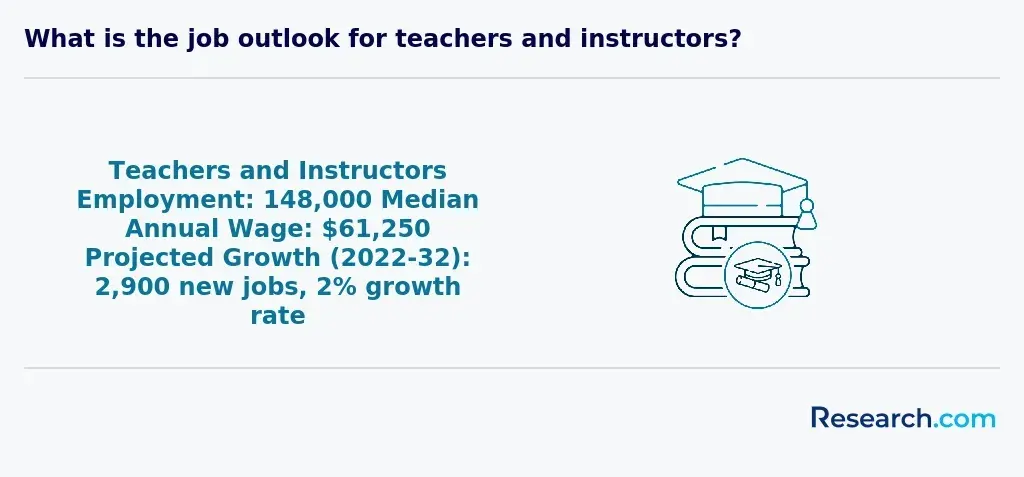
Detailed labor market data for private school teachers specifically can be limited, so candidates should interpret the outlook through broader education trends, local enrollment patterns, school budgets, and turnover. Teaching opportunities may arise from retirements, resignations, enrollment changes, new programs, or hard-to-fill subject areas.
- Growth is likely to be moderate rather than explosive. Candidates should expect openings, but not unlimited expansion in the number of positions.
- Local demand matters. Opportunities may differ between Fargo, Bismarck, smaller towns, religious schools, independent schools, and specialized programs.
- Competition can vary by subject. A candidate with strong math, science, special education, music, or early childhood preparation may face a different market than a general applicant.
- Private school budgets can affect hiring. Enrollment and tuition revenue may influence staffing levels, salaries, and program offerings.
- Licensure can improve mobility. Even if not required by every private school, a valid credential can help teachers move between schools or consider public school employment later.
When researching openings, do not rely only on statewide averages. Contact schools directly, monitor job boards, attend education fairs, and network with administrators, alumni, and current teachers. Also compare private school roles with broader careers in education so you understand your alternatives.
How much do private school teachers in North Dakota make?
Private school teacher pay in North Dakota can differ significantly by school type, location, grade level, subject area, teacher experience, degree level, and institutional funding. The average salary range often cited for private school teachers in North Dakota is between $30,000 and $50,000 annually, but individual offers may fall inside or outside that range depending on the school.
| Compensation Factor | Why It Matters | Question to Ask Before Accepting an Offer |
| Base salary | Determines immediate income and affects long-term financial planning | Is the salary based on a step schedule, negotiation, degree level, or annual contract? |
| Benefits | Health insurance, retirement, paid leave, and tuition benefits can change total compensation | What benefits are included, and what portion does the school pay? |
| Contract length | Some roles may be based on an academic-year contract rather than year-round pay | Is pay distributed over 9, 10, or 12 months? |
| Professional development | Training support can reduce out-of-pocket costs and improve advancement potential | Does the school fund conferences, endorsements, graduate courses, or workshops? |
| Workload | Small schools may ask teachers to advise clubs, coach, supervise activities, or teach multiple subjects | Which duties are included in the contract, and which are paid separately? |
Private school salaries are sometimes lower than public school salaries, but compensation should be evaluated as a full package. Smaller classes, mission alignment, curriculum flexibility, tuition discounts for dependents, or a strong school community may matter to some teachers. Still, those benefits do not replace financial planning. Ask for a written offer and review salary, benefits, renewal terms, extra duties, and professional development support before making a decision.
How can I enhance my specialized teaching skills in private education?
Specialized skills can make a private school teacher more valuable, particularly in small schools where one educator may fill several roles. Areas such as special education support, reading intervention, educational technology, music, faith formation, English language learning, and differentiated instruction can help teachers serve a wider range of students.
If you want to work with students who need individualized support, review the pathway for becoming a special education teacher in North Dakota. Even if your private school role is not formally a special education position, training in accommodations, behavior support, assessment, and inclusive instruction can improve classroom practice.
How can I elevate my academic credentials for career advancement?
Additional academic credentials can help private school teachers qualify for lead teaching roles, early childhood positions, department leadership, curriculum design, or administrative responsibilities. The best credential depends on the students you want to teach and the direction you want your career to move.
For educators focused on young learners, an online early childhood education degree may provide a structured way to build knowledge in developmentally appropriate instruction, family engagement, early literacy, and classroom organization. Online study can be useful for working adults, but candidates should still verify accreditation, field experience requirements, and transfer credit rules.
Can private school teachers transition to early childhood education roles?
Yes, private school teachers can move into early childhood education, but they may need additional preparation in child development, play-based learning, early assessment, health and safety practices, and age-appropriate classroom management. Preschool and early elementary settings require different strategies than middle or high school classrooms.
Before shifting into preschool or pre-K teaching, review the preschool teacher requirements in North Dakota. This can help you identify whether you need a degree, certificate, background check, supervised experience, or additional training for the role you want.
How can pursuing an advanced degree boost my career as a private school teacher in North Dakota?
An advanced degree can support career growth when it aligns with a clear professional goal. A master’s degree may help teachers deepen content expertise, move into curriculum leadership, qualify for administrative pathways, or strengthen their case for higher compensation. However, it is not automatically worth the cost for every private school teacher.
Before enrolling, compare the cost of the degree with likely benefits: salary movement, leadership eligibility, specialization, and portability to other schools. Educators considering graduate study in elementary education can review what you can do with a master’s in elementary education to see how the credential may fit classroom and non-classroom roles.
What are the emerging trends in private school education in North Dakota?
Private schools in North Dakota are responding to many of the same pressures affecting education nationally: digital learning tools, hybrid instruction, family demand for individualized education, curriculum transparency, student support needs, and competition for qualified teachers. These trends do not affect every school in the same way, but they influence hiring conversations and teacher expectations.
- Technology integration: Teachers are increasingly expected to use learning platforms, digital assessment tools, and classroom technology thoughtfully rather than as add-ons.
- Personalized learning: Smaller schools may emphasize individualized instruction, but teachers need practical systems for differentiation and progress monitoring.
- Mission-driven education: Religious and independent schools often hire for alignment with school values as well as teaching skill.
- Credential awareness: Families and accrediting bodies may pay closer attention to teacher qualifications, curriculum quality, and student outcomes.
- Flexible preparation: Online degrees, alternative routes, and professional certificates are becoming more relevant for working adults entering teaching.
For a broader state-level overview, see this guide on how to become a teacher in North Dakota.
What mentorship and leadership opportunities can boost my career?
Private school teachers can build leadership experience before moving into formal administration. In smaller schools, teachers may have opportunities to chair committees, mentor new faculty, lead curriculum review, coordinate accreditation work, coach student activities, or design schoolwide initiatives.
Look for schools that offer structured mentoring, classroom observation, professional learning communities, and leadership pathways. Teachers who want a strong foundation in elementary instruction can also review guidance on becoming an elementary school teacher in North Dakota.
What additional certifications can enhance my teaching credentials?
Additional certifications are most useful when they solve a real need for the school or support a defined career goal. A certificate should not be collected simply to add lines to a resume. Choose credentials that match the grades, subjects, or student populations you want to serve.
| Certification or Skill Area | How It Can Help in Private Schools |
| Special education | Supports differentiated instruction, accommodations, and individualized student support |
| Music education | Can expand arts programming and support chapel, performance, or enrichment activities |
| Educational technology | Helps teachers use digital tools for instruction, assessment, and communication |
| Early childhood education | Prepares teachers for preschool, pre-K, and early elementary learning environments |
| Subject-area specialization | Strengthens credibility for middle and high school teaching assignments |
Educators interested in arts instruction can explore music teaching qualifications in North Dakota to understand how subject-specific preparation may improve hiring options.
How can specializing in history benefit my teaching career in North Dakota?
A history specialization can be valuable for private school teachers who want to teach secondary social studies, design humanities courses, lead civic education projects, or build interdisciplinary lessons. Strong history teachers help students analyze evidence, compare perspectives, write clearly, and understand how past events shape current issues.
Private schools with classical, religious, college-preparatory, or humanities-focused curricula may place particular value on teachers who can connect history with literature, philosophy, government, geography, and ethics. If this route interests you, review how to become a history teacher in North Dakota.
What are the certification options for private school teachers in North Dakota?
Certification choices should be based on the kind of teaching you want to do and the expectations of the schools where you plan to apply. Some private schools may accept nontraditional backgrounds, while others may expect the same level of preparation as public schools. A state license, endorsement, or specialized certificate can make your application easier to evaluate.
To compare available pathways, review the types of teacher certification in North Dakota. Pay close attention to grade bands, subject endorsements, renewal rules, and whether your program includes supervised teaching experience.
How can online education enhance my teaching credentials in North Dakota?
Online education can help aspiring and current teachers complete degrees, add endorsements, or build targeted skills while continuing to work. This can be especially useful for career changers, rural candidates, substitute teachers, and private school employees who cannot relocate for a campus-based program.
Before choosing an online program, verify accreditation, field placement requirements, licensure alignment, student support services, and total cost. Online coursework can be convenient, but it should still lead to a credential that employers understand and respect. For more guidance, see how to become a teacher online in North Dakota.
What other career paths can I pursue after becoming a private school teacher in North Dakota?
Private school teaching can lead to several related education and student-support careers. Teachers may move into curriculum development, tutoring, school administration, admissions, instructional coaching, educational consulting, nonprofit education, museum education, library programming, or student services.
Some educators choose more specialized student-support roles. For example, a teacher interested in communication disorders and therapy-based student support can explore how to become a speech pathologist in North Dakota. These transitions usually require additional education, clinical preparation, or licensure, so research requirements early.
What career paths are available for Private school teachers in North Dakota?
Private school teaching can be a long-term classroom career or a stepping stone into leadership and specialized education roles. The best path depends on your strengths, credentials, school environment, and willingness to take on responsibilities beyond classroom teaching.
| Career Path | Typical Responsibilities | When It Makes Sense |
| Lead classroom teacher | Plan lessons, teach students, assess progress, communicate with families | You want direct daily work with students |
| Department chair or grade-level lead | Coordinate curriculum, mentor teachers, lead meetings, support instruction | You want leadership while staying connected to teaching |
| Curriculum developer | Create instructional materials, align lessons with school goals, evaluate resources | You enjoy planning, assessment, and program design |
| Specialized instructor | Teach music, history, special education support, early childhood, technology, or another focus | You have strong subject expertise or additional certification |
| Administrator | Oversee faculty, operations, admissions, student life, or academic programs | You want broader school leadership and policy influence |
| Consultant or trainer | Support schools, train teachers, design programs, advise families or organizations | You have deep experience and want work beyond one classroom |
Private schools may offer meaningful autonomy, but they may also require teachers to support activities, committees, student supervision, or faith-based programming. Before accepting a position, ask how the school defines teacher workload and advancement. You can also compare options with broader careers with a higher education degree.
Additional Tips for Aspiring Private School Teachers in North Dakota
A strong application for a North Dakota private school teaching role should show more than a degree. Schools want evidence that you can teach effectively, support their mission, communicate with families, and contribute to the school community.
- Confirm the school’s requirements before choosing a program. Ask whether the school requires a bachelor’s degree, state license, subject major, faith statement, classroom experience, or specific endorsements.
- Check accreditation and approval status. Private schools are not all structured the same way, and accreditation can affect curriculum expectations, teacher qualifications, and family confidence.
- Build a teaching portfolio. Include sample lesson plans, classroom management strategies, assessment examples, student work samples if appropriate, and evidence of professional development.
- Gain experience before applying for lead roles. Substitute teaching, tutoring, aide work, camp instruction, youth ministry, coaching, and after-school programs can strengthen your resume.
- Compare the full compensation package. Look at salary, benefits, contract length, retirement, professional development funding, tuition discounts, and extra duties.
- Use affordable credential options carefully. If cost is a major concern, research the cheapest teaching credential program in North Dakota, but verify that it aligns with your intended teaching role.
- Network locally. Many private school openings are easier to learn about through school websites, professional contacts, churches, community networks, and education job fairs.
Common Mistakes to Avoid
| Mistake | Why It Can Hurt You | Better Approach |
| Assuming private schools do not care about credentials | Many still prefer degrees, licenses, or subject expertise | Review actual job postings and contact schools before choosing a path |
| Choosing a program based only on tuition | A cheap program may not meet your career, licensure, or field experience needs | Compare accreditation, outcomes, transfer credit, and placement support |
| Ignoring background check costs and timing | Delays can slow hiring or onboarding | Ask early about fingerprinting, criminal history checks, and required fees |
| Overlooking benefits | A salary offer alone does not show total compensation | Request written details on insurance, retirement, paid leave, and tuition benefits |
| Relying only on rankings or reputation | A well-known school may not fit your teaching style or financial needs | Evaluate mission fit, workload, leadership, resources, and retention |
| Assuming online programs automatically meet requirements | Some may not align with licensure or local employer expectations | Verify accreditation and state alignment before enrolling |
Questions to Ask Before Applying to a Private School
- What degrees, licenses, endorsements, or certificates are required for this position?
- Does the school prefer state-licensed teachers even if licensure is not mandatory?
- Is the school accredited, approved, religiously affiliated, or mission-based?
- What background checks, fingerprinting, or documentation must be completed?
- What curriculum does the school use, and how much flexibility do teachers have?
- How many students are typically in each class?
- What is the salary range, and what benefits are included?
- Are teachers expected to coach, advise clubs, supervise activities, or lead chapel or faith-based programming?
- Does the school pay for professional development or additional credentials?
- What are the renewal, evaluation, and contract procedures?
Key Insights
- Private school hiring in North Dakota is school-specific. Some schools may be flexible, but many still expect a bachelor’s degree, classroom experience, subject preparation, or licensure.
- A teaching license can improve your options. Even when not required everywhere, licensure strengthens credibility and can make it easier to move between private and public school roles.
- Grade level matters. Elementary, middle school, and high school roles usually require different academic preparation, especially for subject-specific secondary teaching.
- Costs include more than college tuition. Plan for licensing, background checks, professional development, relocation, and personal classroom expenses.
- Salary should be evaluated as a package. The cited range of $30,000 to $50,000 annually does not tell the whole story; benefits, workload, contract length, and advancement opportunities matter.
- Specialization can improve competitiveness. Training in special education, early childhood, music, history, technology, or another high-need area can help you stand out.
- The best path starts with target schools. Before enrolling in a program, study job postings and ask schools directly what qualifications they require and prefer.
Related Articles for Nearby States
- 2027 How to Become a Private School Teacher in South Dakota: Requirements & Certification
- 2027 How to Become a Private School Teacher in Minnesota: Requirements & Certification
- 2027 How to Become a Private School Teacher in Montana: Requirements & Certification
- 2027 How to Become a Private School Teacher in Nebraska: Requirements & Certification
- 2027 How to Become a Private School Teacher in Wyoming: Requirements & Certification
- 2027 How to Become a Private School Teacher in Iowa: Requirements & Certification
- 2027 How to Become a Private School Teacher in Wisconsin: Requirements & Certification
- 2027 How to Become a Private School Teacher in Colorado: Requirements & Certification
- 2027 How to Become a Private School Teacher in Kansas: Requirements & Certification
- 2027 How to Become a Private School Teacher in Illinois: Requirements & Certification
References:
- U.S. Department of Education. (09 Apr 2014). North Dakota State Regulations. https://www2.ed.gov/about/inits/ed/non-public-education/regulation-map/northdakota.html
- North Dakota Education Standards and Practices Board (n.d.). License FAQs. https://www.nd.gov/espb/licensure/license-information/license-faqs
- Educationdata.org (08 Oct 2023). Average Cost of Private School. https://educationdata.org/average-cost-of-private-school
- Careeroutlook.us (n.d.). Teachers and Instructors, All Other in North Dakota. https://careeroutlook.us/career.php?id=253099&st=ND
Other Things You Should Know About Becoming a Private School Teacher in North Dakota
In 2027, private schools in North Dakota may not require certification for teachers, but having a teaching license can enhance job prospects. It's important for aspiring teachers to verify specific requirements with individual schools, as standards could vary widely based on the institution’s policies.
In 2027, private schools in North Dakota may set their own requirements for teachers. Typically, a bachelor's degree in education or a related field is necessary, but state certification may not be mandatory. Schools might also require relevant teaching experience or subject-specific qualifications.