2027 How to Become a Teacher in Nebraska – What Degree Do You Need to Be a Teacher?

Co-Founder and Chief Data Scientist
Becoming a teacher in Nebraska is a licensing decision as much as a career decision. You need the right degree, an approved teacher preparation program, the correct endorsement for the grade or subject you want to teach, required training, background checks, and state certification through the Nebraska Department of Education.
This guide explains how to become a teacher in Nebraska in 2026, including education requirements, certification steps, renewal rules, endorsement choices, program options, online pathways, substitute teaching, private school considerations, and long-term career opportunities. It is designed for first-time college students, career changers, substitute teachers, out-of-state educators, and current teachers considering advancement.
Nebraska already employs more than 27,000 elementary, middle school, secondary, and special education teachers (U.S. Bureau of Labor Statistics, 2025). Even so, districts continue to need qualified educators, especially in hard-to-staff locations and specialties. Choosing the right pathway early can help you avoid delays, unnecessary coursework, or a credential that does not match your intended classroom role.
How to Become a Teacher in Nebraska Table of Contents
- Nebraska teaching career overview
- Education requirements for Nebraska teachers
- Nebraska teacher licensure and renewal process
- Nebraska teaching certificates and certification pathways
- Teacher benefits and support systems in Nebraska
- English teacher specialization in Nebraska
- Special education career options in Nebraska
- Special education teacher certification in Nebraska
- Professional development for Nebraska educators
- Teacher shortages and retention in Nebraska
- Kindergarten teacher requirements in Nebraska
- Top education programs in Nebraska for 2027
- Online education pathways for Nebraska teachers
- Elementary school teacher requirements in Nebraska
- Substitute teaching requirements in Nebraska
- Teacher career opportunities and advancement in Nebraska
- Alternative education careers in Nebraska
- Private school teacher requirements in Nebraska
- Financial considerations for Nebraska teacher certification
Quick Answer: How do you become a teacher in Nebraska?
To become a licensed teacher in Nebraska, you generally need to earn at least a bachelor’s degree from an approved education or teacher preparation program, complete supervised fieldwork and student teaching, finish required training in special education and human relations, pass the Praxis II content test for your endorsement area, submit fingerprints and application materials to the Nebraska Department of Education, and receive the appropriate Nebraska teaching certificate.
| Step | What you need to do | Why it matters |
| 1. Choose a teaching area | Select the grade level, subject, or specialty you want to teach. | Your endorsement determines which courses, tests, and field placements you need. |
| 2. Earn the required degree | Complete at least a bachelor’s degree through an approved teacher preparation route. | Nebraska requires formal preparation before initial certification for most classroom teachers. |
| 3. Complete required training | Finish special education and human relations training. | These requirements apply to candidates seeking a Nebraska teaching certificate. |
| 4. Pass the content exam | Take and pass the Praxis II test tied to your endorsement. | The exam verifies subject-area readiness for your intended teaching assignment. |
| 5. Apply to the state | Submit transcripts, verification forms, test scores, fingerprint cards, fees, and required training proof. | The Nebraska Department of Education uses these documents to determine eligibility. |
| 6. Maintain your license | Complete continuing education and renew on schedule. | An initial teaching certificate is valid for five years and requires six credit hours of continuing education. |
Overview of the Education Industry in Nebraska
Before comparing types of degrees in education, it helps to understand the Nebraska teaching market. Your route to licensure, salary expectations, mobility options, and long-term advancement depend on your grade level, endorsement, district type, and willingness to teach in high-need areas.
- Salaries differ by role and level. Nebraska teacher pay varies by assignment and experience. Nebraskan preschool teachers earn $43,450, middle school educators earn $60,650, secondary school special education teachers earn $64,360, and postsecondary professors earn anywhere from $61,540 to $123,470 (BLS, 2024).
- Licensure mobility is becoming more important. Nebraska joined nine other states that enacted the Interstate Teacher Mobility Compact. The compact is intended to help eligible teachers apply for licensure in another compact state without repeating credentialing exams or additional coursework.
- Certification rules are changing to reduce barriers. Nebraska has been revising its licensure system while broader elementary and higher education trends that affect teachers continue to reshape preparation programs. As of July 2024, state officials further streamlined certification through a new multi-tiered licensure system designed to speed up entry for out-of-state candidates (Nebraska Department of Education, 2024).
Educational Requirements for Teachers in Nebraska
Most Nebraska teaching paths begin with a bachelor’s degree from an education program approved by the Nebraska Department of Education or the Council for the Accreditation of Educator Preparation (CAEP). Depending on your goals, that may mean a campus-based secondary education program, an approved alternative route, or an elementary education online degree that includes the required field experiences.
Career changers who plan on going back to college to pursue teaching should pay close attention to whether their previous credits can apply toward a teacher preparation program. Nebraska candidates must also complete training in special education and human relations, and they must earn the correct teaching endorsement for the grade level or subject they plan to teach. For example, a prospective early childhood educator (K-3) should complete at least 18 semester hours in that area, while elementary (6-12) math teachers must complete 36 semester hours in mathematics courses.
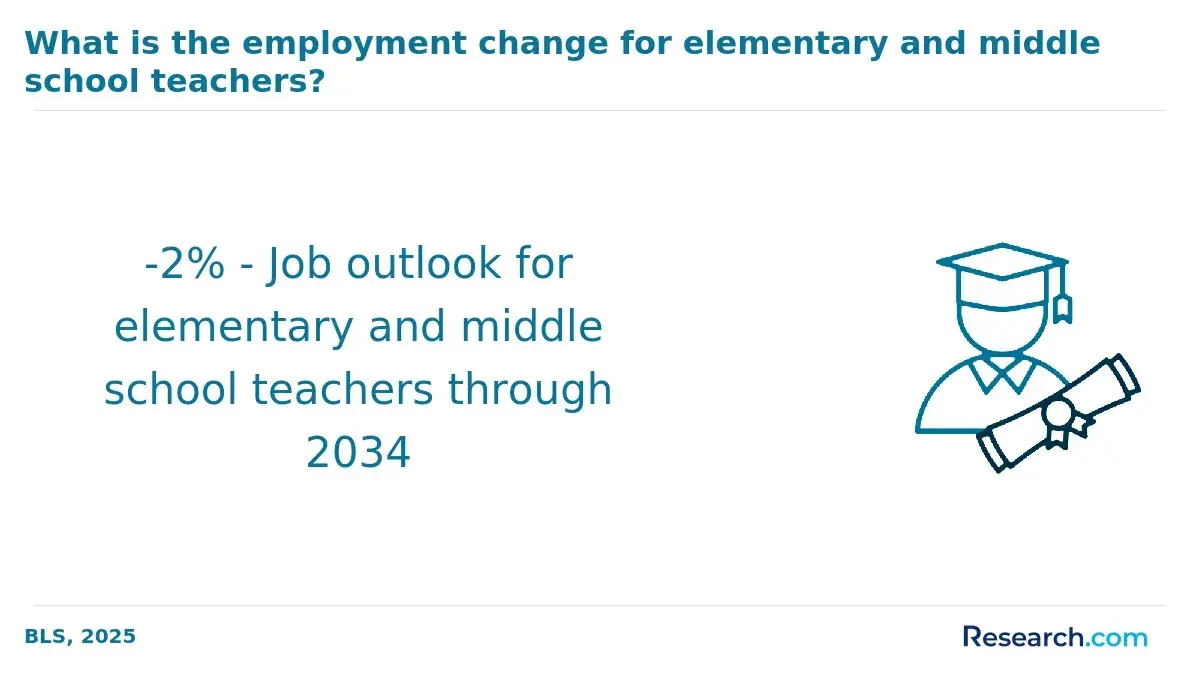
Employment projections also deserve a realistic look. Most teachers in the state are expecting employment declines of 2% from 2024 to 2034 (O*NET OnLine, 2024). That does not mean Nebraska has no need for teachers; projections, annual vacancies, retirements, district location, and shortage areas can tell different stories. Candidates should evaluate demand by endorsement and region rather than relying on statewide projections alone.
| Teaching goal | Typical preparation focus | Decision point for students |
| Early childhood or kindergarten | Child development, early literacy, classroom routines, family engagement, and supervised early learning placements | Choose a program that aligns with the exact grade span you want to teach. |
| Elementary education | Broad preparation across reading, math, science, social studies, classroom management, and child development | Confirm that the program leads to the correct elementary endorsement. |
| Middle or secondary education | Subject-area coursework plus adolescent development, assessment, and teaching methods | Make sure your major and endorsement match the subject you want to teach. |
| Special education | Inclusive instruction, individualized education plans, behavior support, assistive technology, and clinical practice | Verify whether you need a standalone license, added endorsement, or dual preparation pathway. |
| Career changer route | Prior bachelor’s degree review, pedagogy coursework, testing, and supervised teaching experiences | Ask how long the route takes and whether your previous credits reduce cost or time. |
Nebraska Licensure Application and Renewal Process for Teachers
From 2024 to 2025, the full-time equivalent of teachers across all districts in the state was 27,247.95 (NE Department of Education, 2024). If you want to join this workforce, the cleanest path is to plan backward from the certificate and endorsement you need.
- Earn at least a bachelor’s degree through an accredited education or teacher preparation program that includes practicum, clinical, and student teaching experiences.
- Complete Nebraska’s required training in special education and human relations.
- Prepare for and pass the Praxis II content test that corresponds to your endorsement area. The Praxis Core test is no longer a requirement following legislative changes that took effect in 2024.
- Apply through the NE Department of Education and submit the required materials, which may include fingerprint cards, application fees, an accredited institution verification form, Praxis II scores, official documentation of special education training, and proof of human relations training.
- Receive the Nebraska Department of Education Teacher Certification appropriate for a new or initial educator.
How to Become a Teacher in Nebraska: Post-Licensure Steps
Licensure is not the end of the process. After receiving an Initial Teaching Certificate, new educators may benefit from joining the Nebraska State Education Association for professional resources, policy updates, and continuing education support. An initial license is valid for five years, and teachers must complete six credit hours of continuing education during that period.
Teachers who want to increase their instructional expertise, move into leadership, or qualify for more advanced credentials may consider graduate study, including an online masters of education. Nebraska also offers higher-level certificates, including a Standard Teaching Certificate after teaching for two consecutive years and a Professional Teaching Certificate after teaching half- or full-time for two consecutive years after the previous certificate.
Understanding Nebraska Teaching Credentials and Certification Pathways
Nebraska certification is not one single credential. It is a system of certificates, endorsements, experience requirements, and renewal expectations. The right pathway depends on whether you are a first-time undergraduate, a career changer, a licensed teacher from another state, a substitute teacher, or an experienced educator pursuing advancement.
Most candidates should begin by identifying three things: the grade level they want to teach, the subject or specialty they want to teach, and the certificate type they qualify for now. Nebraska offers Initial, Standard, and Professional Teaching Certificates, and each level reflects different requirements for education, experience, and continuing development. Candidates who already hold a bachelor’s degree but did not complete traditional teacher preparation may need to evaluate alternative teaching certification options.
If your priority is speed, affordability, or career-change flexibility, compare the types of teaching certificates in Nebraska before enrolling. The lowest-tuition option is not always the cheapest overall if it does not include the endorsement you need, delays student teaching, or requires extra coursework after admission.
| Pathway | Best fit | What to verify before enrolling |
| Traditional bachelor’s in education | First-time college students who know they want to teach | State approval, CAEP status if applicable, endorsement alignment, and student teaching placement support |
| Post-baccalaureate teacher preparation | Career changers who already have a bachelor’s degree | Transfer credit rules, timeline, testing requirements, and fieldwork format |
| Graduate education route | Degree holders seeking teaching preparation plus advanced study | Whether the degree leads to initial licensure or only professional advancement |
| Out-of-state licensure route | Teachers licensed outside Nebraska | Compact eligibility, Nebraska endorsement match, and any remaining state-specific requirements |
| Added endorsement | Licensed teachers expanding into another subject or student population | Semester-hour requirements, testing requirements, and district demand for that endorsement |
What are the common benefits and support systems for teachers in Nebraska?
Nebraska teaching compensation is more than base salary. Benefits differ by district, but candidates should evaluate the full employment package before accepting an offer. This matters especially for new teachers comparing rural, suburban, urban, public, private, and special education roles.
- Health insurance: Many districts provide medical coverage, and some packages may also include dental and vision options.
- Retirement plans: Nebraska teachers commonly participate in the Nebraska Public Employees Retirement System (NPERS), which is funded through employee and employer contributions.
- Professional development: Districts and professional organizations may offer workshops, training days, collaborative learning opportunities, and support for instructional improvement.
- Mentoring: New teachers may be paired with experienced educators who can help with classroom routines, lesson planning, parent communication, and school culture.
- Paid leave: Sick leave and other forms of paid time off can affect work-life balance and should be reviewed in the contract.
- School-level support: A supportive principal, collaborative grade-level team, access to curriculum resources, and manageable class expectations can matter as much as formal benefits.
| Question to ask a district | Why it matters |
| What mentoring is provided for first-year teachers? | Strong induction support can reduce early-career burnout. |
| How are planning periods and collaboration time scheduled? | Time to plan and work with colleagues affects teaching quality and workload. |
| What professional development is required or funded? | Required training can support renewal but may also require time outside school hours. |
| How does the salary schedule reward graduate credits or advanced degrees? | Graduate coursework may improve placement on the pay schedule in some districts. |
| What curriculum, assessment, and technology tools are provided? | New teachers need practical classroom resources, not just certification. |
How can I specialize in English education in Nebraska?
Future English teachers should choose a preparation route that combines literature, composition, language study, adolescent literacy, assessment, and classroom methods. Nebraska candidates also need the correct endorsement for the grade span they plan to teach. If your goal is middle or secondary English, review program requirements early so your major coursework, methods courses, field placements, and Praxis II content test all align. For a focused walkthrough, see this guide on how to become an english teacher in Nebraska.
How can I explore a special education career path in Nebraska?
Special education is one of the most specialized teaching paths because it requires knowledge of disability categories, individualized education programs, inclusive instruction, family collaboration, behavior supports, and legal responsibilities. Teachers considering this field should shadow special educators, ask about caseload expectations, and compare programs that include substantial supervised practice. To understand roles beyond the general classroom, review the special education career path.
How can I obtain special education teacher certification in Nebraska?
Special education certification generally requires targeted coursework and clinical experience in evidence-based intervention, differentiated instruction, behavior management, assessment, and assistive technology. Candidates should verify whether a program prepares them for the specific Nebraska endorsement they need and whether field placements include inclusive and specialized settings. For a more detailed certification overview, use this resource on special education teacher certification in Nebraska.
How can ongoing professional development empower Nebraska educators?
Professional development is not only a renewal requirement; it is how teachers keep pace with curriculum changes, student needs, classroom technology, assessment practices, and school improvement goals. Nebraska educators may use workshops, graduate coursework, mentoring, collaborative planning, and professional learning communities to strengthen their practice. Teachers considering leadership, instructional design, or higher education roles can also compare options such as an affordable online master's in higher education.
How is Nebraska addressing teacher shortages and retention?
Nebraska’s teacher workforce challenge is not just about recruiting new educators. Retention matters too. Schools need teachers who can stay, grow, and serve communities over time, particularly in rural areas and shortage fields. Flexible preparation options through accredited online colleges can help some candidates enter the profession without relocating, but students should always confirm state approval and licensure alignment.
- Loan forgiveness options: Nebraska offers loan forgiveness to teachers who work in high-need areas, including special education and rural districts.
- Financial incentives: Some incentives are directed toward shortage areas such as STEM subjects, special education, and elementary education.
- Mentoring and induction: New teachers may receive guidance from experienced educators during the first years of classroom practice.
- Recruitment efforts: The state and districts use recruitment strategies to attract educators to areas with vacancies.
- Professional growth: Workshops, seminars, and district training can help teachers adapt to changing standards and classroom expectations.
Vacancy data and employment projections should be read carefully. The job outlook for teachers in Nebraska has been described as positive, with vacancies decreasing by 7% from 669 in the 2024-2025 school year to 490 for 2025-2026. At the same time, O*NET OnLine projects a 2% employment decline for most teachers in the state from 2024 to 2034. These figures measure different labor market conditions, so candidates should examine the specific district, subject area, and endorsement they plan to pursue.
What are the kindergarten teacher requirements in Nebraska?
Kindergarten teachers need preparation in early childhood learning, child development, early literacy, numeracy, family communication, classroom routines, observation, and age-appropriate assessment. Candidates should complete a program with supervised placements in early learning environments and confirm that the endorsement matches Nebraska’s grade-level expectations. For a dedicated guide, review the full explanation of kindergarten teacher requirements in Nebraska.
List of Top Education Programs in Nebraska for 2027
The programs below can help prospective teachers compare Nebraska education options by credential level, cost, endorsement availability, and accreditation. Use this list as a starting point, not a final decision tool. Before applying, confirm current tuition, admission requirements, state approval, field placement availability, and whether the program leads to the endorsement you need.
| School | Featured education option | Estimated cost | Accreditation |
| College of Saint Mary | BS in Early Childhood Education (Pre-K to 3) with a Special Education Minor | $750/credit hour | NE Department of Education |
| Concordia University Nebraska | BSEd in Elementary Education | $1,000/credit hour (part-time), $19,250/semester (full-time) | CAEP, National Association of Schools of Music |
| Chadron State College | Education degree programs with field endorsement requirements | $257.70-$271.15/credit hour | CAEP |
| Creighton University Omaha | MEd in Elementary School Teaching | $626/credit hour | CAEP |
| University of Nebraska Lincoln | EDD in Educational Studies | $353/credit hours (resident), $1,031/credit hour (non-resident) | CAEP |
1. College of Saint Mary
College of Saint Mary offers a BS in Early Childhood Education (Pre-K to 3) with a Special Education Minor for students who want to work with young learners and children with diverse needs. The program includes around 128 credit hours and covers topics such as child psychology, language arts, observation and assessments, and health, safety, and nutrition for early childhood education. Students also complete professional seminar sessions and field-based experiences that connect coursework with classroom practice.
- Estimated Cost: $750/credit hour
- Other Programs Offered: Elementary Education, K-12 Education, Secondary Education
- Accreditation: NE Department of Education
2. Concordia University Nebraska
Concordia University Nebraska provides a BSEd in Elementary Education designed around classroom standards, evidence-based instruction, assessment, children’s literature, diverse learning settings, and classroom leadership. The university reports a 12:1 student-to-faculty ratio and a 100% career outcome rate, which students may want to discuss with admissions staff to understand how outcomes are measured.
- Estimated Cost: $1,000/credit hour (part-time), $19,250/semester (full-time)
- Other Programs Offered: Early Childhood Birth-3rd Grade Inclusive Education, Music Education, Secondary Education, Special Education, Specialized programs by subject area
- Accreditation: CAEP, National Association of Schools of Music
3. Chadron State College
Chadron State College prepares teacher candidates through coursework in educational psychology, technology for learning, assessment, and subject-specific methods. Students complete field endorsement requirements and internships in classroom settings. The college also offers a study abroad option for learners who want exposure to different educational environments.
- Estimated Cost: $257.70-$271.15/credit hour
- Other Programs Offered: Elementary Education, Middle-Level Education, Curriculum and Instruction (MEd), School Counseling (MAEd), Educational Administration (MAEd)
- Accreditation: CAEP
4. Creighton University Omaha
Creighton University Omaha offers an MEd in Elementary School Teaching with 44 credit hours of advanced education study. The curriculum includes cultural diversity, inclusion, student responsibility, and teaching methods across subjects while incorporating Catholic and Jesuit educational traditions. The program also includes an accelerated option for undergraduates seeking higher-level credentials. Creighton reports an 18:1 student-to-faculty ratio and a 100% pass rate.
- Estimated Cost: $626/credit hour
- Other Programs Offered: Elementary Education (BS), Early Childhood Education Certificate Program
- Accreditation: CAEP
5. University of Nebraska Lincoln
The University of Nebraska Lincoln offers an EDD in Educational Studies with specializations in Innovative Learning Technologies and Teaching, Curriculum, and Learning. The program requires a minimum of 96 credit hours, including 18 in a specialization, and can be completed in three to four years. Coursework includes school technology leadership, learning experience design, instructional technology design, and specialized work by subject area, along with practicums and professional seminars.
- Estimated Cost: $353/credit hours (resident), $1,031/credit hour (non-resident)
- Other Programs Offered: Early Childhood Education in a Mobile Society, Family & Consumer Sciences Occupational (6-12), Specialized programs by subject area
- Accreditation: CAEP
How can I leverage online education to advance my teaching career in Nebraska?
Online education can be useful for Nebraska teacher candidates and licensed educators who need flexibility, but it must be chosen carefully. An online program should be accredited, approved for the intended licensure outcome, and able to arrange fieldwork or student teaching that satisfies Nebraska requirements. If you want a route built around remote coursework, review how to become a teacher through online pathways in this guide to how to become a teacher online in Nebraska.
| Online option | When it makes sense | Risk to avoid |
| Online bachelor’s in education | You need flexibility and are beginning your teaching preparation. | Choosing a program that does not lead to Nebraska licensure. |
| Online post-baccalaureate program | You already have a bachelor’s degree and want to transition into teaching. | Underestimating field placement or student teaching requirements. |
| Online master’s in education | You are already licensed and want advancement, specialization, or leadership preparation. | Assuming a master’s automatically changes your license or pay. |
| Online endorsement coursework | You want to add a subject, grade level, or specialty. | Taking courses before confirming endorsement requirements with the state or district. |
What are the specific requirements for teaching elementary school in Nebraska?
Elementary school teachers in Nebraska typically need a bachelor’s degree in elementary education, completion of an approved teacher preparation program, supervised clinical experience, and the correct elementary education endorsement. Candidates should also complete required state training and testing. For a more focused explanation, see this guide on how to become an elementary school teacher in Nebraska.
What are the substitute teaching pathways and requirements in Nebraska?
Substitute teaching can be a practical way to gain classroom experience, explore grade levels, and build district connections before committing to a full-time teaching role. Requirements can include baseline education qualifications, district orientation, background checks, and the appropriate substitute authorization or certification pathway. To review the process in detail, see the guide to Nebraska substitute teacher requirements.
What are the career opportunities and advancement options for teachers in Nebraska?
A Nebraska teaching license can lead to more than one classroom role. Some educators remain in teaching and deepen their expertise, while others move into curriculum, student services, administration, higher education, or policy work. The best advancement path depends on whether you want to lead students, adults, programs, or systems.
- Specialized classroom roles: Teachers may build expertise in special education, STEM, language arts, ESL, gifted education, or educational technology.
- School administration: Experienced teachers may pursue principal, assistant principal, or superintendent roles, typically with additional graduate preparation in educational leadership or administration.
- Higher education: Some experienced educators teach future teachers at colleges and universities or through online programs, including the best online colleges for teaching degrees.
- Curriculum and instructional support: Teachers may move into curriculum design, instructional coaching, assessment coordination, or educational technology leadership.
- Consulting and tutoring: Some educators provide tutoring, curriculum consulting, test preparation, or professional training services.
- Mentoring and teacher leadership: Classroom teachers can expand their influence by mentoring new educators, leading professional learning sessions, or serving on school improvement teams.
- Policy and advocacy: Educators interested in systemic change may work with government agencies, nonprofits, associations, or advocacy organizations.
| Career move | Best for teachers who want to... | Likely preparation need |
| Instructional coach | Support other teachers while staying close to classroom practice | Strong teaching record and possible graduate coursework |
| School administrator | Lead staff, budgets, school culture, and instructional improvement | Educational leadership or administration preparation |
| Specialist teacher | Work in a high-need area or focused subject | Additional endorsement or specialized training |
| Higher education instructor | Prepare future educators or teach education courses | Graduate degree and relevant teaching experience |
| Education consultant | Design curriculum, train educators, or provide targeted student support | Demonstrated expertise and professional network |
What alternative education careers can I pursue in Nebraska?
Not every education career requires leading a traditional classroom every day. Nebraska educators and education graduates may consider roles in curriculum coordination, instructional technology, academic counseling, school administration, student support, assessment, tutoring, nonprofit education, or school library services. If you want to support learning through information literacy and school resources, review how to become a school librarian in this guide on how to be a school librarian in Nebraska.
What are the private school teacher requirements in Nebraska?
Private schools in Nebraska may follow different hiring expectations than public districts, but candidates should not assume that certification is unnecessary or irrelevant. Many private schools value or require state certification, and some may add requirements based on religious mission, instructional philosophy, curriculum model, or specialized student population. Before accepting a private school role, ask whether the position requires Nebraska certification, whether experience counts toward future public school roles, and what professional development is expected. For more detail, see private school teacher requirements in Nebraska.
What are the financial considerations for obtaining teacher certification in Nebraska?
The cost of becoming a teacher includes more than tuition. Candidates should budget for application fees, textbooks, testing fees, background checks, transportation to field placements, unpaid or reduced-work student teaching periods, endorsement coursework, and possible graduate study. Scholarships, grants, employer support, and loan forgiveness programs may reduce the burden for eligible students, especially those entering shortage areas. For a deeper look at certification costs and pathways, review teacher certification requirements in Nebraska.
| Cost factor | What to check | How to reduce risk |
| Tuition | Per-credit cost, semester cost, residency status, and required credits | Compare total program cost, not just advertised tuition. |
| Transfer credits | How prior college work applies to degree and endorsement requirements | Request a written transfer evaluation before enrolling. |
| Testing | Praxis II content test requirements for your endorsement | Take the correct exam and use official preparation materials. |
| Field placement | Student teaching schedule, location, and whether it is unpaid | Plan finances before the student teaching term begins. |
| Licensure application | Fingerprinting, state application fees, and required documentation | Create a checklist so missing materials do not delay certification. |
| Graduate study | Whether advanced coursework is optional, required, or tied to advancement | Ask districts how graduate credits affect salary placement. |
Common Mistakes to Avoid When Becoming a Teacher in Nebraska
- Choosing a program before checking state approval: Accreditation and Nebraska licensure alignment should be confirmed before you enroll.
- Assuming every online program leads to certification: Some online education degrees are designed for advancement, not initial licensure.
- Ignoring endorsement requirements: A degree alone may not qualify you for the specific grade or subject you want to teach.
- Looking only at tuition: Testing, fieldwork travel, student teaching, books, and fees can change the real cost.
- Waiting too long to prepare for Praxis II: Your licensure timeline can stall if you do not pass the correct content test.
- Assuming salary outcomes are guaranteed: Pay depends on district salary schedules, experience, education level, role, and contract terms.
- Overlooking rural and shortage-area opportunities: Some candidates focus only on familiar districts and miss roles with stronger demand or incentives.
- Not asking about mentoring: Early-career support can strongly affect your first years in the classroom.
Questions to Ask Before Choosing a Nebraska Teacher Preparation Program
- Is the program approved for Nebraska teacher certification?
- Which endorsement or endorsements will I be eligible for after completing the program?
- Does the program include special education and human relations training?
- Where will I complete field experiences and student teaching?
- What Praxis II test will I need, and when should I take it?
- How many of my previous credits transfer into the program?
- What is the total estimated cost, including fees and student teaching expenses?
- Does the program support online, hybrid, evening, or part-time students?
- What job placement, mentoring, or district partnership support is available?
- If I move later, how might the Interstate Teacher Mobility Compact affect licensure options?
FAQ
1. What are the educational requirements to become a teacher in Nebraska?
You generally need at least a bachelor’s degree from an education or teacher preparation program approved by the Nebraska Department of Education or CAEP. You must also complete required special education and human relations training and meet endorsement requirements for your teaching area.
2. What exams are required for teacher certification in Nebraska?
Nebraska teacher candidates must pass the Praxis II content test connected to their endorsement area. The Praxis Core test is no longer a requirement following legislative changes that took effect in 2024.
3. How do I apply for a Nebraska teaching license?
After completing your degree, training, fieldwork, and testing requirements, you apply through the Nebraska Department of Education. Typical materials include official transcripts, institutional verification, Praxis II scores, fingerprint cards, fees, and proof of special education and human relations training.
4. How often do Nebraska teachers renew their licenses?
An initial Nebraska teaching certificate is valid for five years. Teachers must complete six credit hours of continuing education during that period to renew.
5. Does Nebraska participate in the Interstate Teacher Mobility Compact?
Yes. Nebraska participates in the Interstate Teacher Mobility Compact, which is intended to make it easier for eligible teachers to apply for licensure in another compact state without repeating credentialing exams or additional coursework.
6. What is the job outlook for teachers in Nebraska?
The outlook depends on how you measure demand. Vacancies decreased by 7% from 669 in the 2024-2025 school year to 490 for 2025-2026, while O*NET OnLine projects a 2% employment decline for most teachers in Nebraska from 2024 to 2034. Candidates should evaluate demand by district, endorsement, and location.
7. What are some education programs in Nebraska?
Examples include College of Saint Mary, Concordia University Nebraska, Chadron State College, Creighton University Omaha, and the University of Nebraska Lincoln. Before applying, verify current costs, accreditation, approval status, and whether the program leads to your intended Nebraska endorsement.
8. How much do teachers earn in Nebraska?
Teacher earnings vary by grade level, specialty, experience, and district. Examples from BLS data include $43,450 for Nebraskan preschool teachers, $60,650 for middle school educators, $64,360 for secondary school special education teachers, and $61,540 to $123,470 for postsecondary professors (BLS, 2024).
9. What extra training is required for Nebraska teaching endorsements?
Candidates must complete endorsement-specific coursework. For example, a prospective early childhood educator (K-3) should complete at least 18 semester hours in that area, while elementary (6-12) math teachers must complete 36 semester hours in mathematics courses.
10. Should I become a teacher in Nebraska?
Becoming a teacher in Nebraska can make sense if you want a community-focused profession, are willing to complete licensure requirements, and are prepared to evaluate pay, location, endorsement demand, and working conditions carefully. It may be less suitable if you need a fast credential without supervised teaching, want guaranteed salary outcomes, or are not ready for ongoing professional development.
Key Insights
- Start with the endorsement, not just the degree. Your Nebraska teaching path depends on the grade level, subject, or specialty you want to teach.
- Approved preparation matters. Choose a Nebraska Department of Education-approved or CAEP-aligned program that includes the coursework, fieldwork, and student teaching you need.
- Licensure requires multiple steps. A bachelor’s degree, special education training, human relations training, Praxis II testing, fingerprints, fees, and verification documents are all part of the process.
- Online programs can work, but only if they meet Nebraska requirements. Confirm licensure alignment and field placement support before enrolling in an online degree or endorsement program.
- Teacher demand is uneven. Statewide projections, vacancy counts, district needs, and shortage areas can point in different directions, so evaluate your specific endorsement and location.
- Costs go beyond tuition. Testing, student teaching, transportation, fees, and lost work hours can affect the real price of certification.
- Career growth is flexible. Nebraska teachers can advance through added endorsements, graduate study, instructional coaching, administration, higher education, policy, or alternative education roles.
Related Articles for Nearby States
- 2027 How to Become a Teacher in Kansas – What Degree Do You Need to Be a Teacher?
- 2027 How to Become a Teacher in South Dakota – What Degree Do You Need to Be a Teacher?
- 2027 How to Become a Teacher in Iowa – What Degree Do You Need to Be a Teacher?
- 2027 How to Become a Teacher in Colorado – What Degree Do You Need to Be a Teacher?
- 2027 How to Become a Teacher in Missouri – What Degree Do You Need to Be a Teacher?
- 2027 How to Become a Teacher in Wyoming – What Degree Do You Need to Be a Teacher
- 2027 How to Become a Teacher in Minnesota – What Degree Do You Need to Be a Teacher
- 2027 How to Become a Teacher in Oklahoma – What Degree Do You Need to Be a Teacher?
- 2027 How to Become a Teacher in North Dakota – What Degree Do You Need to Be a Teacher?
- 2027 How to Become a Teacher in Illinois – What Degree Do You Need to Be a Teacher?
References:
- Ash, A. M. (2025, September 24). Teachers Who Collaborate, Learn at Work Are More Satisfied. Gallup. https://news.gallup.com/poll/695492/teachers-collaborate-learn-work-satisfied.aspx
- EDUCAUSE. (2025). Findings From The 2025 Teaching and Learning Workforce Report. https://events.educause.edu/-/media/files/events/webinar/2025/web2513/slides.pdf
- Kurtz, H. & Baker, L. (2025, March 4). What Teacher Morale Looks Like in Every State. EdWeek. https://www.edweek.org/the-state-of-teaching/teaching-learning/what-teacher-morale-looks-like-in-every-state/2025/03
- National Student Clearinghouse Research Center. (2026, January 15). Final Fall Enrollment Trends. https://nscresearchcenter.org/final-fall-enrollment-trends
- U.S. Bureau of Labor Statistics. (2025, August 28). Occupational projections, 2024–2034, and worker characteristics. Retrieved February 2026, from https://www.bls.gov/emp/tables/occupational-projections-and-characteristics.htm
Other Things You Should Know About Becoming a Teacher in Nebraska
To become a teacher in Nebraska, you must earn at least a bachelor's degree in an education program approved by the Nebraska Department of Education or the Council for the Accreditation of Educator Preparation (CAEP). You must also complete training in special education and human relations.
To apply for a teaching license in Nebraska in 2027, you must first complete an approved teacher education program, pass required exams like the Praxis, submit an application through the Nebraska Department of Education's portal, and undergo a background check.
After meeting the educational and exam requirements, you can apply for a teaching license by submitting your application through the Nebraska Department of Education. This includes providing official transcripts, verification of supervised clinical hours, Praxis II test scores, fingerprint cards, and proofs of special education and human relations training.
Teaching licenses in Nebraska are valid for five years. To renew your license, you must complete six credit hours of continuing education (CE) during the five-year period.
Yes, Nebraska is one of the states that participate in the Interstate Teacher Mobility Compact, allowing teachers to apply for licensure in a compact state without retaking the credentialing exam or completing additional coursework.
To become certified in Nebraska, candidates must pass the Praxis Core Academic Skills for Educators tests, along with specific Praxis Subject Assessments related to their desired teaching area. Each exam ensures that the teacher meets Nebraska's educational and instructional standards.
Aspiring teachers must obtain specific endorsements to practice in their chosen grade level or subject area. This involves completing a set number of semester hours in relevant coursework, such as 18 hours for early childhood education or 36 hours for elementary math teachers.