
2027 How to Become a College Professor

Co-Founder and Chief Data Scientist
Becoming a college professor is not one single career path. The requirements depend on what you want to teach, where you want to work, and whether your goal is a tenure-track research role, a teaching-focused faculty job, a community college position, or an applied professional appointment. The decision matters because the investment can be substantial: doctoral study may take years, tenure-track hiring is highly selective, and many new academics start in temporary or adjunct roles before finding stable faculty work.
This guide explains how to become a college professor in practical terms. You will learn what professors actually do, which degrees are typically required, how to build teaching and research experience, how tenure works, what professors earn, when a Ph.D. is necessary, and how to improve your odds in a competitive academic job market.
Quick Answer: How Do You Become a College Professor?
To become a college professor, most candidates earn an advanced degree in their subject, gain college-level teaching experience, produce scholarly or professional work, and apply for faculty openings that match their field and credentials. A Ph.D. is usually expected for tenure-track jobs at research universities, while a master’s degree may qualify candidates for some community college, adjunct, or applied teaching roles. Strong candidates usually combine subject expertise, teaching evidence, research or industry accomplishments, and professional connections.
Key Things You Should Know about Becoming a College Professor
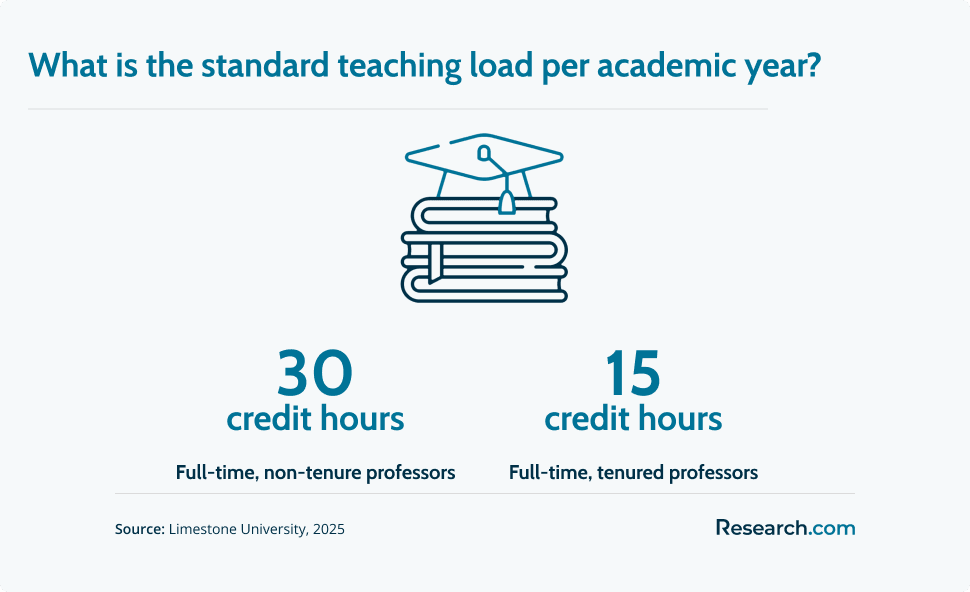
- Teaching loads vary by institution: research university professors often teach 6–9 hours, while faculty at teaching-focused institutions usually teach more.
- Doctoral timelines differ by field. A Ph.D. may take 6–13 years depending on discipline and program structure.
- Publishing matters most for research-heavy faculty roles, and acceptance rates at leading journals can be very low.
- The average salary for full-time college professors is $112K, while law professors can earn up to $176K.
- Tenure-track jobs are limited and highly competitive, so adjunct, visiting, postdoctoral, and non-tenure-track roles are common entry points.
- What does a college professor do?
- What degree do you need to become a college professor for 2027?
- How do you gain teaching experience for a professor role?
- How important is research and publishing in becoming a professor?
- What is the tenure track, and how does it work?
- How much do college professors make?
- Can an online EdD program effectively prepare you for a college professor role?
- What challenges must college professors overcome in today’s academic landscape?
- How can an online PhD in leadership and management boost your academic career?
- What emerging trends are shaping the future of college professorship?
- How can an advanced EdD degree boost your academic leadership skills?
- What alternative academic career paths can complement a college professorship?
- Can interdisciplinary studies broaden your academic impact?
- How competitive is the job market for college professors?
- Can you become a college professor without a Ph.D.?
- What skills do you need to be a successful professor?
- How can you increase your chances of becoming a professor?
What does a college professor do?
A college professor teaches postsecondary students, develops course materials, evaluates learning, mentors students, and may conduct research or professional scholarship. The balance of those responsibilities changes significantly by institution type. A professor at a research university may spend much of the week on grant writing, lab supervision, publishing, and graduate mentoring, while a community college professor may spend most of the job teaching, advising, and supporting student success.
| Responsibility | What it usually includes | Why it matters for aspiring professors |
| Teaching | Professors at research universities typically teach 6–9 hours per week. Faculty at teaching-focused colleges may teach 12–15 hours, and community college faculty often teach about 15–18 hours weekly. | Your teaching load affects how much time you can devote to research, advising, curriculum work, and service. |
| Research and publishing | Faculty may design studies, run labs, write journal articles, publish books, present at conferences, or produce creative work. | Research output is often central to hiring, promotion, and tenure at universities with strong research expectations. |
| Advising and mentoring | Professors help students choose courses, develop research projects, prepare for graduate school, and plan careers. Some also advise future educators, including students completing online ESL teaching certification programs. | Strong mentoring can strengthen your reputation and demonstrate your value beyond the classroom. |
| Service and administration | Faculty serve on committees, revise curricula, assess programs, review admissions files, or support accreditation work. | Service is part of most full-time faculty jobs and is frequently evaluated in promotion decisions. |
| Professional engagement | Professors may work with industry partners, speak at conferences, advise policymakers, review manuscripts, or participate in community projects. | External visibility can help you build a professional network and show impact beyond your own campus. |
Before choosing a graduate program, think carefully about which version of professorship you want. A research-intensive career, a teaching-centered role, and a professionally oriented faculty appointment can require different preparation.
What degree do you need to become a college professor for 2027?
Most full-time faculty roles require a graduate degree in the teaching discipline. For tenure-track jobs at research universities, a Ph.D. is usually the standard credential. However, a master’s degree may be sufficient for some community college positions, adjunct jobs, and applied programs. Professional fields such as law, medicine, business, and the arts may use different credential expectations.
Doctoral degrees
A Ph.D. is the most common requirement for research-focused and tenure-track academic roles. The time required to complete a Ph.D. varies by discipline:
- Physical and Earth Sciences – Around 6.3 years
- Engineering – About 6.8 years
- Psychology and Social Sciences – Typically 7.9 years
- Education – Can take up to 13 years
Master’s degrees
A master’s degree can be enough for some teaching roles, especially at community colleges, in adjunct appointments, and in fields where practical experience is valued. English, mathematics, education, business, fine arts, and subjects connected to history degrees may offer master’s-level teaching opportunities depending on the institution and course level.
Professional degrees
Some disciplines do not follow the Ph.D.-first model. Law faculty typically hold a J.D., medical faculty may hold an M.D., and business schools may value an MBA combined with substantial professional experience. Creative fields may also consider a terminal practice-based degree or an exceptional portfolio.
| Credential path | Best fit | Important limitation |
| Ph.D. | Tenure-track jobs, research universities, doctoral-level teaching, scholarly research careers | Long completion timeline and intense competition for permanent faculty openings |
| Master’s degree | Community colleges, adjunct teaching, some undergraduate teaching roles, applied subjects | Usually not enough for tenure-track research university jobs |
| Professional degree | Law, medicine, business, health fields, practice-based disciplines | May need strong professional achievements, publications, teaching experience, or licensure depending on the field |
| EdD | Education leadership, applied teaching, administration, practitioner-scholar roles | May be less aligned with research-intensive faculty jobs than a traditional Ph.D., depending on the program and institution |
The right degree depends on your intended discipline, the type of institution where you want to teach, and whether your long-term goal is research, teaching, administration, or applied professional education.
How do you gain teaching experience for a professor role?
Teaching experience is one of the clearest ways to show that you can succeed in a college classroom. Graduate school can provide that experience, but it is not the only route. Candidates can also build evidence through adjunct teaching, tutoring, online instruction, professional training, and supervised instructional roles.
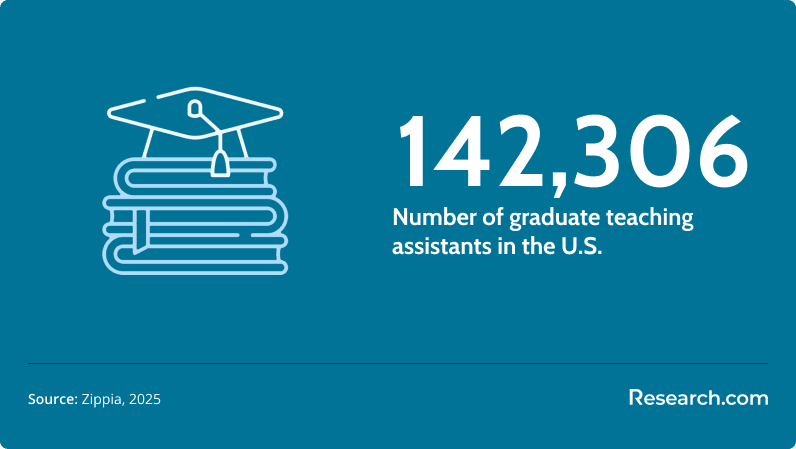
- Graduate teaching assistantships – Many doctoral students begin as teaching assistants. They may lead discussion sections, grade assignments, support labs, hold office hours, or teach introductory courses. As of 2023, about 142,306 graduate TAs are employed in the U.S.
- Adjunct or part-time college teaching – Adjunct work can help you build a teaching portfolio, collect student evaluations, and demonstrate that you can manage a course. Some candidates also gain earlier classroom exposure through roles related to what do you need to be a substitute teacher.
- Tutoring, mentoring, and academic coaching – These roles strengthen your ability to explain difficult concepts, diagnose learning gaps, and support different types of students.
- Online and continuing education instruction – Teaching online courses, professional workshops, or certificate programs can show that you can design learning experiences beyond the traditional classroom.
- Workplace training and educational outreach – Corporate training, museum education, nonprofit instruction, and adult education can help develop presentation, curriculum, and learner-support skills.
| Teaching evidence to collect | Why hiring committees may value it |
| Syllabi and sample assignments | Shows how you organize a course, set expectations, and assess learning |
| Teaching evaluations | Provides feedback from students or supervisors on your classroom performance |
| Statement of teaching philosophy | Explains your approach to learning, inclusion, assessment, and student engagement |
| Sample lectures or teaching demonstration materials | Helps search committees evaluate how you communicate complex ideas |
| Evidence of curriculum development | Shows that you can create or improve courses, not simply deliver existing content |
Aspiring professors should not wait until the job market to think about teaching. Start documenting your teaching work early, because a strong faculty application usually needs more than a degree transcript.
How important is research and publishing in becoming a professor?
Research and publishing are critical for many professor roles, especially tenure-track positions at research universities. A publication record signals that you can produce original work, contribute to your discipline, and participate in scholarly conversations beyond your own institution.
Publishing in leading academic journals is difficult. Prestigious journals such as Nature and Science accept only about 7–8% of submissions. The American Economic Review has a comparable acceptance rate of around 8% for regular submissions. In engineering, life sciences, and physical sciences, acceptance rates vary widely and average 32%, with some journals accepting as few as 1.1% of submissions.
Research expectations are not identical everywhere. A research university may expect journal articles, grant activity, conference presentations, lab leadership, and graduate student supervision. A liberal arts college may value research but place heavier weight on teaching. A community college may care more about instructional effectiveness than journal publication. Still, scholarly activity can improve credibility, strengthen applications, and support promotion.
If you are comparing doctoral options, reviewing what is the difference between a PhD and an EdD can help you decide whether you need a research-intensive doctorate or a more applied professional degree.
How to build a stronger research profile
- Join a faculty research project as early as possible in graduate school.
- Present at conferences before submitting to journals.
- Target journals that match your topic, methods, and contribution level.
- Build a publication plan with your advisor instead of submitting randomly.
- Keep a clear record of manuscripts, revisions, conference papers, grants, and collaborations.
What is the tenure track, and how does it work?
The tenure track is a probationary faculty pathway that can lead to a more secure, long-term academic appointment. It typically lasts six to seven years and includes formal review of teaching, research, and service. Tenure is designed to protect academic freedom, but earning it requires sustained evidence that you meet the institution’s standards.
| Stage | Typical title or milestone | Main expectations |
| Entry into faculty role | Assistant professor | Begin teaching, publishing, advising, serving on committees, and developing a research or professional agenda |
| Pre-tenure period | Annual or periodic reviews | Show progress in teaching effectiveness, scholarship, service, and departmental contribution |
| Tenure review | Formal evaluation after several years | Submit evidence of research, teaching, service, external recognition, and institutional fit |
| Post-tenure stage | Associate professor | Continue scholarship, teaching, mentoring, service, and often expanded leadership responsibilities |
| Advanced rank | Full professor | Demonstrate sustained excellence, broader impact, leadership, and strong professional reputation |
New assistant professors often teach, publish, advise students, and support programs at the same time. Some mentor students in specialized areas, including those completing an online math education degree or similar graduate pathways.
Not every faculty job is tenure-track. Many colleges rely on lecturers, clinical faculty, visiting professors, adjunct instructors, and professors of practice. These roles can be meaningful and stable in some cases, but candidates should read contract terms carefully because job security, benefits, promotion rules, and research expectations vary.
How much do college professors make?
The average salary for full-time college professors in the 2023–24 academic year was $112,300. Pay varies by discipline, rank, institution type, geographic market, union or contract structure, and whether the role is full-time, tenure-track, clinical, adjunct, or administrative.
| Field | Average salary | Top salary stated |
| Law professors | $133,950 | Up to $176,900 |
| Health specialties professors | $127,640 | Up to $167,120 |
| Economics professors | $122,750 | Up to $144,980 |
| Physics professors | $100,810 | Highest salaries at $125,950 |
| Chemistry professors | About $112,687 annually | Not stated |
Salary should be evaluated alongside the cost and time required to earn the necessary degree. A long doctoral pathway can delay full-time earnings, and adjunct teaching may not provide the same income or benefits as a full-time faculty job. When comparing fields, consider the availability of tenure-track openings, nonacademic alternatives, location flexibility, and the opportunity cost of graduate study.
Can an online EdD program effectively prepare you for a college professor role?
An online EdD can be useful for professionals who want to teach in education-related fields, move into academic leadership, or strengthen applied expertise in curriculum, assessment, policy, and institutional improvement. It is usually best suited for practitioner-scholar roles rather than traditional research-intensive faculty paths.
The main advantage is flexibility. Many EdD students are working educators, administrators, trainers, or student-support professionals who need a doctoral pathway that fits around employment. Programs may cover leadership, applied research, instructional design, organizational change, and evidence-based decision-making. If speed is an important factor, comparing the fastest online EdD programs can help you identify options with accelerated structures.
However, candidates should be realistic. An EdD does not automatically qualify someone for every professor role. If your target is a tenure-track research job in a discipline outside education, a Ph.D. may be a better fit. Before enrolling, ask whether the program is accredited, whether faculty publish in your area of interest, whether graduates teach at colleges, and whether the dissertation or capstone matches your career goals.
What challenges must college professors overcome in today’s academic landscape?
College professors now work in an environment shaped by budget pressure, changing student needs, digital learning, competition for grants, publication expectations, and heavier service workloads. The job can be intellectually rewarding, but it often requires managing many priorities at once.
- Workload pressure – Teaching, grading, research, advising, committee work, and student support can compete for the same limited time.
- Research competition – Grant funding, journal publication, and tenure expectations can be demanding, especially for early-career faculty.
- Digital teaching demands – Professors increasingly need to design accessible online materials, use learning platforms, and support students in hybrid settings.
- Administrative responsibilities – Assessment, accreditation, curriculum review, and institutional reporting can consume more time than new faculty expect.
- Career uncertainty – Many candidates spend years in adjunct, visiting, or postdoctoral roles before securing permanent faculty employment.
Some educators respond by expanding their instructional training or pursuing additional credentials. For example, candidates comparing affordable routes into teaching may review the cheapest teaching degree online options, but any credential should be chosen for a clear professional purpose rather than simply added to a resume.
How can an online PhD in leadership and management boost your academic career?
An online PhD in leadership and management may benefit professionals who want to combine scholarship, organizational strategy, and higher education leadership. This type of doctorate can be especially relevant for faculty or administrators interested in program management, policy development, institutional effectiveness, organizational change, or applied research.
For academic careers, the value depends on fit. A leadership and management doctorate may strengthen your profile for departments or programs focused on organizational leadership, higher education administration, business, management, or adult learning. It may be less appropriate if you want to teach in a traditional discipline that expects a field-specific Ph.D.
If your goal is to build leadership credibility while keeping costs in view, researching an online PhD in leadership and management can help you compare doctoral options tied to organizational leadership and academic advancement.
What emerging trends are shaping the future of college professorship?
Several trends are changing what colleges expect from faculty. Professors increasingly need to teach across formats, use technology responsibly, support diverse learners, collaborate across disciplines, and connect coursework to workforce or community needs. These shifts do not replace deep subject expertise, but they do change how that expertise is delivered and evaluated.
- Hybrid and online learning – Faculty are expected to design courses that work in person, online, or in blended formats.
- AI and digital tools – Professors must rethink assignments, academic integrity policies, research workflows, and student support as AI tools become more common.
- Interdisciplinary programs – Colleges increasingly value faculty who can collaborate across departments and build programs around complex social, scientific, or professional problems.
- Student success expectations – Advising, retention, inclusive teaching, and early intervention are more visible parts of faculty work.
- Credential flexibility – Certificates, online degrees, continuing education, and professional programs are expanding the ways faculty may teach outside traditional semester-based courses.
Faculty who teach writing, literature, communication, or humanities-related subjects may also look at affordable online English master's degrees when building expertise in language, curriculum, and digital communication.
How can an advanced EdD degree boost your academic leadership skills?
An advanced EdD can help educators move from classroom-focused work into program leadership, curriculum design, assessment, accreditation, student services, or administrative decision-making. Unlike many research doctorates, the EdD commonly emphasizes applied problem-solving in educational settings.
This pathway may make sense if you want to lead a department initiative, manage academic programs, train faculty, improve learning outcomes, or prepare for administrative roles while continuing to teach. It may be less appropriate if your main goal is a research-intensive faculty position where disciplinary publications are the primary hiring criterion.
Cost and program quality matter. If you are comparing options, reviewing affordable EdD programs can help you evaluate tuition, format, accreditation, completion requirements, and alignment with your academic leadership goals.
What alternative academic career paths can complement a college professorship?
A professor’s career does not have to stay inside one department or one job title. Many academics build related careers in consulting, research administration, curriculum design, academic publishing, policy work, grant management, assessment, institutional research, learning design, or specialized centers. These paths can provide stability, income diversity, and broader impact.
| Alternative path | How it connects to professorship | When it may be a good fit |
| Academic consulting | Uses subject expertise to advise schools, nonprofits, companies, or public agencies | You have specialized knowledge that solves practical problems outside campus |
| Research center leadership | Combines scholarship, grant work, project management, and interdisciplinary collaboration | You prefer team-based research and external partnerships |
| Instructional design or curriculum leadership | Applies teaching expertise to course development, online learning, and assessment | You enjoy building learning systems as much as teaching individual courses |
| Academic administration | Moves faculty experience into department, program, or institutional leadership | You want to influence policy, budgets, hiring, and student outcomes |
| Library, archival, or information careers | Supports research, information literacy, digital scholarship, and academic programs | You are interested in knowledge systems and may want to explore library science careers |
Alternative academic paths can also make you a stronger faculty candidate by broadening your experience, especially if you can connect that work to teaching, research, or institutional service.
Can interdisciplinary studies broaden your academic impact?
Interdisciplinary expertise can make a professor more effective in fields where complex problems do not fit neatly inside one department. Public health, data ethics, education policy, environmental studies, digital humanities, business analytics, and social justice research often require methods and perspectives from multiple disciplines.
For faculty candidates, interdisciplinary training can be an advantage when it helps you teach across programs, collaborate on grants, build new curricula, or connect academic work to real-world problems. The risk is lack of focus. Hiring committees still need to understand your primary field, methods, and contribution.
If you want a structured way to combine fields, an interdisciplinary studies degree may help you develop a broader academic foundation. Make sure the program supports a coherent career narrative rather than a scattered set of unrelated interests.
How competitive is the job market for college professors?
The faculty job market is highly competitive, especially for tenure-track positions at research universities. Many applicants hold advanced degrees, teaching experience, publications, conference records, and strong recommendations, so a degree alone rarely makes a candidate stand out.
Full-time tenure-track positions are limited, and many new Ph.D. graduates begin in adjunct, postdoctoral, visiting, or temporary roles. Competition can be especially intense in the humanities and social sciences, where applicant pools may be larger than the number of available jobs. Fields such as engineering, healthcare, and computer science may offer more openings because of industry demand, but hiring still depends on specialization, institutional budgets, and candidate quality.
Some candidates strengthen their prospects by looking beyond traditional departments. For example, those interested in defense, behavioral science, or applied psychology may find useful context in a military psychologist career guide.
What hiring committees commonly look for
- A graduate degree that clearly matches the job description
- Evidence of effective college-level teaching
- Published or publishable research for research-oriented positions
- Strong letters of recommendation from credible faculty or professional supervisors
- A focused research agenda or teaching specialization
- Ability to contribute to department needs, curriculum, advising, and service
- Professional engagement through conferences, associations, grants, or collaborations
Can you become a college professor without a Ph.D.?
Yes, it is possible to become a college professor without a Ph.D., but the range of opportunities is narrower. Community colleges, adjunct positions, applied programs, and some teaching-focused institutions may hire candidates with a master’s degree, professional degree, or significant industry experience.
This route is most realistic in fields where professional expertise is central to instruction. Business, healthcare, education, fine arts, law-related studies, and technical programs may value candidates who can bring current workplace knowledge into the classroom. For example, someone with an MBA degree online and substantial business experience may qualify to teach certain business courses, depending on the college’s requirements.
| Without a Ph.D., you may be competitive for | You are less likely to qualify for |
| Adjunct teaching | Tenure-track research university roles |
| Community college teaching in some subjects | Doctoral-level research supervision |
| Professional or applied courses | Faculty jobs requiring a discipline-specific Ph.D. |
| Continuing education or certificate programs | Research appointments with heavy publication expectations |
If you do not plan to earn a Ph.D., focus on building a strong teaching portfolio, documenting professional accomplishments, and targeting institutions that value applied experience.
What skills do you need to be a successful professor?
Successful professors need more than subject knowledge. They must communicate clearly, support student learning, produce or interpret scholarship, manage time, collaborate with colleagues, and adapt as higher education changes.
- Clear communication – Professors need to explain difficult ideas in lectures, discussions, feedback, academic writing, and public presentations.
- Mentorship – Advising students can affect academic performance and persistence. Research shows that students with mentors see a 2% to 20% increase in GPA.
- Time management – Faculty often juggle teaching, grading, research, office hours, meetings, peer review, and service deadlines.
- Critical thinking – Professors evaluate evidence, challenge assumptions, design research questions, and teach students how to reason independently.
- Adaptability – Teaching tools, student expectations, research methods, and institutional priorities change over time.
- Collaboration – Many faculty roles require coauthoring papers, serving on committees, mentoring graduate students, and coordinating with staff or administrators.
- Ethical judgment – Professors must handle grading, research integrity, student privacy, authorship, and conflicts of interest responsibly.
How can you increase your chances of becoming a professor?
You can improve your chances by building a focused profile early. The strongest candidates usually do not try to look qualified for every academic job. They show a clear fit for a specific field, institution type, teaching area, and research or professional agenda.
- Choose the right graduate program. Look for faculty whose research or professional expertise aligns with your goals. Ask about placement outcomes, teaching opportunities, funding, mentoring, and time to completion.
- Build teaching evidence before applying. Seek assistantships, guest lectures, adjunct work, online teaching, or supervised instruction. Save syllabi, evaluations, sample assignments, and teaching reflections.
- Publish strategically. Work with advisors to identify realistic journals, conferences, edited volumes, or professional outlets that fit your discipline.
- Develop a clear academic identity. Be able to explain what you teach, what you study, why it matters, and how it fits the department’s needs.
- Network professionally. Attend conferences, join scholarly associations, collaborate on projects, and maintain relationships with mentors and peers.
- Consider stepping-stone roles. Postdoctoral fellowships, visiting professorships, lecturer roles, and adjunct positions can build experience, though candidates should weigh pay, benefits, and long-term stability.
- Keep backup pathways open. Academic hiring can be unpredictable, so consider research, policy, consulting, administration, industry, or education technology roles related to your expertise.
Some candidates use shorter graduate programs to build specialized knowledge before deciding on a doctorate. For example, 1 year master’s programs online may help certain students strengthen credentials quickly, although they do not replace a Ph.D. when a doctorate is required.
Common mistakes to avoid
| Mistake | Why it can hurt you | Better approach |
| Assuming any doctorate leads to a professor job | Faculty hiring depends on field fit, publications, teaching evidence, and institutional needs | Research job postings before choosing a degree path |
| Ignoring accreditation and program reputation | Weak or poorly recognized programs can limit hiring options | Verify accreditation and ask where graduates work |
| Focusing only on tuition | A low-cost program may still be a poor investment if it lacks funding, mentoring, or placement support | Compare total cost, assistantships, completion rates, faculty fit, and career outcomes |
| Waiting too long to teach | A degree without classroom experience may be less competitive for teaching roles | Seek teaching assistantships, adjunct roles, tutoring, or online instruction early |
| Publishing without a strategy | Random submissions can waste time and lead to repeated rejection | Target appropriate journals and get advisor feedback before submitting |
| Relying only on rankings | A highly ranked school may not be the best fit for your research area or career goal | Evaluate advisor match, funding, teaching opportunities, and placement history |
| Assuming online programs meet every hiring expectation | Some faculty roles may prefer discipline-specific, research-intensive preparation | Ask schools and potential employers how the credential is viewed in your field |
Here’s What Graduates Have to Say about Becoming a College Professor
-
: "
College teaching has allowed me to guide students while continuing to develop my own research agenda. The work is demanding, but the mix of academic freedom, discussion, and student growth keeps it meaningful. Watching students become sharper thinkers is one of the best parts of the career. – Anthony
"
-
: "
Becoming a professor gave me a way to bring together teaching, mentoring, and scholarship. I value the chance to help students mature academically while also contributing to my discipline through publication and research. It is challenging work, but the rewards are real. – Scott
"
-
: "
I wanted work that would keep me learning and let me do something useful for others. Professorship has offered that combination through classroom conversations, new ideas, and continuous intellectual growth. For me, it is not only a job but a long-term commitment to knowledge. – Chris
"
Questions to Ask Before Choosing the Professor Path
- Do I want a research-heavy, teaching-heavy, applied, or administrative academic career?
- Is a Ph.D. required for the roles I want, or would a master’s, EdD, J.D., M.D., MBA, or professional credential be more appropriate?
- How long will my graduate training take, and how will I pay for it?
- Will the program give me teaching experience, research mentoring, and publication support?
- Where do graduates of the program actually work?
- Am I willing to relocate for academic jobs?
- What nonacademic careers could I pursue if I do not secure a tenure-track position?
- Does my target field have enough openings to justify the time and cost of preparation?
References:
- Cobb, K. (2024, August 13). Teaching load and equivalencies. Limestone Faculty/Staff Handbook. https://fac-staff-hb.limestone.edu/teaching-load-and-equivalencies
- Graduate Teaching Assistant Demographics and Statistics [2025]: Number of graduate teaching assistants in the US. (2025, January 8). https://www.zippia.com/graduate-teaching-assistant-jobs/demographics/
- Occupational Outlook Handbook - Postsecondary Teachers. (2025, February). U.S. Bureau of Labor Statistics. Retrieved March 6, 2025, from https://www.bls.gov/ooh/education-training-and-library/postsecondary-teachers.htm Graduate Teaching Assistant Demographics and Statistics
- Resource for journal acceptance rates. (n.d.). Academia Stack Exchange. https://academia.stackexchange.com/questions/13192/resource-for-journal-acceptance-rates
- Staff, C. (2024, January 31). How long does it take to get a PhD? Coursera. https://www.coursera.org/articles/how-long-does-it-take-to-get-a-phd
Key Insights
- Most tenure-track professor roles require a Ph.D., but community colleges, adjunct roles, professional programs, and applied fields may accept a master’s or professional degree.
- The best degree path depends on your target institution. Research universities reward publications and grants; teaching-focused colleges place more weight on classroom performance; community colleges often prioritize instruction and student support.
- Teaching experience should be built early through assistantships, adjunct work, tutoring, online teaching, or professional instruction.
- Publishing is essential for research-oriented careers, but expectations vary by field and institution type.
- Tenure can provide long-term stability, but the path is competitive and usually involves six to seven years of evaluation.
- Professor salaries vary widely by field. The average full-time professor salary was $112,300 in 2023–24, with higher averages in law, health specialties, and economics.
- You can become a college professor without a Ph.D. in some settings, but your options will be more limited.
- The smartest strategy is to match your credentials, teaching record, research profile, and job search to a specific academic career goal rather than pursuing degrees without a clear plan.
Other Things You Should Know about Becoming a College Professor
Yes. At research universities, tenure-track hiring often expects peer-reviewed publications, conference presentations, or a clear research agenda. In many fields, candidates submit a dissertation abstract, writing sample, and evidence of scholarly productivity. Community colleges may focus more on teaching experience than publications.
Becoming a college professor in 2026 typically takes around 8-12 years. This period includes completing a bachelor's degree, followed by a master's and often a Ph.D. Programs may vary, and gaining teaching experience and publishing research can influence the timeline.


