2027 How to Become a Teacher in Ohio – What Degree Do You Need to Be a Teacher?

Co-Founder and Chief Data Scientist
Choosing a teaching program in Ohio is not just about finding a school with an education major. You need a program that matches the grade level or subject you want to teach, prepares you for Ohio licensure, includes supervised classroom experience, and gives you a realistic path into employment. This guide is for first-time college students, career changers, substitute teachers, out-of-state educators, and current teachers who want to understand Ohio’s teacher preparation and licensing options.
Ohio can be a strong place to build an education career, especially if you choose a high-need subject area, complete a state-approved preparation program, and understand the licensing process before you enroll. A teacher in Ohio can earn up to 28% more than the national average salary for their role (O*NET, n.d.), but salaries and job openings vary by grade level, region, school type, and credential. This guide explains Ohio’s teacher job market, licensure steps, renewal rules, program options, and practical ways to compare schools offering education and early child development bachelor’s programs.
Best Teaching Schools in Ohio Table of Contents
- Teaching career outlook in Ohio
- Education requirements for Ohio teachers
- Ohio teacher license application and renewal steps
- Ohio teaching credentials and pathway options
- Technology skills Ohio teachers should build
- How to specialize in English teaching in Ohio
- Top teaching programs in Ohio for 2027
- Whether an online EdD makes sense for Ohio educators
- How Ohio teachers can improve their hiring prospects
- Kindergarten teacher requirements in Ohio
- Private school teacher requirements in Ohio
- How to move into online teaching in Ohio
- Ohio teacher certification requirements
- Substitute teacher licensure requirements in Ohio
- Other Ohio teaching career options
- Advanced education options for Ohio teachers
- Specialized certifications for Ohio educators
- School librarian careers in Ohio
- How to stand out in Ohio’s teacher job market
Quick Answer: How Do You Become a Teacher in Ohio?
To become a licensed teacher in Ohio, you generally need a bachelor’s degree, completion of a state-approved educator preparation program, passing scores on required professional knowledge and content assessments, background checks, and an application through the Connected Ohio Records for Educators (CORE) system. New teachers typically begin with a two-year Resident Educator License, complete the Ohio Resident Educator Program, and then apply for a Professional Educator License.
The best teaching school for you is the one that is approved for the specific license, grade band, and subject you want to teach. Before enrolling, confirm accreditation, field placement support, test preparation resources, total cost, transfer credit policies, and whether the program leads directly to Ohio licensure.
Teaching Career Outlook in Ohio
Ohio remains one of the country’s larger teacher employment markets. The state ranks fourth for high school teachers and third for postsecondary teachers. At the same time, the supply of newly licensed teachers has narrowed, falling from 5,000 in 2024 to 4,680 in 2025. That decline has contributed to staffing pressure in some local schools, especially when openings are concentrated in harder-to-fill subjects or locations.
Job growth projections should be interpreted carefully. According to the U.S. Bureau of Labor Statistics (BLS), Ohio teaching roles across most grade levels are expected to grow more slowly than the average by 2032. Preschool teaching is the major exception, with projected Ohio growth of 11.4% compared with the 3% average. This means aspiring teachers should think strategically about licensure areas, endorsements, and geographic flexibility rather than assuming every teaching credential will create the same opportunities.
Demand remains meaningful even where growth is modest because schools still need to replace teachers who retire, change careers, move districts, or advance into other roles. Postsecondary education is especially large in Ohio. BLS projections indicate about 20,590 yearly openings for postsecondary teachers in Ohio, with particularly strong demand for health specialties and agricultural sciences teachers (Ohio Department of Education, n.d.; Projections Central, n.d.).
| Teaching Role | Average Annual Job Openings in OH (2030) |
| Preschool Teachers | 1,820 |
| Kindergarten Teachers | 310 |
| Elementary School Teachers | 4,030 |
| Middle School Teachers | 2,460 |
| Secondary School Teachers | 4,700 |
| Postsecondary Teachers | 20,590 |
Ohio salaries can also be competitive. Whether you enter the field with an undergraduate education degree or continue into an early childhood development master’s program, your earnings will depend on your role, district, experience, education level, and location. High school teachers in Ohio earn a median salary of $73,520, compared with the U.S. average of $62,360. Cleveland-Elyria reports the highest median salary for Ohio high school teachers at $80,090, while Dayton, Springfield, Akron, and Columbus are also among higher-paying areas (O*NET, n.d.).
Education Requirements for Teachers in Ohio
Ohio teachers must hold at least a bachelor’s degree and complete an approved educator preparation program through an accredited college or university. Many students meet both requirements through a traditional undergraduate education degree. Others enter the profession after earning a bachelor’s degree in another field by completing a post-baccalaureate licensure pathway or an education graduate program, including some master’s in education pathways.
| Pathway | Best Fit | What to Check Before Enrolling |
| Traditional bachelor’s in education | First-time college students who know they want to teach | Confirm the program is approved for your intended Ohio license and includes required fieldwork and student teaching. |
| Post-baccalaureate licensure program | Career changers who already hold a bachelor’s degree | Ask how prior coursework is evaluated and whether the pathway leads to the specific grade band or subject you want. |
| Graduate education program with licensure | Degree holders who want licensure plus graduate-level training | Verify that the program is designed for initial licensure, not only professional development. |
| Endorsement or certificate program | Licensed teachers adding a new area such as special education or ESL | Confirm required exams, field experiences, and whether the endorsement fits your current license. |
The key decision is not simply “online or campus” or “bachelor’s or master’s.” The most important question is whether the program leads to the exact Ohio credential you need. A program may be academically legitimate but still fail to qualify you for a specific license, endorsement, or school role if it is not aligned with Ohio requirements.
Ohio Teacher License Application and Renewal Steps
Ohio uses several teaching credentials, including the standard teaching license, alternative resident educator license, professional educator license, senior professional educator license, and associate license. This tiered structure gives new educators a starting credential and allows experienced teachers to move into more advanced licenses as they complete mentoring, professional development, and renewal requirements.
Step 1: Complete a State-Approved Educator Preparation Program
The first major requirement for initial licensure is an approved educator preparation program. These programs combine subject-area coursework, teaching methods, assessment strategies, classroom management, and supervised practice in schools. Your program should match both the age group and the subject you plan to teach.
Ohio offers traditional and alternative preparation routes. A traditional pathway often takes four years and may lead to a Bachelor of Science in Education (BSEd). Alternative options, such as post-baccalaureate certificates or graduate programs, may be shorter for students who already hold a bachelor’s degree. Some candidates also explore flexible programs in areas such as online special education degrees when they want to work with students who need specialized instructional support.
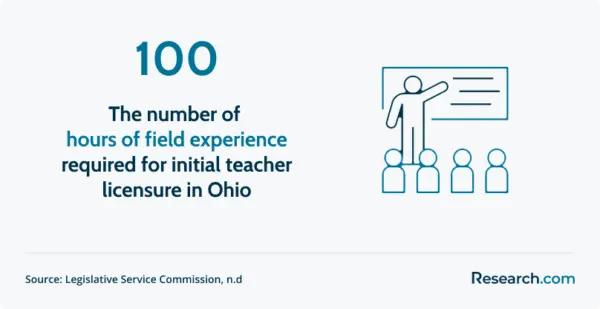
Most Ohio educator preparation programs include significant supervised practice. To meet initial licensure expectations, programs generally require field experience that includes at least 100 clock hours and twelve weeks of student teaching (Legislative Service Commission, n.d.).
Step 2: Pass Required Professional Knowledge and Content Exams
Ohio teacher candidates must pass the required Ohio Assessments for Educators (OAE). These exams measure both teaching knowledge and the subject expertise needed for the licensure area. For an initial resident educator license, candidates must pass one pedagogical knowledge assessment. Teachers who add licensure areas or endorsements must pass the relevant PRAXIS content-area assessments.
Step 3: Apply for the Resident Educator License
The two-year Resident Educator License is the starting license for new teachers who complete an approved preparation program through an in-state college or university. This credential allows beginning teachers to enter the classroom while completing Ohio’s required induction and mentoring process.
Applications are submitted online through the Connected Ohio Records for Educators (CORE) system. Candidates create an OHID account, submit required materials, and pay an $80 application fee. Processing timelines can vary during busy periods, but applications commonly take five to seven business days (Ohio Department of Education, n.d.).
Applicants should be ready to provide official transcripts, test scores, and proof of educator preparation completion. Ohio also requires criminal background checks from the Ohio Bureau of Criminal Investigation (BCI) and the FBI (Ohio Department of Education, n.d.). If you are unsure which license category applies to you, contact the Department of Education directly using the phone number or contact information listed on its website.
Step 4: Complete the Ohio Resident Educator Program
The Ohio Resident Educator Program lasts two years and applies to new teachers and out-of-state teachers with less than three years of teaching experience who meet eligibility requirements. It is designed to support the transition from preparation program to full classroom responsibility.
During the program, teachers receive mentoring, guidance, and professional development. The experience focuses on practical teaching skills such as instructional planning, lesson delivery, assessment, communication, and relationship building. After completing the program and the Resident Educator Summative Assessment (RESA), teachers may move toward a professional teaching license in Ohio.
Step 5: Apply for the Professional Educator License
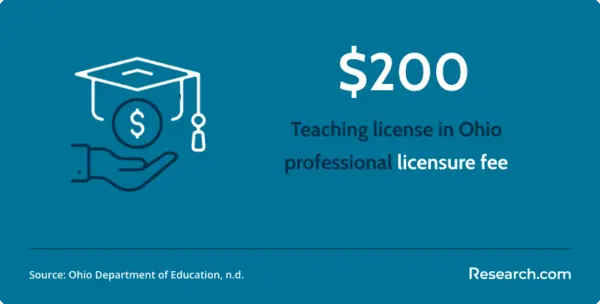
After meeting Ohio Department of Education requirements, teachers can apply for a professional license. To advance, you must satisfy current licensure rules, submit the application online, and pay the $200 professional license fee.
The Office of Educator Licensure reviews your materials and determines whether you qualify. Once issued, you receive notification by email. Employers and the public can verify credentials through the Ohio teaching license lookup, available through the educator search portal on the Department of Education website.
Professional educator licenses in Ohio must be renewed every five years. Renewal requires six semester hours of coursework connected to classroom teaching or your licensure area, or 18 continuing education units (CEUs). Renewal applications are completed online through the CORE system (Ohio Department of Education, n.d.).
Understanding Ohio’s Teaching Credentials and Pathways
Ohio’s licensing system gives candidates more than one route into teaching, but each route serves a different purpose. A high school graduate entering college will usually follow a traditional education degree. A professional changing careers may need a post-baccalaureate or alternative resident educator pathway. A licensed teacher who wants to expand into another subject may need an endorsement, not a second full degree.
If cost or speed is a major concern, compare the available teaching certificate options in Ohio before committing to a program. A lower-cost pathway can be a good choice if it is approved for your target license and includes the required fieldwork. It can be a poor choice if it delays licensure, lacks school placement support, or does not align with the subject or grade level you want.
Teachers can also strengthen their long-term careers by adding endorsements, participating in mentorship, and moving into higher credential tiers such as the senior professional educator license. These steps can support leadership opportunities in curriculum design, teacher training, instructional coaching, and school administration.
How Technology Is Changing Teaching in Ohio
Technology is now part of everyday teaching, not a separate specialty reserved for computer labs. Ohio teachers increasingly use learning management systems, virtual meeting tools, digital assessments, adaptive learning platforms, classroom apps, and online parent communication systems. These tools can improve access and efficiency when used well, but they also require strong judgment around privacy, accessibility, student engagement, and screen time.
Students comparing education programs should ask how each school prepares candidates to teach with technology. Some flexible or affordable pathways, including options connected to the most affordable online master’s in early childhood education programs, may include digital teaching methods, online learning design, or technology-supported assessment. These skills are useful in both traditional and remote classrooms.
Technology can also support professional growth. Teachers can complete online workshops, webinars, and continuing education activities to build skills in digital lesson design, virtual classroom management, and data-informed instruction. The goal is not to replace teaching with software. The goal is to use technology to make instruction clearer, more accessible, and more responsive to student needs.
How Can I Specialize in Teaching English in Ohio?
To become an English teacher in Ohio, choose a preparation pathway that includes literature, writing, language arts pedagogy, adolescent literacy, assessment, and supervised English classroom experience. Candidates should also confirm which Ohio assessments and license area apply to the grade level they want to teach.
English teaching can be a strong fit if you enjoy helping students read closely, write clearly, discuss complex texts, and build communication skills. Before enrolling, compare programs by their student teaching placements, writing instruction coursework, and support for the required licensure exams. For a more targeted breakdown, review this guide on how to become an English teacher in Ohio.
Top Teaching Programs in Ohio for 2027
The following Ohio programs can help students prepare for teacher licensure or career advancement. Use this list as a starting point, not a final decision. Always confirm current tuition, admissions requirements, accreditation, licensure alignment, clinical placement availability, and transfer policies directly with the school.
University of Dayton
The University of Dayton provides seven undergraduate teacher education pathways for students preparing to teach in early childhood, middle childhood, or secondary education. The programs combine coursework, training, and classroom-based experiences. Students who have not yet chosen a specific education major can enter the Discover Teacher Education program, which allows them to explore the available undergraduate majors during the first year before selecting the best match.
- Program Length: Four years
- Tracks/concentrations: Adolescence to Young Adult Education, Early Childhood Leadership and Advocacy, World Language Education, Intervention Specialist, Middle Childhood/Intervention Specialist, Pre-Kindergarten to Grade 5, Secondary Catholic Religion Education
- Estimated Cost per Credit: $2,644
- Required Credits to Graduate: 126-145
- Accreditation: Council for the Accreditation of Educator Preparation (CAEP)
Bowling Green State University
Bowling Green State University offers 28 teacher preparation options across grade levels from early childhood through secondary education. Its Bachelor of Science in Education (BSED) programs build teaching knowledge while allowing students to focus on areas such as physical education, earth sciences, and social studies. Students complete classroom learning and extensive supervised practice, including nearly 1,000 hours of student teaching, internships, and related field experience by graduation.
- Program Length: Four years
- Tracks/concentrations: Adolescence to Young Adult/Secondary Education, Career Tech Workforce Education, Inclusive PreK-5 Education, Intervention Specialist, Middle Childhood Education, Physical Education and Health Education, World Language Education
- Estimated Cost per Credit: $563
- Required Credits to Graduate: 122
- Accreditation: Council for the Accreditation of Educator Preparation (CAEP)
Mount St. Joseph University
Mount St. Joseph University offers a Master of Arts Initial Teacher Licensure pathway for students who already have a bachelor’s degree. Licensure options include Early Childhood Education for Pre-K to 5th grade, Middle Childhood Education for 4th to 9th grade, and Adolescent to Young Adult Education for 7th to 12th grade. Students may complete the accelerated option in as few as 15 months, while the part-time route may take up to two years. Field experiences and student teaching are included.
- Program Length: 15 months
- Tracks/concentrations: Early Childhood Education, Middle Childhood Education, Adolescent to Young Adult Education, Special Education, Multi-Age Education in Art or Music Education
- Estimated Cost per Credit: $680
- Required Credits to Graduate: 120
- Accreditation: Council for the Accreditation of Educator Preparation (CAEP)
Ohio University
Ohio University prepares teacher candidates through undergraduate degrees, master’s programs, endorsements, professional development, and doctoral study. Students seeking initial licensure can choose from Ohio University’s teacher education bachelor’s degree options. BSEd pathways include early childhood and elementary education, middle childhood, adolescent-to-young adult, intervention specialists in special education, and Spanish education. The university also offers the Consortium for Overseas Student Teaching (COST), which lets teacher candidates complete a semester-long professional internship abroad.
- Program Length: Four years
- Tracks/concentrations: Early Childhood and Elementary Education, Middle Childhood, Adolescent-to-Young Adult, Intervention Specialists (Special Education), Spanish Education
- Estimated Cost per Credit: $474
- Required Credits to Graduate: 120-126
- Accreditation: Council for the Accreditation of Educator Preparation (CAEP)
University of Cincinnati
The University of Cincinnati’s School of Education offers accredited teacher preparation programs that can lead to licensure in areas such as middle school and high school teaching. Its undergraduate education programs emphasize experiential learning, giving students opportunities to apply teaching methods in real classrooms before entering the profession full time.
- Program Length: Four years
- Tracks/concentrations: Middle Childhood Education, Secondary Education, Special Education
- Estimated Cost per Credit: $566
- Required Credits to Graduate: 120
- Accreditation: Council for the Accreditation of Educator Preparation (CAEP)
| School | Best For | Decision Point |
| University of Dayton | Students who want multiple undergraduate teaching tracks and first-year exploration | Compare the higher estimated cost per credit with advising, placement support, and program fit. |
| Bowling Green State University | Students who want many preparation options and extensive supervised experience | Ask how the nearly 1,000 hours of supervised work are scheduled across the program. |
| Mount St. Joseph University | Career changers seeking initial licensure after a bachelor’s degree | Confirm how the 15 months accelerated option fits your work schedule and clinical requirements. |
| Ohio University | Students interested in broad licensure options and possible overseas student teaching | Review COST eligibility, timing, and whether the international placement fits your licensure plan. |
| University of Cincinnati | Students who value experiential learning in middle, secondary, or special education | Ask about local field placement partnerships and support for licensure exams. |
How to Choose the Right Ohio Teaching Program
A strong teaching program should do more than award credits. It should move you efficiently toward the license you need, prepare you for required exams, place you in appropriate classrooms, and help you understand hiring expectations in Ohio schools.
Questions to Ask Before You Enroll
- Licensure alignment: Does the program lead to the exact Ohio license, grade band, and subject area I want?
- Approval and accreditation: Is the educator preparation program state-approved, and is the school properly accredited?
- Field placements: Who arranges student teaching, and where do candidates typically complete placements?
- Exam support: What preparation is available for the OAE and any required PRAXIS content assessments?
- Total cost: What will I pay after tuition, fees, books, transportation, testing, background checks, and licensure fees?
- Schedule fit: Can I complete required observations and student teaching if I work or have caregiving responsibilities?
- Transfer credits: How many previous credits will count, and will they reduce time to completion?
- Career support: Does the program connect candidates with districts, job fairs, alumni mentors, or hiring networks?
Common Mistakes to Avoid
| Mistake | Why It Can Hurt You | Better Approach |
| Choosing a program before checking licensure alignment | You may earn credits that do not qualify you for the Ohio credential you need. | Ask the school to identify the specific license or endorsement the program leads to. |
| Comparing schools only by tuition | Low tuition may not reflect fees, exam costs, commuting, delayed graduation, or weak placement support. | Calculate total cost and compare completion support, fieldwork access, and exam preparation. |
| Assuming every online program meets Ohio rules | Some online education degrees are not designed for Ohio licensure or local clinical placement. | Confirm state approval and ask how student teaching is arranged in Ohio. |
| Ignoring subject-area demand | Some credentials may face more competition than others in your preferred district. | Research local openings and consider high-need areas such as STEM, special education, and ESL. |
| Waiting too long to prepare for exams | Delayed test scores can slow your license application and job search. | Build OAE and content assessment preparation into your program timeline. |
Teaching in Ohio: Is It Worth It?
Teaching in Ohio can be worthwhile if you want a community-facing career, are prepared for the licensing process, and choose a credential with strong local demand. The career can offer meaningful work, competitive pay in some areas, and multiple advancement paths. It also requires resilience, classroom management skill, continuous professional learning, and comfort with accountability expectations.
This path may be a strong fit if you enjoy working with students, can commit to field experiences and student teaching, and want a profession where your communication and planning skills matter daily. It may be less suitable if you need a credential with minimal in-person training, want guaranteed salary outcomes, or are unwilling to complete ongoing renewal requirements.
Continuing Your Career After Initial Licensure
Ohio teachers are not limited to one classroom role forever. After earning an initial license, you can pursue endorsements, graduate degrees, leadership roles, instructional coaching, school administration, postsecondary teaching, online education, or specialized student support roles. Some educators also continue into a higher education degree online if they want to work in colleges, universities, student affairs, academic administration, or adult learning environments.
Is an Online Doctorate of Education the Next Step for Advancing My Career in Ohio?
An online doctorate can make sense for experienced Ohio educators who want to move into senior leadership, applied research, policy, district administration, higher education, or specialized academic roles. Programs in online doctorate of education programs typically emphasize advanced research skills, organizational leadership, instructional improvement, and education policy.
An EdD is usually not necessary for initial teacher licensure. It is better viewed as a later-career credential for educators who already understand classroom practice and want to influence systems, programs, or institutions. Before enrolling, compare dissertation or capstone expectations, residency requirements, faculty expertise, completion support, and whether the degree aligns with your target role.
How Can Teachers in Ohio Increase Their Chances of Getting Hired?
Licensure is the baseline. To compete well, candidates should show that they can meet real school needs, manage classrooms, use data responsibly, communicate with families, and support diverse learners. Your employability improves when your preparation, field experience, endorsements, and references tell a clear story about the value you bring to a school.
Specialize in Areas Schools Need
- STEM education: Science, technology, engineering, and mathematics teachers are often valuable, especially at the secondary level.
- Special education: Schools need educators who can support students with varied learning needs across grade levels.
- English as a Second Language (ESL): ESL preparation can help teachers serve multilingual students and culturally diverse classrooms.
Consider Rural, Underserved, Alternative, or Charter Schools
- Rural schools: Some rural Ohio districts experience shortages, especially in math, science, and special education.
- Underserved communities: These settings can provide meaningful experience and help teachers build adaptable instructional skills.
- Alternative and charter schools: These environments may offer different teaching models and can be useful for newer teachers seeking early classroom experience.
Use Mentoring and Professional Development Strategically
- Ohio Resident Educator Program: Treat the program as more than a requirement. Use mentoring to strengthen lesson planning, assessment, and classroom systems.
- Professional learning communities: Collaborating with other teachers can help you share resources, analyze student progress, and improve instruction.
- Targeted workshops: Choose training tied to your goals, such as literacy intervention, inclusive instruction, classroom technology, or assessment design.
Build a Professional Network Before Graduation
- Career fairs and conferences: Meeting principals, district recruiters, and experienced teachers can lead to interviews and stronger references.
- Professional associations: Groups such as the Ohio Education Association (OEA) or Ohio Association of Teachers of Mathematics (OATM) may provide resources, job information, and professional connections.
- Field placement relationships: Student teaching is often your first extended job audition. Be reliable, reflective, and professional from the first day.
What Are the Kindergarten Teacher Requirements in Ohio?
Kindergarten teachers in Ohio typically need a bachelor’s degree in early childhood education or a closely related area, completion of a state-approved educator preparation program, supervised classroom experience, passing scores on required Ohio Assessments for Educators, and background checks. Coursework should include child development, early literacy, classroom routines, assessment, and age-appropriate instruction. For a focused explanation of this pathway, review the kindergarten teacher requirements in Ohio.
What Are the Private School Teacher Requirements in Ohio?
Private schools may set hiring standards that differ from public school requirements. Some expect state licensure, while others may prioritize subject expertise, mission fit, prior teaching experience, or alignment with a specific educational philosophy. Candidates should ask each school directly about credentials, background checks, professional development, and classroom expectations. For more detail, see this guide to private school teacher requirements in Ohio.
How Can I Transition to Online Teaching in Ohio?
Online teaching requires more than moving in-person lessons onto a video platform. Teachers need skills in virtual classroom management, digital content creation, asynchronous instruction, student engagement, accessibility, assessment security, and communication with families or adult learners. Ohio educators who want more flexibility or want to reach students remotely can build these skills through professional development, online teaching experience, and technology-focused coursework. This guide on how to become a teacher online in Ohio explains the pathway in more detail.
What Are the Teacher Certification Requirements in Ohio?
Ohio teacher certification generally requires a bachelor’s degree from an accredited institution, completion of a state-approved educator preparation program, required professional knowledge and subject-area assessments, field experience, student teaching, background checks, and continuing professional development after licensure. Requirements vary by grade level, subject, endorsement, and pathway, so candidates should verify the rules for their exact credential. For a more detailed breakdown, read this overview of teacher certification requirements in Ohio.
What Are the Licensure Requirements for Substitute Teachers in Ohio?
Substitute teaching can be a practical way to gain classroom experience before pursuing a full teaching license. Candidates must meet Ohio’s academic and background check requirements and may need specific training related to classroom management, school procedures, and instructional support. District expectations can vary, so applicants should review both state requirements and local hiring rules. For details, see this guide to Ohio substitute teacher requirements.
What Other Teaching Opportunities Are Available in Ohio?
Ohio educators can pursue many grade levels and specializations. For candidates who want to teach foundational skills in reading, mathematics, science, and social development, elementary education may be a strong option. Understanding how to become an elementary school teacher in Ohio can help you compare this pathway with early childhood, middle school, secondary, special education, or postsecondary teaching.
What Advanced Education Options Can Boost a Teaching Career in Ohio?
Graduate education can help teachers deepen their instructional skills, qualify for specialized roles, or prepare for leadership. A master’s program may focus on curriculum design, early childhood learning, assessment, special education, literacy, educational leadership, or instructional technology. Teachers interested in young learners can compare online master’s degree programs in early childhood education to evaluate flexibility, cost, licensure relevance, and career fit.
What Specialized Certifications Can Enhance a Teaching Career in Ohio?
Specialized credentials can help teachers serve students with specific needs and compete for roles in high-demand areas. Special education is one example. Earning a special education teacher certification in Ohio can prepare educators to support students with disabilities, collaborate on individualized supports, and adapt instruction for varied learning needs. Before adding any endorsement, confirm eligibility rules, required exams, field experiences, and how the credential works with your existing license.
Is Becoming a School Librarian a Viable Career Path in Ohio?
School librarianship can be a strong alternative for educators who want to support curriculum, research, reading development, digital literacy, and information access across a school community. The role often blends teaching, technology, collection management, and collaboration with classroom teachers. If you are considering this direction, review how to become a school librarian in Ohio to understand credential expectations and career steps.
How to Stand Out in Ohio’s Competitive Teacher Job Market
Ohio offers meaningful opportunities for teachers, but candidates should not rely on licensure alone. Schools want educators who can meet student needs, collaborate with colleagues, adapt instruction, communicate clearly, and stay current with teaching practices. The strongest candidates connect their preparation to a specific school need.
Pursue In-Demand Specializations
Some teaching areas can make candidates more competitive because they align with persistent school needs. STEM, special education, and ESL are three examples that can strengthen a teacher’s profile when paired with strong classroom practice and appropriate credentials.
- STEM education: Building expertise in science, technology, engineering, or mathematics can improve prospects, especially for secondary teaching roles.
- Special education: Completing a special education degree or endorsement can help teachers support students with a wide range of learning needs.
- ESL: Adding ESL preparation can help teachers serve multilingual learners and broaden their employment options.
Build Credentials That Match Your Career Goal
Additional education can help, but only when it fits your target role. Some students may need an initial licensure pathway, while others may be better served by endorsements, graduate certificates, or leadership-focused programs. If you are still completing your first credential, compare options such as a bachelor of education online program and confirm whether it meets Ohio licensure requirements.
Gain Strong Experience in High-Need Settings
Experience in rural, underserved, or hard-to-staff schools can help teachers develop flexibility, cultural responsiveness, classroom management skills, and a record of service. These experiences may also connect teachers with loan forgiveness options designed for educators in underserved areas.
- Build a teaching record that shows adaptability across student populations.
- Ask districts about loan forgiveness opportunities for eligible educators in underserved settings.
- Use early placements to collect strong references and examples of student-centered instruction.
FAQ
What are the basic education requirements to become a teacher in Ohio?
You need at least a bachelor’s degree and completion of an approved teacher preparation program through an accredited college or university. The program must align with the license area and grade level you plan to teach.
What exams are required for Ohio teacher licensure?
Ohio candidates must pass the Ohio Assessments for Educators (OAE) that apply to their licensure area. Candidates adding certain licensure areas or endorsements may also need the relevant PRAXIS content-area assessments.
How do I apply for an Ohio Resident Educator License?
You apply through the Connected Ohio Records for Educators (CORE) system after creating an OHID account. Applicants submit required transcripts and test scores, complete BCI and FBI background checks, and pay the $80 application fee.
What is the Ohio Resident Educator Program?
The Ohio Resident Educator Program is a two-year induction experience for eligible new teachers and out-of-state teachers with less than three years of teaching experience. It provides mentoring, professional development, and support as teachers build classroom skills.
How do I move from a Resident Educator License to a Professional Educator License?
You must complete the Ohio Resident Educator Program and the Resident Educator Summative Assessment (RESA), meet current state licensure requirements, submit the online application, and pay the $200 fee.
How often must Ohio teachers renew a professional license?
Ohio professional educator licenses renew every five years. Renewal requires six semester hours of relevant coursework or 18 continuing education units (CEUs) tied to classroom teaching or your licensure field.
What are the job prospects for teachers in Ohio?
Ohio’s projected growth for many teaching roles is slower than average, but openings remain due to turnover, retirements, and staffing needs. Postsecondary teaching is especially large, with about 20,590 annual openings projected in Ohio.
How much do teachers earn in Ohio?
Earnings vary by role, district, experience, and location. Ohio high school teachers earn a median salary of $73,520, and Cleveland-Elyria reports a median salary of $80,090 for high school teachers.
Which Ohio schools offer strong teacher preparation programs?
Examples include the University of Dayton, Bowling Green State University, Mount St. Joseph University, Ohio University, and the University of Cincinnati. Each offers different pathways, costs, tracks, and formats, so compare them by licensure fit rather than reputation alone.
Are there alternative routes to becoming a teacher in Ohio?
Yes. Candidates who already hold a bachelor’s degree may pursue post-baccalaureate, graduate, or alternative resident educator pathways, depending on their background and target license. Always confirm that the route is approved for Ohio licensure before enrolling.
Related Articles for Nearby States
- 2027 How to Become a Teacher in Indiana – What Degree Do You Need to Be a Teacher?
- 2027 How to Become a Teacher in Kentucky – What Degree Do You Need to Be a Teacher?
- 2027 How to Become a Teacher in West Virginia – What Degree Do You Need to Be a Teacher?
- 2027 How to Become a Teacher in Pennsylvania – What Degree Do You Need to Be a Teacher?
- 2027 How to Become a Teacher in Michigan – What Degree Do You Need to Be a Teacher?
- 2027 How to Become a Teacher in Illinois – What Degree Do You Need to Be a Teacher?
- 2027 How to Become a Teacher in Virginia – What Degree Do You Need to Be a Teacher
- 2027 How to Become a Teacher in Tennessee – What Degree Do You Need to Be a Teacher
- 2027 How to Become a Teacher in North Carolina – What Degree Do You Need to Be a Teacher?
- 2027 How to Become a Teacher in Missouri – What Degree Do You Need to Be a Teacher?
Key Insights
- Licensure fit matters most: The best Ohio teaching program is the one approved for your intended grade level, subject area, and credential.
- Ohio has openings, but demand is uneven: Growth is slower than average for many teaching roles, while preschool and postsecondary teaching show stronger opportunity signals in the data provided.
- New teachers follow a staged process: Most candidates complete an approved preparation program, pass required assessments, apply for a Resident Educator License, finish the two-year Ohio Resident Educator Program, and then pursue a Professional Educator License.
- Costs go beyond tuition: Compare fees, testing, background checks, student teaching logistics, transportation, and time to completion before choosing a school.
- Specializations can improve competitiveness: STEM, special education, and ESL preparation may help candidates stand out when those areas align with local school needs.
- Online programs require extra verification: Do not assume an online education degree leads to Ohio licensure. Confirm state approval, field placement arrangements, and exam preparation before enrolling.
- Renewal is part of the career: Ohio professional educator licenses renew every five years and require six semester hours of coursework or 18 CEUs.
References:
- EDUCAUSE. (2025). Findings From The 2025 Teaching and Learning Workforce Report. https://events.educause.edu/-/media/files/events/webinar/2025/web2513/slides.pdf
- Projections Central. (n.d.). Long-Term Occupational Projections (2030). Projections Central. https://projectionscentral.org/Projections/LongTerm?AreaName=ohio%2C+%22united+states%22&Name=teacher&items_per_page=1000
- Steiner, E. D., Levine, P. R., Doan, S., & Woo, A. (2025). Teacher WellBeing, Pay, and Intentions to Leave in 2025. RAND. https://www.rand.org/pubs/research_reports/RRA1108-16.html
- U.S. Bureau of Labor Statistics. (n.d.). 25-1199 Postsecondary Teachers, All Other. Bureau of Labor Statistics. https://www.bls.gov/oes/current/oes251199.htm
- U.S. Bureau of Labor Statistics. (n.d.). 25-2031 Secondary School Teachers, Except Special and Career/Technical Education. Bureau of Labor Statistics. https://www.bls.gov/oes/current/oes252031.htm
Other Things You Should Know About Becoming a Teacher in Ohio
To become a teacher in Ohio in 2027, you must have a bachelor's degree from an accredited institution. Additionally, completing a state-approved teacher preparation program is essential. You must also pass the necessary Ohio Assessments for Educators (OAE) to qualify for a teaching license.
Aspiring teachers in Ohio must pass the Ohio Assessment for Educators (OAE) exams, focusing on subject-specific tests relevant to their teaching area. Additionally, candidates often need to pass the Principles of Learning and Teaching (PLT) test as part of the certification process.
To apply for a Resident Educator License in Ohio in 2027, candidates must complete an approved educator preparation program, pass the Ohio Assessments for Educators (OAE), and submit an application via the Ohio Department of Education's online system. A background check is also required.
In 2027, you can pursue alternative licensure in Ohio if you hold a bachelor's degree and meet specific coursework requirements. These pathways often involve obtaining a one-year temporary license and completing an approved preparation program while teaching. This route helps address diverse subject needs in Ohio schools.
The Ohio Department of Education and Workforce issues teaching licenses in Ohio through its Educator Licensure section. Applicants submit materials through the online licensure system, and the agency verifies degree, exam, and preparation requirements before granting a Resident Educator License or other Ohio teaching license.