2027 Cheapest Accredited Online Sustainability Degree Programs: Tuition, Fees, and Financial Aid

Co-Founder and Chief Data Scientist
Choosing an online sustainability degree is really a cost-verification problem: advertised tuition, mandatory fees, transfer rules, and aid can change the true price. College Board's 2024 Trends in College Pricing reports average in-state tuition and fees at public four-year colleges at $11,610, making careful comparison essential.
This guide is for students seeking affordable accredited online sustainability programs. You will learn which options publish low tuition, how to confirm accreditation, where hidden costs appear, and how FAFSA, grants, scholarships, employer benefits, and transfer credits can reduce your net price.
Key Things You Should Know
- The lowest-cost accredited online sustainability options are usually public universities with resident pricing or all-online tuition; published starting rates include about $122.70 per credit for Florida resident upper-division coursework at St. Petersburg College and $129.18 per credit for Florida residents at UF Online, before individual aid and program rules.
- Advertised tuition is not the same as total cost: students should add mandatory distance-learning fees, technology fees, books, lab or software costs, internship travel, graduation fees, and the number of credits actually required after transfer evaluation.
- Net price matters more than sticker price because FAFSA-based aid, the federal Pell Grant of up to $7,395 for eligible students in the 2025-2026 award year, scholarships, employer tuition benefits, and transfer credits can make a higher-tuition accredited program cheaper out of pocket.
What Are the Cheapest Accredited Online Sustainability Degree Programs?
The cheapest accredited online sustainability degree depends on your residency, transfer credits, enrollment pace, and financial aid package. For many students, the strongest starting point is a regionally accredited public institution that publishes either low in-state online tuition or a single online rate for all students.
The table below compares published online tuition for selected accredited U.S. programs with sustainability, sustainable management, environmental sustainability, or closely aligned sustainability-focused curricula. Treat the estimates as a screening tool, not a final bill, because institutional fees, transfer acceptance, residency rules, and annual tuition changes can affect your final cost.
| Program | Credential and online format | Published tuition used for comparison | Credit basis | Estimated tuition before added fees | Best affordability fit |
| St. Petersburg College | BAS in Sustainability Management, online upper-division pathway | About $122.70 per upper-division credit for Florida residents | Primarily a bachelor's-completion structure | About $7,362 for 60 upper-division credits for Florida residents | Florida transfer students with an associate degree or substantial prior credit |
| University of Florida Online | BS in Sustainability and the Built Environment, fully online | $129.18 per credit for Florida residents; $552.62 for nonresidents | 120-credit bachelor's degree | About $15,501.60 resident tuition and fees; about $66,314.40 nonresident tuition and fees | Florida residents seeking a full online bachelor's from a large public university |
| Florida International University Online | BA in Sustainability and the Environment, fully online | $235.57 per credit for Florida residents; $648.87 for nonresidents | 120-credit bachelor's degree | About $28,268.40 resident tuition; about $77,864.40 nonresident tuition | Students wanting a broad sustainability-and-environment curriculum with public university pricing |
| University of Wisconsin Sustainable Management | BS in Sustainable Management, online collaborative degree-completion program | $350 per credit for all students | Often completed as a 63-credit major after transfer coursework | About $22,050 for 63 credits | Working adults with prior credits who want a flat online rate |
| Oregon State University Ecampus | BS or BA in Sustainability, online | About $366 per quarter credit for undergraduate Ecampus courses | 180 quarter-credit bachelor's structure | About $65,880 before fees if all credits are completed through OSU | Students who value broad course selection and may transfer in lower-cost credits |
| Unity Environmental University | Online environmental and sustainability-focused bachelor's options | About $470 per credit | 120-credit bachelor's structure | About $56,400 before fees | Students seeking an environmentally focused institution and flexible online pacing |
| Arizona State University Online | BS in Sustainability, fully online | Published online undergraduate tuition commonly varies by course and program | 120-credit bachelor's structure | Usually higher than low-cost public resident options after full-program calculation | Students prioritizing a large online sustainability school and extensive support services |
For a Florida resident, the lowest published tuition starting points in this comparison are St. Petersburg College and UF Online.
For an out-of-state student, a flat-rate program such as the University of Wisconsin Sustainable Management degree may be more competitive than a public university that charges nonresident tuition. Students comparing sustainability to other online fields can use the same cost-screening logic used for affordable online master's programs: verify accreditation first, then compare total tuition, fees, aid, and completion time.
How Were the Cheapest Online Sustainability Degree Programs Ranked?
The most useful ranking for affordability should not simply sort schools by the lowest per-credit price. A program with a low posted rate can become more expensive if it requires more credits, limits transfer credit, charges separate online fees, or offers little grant aid.
This comparison prioritizes programs that meet practical affordability and quality filters. The ranking logic is especially important for online sustainability degrees because programs may be offered as full bachelor's degrees, degree-completion pathways, interdisciplinary environmental degrees, or sustainable management majors.
- Institutional accreditation came first, because students generally need an accredited institution for federal aid eligibility, credit transfer, graduate school consideration, and employer recognition.
- Published online tuition was compared separately for resident, nonresident, and flat-rate students, because the cheapest school for one student may not be the cheapest for another.
- Total credit requirement was considered, because a 60-credit completion program can be less expensive for transfer students but not directly comparable to a 120-credit first-time bachelor's program.
- Mandatory and likely fees were reviewed when schools publish them clearly, including technology, online learning, student services, graduation, and course-specific fees.
- Financial aid access, transfer policies, and flexibility were weighed because grants, scholarships, employer benefits, and accepted transfer credits can reduce net price more than a small tuition difference.
A major limitation is that schools update tuition and fees regularly, and individual aid packages vary. Use this ranking as a shortlist, then request a written cost estimate from each school that includes your transfer credits, residency status, enrollment pace, and expected aid.
How Can You Verify the Accreditation of an Online Sustainability Degree Program?
Accreditation is the first affordability checkpoint because an unaccredited or improperly accredited program can block federal aid, reduce transferability, and weaken employer or graduate-school recognition. For sustainability degrees, institutional accreditation is usually more important than programmatic accreditation because most sustainability bachelor's programs are interdisciplinary and do not have a single required professional accreditor.
Use the following checks before applying or paying an enrollment deposit. These steps also apply when evaluating other online professional programs, such as a BCBA school online, where accreditation and eligibility rules can directly affect cost and career options.
- Search the institution in the U.S. Department of Education's Database of Accredited Postsecondary Institutions and Programs or the Council for Higher Education Accreditation directory.
- Confirm that the accreditor is recognized and that the institution's accreditation status is current, not probationary, withdrawn, or limited to a different campus.
- Check whether the online sustainability degree is offered by the same accredited institution listed in the directory, not by an unrelated third-party training provider.
- Ask the school whether the specific online program is eligible for Title IV federal financial aid, because accreditation alone does not automatically mean every program qualifies.
- Verify transfer-credit policies with the registrar, including maximum transferable credits, minimum grade requirements, residency credits, and whether prior credits apply to the sustainability major or only electives.
Red flags include vague phrases such as "nationally recognized" without naming an accreditor, pressure to enroll before receiving a financial aid estimate, missing consumer information, unclear credit-hour requirements, and refusal to provide accreditation documentation in writing.
How Much Does an Accredited Online Sustainability Degree Really Cost?
The real cost of an online sustainability degree is the amount you pay to complete all remaining degree requirements after tuition, mandatory fees, books, technology, travel, and financial aid are included. This is why a student with 60 accepted transfer credits can pay far less than a first-time student at the same institution.
The table below separates common cost terms that are often mixed together in marketing materials. Understanding these definitions helps you compare programs more accurately and avoid assuming that per-credit tuition is the final price.
| Cost term | What it means | Why it matters for online sustainability students |
| Tuition | The instructional charge, usually billed per credit, per term, or through a subscription model | This is the easiest number to compare, but it may exclude mandatory fees and required materials |
| Mandatory fees | Required charges such as technology, online learning, student services, assessment, or graduation fees | Fees can narrow or erase the difference between two schools with similar tuition rates |
| Total program cost | The estimated price to complete every required credit and fee before aid | This shows whether a program is truly affordable for your remaining credits |
| Financial aid | Grants, scholarships, loans, work-study, employer aid, military benefits, or tuition discounts | Aid can reduce out-of-pocket cost, but loans must be repaid and scholarships may not renew automatically |
| Net price | Cost after grants and scholarships are subtracted, excluding optional borrowing | This is usually the best number for comparing affordability across accredited programs |
As a quick calculation, multiply the number of credits you still need by the tuition rate, then add required fees and subtract grants and scholarships. If one school accepts 45 more transfer credits than another, it may be cheaper even if its per-credit tuition is higher.
Practical rule: Do not ask only, "What is tuition?" Ask, "What will I pay to finish the degree after my transfer evaluation and aid package?"
Which Tuition Models Make Online Sustainability Degree Programs More Affordable?
Online sustainability programs use different tuition models, and the best one depends on how quickly you study, how many credits you transfer, and whether you qualify for resident tuition. A lower per-credit rate is helpful, but the structure of the program can matter just as much.
The comparison below explains the main tuition models students are likely to encounter. Use it to identify which format fits your budget and schedule before focusing on brand name alone.
| Tuition model | How it works | When it can lower cost | Potential drawback |
| In-state public tuition | Residents pay a lower rate than nonresidents | Best for students who live in the state and can document residency | Out-of-state rates may be much higher |
| Flat online tuition | Online students pay the same rate regardless of state | Useful for out-of-state students comparing public universities | The flat rate may still be higher than your local in-state option |
| Per-credit tuition | Students pay for each credit attempted | Good for part-time students and those transferring many credits | Repeating or withdrawing from courses can increase cost |
| Flat-rate term tuition | Students pay one term price within a credit range | Can save money for full-time students who complete heavier course loads successfully | Risky if work or family obligations make full-time study unrealistic |
| Competency-based or subscription tuition | Students pay for a period of access and progress by demonstrating mastery | Can be economical for highly self-directed students with prior knowledge | May not suit students who need structured weekly instruction |
Students planning to continue beyond a bachelor's degree should also compare how undergraduate choices affect graduate affordability. For example, choosing a low-cost accredited bachelor's program with strong transfer acceptance may preserve aid eligibility and reduce borrowing before applying to sustainability, policy, business, or best online master's of social work programs connected to community resilience and social impact careers.
What Fees and Hidden Costs Should Online Sustainability Degree Students Expect?
Online programs often feel cheaper because students avoid campus housing and commuting, but sustainability majors may still face required digital tools, course materials, fieldwork expenses, and administrative fees. The safest approach is to request a line-item cost sheet before enrolling.
These are the fees and indirect costs most worth checking because they can change the total price even when tuition looks affordable.
- Online learning or distance education fees, which may be charged per credit or per term in addition to tuition.
- Technology fees, including learning platform access, proctoring systems, remote exam tools, or required software.
- Course materials, such as textbooks, case-study platforms, GIS tools, statistics software, environmental data subscriptions, or lab kits.
- Fieldwork, internship, or practicum costs, including local transportation, background checks, safety gear, or unpaid time away from work.
- Portfolio, capstone, or assessment fees that may appear near the end of the program.
- Transfer evaluation, transcript, application, orientation, and graduation fees.
- Residency or short-term campus requirements, if the program is mostly online but not fully online.
Common mistakes include comparing only tuition, overlooking fees that are charged every term, and assuming "online" means "no in-person costs." Ask whether any sustainability courses require site visits, service learning, lab components, or internships that could add travel or scheduling expenses.
How Does FAFSA and Federal Financial Aid Work for Online Sustainability Degree Programs?
Online students can qualify for federal financial aid if they enroll in an eligible program at an eligible institution and meet federal student aid requirements. The delivery format itself is not the deciding factor; accreditation, Title IV eligibility, enrollment level, satisfactory academic progress, and degree-seeking status matter more.
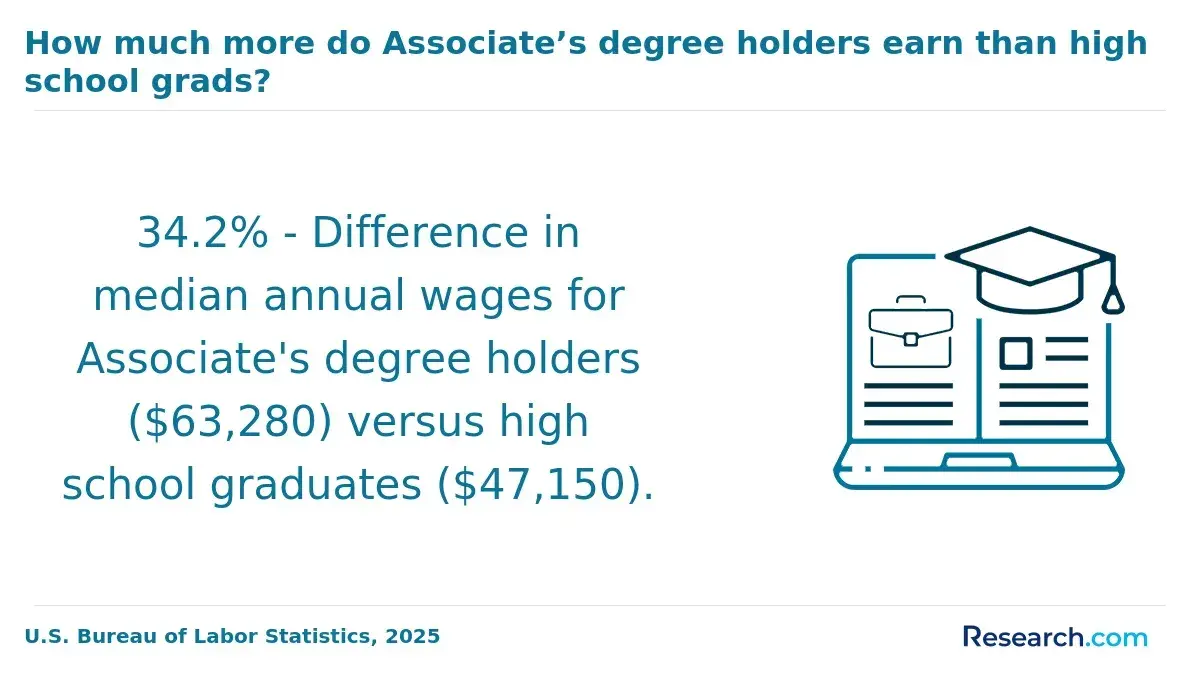
The federal Pell Grant remains one of the most important affordability tools for eligible undergraduates because it does not have to be repaid. For the 2025-2026 award year, the maximum Pell Grant is $7,395, which can materially reduce net price at lower-cost public online programs.
Follow these steps to evaluate aid before committing to an online sustainability degree.
- Complete the FAFSA as early as possible and list every accredited school you are seriously considering.
- Confirm with each school that the specific online sustainability program is Title IV eligible.
- Review the financial aid offer by separating grants and scholarships from loans, because only grants and scholarships reduce net price without repayment.
- Ask how aid changes if you enroll part time, take summer courses, transfer credits, or stop attending temporarily.
- Check satisfactory academic progress rules, including minimum GPA, completion rate, and maximum timeframe, because losing aid can sharply increase cost.
Borrowing should be a last part of the affordability plan, not the whole plan. If two accredited programs have similar net prices, the one that lets you finish faster with fewer loans may be the better value even if its advertised tuition is not the lowest.
Which Scholarships, Grants, and Tuition Benefits Can Help Pay for an Online Sustainability Degree?
Scholarships and grants reduce net price because they generally do not need to be repaid when students meet the award conditions. Online sustainability students should look beyond general merit aid and search for awards tied to environmental studies, climate resilience, public service, energy, agriculture, urban planning, conservation, and community development.
The table below summarizes major funding categories and what to verify before counting the award in your budget. The most important detail is renewability, because a one-time award may help in the first term but not reduce the full program cost.
| Funding source | Typical use | What to verify |
| Federal Pell Grant | Need-based undergraduate aid | Annual eligibility, enrollment level, lifetime limit, and satisfactory academic progress |
| State grants | Need-based or merit-based aid for residents | Whether online students and out-of-state online programs qualify |
| Institutional scholarships | Merit, need, transfer, adult learner, or program-specific awards | Renewal rules, GPA requirements, and whether awards apply to online tuition |
| Environmental scholarships | Awards from conservation, energy, planning, or sustainability organizations | Major requirements, citizenship or residency rules, essays, and deadlines |
| Employer tuition assistance | Workforce education benefit paid by an employer | Annual cap, grade requirements, repayment obligations, and approved majors |
| Military and veteran education benefits | Education funding for eligible service members, veterans, and dependents | Benefit type, remaining entitlement, housing rules for online study, and school participation |
Employer benefits can be especially useful for working adults in facilities management, utilities, logistics, municipal government, corporate social responsibility, or environmental compliance. If your employer covers only job-related education, frame the degree around skills such as energy efficiency, reporting, project management, risk assessment, and sustainable operations.
Can Transfer Credits, Prior Learning, and Competency-Based Study Lower the Cost of an Online Sustainability Degree?
Yes. For many online sustainability students, transfer credit is the largest cost-saving opportunity because it reduces the number of credits billed by the degree-granting institution. This is especially important for adults with community college credits, military training, professional certifications, or previous college coursework.
Before enrolling, ask each school for a formal or preliminary transfer review. The goal is to learn how many credits apply to the degree itself, not just how many credits the school accepts in general.
- Transfer general education credits from a regionally accredited community college when possible, especially before paying higher upper-division tuition.
- Check whether prior environmental science, business, economics, public policy, statistics, or GIS courses apply to sustainability major requirements.
- Ask about credit for prior learning, military training, standardized exams, industry certifications, or professional portfolios.
- Review residency requirements, because schools often require a minimum number of credits to be completed through their institution.
- Confirm whether transfer credits affect scholarship eligibility, degree-completion timelines, or Latin honors requirements.
- Avoid retaking courses unless the school confirms in writing that the original credits will not apply.
Students interested in sustainability careers inside supply chains, process improvement, procurement, or corporate operations may also compare sustainability coursework with an operations management degree. In some cases, combining transfer-friendly undergraduate sustainability study with later business specialization can be more cost-effective than choosing an expensive undergraduate program with limited transfer flexibility.
How Should Students Compare the Net Price, Quality, and Return on Investment of Online Sustainability Degree Programs?
The best-value online sustainability degree is accredited, affordable after aid, realistic to complete, and aligned with the student's career goals. It is not automatically the program with the lowest per-credit tuition, especially if lower tuition comes with weak advising, poor transfer acceptance, limited course availability, or few career-relevant experiences.
Use the following decision framework after you receive tuition estimates and financial aid offers. It helps compare cost with quality and career fit without overvaluing a single metric.
- Calculate net price for each program by subtracting grants and scholarships from total tuition and mandatory fees for the credits you still need.
- Compare time to completion, because an extra year of enrollment can add fees and delay full-time earnings.
- Review curriculum fit, including climate policy, environmental science, sustainable business, energy, GIS, data analysis, urban planning, or corporate sustainability reporting.
- Ask about student outcomes, including retention, graduation, internship access, career services, alumni roles, and graduate-school placement when available.
- Estimate borrowing conservatively and compare expected monthly loan payments with realistic entry-level and mid-career roles.
- Choose the lowest net-price accredited program that still provides the skills, support, flexibility, and career alignment you need.
For salary context, the U.S. Bureau of Labor Statistics reported a May 2024 median annual wage of $80,060 for environmental scientists and specialists. That figure should not be treated as a guaranteed outcome for sustainability graduates, but it can help students evaluate whether projected debt is reasonable for environmental analysis, compliance, planning, consulting, and sustainability-related roles.
Some students may find stronger ROI by pairing a low-cost sustainability degree with targeted credentials in data analytics, project management, energy auditing, GIS, or supply chain. Others may decide that a different major has better earnings alignment; comparing sustainability with the top 10 highest paying degrees can clarify how much debt is reasonable for your goals.
Other Things You Should Know About Sustainability
No. Environmental science usually emphasizes natural systems, ecology, chemistry, and environmental analysis. Sustainability degrees are often broader and may combine environmental science with policy, economics, business, planning, climate adaptation, and social impact.
Yes, several accredited U.S. institutions offer fully online sustainability or sustainability-focused degrees. However, students should confirm whether any courses require internships, local fieldwork, proctored exams, or short in-person experiences.
Common pathways include sustainability coordinator, environmental compliance assistant, energy analyst, conservation program assistant, ESG reporting associate, resilience planning assistant, and environmental policy support roles. Job requirements vary by employer and may require experience or technical skills.
Not always. A bachelor's degree can support entry-level roles, especially when paired with internships, data skills, GIS, reporting experience, or project work. A master's degree may help for specialized policy, management, research, or senior sustainability roles.
References
- Low-cost and Free Courses on Sustainability — Marshall Sustainability https://www.marshallsustainability.com/insights/low-cost-free-sustainability-courses
- Financial Aid for Online Colleges | CollegeAtlas https://www.collegeatlas.org/financial-aid-for-online-colleges
- Accreditations and rankings https://resources.sulitest.org/accreditations-and-rankings
- 2025 Most Affordable Online Environmental Science Degrees https://www.onlineu.com/most-affordable-colleges/environmental-science-degrees
- Accreditation is the foundation for trustworthy sustainability certification - ASI North America https://asi-na.org/updates-events/accreditation-is-the-foundation-for-trustworthy-sustainability-certification/
- Financial Aid Guide for Students at Online Colleges - OnlineColleges.net https://www.onlinecolleges.net/for-students/financial-aid-online-students/
- Sustainability and ESG Courses and Degrees | US, UK, Europe, Free UN Options https://enable.green/news/top-10-sustainability-esg-courses-degrees-us-uk-europe/
- Green Key — Online Training Platform https://www.greenkey.global/fee-academy
- Sustainability Insights Blog | SUMAS https://sumas.ch/blog/