2027 BS in Business Administration: A School That Changes Its Degree Catalog During Enrollment
Audited and Verified:
Our Editorial and Data Verification Process
Research.com uses government datasets, official education statistics and primary institutional information to support its career and degree guides. Our review process checks factual accuracy, occupational definitions, source dates and the requirements associated with the credentials discussed.
How This Article Was Fact-Checked
Our editorial team verifies salary estimates, employment projections, education requirements and program information against original data providers and official organizations. Salary figures are checked against the relevant occupational definitions and reporting periods. Information about licensure, accreditation and required in-person training is reviewed separately.
Fact-checked and verified on:

Co-Founder and Chief Data Scientist
Your school has changed the BS in Business Administration catalog, and the requirements in your degree audit no longer match the plan you started with. For transfer and returning students, even one newly required or unavailable course can affect graduation timing and cost.
This guide explains how catalog-year rules work, which records establish your requirements, and when a change calls for an adviser, registrar, or formal appeal. You'll be able to distinguish a routine catalog update from a change that requires a revised completion plan.
Key Things You Should Know
- A new catalog does not automatically replace your requirements. Your applicable catalog year depends on the school's policies, your enrollment history, and any rules for entering the business major or concentration.
- Compare three records before changing your schedule: your applicable catalog, your current degree audit, and written decisions about transfer credit or substitutions. Track remaining required credits, course availability, and added cost. If a requirement changes or a course disappears, request a written completion plan before registering.
- Ask which office can approve an equivalent course, substitution, or appeal; an adviser's suggestion alone may not update your official audit.
What Is a Bachelor's Degree in Business Administration?
A BS in Business Administration is an undergraduate degree combining general education with a business core and, at some schools, electives or a formal concentration. Its precise title and requirements are set by the institution; a BS, BBA, and BS in Management are not interchangeable merely because their courses overlap.
That distinction matters when a catalog changes. A revised marketing elective might leave your business core untouched, while a new statistics prerequisite could change the order in which you can finish required courses. Check whether the revision applies to the university, the business major, a concentration, or only students who enter the program after a stated date. If you are still comparing institutions, a national guide to ranked online business colleges can help identify options, but each school's catalog and written policies must determine your degree plan.
Is a Business Administration Degree Worth It?
For a student already enrolled, the useful question is whether finishing this degree remains a sound use of time and money after the catalog change. A business degree may help you meet a bachelor's requirement and build broad skills, but it does not guarantee a promotion or a management job.
Compare the approved path to graduation with realistic alternatives: finishing under your existing catalog, accepting a newer catalog to gain a desired concentration, or transferring after another school evaluates how your credits would apply. Include repeated courses, any newly required credits, expected course offerings, and the cost of staying enrolled longer. A comparison of business administration degrees compared by cost duration and outlook is a starting point, not a substitute for institution-specific degree audits. Transferring can be a poor bargain if accepted credits become electives rather than requirements.
How Do You Choose an Accredited Business Administration Program?
If a catalog change makes you reconsider your school, first verify its current institutional accreditation and whether any claimed AACSB, ACBSP, or IACBE accreditation covers the business program in question. Accreditation is distinct from catalog protection: it does not, by itself, freeze a student's degree requirements. Also compare how reliably each school publishes policies, offers required courses, resolves audit errors, and documents exceptions.
Catalog changes can affect different students in different ways. This comparison helps identify which policy determines your next conversation with the school.
| Situation | What may govern the degree | Why the distinction matters |
| Continuous enrollment | A retained catalog year, if school policy permits | New requirements may not apply automatically. |
| New admission to the business major | A separate major-entry catalog rule | University admission and major admission may establish different requirements. |
| Break in enrollment or readmission | Reentry and catalog-expiration policies | Returning students may have to follow newer requirements. |
| Closed concentration or discontinued course | Transition, equivalency, or substitution policies | Keeping an older catalog may still require an approved way to finish. |
Ask the registrar to identify your governing catalog year in writing and the business department to confirm how it applies to the major. If you are considering another school, compare affordable accredited business administration programs accepting FAFSA only after checking accreditation, actual credit applicability, and aid eligibility for your circumstances.
Business administration programs commonly cover accounting, economics, finance, marketing, management, operations, and quantitative decision-making. The courses and required depth vary by catalog. A concentration is an officially defined set of requirements; a few related electives do not necessarily produce a concentration on your record.
When reviewing a changed curriculum, compare requirements satisfied, not just course titles. A revised analytics course may replace an older statistics course for some students but remain a separate requirement for others. Obtain a written equivalency or substitution decision before assuming either result. If a new project-management sequence is driving up your remaining coursework, compare its learning value with lower-tuition online programs for project management only if a separate degree genuinely better fits your goal; changing schools does not ensure the sequence will transfer.
Delivery format becomes important when a catalog revision changes which required courses you can take and when. An online section might let you avoid a commute, but it may still require live meetings, scheduled exams, group work, or fixed deadlines. An on-campus section might be the only timely offering of a course you need.
Ask the department for a term-by-term schedule of your remaining requirements in your intended format, including prerequisites and any campus visits. Then check whether the proposed pace fits your work and caregiving commitments. Online business bachelor's degrees with shorter timelines may offer useful comparisons, but an advertised completion time does not establish when your remaining courses will be offered.
If you are already studying at the institution, a catalog dispute is not usually a new admissions application. It may, however, expose a separate admission requirement for the business major, a concentration, or readmission after a break. The school may also distinguish a prerequisite needed to enter the major from a course needed to graduate.
Request written confirmation of your admission status, major-entry date, prerequisite decisions, and any readmission conditions. Transfer students should keep official transcripts and prior equivalency decisions: credit accepted by the university does not necessarily satisfy accounting, statistics, or another business requirement. For a fuller explanation of entry rules, see the business administration degree admissions requirements guide. Your institution remains the authority on which rules apply to you.
A catalog change affects completion time through remaining required courses and their availability, not merely the total number of credits on a program page. A new prerequisite can delay a later course; an approved equivalent offered next term may avoid that delay. Neither outcome should be assumed before the school confirms a schedule.
Build two written scenarios - your original audited path and the school's proposed revised path. For each, record remaining credits by requirement, prerequisites, the next available section, expected graduation term, tuition and fees, and any books, software, travel, or proctoring expenses. Ask financial aid whether a changed enrollment schedule affects your eligibility or satisfactory academic progress. Accelerated online pathways for business students are worth comparing if a delay is substantial, but a shorter calendar does not necessarily mean fewer credits, less work, or a lower total cost.
A completed BS in Business Administration can support applications for roles such as operations coordinator, marketing coordinator, procurement assistant, or HR specialist, depending on your experience and the employer's requirements. These jobs have different tasks; the degree alone does not establish specialist expertise or qualify a new graduate to supervise staff.
Use a catalog change to check whether a newly required course advances your target role. For example, someone aiming for HR should weigh employment-law and HR coursework against an unrelated elective, while also seeking relevant work samples or experience. If transferring to an HR-focused program is under consideration, compare credit acceptance at online HR schools based on credits applied to graduation requirements - not just credits accepted in total.
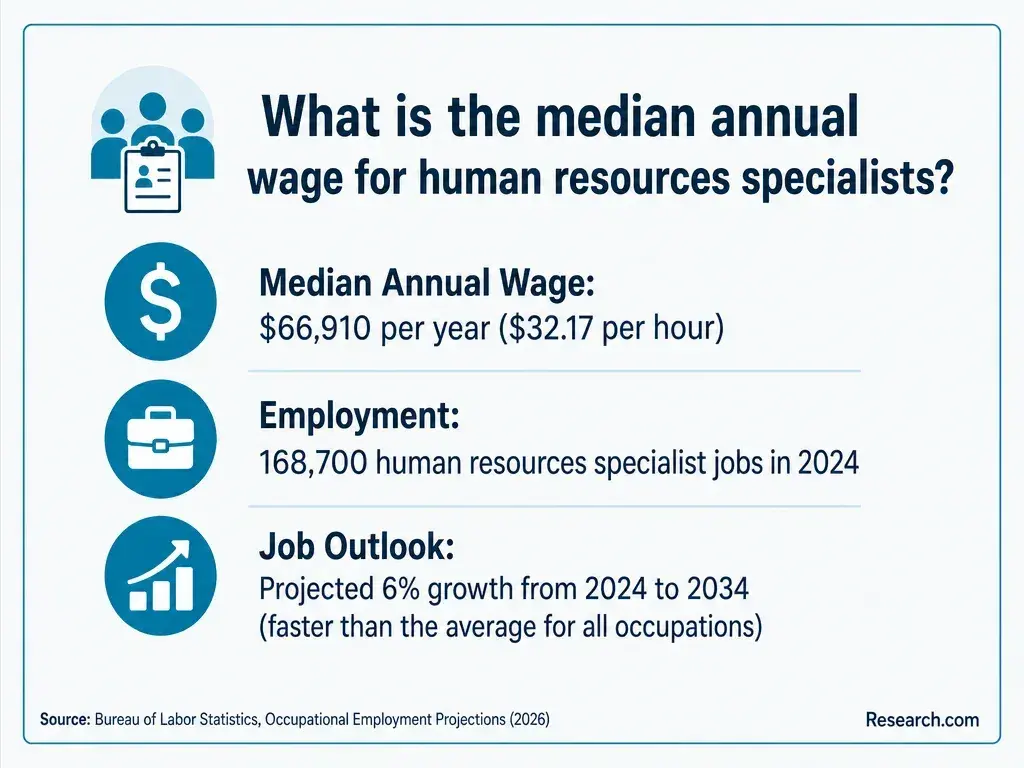
There is no single salary attached to a BS in Business Administration. Pay depends on the occupation, location, employer, and experience. The U.S. Bureau of Labor Statistics reports a May 2025 median annual wage of $75,940 for human resources specialists. That is an occupation-wide median, not a predicted starting salary for a business administration graduate.
Do not use a manager's median wage to justify extra terms of tuition if you have not established a realistic route to that role. If a catalog change has made you consider a leadership degree instead, shorter study timelines for leadership bachelor's students should be weighed against transfer-credit loss, added cost, and the experience employers expect for management work.
What Certifications or Licenses Complement a Business Degree?
A professional certification can demonstrate a defined skill, but it does not replace a required degree course unless your institution formally awards applicable credit or approves a substitution. Eligibility for accounting licensure, HR certifications, project-management credentials, and financial-services licenses is governed by the relevant board or credentialing organization - not by a business administration catalog alone.
If a changed catalog adds coursework related to your career goal, compare that coursework with a separate credential's eligibility rules and total cost before paying for both. Someone considering a project-management pathway, for example, can review project management fees books and aid considerations, then ask the business department whether any proposed course substitution is academically permitted. Get approval before enrolling elsewhere.
Other Things You Should Know About Business Administration
It can help document what was published, but the registrar should identify the official catalog and policies applicable to you. Save the page and its date, then request written confirmation.
A new number does not necessarily mean a new requirement. Ask the department or registrar for the official course equivalency and check that it appears correctly in your degree audit.
Not necessarily. A transcript records completed courses; the substitution may instead appear in the degree audit or an approval record. Keep a copy of the decision.
Do not assume it does. Ask the registrar and financial-aid office how to protect your enrollment and aid while the appeal is pending, and follow published payment and withdrawal deadlines.
- Rule 3342-3-01.1 - Ohio Administrative Code https://codes.ohio.gov/ohio-administrative-code/rule-3342-3-01.1
- School-Determined Requirements - FSA Partner Connect https://fsapartners.ed.gov/knowledge-center/fsa-handbook/2025-2026/vol1/ch1-school-determined-requirements
- Student Complaints - Texas Higher Education Coordinating Board https://www.highered.texas.gov/student-complaints/
- BA in Business Administration | fullerton.edu https://business.fullerton.edu/programs/undergraduate/advising/ba_businessadministration
- EM119 - Catalog Year and Continuous Enrollment | UT System Policies https://policy.tennessee.edu/procedure/em119-catalog-year-and-continuous-enrollment/
- Catalog Rights for Majors | santarosa.edu https://catalog2024-2025.santarosa.edu/catalog-2024-2025/catalog-rights-majors
- Muma College of Business | University of South Florida https://usf.edu/undergrad-catalog-muma-college-of-business
- Change of Catalog Year (Requirement Term) | Rhode Island Small Business Development Center https://web.uri.edu/registration-records/for-students/change-of-catalog-year-requirement-term/
- How to Read a College Degree Plan Before You Enroll | Florida National University (FNU) https://www.fnu.edu/how-to-read-college-degree-plan/