2027 Customer Experience vs. Aviation Management for a Business Administration BS: Which Fits?
Audited and Verified:
Our Editorial and Data Verification Process
Research.com uses government datasets, official education statistics and primary institutional information to support its career and degree guides. Our review process checks factual accuracy, occupational definitions, source dates and the requirements associated with the credentials discussed.
How This Article Was Fact-Checked
Our editorial team verifies salary estimates, employment projections, education requirements and program information against original data providers and official organizations. Salary figures are checked against the relevant occupational definitions and reporting periods. Information about licensure, accreditation and required in-person training is reviewed separately.
Fact-checked and verified on:

Co-Founder and Chief Data Scientist
A Business Administration BS can prepare you to improve customer relationships or help run aviation operations, but those goals call for different coursework and experience. Customer experience is applicable across industries; aviation management concentrates on the operating demands of airlines, airports, and related organizations.
If you are choosing a concentration or finishing a bachelor's degree, the distinction affects your electives, internships, job search, and potentially your time to graduation. This comparison shows what each path teaches, where it may lead, and what to verify before committing.
Key Things You Should Know
- Choose customer experience for cross-industry work in customer research, service improvement, or retention; choose aviation management for airline, airport, or aviation-service operations. Neither concentration makes a new graduate a manager.
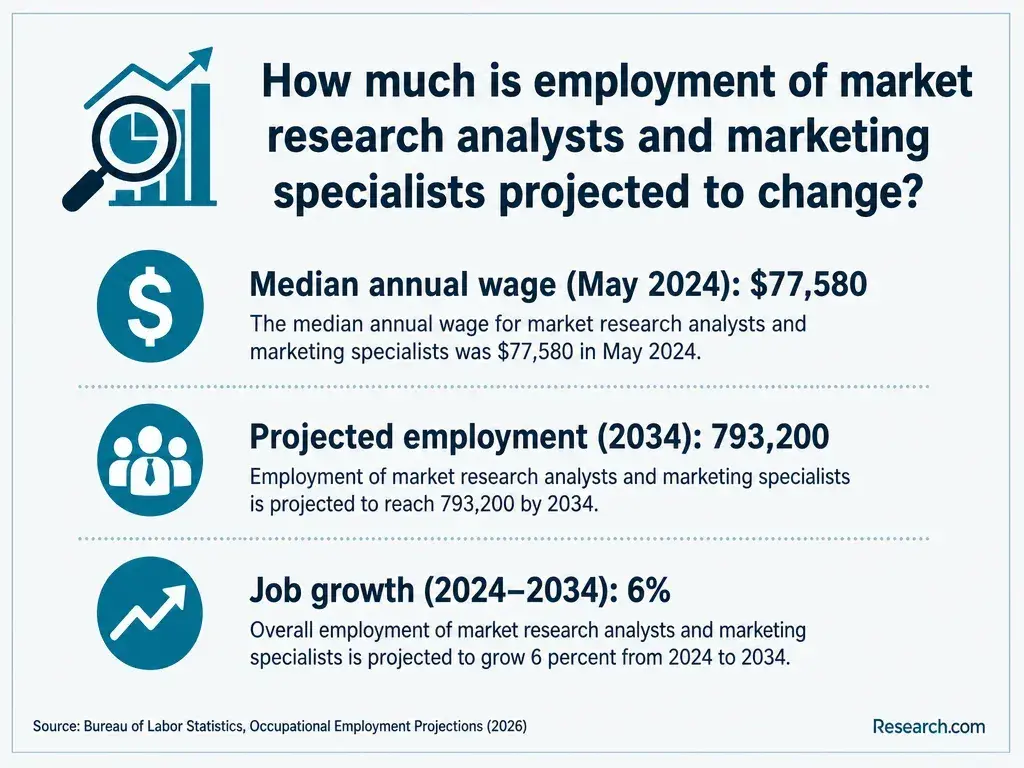
- As one relevant benchmark, U.S. market research analysts had a May 2025 median annual wage of $78,760 across the occupation - not a starting salary for customer experience graduates.
- Before choosing, confirm that each is an official concentration, which courses count toward your degree, and whether aviation projects or internships require on-site access.
What Is the Difference Between Customer Experience and Aviation Management?
Customer experience (CX) concerns the interactions people have with an organization before, during, and after a purchase or service. A CX concentration typically connects marketing, customer research, service design, and performance measurement. Aviation management applies business and operations principles to settings such as airports, airlines, and aviation-service firms, where schedules, safety procedures, regulations, and multiple operating partners shape decisions.
The distinction is business function versus industry. CX skills can transfer from a retailer to a hospital or airline, although each employer has its own systems and customers. Aviation management offers more industry context, but moving into another sector may require translating aviation-specific experience into general operations skills. Neither concentration is the same as pilot training or aircraft maintenance training.
If your interest is moving goods rather than running passenger or airport services, compare aviation coursework with supply chain study. Students focused on that alternative can examine shorter completion timelines for supply chain bachelor's students; program length still depends on applicable credits and course availability.
What Do You Learn in Each Business Administration Degree Concentration?
Both paths generally sit alongside a business core, which may include accounting, economics, statistics, marketing, finance, and management. The concentration's value lies in what it adds to that core. Actual course titles and required credits vary by school, so the catalog - not the concentration label - determines what you will study.
This comparison identifies the learning you should look for in each curriculum and the kind of work that could demonstrate it.
| Area | Customer experience | Aviation management |
| Typical focus | Customer journeys, service processes, research, retention, and feedback | Airport or airline operations, scheduling, service delivery, and aviation business practices |
| Analytical work | Interpreting surveys, complaints, and service measures while accounting for data limitations | Examining capacity, delays, resource use, and operational trade-offs |
| Useful applied work | A proposed journey map or service-improvement plan using permitted data | An operations case or process-improvement proposal grounded in aviation constraints |
A CX course should teach more than how to raise a satisfaction score: students need to assess whether feedback represents customers fairly and protect personal information. An aviation course should distinguish a classroom scheduling proposal from a change that an operator has authorized and checked against applicable procedures.
If your primary goal is supervising teams rather than improving customer interactions, compare completion times for organizational leadership degrees as an alternative. Check its curriculum as well; a leadership title does not necessarily provide CX research or aviation operations depth.
Which Career Paths Does Each Concentration Prepare You For?
Start with the work you want to do, not the word "management" in a concentration name. Entry-level hiring generally depends on the employer's requirements and evidence of relevant skills; supervisory roles commonly require demonstrated workplace responsibility.
CX graduates may pursue customer insights assistant, service quality coordinator, customer success associate, or marketing research support roles. The work can involve organizing feedback, identifying friction in a service process, preparing reports, and coordinating improvements. Customer success roles may also emphasize account relationships and product knowledge, which coursework alone may not supply.
Aviation management graduates may seek airport operations support, airline station coordination, aviation customer service supervision-track, or aviation business analyst support roles. Tasks can include coordinating schedules and vendors, documenting operational issues, and communicating across teams. Some airport operations or safety-related positions require particular training, background checks, shift availability, or prior airport experience.
There is overlap: an airline needs both good customer experiences and reliable operations. If you already work in aviation customer service, a CX concentration could deepen your research and improvement skills without changing industries. If your strongest experience is in retail service and you want to enter aviation operations, look for an aviation internship or relevant employment rather than assuming the concentration alone bridges that gap. Students drawn primarily to employee experience can instead investigate online HR degrees for transfer students; HR and CX serve different stakeholders and involve different responsibilities.
Online study can make the shared business core easier to fit around work, but delivery format matters most for the concentration's applied requirements. CX students may be able to complete research exercises and presentations remotely using approved or public data. Aviation students should check whether they can access relevant sites, practitioners, simulations, or an approved local internship without traveling to campus.
Campus study may offer easier access to local employers and in-person projects; it is not automatically a better route if those opportunities do not match your target role. Online courses are not necessarily self-paced: live meetings, group assignments, proctored exams, and fixed deadlines can still constrain a work schedule. For a comparison centered on staying employed, see flexible online study for business administration career growth, then verify the obligations of the specific courses you would take.
First verify that the institution holds accreditation recognized by the U.S. Department of Education. Then check whether its business school or the specific business program has applicable AACSB, ACBSP, or IACBE accreditation. These are different checks: institutional accreditation applies to the college or university, while business accreditation has a defined scope that may not cover every degree or location.
Accreditation does not prove that either concentration is available, that its courses run regularly, or that it leads to employment. Request the current catalog and confirm the official degree and concentration names, which business programs are covered, and whether requirements differ online. Apply the same check to alternatives: information about financial aid at low-cost project management schools is not a substitute for verifying the accreditation and scope of any program you consider.
Admission usually begins with the institution's undergraduate requirements, such as prior academic records. A school may separately require admission to its business major or completion of specified courses before students declare a concentration. Requirements for mathematics, statistics, accounting, GPA, and transfer standing vary; neither concentration has one universal admissions standard.
Transfer and returning students need an additional check: accepted credit is not necessarily credit applied to the business core or concentration. Ask for an official degree audit showing remaining general education, business, concentration, elective, and residency requirements. If your previous study was outside business, review prerequisites for a business administration degree, then obtain the receiving school's decision on your own courses before planning a graduation date.
A bachelor's degree commonly takes about four years of full-time study from the beginning. A transfer student's remaining time depends on credits applied to requirements, course sequencing, enrollment pace, and the frequency of concentration offerings. An aviation elective offered infrequently could delay completion even when it does not add credits; a CX option may be quicker only if its required courses fit your approved audit.
Compare total completion cost rather than tuition alone. Count remaining tuition and mandatory fees, books or software, travel or site visits, and the earnings or work hours affected by scheduling. No reliable price difference can be inferred from the concentration names. Economical business administration degrees with quicker study routes can provide options to investigate, but obtain a school-specific credit evaluation and cost estimate before assuming savings.
There is no single salary for either concentration: employers pay for particular occupations, responsibilities, experience, and locations, not the concentration label. The U.S. Bureau of Labor Statistics (BLS) reports a May 2025 median annual wage of $78,760 for market research analysts, an occupation that can overlap with customer insights work. BLS projects employment in that occupation to grow 7% from 2025 to 2035. The median covers workers at different career stages and is not an expected offer for a new CX graduate.
Aviation management leads to a wider mix of airport, airline, service, and operations titles, so a single occupational median would be misleading. Compare job postings for the exact role and location you want, including shift requirements and experience thresholds. When weighing earnings against education expense, explore affordable colleges for business study, but compare each program's likely remaining cost rather than treating occupation-wide wages as a personal return-on-investment forecast.
A CX concentration does not confer a professional license. Employers may value training in research methods, analytics software, customer-service systems, or service improvement, but requirements depend on the job. Likewise, an aviation management concentration is not a pilot certificate, aircraft maintenance credential, or authorization to perform regulated aviation duties. Particular airport or airline roles may involve employer training, security screening, or other role-specific requirements.
Check the duties and requirements of an actual job posting before paying for an additional credential. A voluntary project-management certificate, for example, may complement coordination work but cannot replace aviation-specific qualifications. If you are considering a separate degree for that goal, compare grants versus loans for project management bachelor's study before adding another education expense.
How Should You Choose Between Customer Experience and Aviation Management?
Choose customer experience if you want to investigate customer needs and improve service across possible industries. Choose aviation management if you want your business education grounded in airline, airport, or related operations - and can realistically gain industry exposure. Existing experience can change the answer: an aviation employee seeking broader career portability may benefit from CX, while a customer-service employee committed to airport operations may benefit from aviation coursework plus on-site experience.
Make the final comparison against a specific role. Read local job descriptions, identify the tasks you cannot yet demonstrate, and compare each school's required courses and approved applied opportunities against those gaps. Ask an adviser for an official degree audit and ask career services which aviation or CX employers students can access. If your target is general project coordination rather than either specialty, project management degree tuition comparisons can help you evaluate an alternative - but experience and job-specific skills still matter.
Other Things You Should Know About Business Administration
Yes. Airlines have customer research, service quality, and customer support functions. Aviation knowledge and relevant work experience may strengthen an application.
Possibly. The school decides whether each course meets a core, concentration, or elective requirement; an approved degree audit provides the answer.
Not universally. Relevant employment, an approved project, or an internship can provide evidence of skills, but only the program can say whether an internship is required for graduation.
Consider it if its required courses and industry access fit your target role better. Compare the actual curricula and remaining credits, not just the degree titles.
- Employment Projections - Labor Market Information - CA.gov https://labormarketinfo.edd.ca.gov/data/employment-projections.html
- Bachelor of Science Aviation Science and Management | mga.edu https://online.mga.edu/direct/programs/programs/aviation-science-and-management-bs.php
- Careers in customer experience: jobs for graduates in CX | Uncover IE https://www.ie.edu/uncover-ie/customer-experience-careers/
- Internships and Experiential Learning | suny.edu https://www.suny.edu/workforcedevelopment/internship/
- Bachelor of Science in Aviation Business Administration | erau.edu https://erau.edu/degrees/bachelor/aviation-business-administration
- Aviation Management Degree | 5 Top Career Paths & Salaries | Wayman Aviation https://wayman.edu/what-can-you-do-with-an-aviation-management-degree/
- College of Business Administration - Academic Catalog https://catalog.uic.edu/ucat/colleges-depts/business-administration/
- What is Customer Experience? | SNHU https://www.snhu.edu/about-us/newsroom/business/what-is-customer-experience
- Business administration vs. a Bachelor of Management | Chatham University https://www.chatham.edu/news-and-stories/blog/business-administration-vs-bachelor-of-management-degrees.html
- Online Bachelor's in Aviation Management Degree | Purdue Global https://www.purdueglobal.edu/degree-programs/aviation/bachelor-aviation-management/