2027 BS in Business Administration Transfer Planning: Credits from a College That Merged with Another Institution
Audited and Verified:
Our Editorial and Data Verification Process
Research.com uses government datasets, official education statistics and primary institutional information to support its career and degree guides. Our review process checks factual accuracy, occupational definitions, source dates and the requirements associated with the credentials discussed.
How This Article Was Fact-Checked
Our editorial team verifies salary estimates, employment projections, education requirements and program information against original data providers and official organizations. Salary figures are checked against the relevant occupational definitions and reporting periods. Information about licensure, accreditation and required in-person training is reviewed separately.
Fact-checked and verified on:

Co-Founder and Chief Data Scientist
A college merger can make an otherwise straightforward transfer harder to document. Your courses may appear under an institution that no longer exists, while the university offering your BS in Business Administration needs official records and enough detail to decide how each course fits its degree. This guide is for former students planning to finish a business bachelor's degree. It explains where to find records, how to distinguish accepted credits from completed requirements, and what to confirm before choosing a program or paying for another course.
Key Things You Should Know
- A merger does not erase completed coursework, but the receiving university - not the successor college - decides whether credits transfer and which BS requirements they satisfy.
- Request an official transcript for your original enrollment period and a written degree audit; a hypothetical 60 accepted credits do not necessarily mean only 60 credits remain.
- Before enrolling, confirm business prerequisites, upper-division and residency requirements, course availability, and the resulting cost and completion schedule.
What happens to your credits when a college merges with another institution?
Completed courses generally remain part of your academic record after a merger. What may change is the institution responsible for storing that record, issuing transcripts, and explaining older course numbers or catalogs. The successor might continue the original college's programs, incorporate some of them, or simply maintain its records; none of those arrangements automatically makes an old course equivalent to one offered today.
For transfer planning, separate the record from the credit decision. The successor or designated records custodian documents what you completed. The university where you want to earn the BS evaluates that work under its transfer and degree policies. If the successor offers a convenient completion route, compare its written credit evaluation with other ranked school options for studying business online rather than assuming the successor will preserve the most usable credit.
How can you transfer credits into a BS in Business Administration?
Apply to the receiving university and submit official records for each institution where you earned credit, including the predecessor college if its records are issued separately. A preliminary transfer estimate can help you screen programs, but the official evaluation and degree audit determine your working plan. Admission to the university, admission to the business major, acceptance of credits, and satisfaction of graduation requirements are separate decisions.
Use this sequence to turn an uncertain merger-era record into a plan you can check:
- Ask the transfer office which institution must issue your transcript and whether it needs predecessor-college course descriptions or catalogs.
- Request a course-by-course evaluation showing accepted credits and their placement in general education, business core, concentration, electives, or unused credit.
- Review the current catalog and audit with a business adviser for prerequisites, minimum grades, upper-division work, and credits that must be earned at the receiving university.
- If a relevant course becomes an elective, submit its syllabus and any historical catalog description through the school's substitution or transfer-appeal process; obtain the decision in writing.
- Ask for a term-by-term remaining-course plan before committing to enrollment.
If your prior study is concentrated in project scheduling and operations, compare the business degree's audit with online project management degrees for transfer applicants. The better option is the one that applies more of your coursework to requirements you actually need and fits your career goal - not necessarily the one that accepts the most electives.
Will an accredited university accept credits from a merged college?
Possibly, but neither the merger nor the receiving university's accreditation guarantees acceptance. The evaluator may examine the predecessor's accreditation when you attended, the level and content of your courses, grades, credit units, and its own transfer policies. A predecessor that was accredited at the time does not make every course an automatic match for the current business curriculum.
Check the predecessor and successor as distinct institutions when their names or accreditation histories differ. Confirm the receiving university's current institutional accreditation through the accreditor or the U.S. Department of Education's accreditation database. AACSB, ACBSP, or IACBE recognition, where applicable, concerns the stated business-school or program scope; it is not a substitute for checking institutional accreditation or your individual transfer evaluation.
Accreditation also matters when investigating aid, but aid eligibility depends on additional student and program rules. Use accredited business administration programs and federal student aid as a comparison starting point, then confirm current eligibility and accreditation directly with each school.
Start with the successor institution's registrar or transcript-ordering page. Give the name under which you enrolled, your attendance dates, any former student ID you have, and your current identification details. Ask specifically whether the successor issues transcripts for the predecessor or whether a separate records custodian does. If neither can locate the record, contact the relevant state higher-education agency for guidance on the predecessor's records location.
Order the official transcript using the receiving university's required delivery method; a downloaded student copy may help with advising but may not satisfy application rules. If course titles are too vague to establish an accounting, mathematics, or statistics equivalency, ask the records office or library for the historical catalog and gather any syllabus you retained. These materials can support an evaluation, but the receiving department decides equivalency. The school's prerequisites for a business administration degree are worth checking before you spend time reconstructing a course that the program does not require.
General education and introductory business courses are often the easiest to evaluate, but applicability depends on the receiving BS curriculum. A course may transfer as credit without replacing a required course, particularly when the program requires upper-division study or a specific quantitative sequence. This comparison shows the distinctions to look for in your audit - not a promise of equivalency.
| Prior coursework | Possible place in the BS | What may need closer review |
| Writing, communication, humanities, and social sciences | General education or electives | Required subject areas and minimum grades |
| Financial and managerial accounting; microeconomics and macroeconomics | Business foundation or prerequisites | Course content, sequence, and required level |
| Algebra, calculus, or statistics | Quantitative requirement or prerequisite | Specific mathematical topics and program rules |
| Marketing, management, information systems, or operations | Business core, concentration, or electives | Upper-division equivalency and department approval |
| Applied or occupational business courses | Potentially electives or approved substitutions | Whether their content meets an academic business requirement |
A logistics-heavy transcript might fit a specialized pathway better than a general business core. Compare the remaining courses and expense - not just accepted-credit totals - when considering supply chain program tuition time and earnings context. Also check how quarter credits convert if your original college used a quarter calendar.
Requirements vary by university and sometimes by business major. Expect to document prior college study through official transcripts; a school may also set GPA, minimum-grade, general education, or foundational business-course conditions. Some students can enter the university before they qualify for upper-division business coursework. Ask whether a missing prerequisite blocks admission, admission to the major, or only enrollment in a later course.
For a returning student, the most useful admissions question is whether the proposed start term leaves enough time to evaluate older coursework before registration. If you are comparing a business BS with a project-management bachelor's, review admission and aid conditions separately; an online project management undergraduate funding guide can help identify financing questions for that alternative, but it cannot establish your eligibility at either school. Submit records early enough to resolve missing prerequisites without paying for a course you may already have completed.
Your remaining required courses and their scheduling determine the timeline, not the number of credits on an acceptance letter alone. Many bachelor's programs are structured around roughly 120 semester credits, but a student with substantial accepted credit can still need several terms of upper-division business courses, prerequisites, a capstone, or credits earned at the degree-granting university.
Ask an adviser to map each remaining requirement to the terms when it is offered. Accounting or statistics may precede finance and analytics; a capstone may require completion of the business core. Part-time enrollment, unavailable classes, and limits on how many courses can be taken together can extend the calendar even when the remaining credit count looks manageable. Quick-completion business degree pathways are worth comparing only after each school has evaluated your credits and confirmed an achievable course sequence.
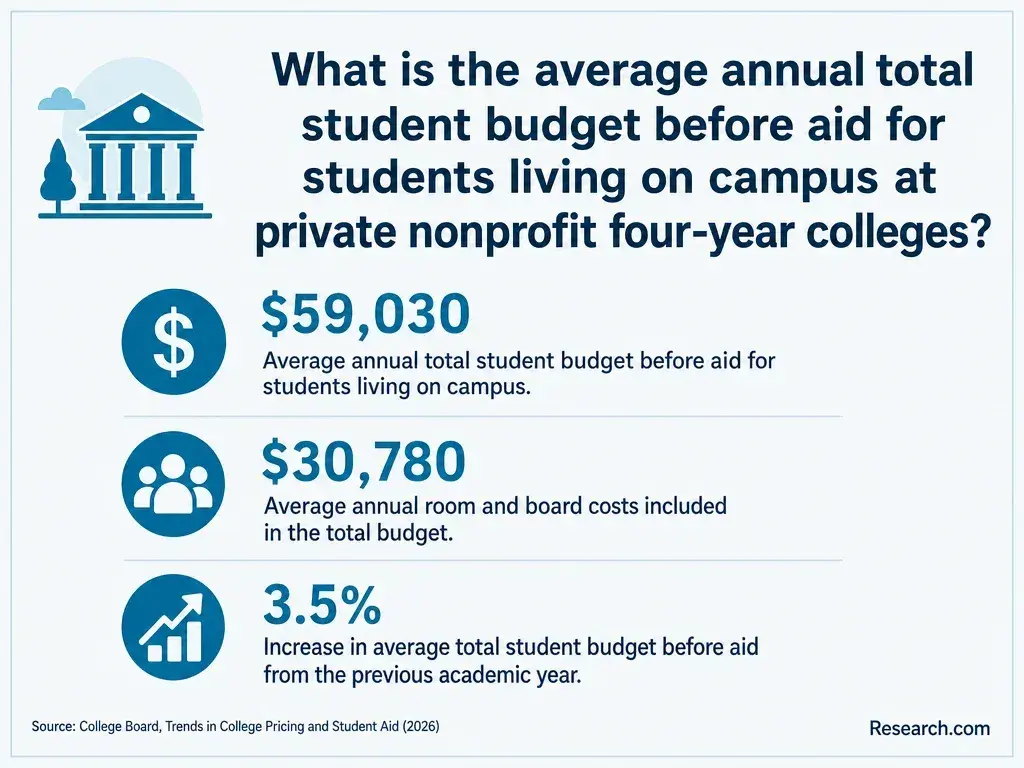
There is no reliable post-transfer price until a school identifies the courses you must still take. Calculate tuition using its actual charging model - per credit, course, or term - and add mandatory fees, books, software, and any travel or assessment costs. Then check whether an extra prerequisite, repeated course, or delayed capstone would require another paid term.
Compare written audits alongside published prices when reviewing the least expensive business administration schools. A lower advertised tuition rate can cost more overall if fewer credits satisfy degree requirements. Ask the financial-aid office how your enrollment intensity and remaining coursework affect aid eligibility, and treat employer reimbursement as a cash-flow benefit only after confirming its approval, grade, timing, and repayment rules.
A BS in Business Administration can support applications for business operations, HR, marketing, project coordination, and related roles, depending on your experience and the skills you can demonstrate. It does not itself qualify someone for a management position or a regulated professional credential. Prior work, internships, spreadsheets and data skills, and examples of sound business decisions matter alongside the degree.
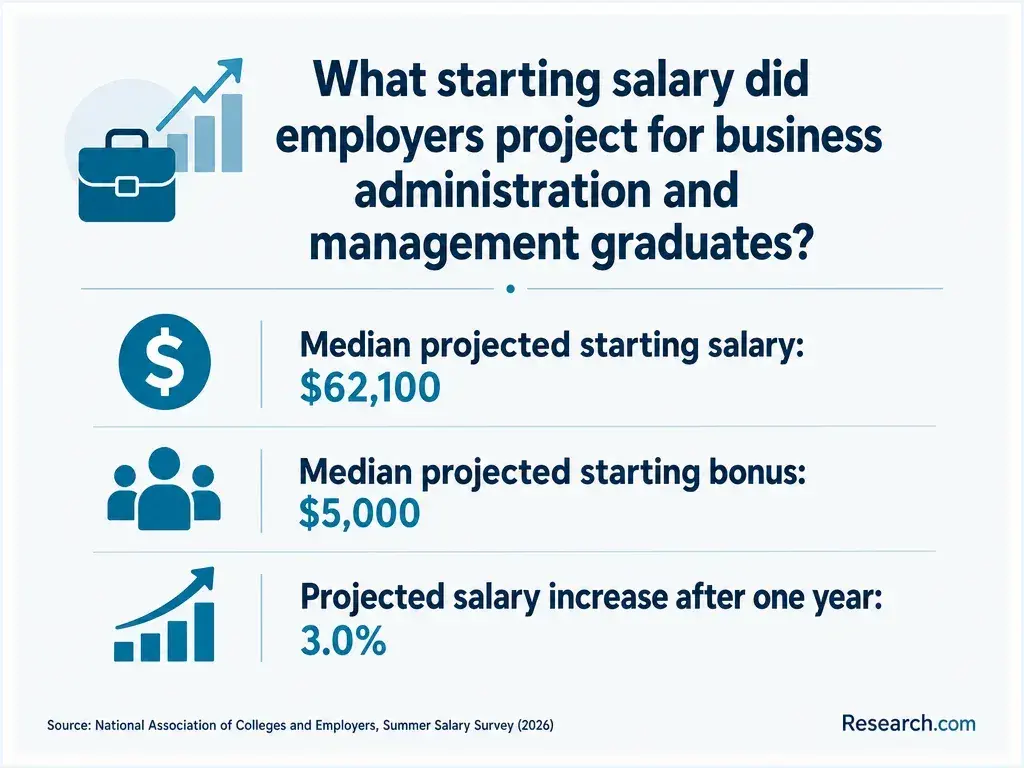
For context, the U.S. Bureau of Labor Statistics reports a May 2025 median annual wage of $75,940 for human resources specialists and projects 6% employment growth for that occupation from 2025 to 2035. That is an occupation-wide median, not an expected starting salary for a new business graduate; duties and employer requirements vary. If your merged-college credits and work history are chiefly in logistics, compare a general BS with supply chain undergraduate programs with shorter terms. A specialized curriculum may better support that goal, but shorter terms alone do not establish a faster or cheaper finish after transfer review.
How do you choose a reputable business administration degree program?
Prioritize the institution that gives you a credible, documented route to graduation. Verify its current institutional accreditation, exact degree title, business-program accreditation scope if advertised, and policies for older coursework. Request an official audit or the most definitive evaluation available before enrollment, and ask who can approve substitutions when a predecessor college's course numbering no longer matches current listings.
Then compare the remaining business courses, their frequency, online or campus attendance requirements, total cost, advising access, and realistic completion term. An accelerated calendar helps only if required courses are available in the right order and you can meet the workload. Use fast-track bachelor's degree options to identify formats to investigate, then confirm their transfer, scheduling, and graduation rules with the school itself. Keep copies of the evaluation and approved exceptions so your plan remains clear if advisers or catalogs change.
Other Things You Should Know About Business Administration
Usually, an existing diploma remains a record of the institution that awarded it. Ask the records custodian how it verifies awards issued under the predecessor's name.
Use the name that appears on your academic record or diploma. If helpful, add a brief parenthetical noting the successor institution so an employer can verify it.
Do not count on it. The receiving university's repeat-course and duplicate-credit policies determine whether both attempts earn credit and how grades are treated.
You can still request its academic record and seek course-by-course transfer evaluation. A completed credential is not required for individual college courses to be considered.
- School-Determined Requirements - FSA Partner Connect https://fsapartners.ed.gov/knowledge-center/fsa-handbook/2025-2026/vol1/ch1-school-determined-requirements
- Definitions | Transfer Credit Ohio https://transfercredit.ohio.gov/educational-partners/educational-partner-initiatives/articulation-transfer-policy-policy/articulation-transfer-policy-definitions
- Transfer Dispute - Texas Higher Education Coordinating Board https://www.highered.texas.gov/transfer-dispute/
- .14 Evaluation and Review Process for Transfer of Courses and Credits. | Library of Maryland Regulations https://regs.maryland.gov/us/md/exec/comar/13B.06.02.14
- Student Records and Privacy FAQs | ed.gov http://www.ed.gov/about/contact-us/faqs/Student%20Records%20and%20Privacy
- Transcripts from Closed Colleges | New York State Education Department https://www.nysed.gov/college-transcripts
- Course Work Taken Elsewhere - USC Catalogue https://catalogue.usc.edu/content.php
- College of Business Administration - Academic Catalog https://catalog.uic.edu/ucat/colleges-depts/business-administration/
- Transcripts & Verification - University Registrar https://www.registrar.pitt.edu/transcripts-verification
- Transfer Credit for Undergraduate Students (Policy 31) | Governors State University, an Illinois Public University https://www.govst.edu/policies/transfer-credit-undergraduate-students