2027 BS in Business Administration Curriculum: How to Evaluate Preparation in Spreadsheet Modeling
Audited and Verified:
Our Editorial and Data Verification Process
Research.com uses government datasets, official education statistics and primary institutional information to support its career and degree guides. Our review process checks factual accuracy, occupational definitions, source dates and the requirements associated with the credentials discussed.
How This Article Was Fact-Checked
Our editorial team verifies salary estimates, employment projections, education requirements and program information against original data providers and official organizations. Salary figures are checked against the relevant occupational definitions and reporting periods. Information about licensure, accreditation and required in-person training is reviewed separately.
Fact-checked and verified on:

Co-Founder and Chief Data Scientist
A course catalog may promise "business analytics" without showing whether students actually build a usable spreadsheet model. That distinction matters if you are choosing a BS in Business Administration to prepare for budgeting, forecasting, or operations work.
This guide explains what competent modeling looks like, where it should appear in the curriculum, and how to assess assignments, online instruction, and program claims. You can use its questions to compare programs against the work you want to do, not just the software listed in a course description.
Key Things You Should Know
- Look for repeated, assessed modeling work: students should build a model, test assumptions, check errors, and explain a business decision, not merely complete spreadsheet tutorials.
- Strong assignments separate inputs, calculations, and outputs; use sensitivity analysis; and make results reproducible. A spreadsheet course title alone does not establish those skills.
- Match the models to your target function and verify actual syllabi and project rubrics. Occupation-wide wages, such as the $82,320 May 2025 median for logisticians, are not expected starting salaries for business graduates.
What Is Spreadsheet Modeling in a Business Administration Degree?
Spreadsheet modeling means structuring business inputs, calculations, assumptions, and outputs so someone can examine a decision. A student might estimate monthly cash needs, compare staffing schedules, or forecast inventory under different demand levels.
The useful product is not a polished grid: it is a model whose logic can be checked and whose assumptions can be changed without rebuilding it.
That is more demanding than spreadsheet literacy, which may involve entering data, formatting cells, and making charts. It is also narrower than professional financial modeling, statistical analysis, or database engineering.
A BS in Business Administration can provide a foundation, but its quantitative depth varies by school. If you already have a degree and need only one modeling skill, compare the cost and time of a targeted course with the cost-to-finish for shorter business administration programs before committing to another bachelor's degree.
How Does a Business Administration Curriculum Teach Spreadsheet Modeling?
Effective curricula build the skill in stages. An introductory course establishes formulas and data handling; accounting, statistics, and finance supply business meaning; later assignments ask students to make and defend decisions.
The key progression is from following prescribed steps to choosing inputs, documenting uncertainty, and explaining what would change a recommendation.
Check sequencing rather than assuming an analytics elective will be available when you need it. A finance model may depend on prior accounting, while an operations elective may require statistics.
If you are comparing an accelerated schedule, including accelerated undergraduate supply chain programs, ask whether its shorter calendar still leaves room for prerequisite courses, feedback, and revision of modeling work.
What Spreadsheet Modeling Skills Should Business Graduates Demonstrate?
For an entry-level business role, a credible work sample should demonstrate more than formula recall. The student should be able to identify the decision, use appropriate units and time periods, distinguish observed figures from estimates, and explain limitations to a nontechnical reader.
Use these capabilities as a checklist when reviewing learning outcomes or sample assignments:
- Structure: Separate source data, adjustable assumptions, calculations, and decision-ready outputs.
- Calculation: Use appropriate formulas and references consistently, with checks that expose missing values or implausible results.
- Interpretation: Distinguish revenue from profit and accounting earnings from cash flow when the decision requires it.
- Uncertainty: Test plausible changes in important assumptions rather than reporting one forecast as a certain outcome.
- Communication and governance: Explain the recommendation, data limitations, and any restrictions on sharing organizational information.
If your target is specifically project scheduling or cost control, compare the modeling assignments with those in online project management degrees with lower tuition. A general business curriculum may offer broader context, while a specialized program may devote more assignments to your target function.
Course names are clues, not proof. This comparison shows the kinds of modeling evidence to seek in syllabi or assessed projects; a program may distribute the work differently:
| Course area | Useful modeling evidence | What it does not establish by itself |
| Accounting and managerial finance | Cash budgets, cost behavior, or scenario-based financial forecasts | Professional accounting or investment-modeling expertise |
| Statistics and business analytics | Data cleaning, summary analysis, forecast evaluation, and discussion of uncertainty | That a forecast proves what caused an outcome |
| Operations and supply chain | Capacity, inventory, staffing, or purchasing comparisons | Experience managing a live operation |
| Marketing or human resources | Campaign-budget scenarios or workforce-cost estimates using clearly defined assumptions | Access to confidential customer or employee records |
An HR-focused student, for example, might benefit from workforce budgeting but should assess whether the additional coursework justifies its price; the costs of an HR degree provide a separate comparison point.
Ask whether the desired modeling course is required, an elective, or part of an officially designated concentration. An elective does not automatically create a concentration.
Request an anonymized assignment prompt, grading rubric, or sample of permitted student work. A useful test is whether another person could change an input, trace the calculation, and understand why the recommendation changes. A hypothetical case is legitimate practice; it should not be presented as measured improvement at a real company.
Review the assignment in this order so an attractive dashboard does not conceal weak reasoning:
- Identify the decision-maker, business question, time horizon, and units being modeled.
- Check where inputs came from and whether estimates are labeled and justified.
- Inspect formula consistency, error checks, and separation of assumptions from outputs.
- Look for sensitivity testing and an explanation of what the model cannot establish.
- Confirm that the final recommendation addresses costs, risks, and stakeholder needs.
A workplace project requires permission to use company data and may need academic approval; a classroom case does not confer either. If you are weighing a specialized project-management degree instead, compare project depth alongside total cost and project management undergraduate scholarship comparisons, rather than judging programs by a single impressive assignment.
They can, if students receive substantive feedback on their files and reasoning. Online delivery is not itself evidence of either strong or weak modeling instruction.
Ask whether faculty inspect formulas or only final answers, whether students revise models after feedback, and how group contributions are assessed.
Also confirm the required software and version, access to spreadsheet applications, file-submission rules, accessibility support, and any live presentations or proctored assessments. An asynchronous lecture can still come with fixed team meetings and deadlines.
For students modeling while employed, guidance on how to balance employment and business administration college study is useful only after checking the actual weekly commitments of the courses under consideration.
Accreditation can help establish that a school or business program undergoes external review, but it is not a guarantee that graduates can build spreadsheet models. Institutional accreditation and business-school or programmatic accreditation have different scopes.
AACSB, ACBSP, and IACBE review business education under their respective standards; none should be treated as a certificate of proficiency in a particular spreadsheet application.
Verify the institution's accreditation and whether the specific business program is within any claimed business accreditor's scope. Then examine the curriculum and assessment evidence: Where is quantitative reasoning taught? Which assignments require a working model? How are student results evaluated?
When comparing lower-cost business degree options, make these checks alongside price; an accreditation label alone cannot settle the modeling question.
Admission requirements depend on the institution and whether you enter as a first-year, transfer, or returning student. Schools may distinguish admission to the university from admission to the business major.
Mathematics placement, introductory accounting, statistics, or other prerequisites may affect when you can take modeling-intensive courses even if they are not conditions of university admission.
Ask admissions and the business adviser for the current catalog requirements and a course sequence. If you have prior credits, obtain an official evaluation showing whether quantitative courses satisfy prerequisites or count only as electives; acceptance of credit is not the same as fulfillment of a business-core requirement.
A student considering HR-related coursework can use HR bachelor's transfer credit evaluation as a comparison, but the institution you attend has final authority over its own degree audit.
Modeling is useful in financial analysis, budgeting, operations, supply chain, and project coordination, but the responsibilities differ. An entry-level employee might maintain a forecast or compare scenarios under supervision; owning a major budget or directing an operation generally requires additional experience and authority.
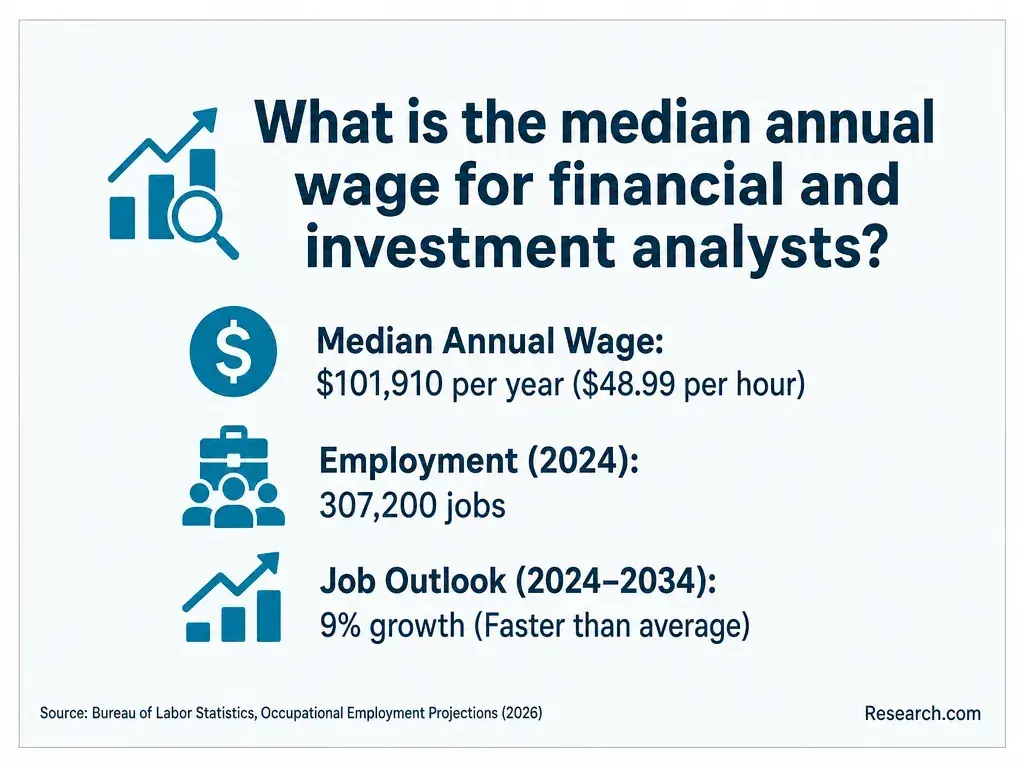
For salary context, the U.S. Bureau of Labor Statistics reports a May 2025 median annual wage of $82,320 for logisticians and $102,740 for financial and investment analysts. These are occupation-wide medians, not salaries promised to new BS in Business Administration graduates.
Use them to identify roles worth researching, then examine local postings for required experience, technical tools, and degrees.
If supply chain is your target, compare the general business route with supply chain degree duration and salary considerations; a specialized curriculum may provide more relevant modeling practice, while the general degree may preserve broader options.
Which Certifications Strengthen Spreadsheet Modeling Preparation?
A spreadsheet-software certification can provide separate evidence that you know specified application features. It is most useful when a target employer names that software and you can pair the credential with a model showing business judgment.
A certificate or exam does not substitute for accounting knowledge, sound assumptions, or experience interpreting results.
Check the certifying organization's current exam objectives, software version, fees, and renewal terms before enrolling. If the skill gap is narrow, a targeted course and assessed project may be more direct than a second degree.
If you still need the bachelor's credential, compare its complete course sequence, not just its advertised speed, with bachelor's degrees with compressed schedules. Faster scheduling does not necessarily mean more modeling practice or a lower total cost.
Other Things You Should Know About Business Administration
That depends on the course and employer. The more transferable evidence is a model with clear logic, checks, and assumptions; confirm the required software before enrolling or submitting work.
Not for every business model. Comfort with algebra, percentages, and basic statistics helps, while finance or analytics courses may have additional prerequisites set by the school.
Usually, if you have the right to share its data and materials. Label hypothetical work clearly and remove confidential information; check course, employer, and intellectual-property rules first.
It may help draft or explain formulas if course rules permit it. You remain responsible for testing the calculations, protecting data, documenting permitted assistance, and defending the model's conclusions.
- Rubric Best Practices, Examples, and Templates | Teaching Resources https://teaching-resources.delta.ncsu.edu/rubric_best-practices-examples-templates/
- Getting Started with Spreadsheet Modeling and Business Analytics - eCornell https://ecornell.cornell.edu/courses/data-science-analytics/getting-started-with-spreadsheet-modeling-and-business-analytics/
- Dr. Sam Pack College of Business - Tarleton Catalog https://catalog.tarleton.edu/undergrad/collegeofbusinessadministration/
- Academic Program Assessment | Institutional Effectiveness https://ie.web.baylor.edu/assessment/academic-program-assessment
- QST IS 879 " Academics | Boston University https://www.bu.edu/academics/questrom/courses/qst-is-879/
- Authentic Assessments | University of Illinois Chicago https://teaching.uic.edu/cate-teaching-guides/assessment-grading-practices/authentic-assessments/
- Advanced Spreadsheet Skills for Financial Analysis | Coursera https://www.coursera.org/learn/advanced-spreadsheet-skills-for-financial-analysis