2027 Online BS in Business Administration Admissions with A Retaken Course Still Showing on the Original Transcript: What to Check
Audited and Verified:
Our Editorial and Data Verification Process
Research.com uses government datasets, official education statistics and primary institutional information to support its career and degree guides. Our review process checks factual accuracy, occupational definitions, source dates and the requirements associated with the credentials discussed.
How This Article Was Fact-Checked
Our editorial team verifies salary estimates, employment projections, education requirements and program information against original data providers and official organizations. Salary figures are checked against the relevant occupational definitions and reporting periods. Information about licensure, accreditation and required in-person training is reviewed separately.
Fact-checked and verified on:

Co-Founder and Chief Data Scientist
A retaken course can improve your academic record without disappearing from your original college transcript. If you are applying to an online BS in Business Administration, that distinction matters: the receiving school may make separate decisions about admission, GPA calculation, and whether the course satisfies a degree requirement. This guide explains what to submit, which repeat-course policies to check, and what to ask before you commit to a program or register for another class.
Key Things You Should Know
- Yes, you can generally apply while an earlier attempt remains on your transcript; disclose both attempts and let the receiving college determine how it evaluates them.
- A replacement grade on your former college's GPA does not automatically replace the original grade in an applicant GPA or satisfy a business prerequisite.
- Check three decisions separately: admission, transfer-credit award, and application of the retaken course to the business degree.
What does an online BS in Business Administration admissions process involve?
Online applicants typically complete an institutional application, report previous education, and arrange for required academic records. A school may then review general admission eligibility separately from entry into its business major. An admission offer is not a final ruling that a repeated accounting, mathematics, or statistics course meets a major requirement.
Before paying to apply, ask which applicant category applies to you - first-year, transfer, returning, or second-degree - and whether the online program has separate GPA or prerequisite rules. Applicants weighing several schools can compare no-fee college applications, but an application-fee waiver does not waive transcript or academic requirements.
Can you apply with a retaken course still listed on your original transcript?
Usually, yes. An original transcript is a historical record, not a document you edit to remove an unsuccessful attempt. A repeat may appear beside the first attempt on the same transcript, or it may appear on a second institution's transcript if you retook the course elsewhere. Schools decide whether and how each grade counts; you should not omit a college because its course did not transfer or because a later grade was better.
If the repeat is still in progress, ask whether the school will review your application now and what deadline applies to the final grade. If the original course was a required prerequisite, a conditional admission decision may not mean you can enroll in the next business course immediately. For a broader view of possible prerequisites, consult the business administration degree admissions requirements guide, then confirm the rule for your intended program.

How do colleges evaluate repeated courses and replacement grades?
"Grade replacement" can mean only that your original college excludes an earlier grade from its own GPA. The receiving college may use a different admissions GPA, consider all attempts, accept only the later attempt for credit, or apply its own prerequisite-grade threshold. Its published policy - and, where necessary, a written evaluation - controls your case.
The distinctions below explain why a better grade does not by itself settle a transfer decision.
| Question | Possible treatment | Who to ask |
| Does the earlier grade affect admission? | The school may calculate an applicant GPA differently from the GPA printed by your former college. | Admissions office |
| Does the repeat earn transfer credit? | Course content, grade, credit level, and repeat limits may affect the award. | Transfer-credit or registrar's office |
| Does it satisfy the business degree? | Accepted credit may count as an elective rather than a required accounting, math, or business course. | Business adviser or department |
Ask how the school handles a repeat completed at another institution, especially if the courses have different titles or credit values. Equivalency can also depend on the intended major: guidance on transfer credit evaluations for project management majors illustrates why a credit decision for one degree should not be assumed to apply to a business administration program.
Follow the receiving school's instructions for official transcripts from every college it requires you to report, including the college where you first took the course and a different college where you repeated it. An unofficial copy may help an adviser give preliminary guidance, but it may not complete an application or final transfer review.
Gather the following records before requesting a ruling so the school can identify the two attempts accurately:
- Both transcripts, showing the original and repeated course, grades, credits, and completion dates.
- Course descriptions or syllabi if the titles, content, or credit systems differ.
- The former college's published repeat or academic-renewal policy, if it explains a GPA notation.
- A current degree audit or written evaluation identifying where accepted credit would apply.
Ask admissions whether pending official records delay a decision, and ask the transfer office when its evaluation becomes final. Transcript evaluation is also distinct from a financial-aid application. For funding questions, use FAFSA planning for affordable business administration study alongside a conversation with the school's aid office about your enrollment and eligibility.
There is no single testing rule for online BS in Business Administration applicants. A school may use different policies for first-year and transfer applicants, and a program can require placement or prerequisite assessment even when it does not require an admissions test. A stronger repeat grade should not be assumed to waive any test the school actually requires.
Check the requirements for your applicant category and entry term, then ask whether prior college credits change them. Faster scheduling is a separate feature: when reviewing American colleges offering fast-track business bachelor's, verify testing rules independently of the advertised completion pace.
Verify the college's institutional accreditation with the accreditor and confirm that it covers the institution awarding the online degree. Then, if the school advertises AACSB, ACBSP, or IACBE accreditation, check the accreditor's listing for its actual scope. Institutional accreditation and business-school or programmatic accreditation answer different questions; neither resolves your repeat-course evaluation.
Accreditation is an essential check when you explore cheaper business administration college programs, but price and accreditation alone are not enough. Confirm the exact degree name, online availability, and the school's written transfer and repeat policies before comparing offers.
A BS in Business Administration commonly combines general education with subjects such as accounting, economics, finance, marketing, management, operations, and quantitative reasoning. Requirements vary. For an applicant with a repeated course, the useful question is not simply whether it transfers, but whether it clears a prerequisite or reduces the courses still needed for the business core.
Review the degree audit for course sequencing. A retaken statistics course accepted only as an elective may leave a required quantitative course outstanding. If your main goal is a specific function, compare the general business curriculum with a specialized path; what to expect from an HR degree is useful context for someone deciding whether broad business study or deeper HR coursework better fits their plans.
Your remaining time and cost depend on the requirements still unmet, not just the number of credits a school accepts. A repeated course might resolve a prerequisite, add elective credit, or award no additional credit because the first attempt already received credit. Major-course sequencing, residency requirements, and how often required online classes run can also change the finish date.
Request a degree audit and a term-by-term plan before comparing tuition. Include fees, books, technology, and the cost of any course you must take again; ask the financial-aid office how your planned enrollment affects aid. Programs with online business degrees with compressed terms may offer a shorter calendar path, but compressed classes do not erase prerequisite or workload requirements.
A business administration degree can support applications for roles in operations, marketing, HR, and other business functions, depending on your experience and demonstrated skills. It does not automatically qualify you for management or a regulated professional credential. If a repeated course affects access to a concentration or internship, consider that practical consequence as well as the credit count.
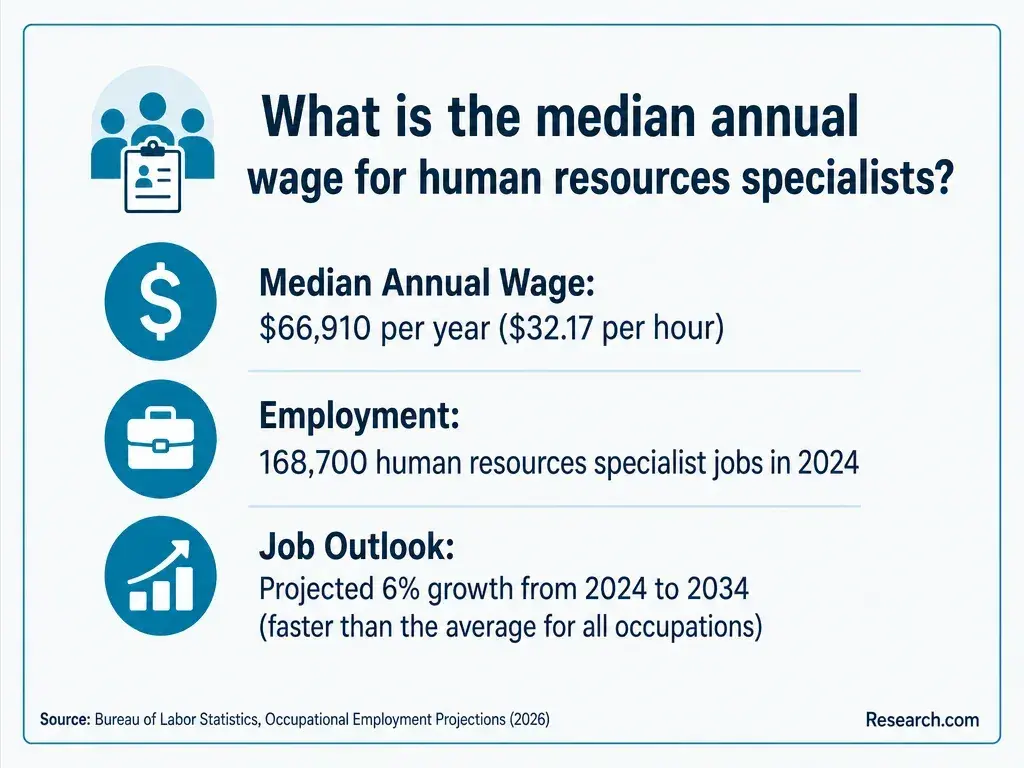
For context, the U.S. Bureau of Labor Statistics reports a May 2025 median annual wage of $75,940 for human resources specialists and projects 6% employment growth from 2025 to 2035. That is an occupation-wide median, not an expected starting salary for a business graduate. If your target is procurement or logistics instead, compare the curriculum and costs against more focused supply chain education costs and career prospects.
How should you compare reputable online business administration programs?
For this admissions situation, the best comparison is a written, course-level evaluation from each school - not a general promise to accept transfer credits. Request the same documents and ask the same questions so differences in policy are visible.
Use this sequence before enrolling or retaking the course yet again:
- Ask admissions whether both attempts affect eligibility or applicant GPA, and whether it can decide while the repeat is pending.
- Ask the transfer office which attempt earns credit and whether it needs syllabi or additional records.
- Ask a business adviser whether that credit meets the exact prerequisite or degree requirement, and obtain an updated audit.
- Compare remaining courses, their availability, total expected charges, and the school's appeal process if the evaluation seems incorrect.
If your goal is specifically project coordination rather than broad business preparation, compare the remaining business requirements with cheapest accredited online project management options. Do not assume either pathway will accept the repeated course in the same way; the receiving institution has final authority over its degree requirements.
Other Things You Should Know About Business Administration
Not necessarily. Academic renewal may change how the original college calculates its GPA while leaving the attempt visible. Ask the receiving school how it treats the notation.
Ask whether the receiving school accepts pass-graded credit for that specific requirement. A pass may earn credit without demonstrating the minimum letter grade required for a business prerequisite.
Wait for guidance unless a published requirement clearly makes another attempt necessary. A further repeat could add cost without improving admission or degree progress.
It may. Second-degree applicants can face different general education, transfer, and residency rules. Request a degree audit for the exact BS in Business Administration rather than assuming the earlier degree clears every requirement.
- Grades and Grade Points | University of Alabama https://catalog.ua.edu/undergraduate/about/academic-regulations/records/grades-grade-points-gpa/
- Transfer Credit Evaluation - TXST Admissions https://www.admissions.txst.edu/future-students/transfer-credit-evaluation.html
- Repeating Coursework | Office of Scholarships & Financial Aid https://financialaid.arizona.edu/policies/repeat-coursework
- MBA Application Tips: Transcripts and the Academic Record | The University of Chicago Booth School of Business https://www.chicagobooth.edu/why-booth/stories/app-process-transcripts
- Transfer Credit Policy - Office of the Registrar - Lafayette College https://registrar.lafayette.edu/additional-resources/transfer-credit-2026/
- Transfer credit policies - Office of Admissions https://admit.washington.edu/apply/transfer/policies/
- Repeat Notations - Office of the University Registrar (OUR) https://registrar.ucdavis.edu/faculty-staff/itg/repeat
- Credentials and Evaluation: Transfer Credit | edmonds.edu https://www.edmonds.edu/student-services/transcripts-and-graduation/transcripts/transfer-credit.html
- Repeating a Course & Grading for Repeated Courses | University of Arizona Office of the Registrar https://registrar.arizona.edu/records-enrollment/enrollment/how-register-classes/repeating-course-grading-repeated-courses
- Repeating Courses - UC Berkeley - L&S Advising https://lsadvising.berkeley.edu/policies/repeating-courses