2027 From Bookkeeping to Financial Analysis: When Does a BS in Business Administration Make Sense?
Audited and Verified:
Our Editorial and Data Verification Process
Research.com uses government datasets, official education statistics and primary institutional information to support its career and degree guides. Our review process checks factual accuracy, occupational definitions, source dates and the requirements associated with the credentials discussed.
How This Article Was Fact-Checked
Our editorial team verifies salary estimates, employment projections, education requirements and program information against original data providers and official organizations. Salary figures are checked against the relevant occupational definitions and reporting periods. Information about licensure, accreditation and required in-person training is reviewed separately.
Fact-checked and verified on:

Co-Founder and Chief Data Scientist
Bookkeeping gives you a close view of transactions, but financial analysis asks you to explain results, test assumptions, and help others make decisions. If you already work with accounts or reports, a BS in Business Administration might help you make that transition - or it might be broader than you need.
This guide compares degree paths, the skills employers may expect, and the time and cost of finishing a bachelor's degree so you can choose a practical next step.
Key Things You Should Know
- A BS in Business Administration makes the most sense when you need a bachelor's credential and broader finance, accounting, and analytical preparation - not just stronger bookkeeping software skills.
- A specialized accounting or finance degree may be the better route if your target jobs consistently require deeper coursework in that function.
- The U.S. median annual wage for financial and investment analysts was $102,740 in May 2025, but that occupation-wide figure is not an expected starting salary for a bookkeeper changing roles.
What Is a Business Administration Bachelor's Degree?
A BS in Business Administration is an undergraduate degree covering how organizations manage money, people, operations, and customers. Programs usually combine general education with a business core and may offer finance, accounting, or analytics electives or a formal concentration. The BS label does not guarantee a particular level of quantitative study; compare actual course requirements rather than degree titles alone.
For a bookkeeper, its value lies in connecting accurate records to budgeting, performance measurement, and business decisions. A BBA may serve a similar purpose, while an accounting or finance bachelor's may provide more subject-specific depth. If your goal is instead project coordination, a specialized path may be worth comparing with low-cost project management degree options.
When Does a BS in Business Administration Make Sense?
The degree is a strong option when your target analyst or business-operations jobs prefer a bachelor's degree, you want room to move among functions, and the program lets you build substantial accounting, finance, statistics, and spreadsheet skills. It is less compelling if you already have a bachelor's degree and only lack a few technical skills, or if the jobs you want consistently specify an accounting or finance major.
This comparison focuses on the decision a working bookkeeper faces: how much additional breadth, depth, and credential value each route provides.
| Route | Best fit | Main limitation |
| BS in Business Administration | You need a bachelor's degree and want finance skills alongside broader business knowledge. | Finance or accounting depth depends on electives and concentration requirements. |
| Accounting or finance bachelor's | Your target roles call for substantial, function-specific coursework. | A change of major may add required courses or extend completion time. |
| Targeted courses and workplace projects | You already meet degree expectations and need to demonstrate specific analytical skills. | They may not satisfy an employer's bachelor's requirement. |
Before enrolling, collect several job postings you would realistically pursue and note their degree preferences, required tools, and experience expectations. Then request a degree audit showing which of your existing credits satisfy requirements - not merely which credits a school accepts. If completion speed matters, compare cost-to-finish for shorter business administration programs using your evaluated remaining courses rather than an advertised program length.
What Jobs Can You Get With a Business Administration Degree?
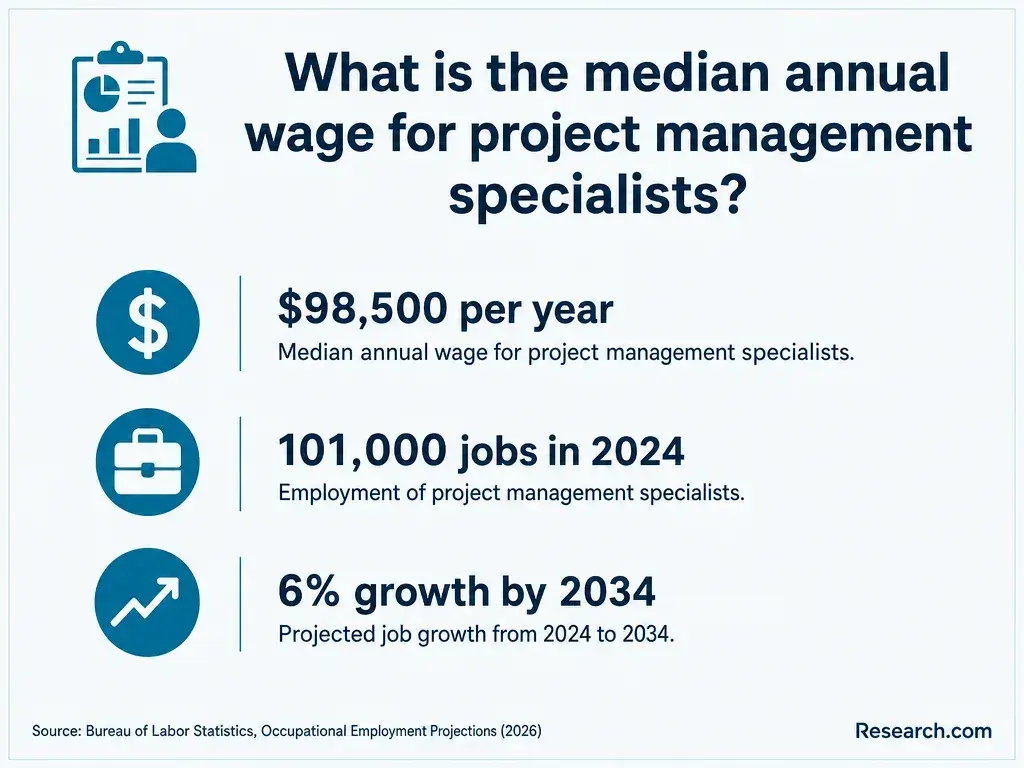
A bookkeeper's closest next steps may include budget or financial reporting support, junior business analyst work, or operations roles involving costs and performance reports. A financial analyst role is a larger step: employers may expect forecasting, financial modeling, industry knowledge, and the ability to explain recommendations - not just accurate transaction entry. Titles vary, so compare duties in actual postings.
The U.S. Bureau of Labor Statistics projects 7% employment growth for financial and investment analysts from 2025 to 2035. That outlook describes the occupation, not the likelihood that a new business administration graduate will be hired. Your strongest application evidence may be a supervised budget comparison, a clearly documented forecast, or a report explaining why actual spending differed from a plan.
Business administration can also support a change into other functions, but bookkeeping experience does not automatically establish readiness for them. For example, someone considering an HR pivot should compare role requirements and HR education costs and career planning rather than assume any business bachelor's provides equivalent preparation.
For this transition, look beyond a course named "finance." Useful preparation includes financial and managerial accounting, financial statements, budgeting, statistics, economics, and spreadsheet-based analysis. A sound assignment should require you to explain assumptions and limitations, not simply produce a chart. Bookkeeping records describe what was entered; analysis may also require accrual adjustments, comparisons over time, and estimates of what could happen next.
Check whether advanced courses have prerequisites and whether the program offers an approved project using suitable data. If the available concentration is largely in another function, such as logistics, accelerated undergraduate supply chain programs may be relevant to an operations goal, but they are not a substitute for finance-focused coursework when financial analysis is the aim.
A bachelor's degree commonly takes about four years of full-time study from the start. A working bookkeeper may finish sooner with applicable prior credits or take longer while studying part time. The decisive number is not credits accepted in total: it is the courses still needed for general education, the business core, prerequisites, any concentration, and the school's residency requirement.
Ask for a term-by-term plan that accounts for course availability and prerequisite order. An accelerated calendar does not eliminate the work required in each course. Ranked online business bachelor's completion routes can help identify programs to investigate, but only the receiving school can determine how your coursework applies to its degree.
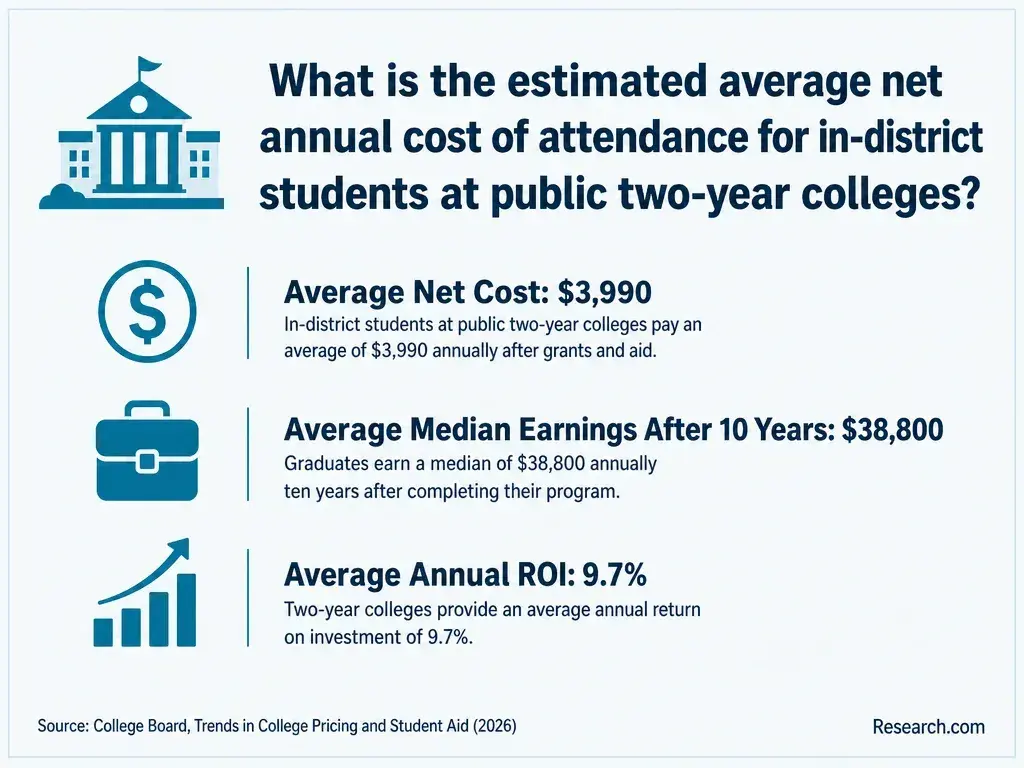
There is no reliable single price for this decision. Compare the tuition for remaining required credits, mandatory fees, books and software, and any travel or proctored assessments. Add borrowing costs and potential lost work hours. A cheaper advertised tuition rate can still produce a higher completion cost if more of your prior coursework counts only as electives.
Request written estimates under the same enrollment pace from each school, and check when employer reimbursement is paid and what conditions apply. You can compare the least expensive business administration schools to build a shortlist, then replace advertised prices with estimates based on your official credit evaluation and aid offer.
Requirements vary by institution and by whether you apply as a first-year or transfer student. Schools commonly request prior transcripts; some business majors have separate entry or prerequisite rules. Previous bookkeeping work can strengthen your case for the program, but it does not automatically replace college accounting, mathematics, or statistics requirements.
Send transcripts before assuming you must repeat introductory coursework, and ask admissions whether business-major entry is separate from university admission. If application costs affect where you can apply, fee-free applications for online college may help you identify options; confirm each school's current policy before applying.
An online degree can serve the same academic goal when the institution is appropriately accredited and the curriculum develops the skills your target roles require. Delivery mode alone does not establish quality. For a working bookkeeper, the more useful comparison is whether you can complete quantitative assignments, obtain feedback, and access projects or career support while keeping your job.
Check live-session times, group-project schedules, exam rules, software access, and whether required courses run when you need them. Online does not necessarily mean self-paced. If keeping your current position is essential, evaluate how to balance employment and business administration college study against your actual work calendar.
First, verify the institution's current accreditation with its accreditor and confirm that the degree, delivery format, and any advertised concentration are actually offered. Institution-level accreditation and business-school or programmatic accreditation - such as AACSB, ACBSP, or IACBE - have different scopes. Check whether any business accreditation covers the program you would enter rather than assuming it does.
Next, compare required finance and accounting courses, transfer-credit application, course schedules, and access to applied work. Budget-friendly online business schools can provide candidates for review, but price and accreditation alone cannot show whether a program prepares you for the analyst tasks in your target job postings.
Do Business Administration Graduates Need Certifications or Licenses?
A general business administration degree does not itself confer a professional license, and many business reporting roles have no universal licensing requirement. Credentials depend on the work: CPA licensure follows state board rules, while certain financial-services activities have separate regulatory requirements. A business degree should not be treated as proof of eligibility for either.
For a bookkeeping-to-analysis move, prioritize the qualifications in actual job postings before paying for a certification. If your intended role shifts toward managing projects rather than analyzing finances, compare the credential's requirements with the cost of accredited project management study; an academic program and a professional certification are distinct qualifications.
Other Things You Should Know About Business Administration
Possibly, if a school offers an approved prior-learning assessment. Ask what documentation it requires, what credit could be awarded, and whether that credit would satisfy a degree requirement rather than count only as an elective.
Only with appropriate employer permission. Otherwise, build a sample with public or invented data and label it clearly. Removing names may not be enough to protect confidential financial information.
Yes, if your supervisor approves suitable tasks. Helping explain budget differences or documenting reporting assumptions can build relevant experience, even when your title remains bookkeeper.
An MBA is generally a graduate degree for people who already hold a bachelor's. If you have one, compare the MBA's cost and curriculum with targeted finance study before committing; if you do not, resolve the bachelor's requirement first.
- Financial Analyst Career Path: Skills, Degree & Salary | EWU https://online.ewu.edu/degrees/business/mba/finance/how-to-become-a-financial-analyst/
- 5 Tools Every Aspiring Data Analyst Should Learn | SCU https://www.scu.edu/business/blog/business-concepts/data-analyst-tools-to-learn/
- Choosing Between an Accounting Degree vs. a Finance Degree | App State Online https://onlineprograms.appstate.edu/blog/accounting-degree-vs-finance-degree/
- Business vs. Finance Degree: What's the Difference? | American Military University https://www.amu.apus.edu/area-of-study/business-administration-and-management/resources/business-vs-finance-degree/
- Bookkeeping vs. Accounting: What Are the Differences? | UC News https://www.online.uc.edu/blog/bookkeeping-vs-accounting.html
- Online Bachelor's Degree in Business Administration | Purdue Global https://www.purdueglobal.edu/degree-programs/business/bachelor-business-administration/
- Bachelor's Degree in Business: Administration or Accounting? | Bay Path University https://www.baypath.edu/news/bay-path-university-blogs/post/bachelor-s-degree-in-business-administration-or-accounting/
- How Long Does it Take to Get a Business Degree Online? | stevenson.edu https://www.stevenson.edu/online/about-us/news/how-long-does-it-take-to-get-a-business-degree-online/
- Finance vs Accounting: Which Degree is Right for You? | post.edu https://post.edu/blog/finance-accounting-choosing-right-degree/
- Online Business Degree | AACSB Accredited - Online Programs | Adelphi University https://onlineprograms.adelphi.edu/programs/bs-bachelor-business/