2027 How to Become a Mental Health Counselor in Missouri

Co-Founder and Chief Data Scientist
Becoming a mental health counselor in Missouri requires more than an interest in helping people. You need the right graduate education, supervised clinical training, exams, and state licensure before you can practice independently. The decision also has practical consequences: graduate school costs money, supervised hours take time, and career options vary depending on whether you want to work in community mental health, private practice, hospitals, schools, addiction treatment, or another setting.
This guide explains how to become a mental health counselor in Missouri, what the role involves, how licensure generally works, which specializations may be available, what salary and demand data suggest, and how to decide whether this career path fits your goals. It is designed for students, career changers, counseling graduates, and licensed professionals considering Missouri as a place to train or practice.
Quick Answer: How Do You Become a Mental Health Counselor in Missouri?
To become a licensed professional counselor (LPC) in Missouri, you typically need to complete a relevant bachelor’s degree, earn a master’s degree in counseling or a closely related field, complete required practicum and supervised clinical experience, pass a qualifying counseling exam such as the National Counselor Examination (NCE) or National Clinical Mental Health Counselor Examination (NCMHCE), and apply through the Missouri Division of Professional Registration. Missouri requires 3,000 hours of supervised clinical practice, and graduate training includes a minimum of 600 supervised practicum hours.
| Requirement | What it means for Missouri counseling candidates |
| Education | Complete a bachelor’s degree, then a master’s degree in counseling or a closely related field. |
| Program quality | CACREP-accredited programs are widely respected and may make licensure review clearer. |
| Clinical training | Missouri requires 3,000 hours of supervised clinical practice, plus at least 600 supervised practicum hours during training. |
| Exam | Pass the NCE or NCMHCE, depending on the applicable licensure route and board requirements. |
| Licensure | Apply through the Missouri Division of Professional Registration before practicing independently. |
| Missouri wage context | Substance abuse, behavioral disorder, and mental health counselors in Missouri had a median hourly wage of $23.14 in May 2023, equal to an estimated $44,428.8 annually based on that hourly figure. |
Key Things You Should Know About Becoming a Mental Health Counselor in Missouri
- More than 1 in 5 adults in the United States live with a mental illness, according to the Centers for Disease Control and Prevention (2024), which helps explain why trained counseling professionals remain important in healthcare and community settings.
- Mental Health America reported that there may be 340 residents for every one mental health provider in the United States, showing the scale of access challenges nationwide.
- Employment for substance abuse, behavioral disorder, and mental health counselors is projected to grow 18% from 2022 to 2032, much faster than the average for all occupations in the United States, according to the US Bureau of Labor Statistics (2024).
- Missouri had 5,790 employed substance abuse, behavioral disorder, and mental health counselors as of May 2023, according to US BLS state wage data.
- A single adult in Missouri needs a gross annual income of $42,024 to cover typical expenses, according to Glasmeier and the Massachusetts Institute of Technology (2024). The estimated $44,428.8 annual counselor wage based on the May 2023 median hourly wage may meet that benchmark for a single adult, but households with partners, children, debt, or higher expenses may need more income.
- What does a mental health counselor do in Missouri?
- What steps do you need to become a mental health counselor in Missouri?
- How should Missouri students prepare for a counseling career?
- Why does practicum experience matter for Missouri counselors?
- Which mental health counseling specializations are available in Missouri?
- What financial aid options can help aspiring Missouri counselors?
- Is Missouri a strong state for mental health counseling careers?
- What professional development options can Missouri counselors use?
- How can specialized education strengthen a Missouri counseling career?
- What licensing and certification requirements should Missouri counselors verify?
- How are telehealth and technology changing counseling in Missouri?
- How can regulatory changes affect Missouri counseling careers?
- How is mental health counseling different from social work in Missouri?
- What is the job demand for mental health counselors in Missouri?
- What legal and ethical issues should Missouri counselors understand?
- Can a mental health counselor move into school counseling in Missouri?
- How do insurance and reimbursement rules affect Missouri counseling practice?
- What related counseling specialties can Missouri professionals consider?
- What jobs can mental health counseling graduates pursue in Missouri?
- What challenges should Missouri mental health counselors expect?
- How can Missouri counselors reduce burnout risk?
What is the role of a mental health counselor in Missouri?
A mental health counselor helps clients understand emotional, behavioral, and psychological concerns and develop healthier ways to cope. In Missouri, this work may involve individual counseling, group therapy, crisis support, treatment planning, assessment, referral coordination, and collaboration with physicians, social workers, schools, families, or community agencies.
The role is especially important in areas where access to behavioral healthcare is limited. Rural communities may face long travel distances, fewer providers, privacy concerns, and stigma around seeking therapy. Urban communities may have more providers but still experience barriers related to cost, insurance coverage, waitlists, transportation, and culturally responsive care.
Common responsibilities for mental health counselors in Missouri include:
- Assessing client needs: Counselors gather information about symptoms, stressors, history, support systems, risk factors, and treatment goals.
- Providing therapy: They use counseling theories and evidence-informed techniques to help clients address anxiety, depression, trauma, substance use, relationship conflict, grief, and other concerns.
- Creating treatment plans: Counselors document goals, interventions, progress, referrals, and safety planning when needed.
- Working across settings: Many counselors work in hospitals, schools, outpatient clinics, residential treatment programs, community mental health centers, correctional settings, nonprofit agencies, or private practice.
- Serving specific populations: Some focus on children and adolescents, adults, families, people with substance use disorders, veterans, older adults, or clients experiencing crisis.
A counselor in St. Louis described the work as a balance of clinical skill and relationship-building. Many clients arrive feeling disconnected or misunderstood, so establishing trust is often the first step. Cultural humility, active listening, and consistency can be as important as any single technique, especially when clients have had limited or negative experiences with mental healthcare.
What are the steps to pursue mental health counseling in Missouri?
The route to becoming a mental health counselor in Missouri is structured, but the exact timeline depends on your undergraduate background, graduate program format, practicum placement, supervised-hour schedule, exam timing, and licensure application process. The following steps outline the usual path.
- Complete a bachelor’s degree. Most candidates begin with a 4-year degree in psychology, social work, human services, counseling-related studies, or another relevant field. Your major does not always have to be counseling, but prerequisite coursework in human development, abnormal psychology, research methods, and helping skills can make graduate school easier.
- Earn a master’s degree in counseling or a related field. Missouri candidates generally need graduate-level counseling preparation. Programs accredited by the Council for Accreditation of Counseling and Related Educational Programs (CACREP) are highly regarded. Schools such as the University of Missouri-St. Louis and Missouri State University offer counseling programs with coursework in counseling theory, ethics, assessment, professional orientation, and clinical practice.
- Complete practicum and supervised clinical training. Missouri requires 3,000 hours of supervised clinical practice. Graduate programs also include supervised practicum or internship experiences, with a minimum of 600 supervised hours referenced in this guide.
- Pass the required counseling exam. Candidates prepare for and pass the National Counselor Examination (NCE) or the National Clinical Mental Health Counselor Examination (NCMHCE), depending on the applicable licensing requirements.
- Apply for Missouri licensure. After meeting education, supervision, and examination requirements, candidates apply through the Missouri Division of Professional Registration. Licensure is what permits independent professional practice under the applicable Missouri counseling credential.
- Consider optional specialty credentials. Additional credentials in areas such as addiction counseling, trauma, family work, or telehealth can help counselors target specific roles or populations.
If you are comparing Missouri with another state, licensing rules can differ substantially. For example, readers researching West Coast requirements may want to review California LPC training programs before assuming the same process applies everywhere.
| Stage | Main decision to make | What to check before moving forward |
| Bachelor’s degree | Choose a major and build relevant experience. | Graduate prerequisites, volunteer options, research opportunities, and advising support. |
| Master’s program | Select a counseling program that fits your goals. | Accreditation, practicum support, faculty expertise, online or campus format, and licensure alignment. |
| Supervised hours | Find clinical sites that match your intended population. | Supervisor credentials, client contact opportunities, documentation rules, and schedule feasibility. |
| Exam preparation | Plan when to study and test. | Exam type, eligibility rules, fees, retake policies, and program pass-rate support when available. |
| Licensure application | Submit a complete and accurate application. | Official transcripts, supervision forms, exam scores, background requirements, and board instructions. |
How can students in Missouri prepare for a career in mental health counseling?
Students who want careers in mental health counseling should start preparing before they enter graduate school. Strong preparation helps you choose the right program, compete for practicum placements, understand the realities of client work, and avoid delays in licensure.
- Choose schools based on licensure fit, not name recognition alone. Look for programs that clearly prepare students for Missouri counseling licensure. CACREP accreditation, strong practicum placement support, and transparent curriculum information are major advantages.
- Get direct exposure to helping roles. Volunteer or work in crisis lines, youth programs, residential treatment, peer support, shelters, behavioral health clinics, or campus wellness programs. These experiences can confirm whether client-facing work suits you.
- Take coursework that builds clinical readiness. Psychology, human development, statistics, research methods, multicultural counseling, ethics, and abnormal psychology can all support graduate-level training.
- Build communication skills early. Counseling depends on listening, reflecting, asking effective questions, handling silence, documenting clearly, and responding calmly under pressure.
- Join professional networks. Organizations such as the Missouri Counseling Association can help students learn about workshops, supervision issues, policy updates, and career paths.
- Clarify your preferred setting. The mental health counseling career path can lead to community agencies, private practice, schools, hospitals, addiction treatment, or employee assistance work. Each setting has different pace, paperwork, supervision, and income considerations.
How important is practicum experience for mental health counselors in Missouri?
Practicum experience is not just a graduation requirement. It is where counseling students begin translating theory into real client care. In Missouri, supervised training matters because candidates must complete a minimum of 600 supervised hours during their preparation and later meet the state’s broader 3,000-hour supervised clinical practice requirement.
| Why practicum matters | How it helps future counselors |
| Skill development | Students practice assessment, rapport-building, treatment planning, documentation, and intervention skills under supervision. |
| Professional identity | Practicum helps students understand their counseling style, theoretical orientation, strengths, and growth areas. |
| Career direction | Different placements expose students to settings such as community mental health centers, hospitals, schools, and private practices. |
| Networking | Supervisors and site staff can become references, mentors, or future employers. |
| Licensure preparation | Accurate supervision records and documented clinical experience help prevent problems later in the licensing process. |
When comparing graduate programs, ask how practicum placements are arranged. A program that leaves students to find their own sites may require more initiative, while a program with established partnerships may make placement easier. Either way, the quality of supervision is critical.
What specializations can mental health counselors in Missouri pursue?
Mental health counseling is a broad field, and Missouri counselors can shape their careers by choosing populations, disorders, settings, or treatment approaches that match their strengths. Specialization can also help counselors stand out when applying for jobs or building a private practice.
| Specialization | Best fit for counselors interested in | Typical work focus |
| Substance abuse counseling | Addiction recovery, relapse prevention, and family support. | Helping clients address alcohol or drug use, build recovery plans, and connect with continuing care. |
| Behavior disorder counseling | Children, adolescents, families, and school collaboration. | Supporting clients with concerns such as ADHD and oppositional defiant disorder through behavior strategies and coordinated care. |
| Licensed mental health counseling | Broad clinical practice across many client concerns. | Providing therapy for anxiety, depression, stress, grief, adjustment issues, trauma, and related mental health needs. |
| Licensed clinical mental health counseling | Therapy, group work, and possible supervisory responsibilities. | Delivering clinical services to individuals and groups, with opportunities to move into leadership or supervision. |
The estimated median annual wage for substance abuse, behavioral disorder, and mental health counselors in Missouri in May 2023 is $44,428.8, based on a median hourly wage of $23.14 during that period (US BLS, 2024). Students comparing licensing paths in other states can also review the Idaho LPC guide to see how requirements may differ outside Missouri.
What financial assistance options are available for aspiring mental health counselors in Missouri?
Graduate counseling education can be expensive, so students should build a funding plan before enrolling. The best approach is to compare total program cost, available aid, time to completion, practicum-related expenses, and the income you can realistically earn while studying.
- Scholarships: Counseling departments, universities, professional associations, and national organizations may offer awards for graduate counseling students. The National Board for Certified Counselors (NBCC) Foundation, for example, offers scholarships for graduate students committed to serving underserved communities.
- Grants: Some Missouri institutions may provide grants or tuition support for residents pursuing mental health careers. Availability varies, so students should contact financial aid offices and counseling departments directly.
- Assistantships: Graduate assistantships may reduce tuition or provide stipends, though they can be competitive and may require teaching, research, or administrative work.
- Employer support: Students already working in healthcare, education, human services, or nonprofit settings should ask whether tuition reimbursement is available.
- Loan forgiveness: Counselors who work in public or nonprofit settings may be able to benefit from the Public Service Loan Forgiveness (PSLF) program if they meet all program requirements.
Before borrowing, estimate your monthly loan payments against likely early-career income. Also compare program formats carefully: a lower tuition rate may not be the best value if the program has weak practicum support, poor licensure alignment, or limited advising. For a broader overview of the state pathway, see this guide to becoming a therapist in Missouri.
Is Missouri a good place to work as a mental health counselor?
Missouri can be a viable state for mental health counseling careers, but whether it is a good fit depends on your location, income needs, preferred population, licensure status, and tolerance for administrative demands. The state includes large metropolitan areas, rural communities, university towns, hospitals, public agencies, and private practices, so work environments can differ considerably.
- Salary context: Substance abuse, behavioral disorder, and mental health counselors in Missouri had an estimated median annual wage of $44,428.8 in May 2023, based on a median hourly wage of $23.14 (US BLS, 2024). A single adult in Missouri needs a gross annual income of $42,024 for typical expenses (Glasmeier & Massachusetts Institute of Technology, 2024), but families and higher-cost situations require more.
- Licensure mobility: Missouri may offer licensing reciprocity options for counselors licensed in other states. Applicants should verify current rules with the Missouri Division of Professional Registration before relocating or accepting a position.
- Access needs: Rural and underserved communities may have fewer mental health providers, which can create meaningful service opportunities but also heavier caseloads and broader responsibilities.
- Community initiatives: Groups such as the Mental Health Coalition advocate for stronger mental health resources and public awareness.
- Setting variety: Counselors may work in St. Louis, rural counties such as Worth County, community health centers, hospitals, nonprofits, schools, or independent practices.
| Missouri counseling career factor | Potential advantage | Possible drawback |
| Rural service needs | Opportunities to serve communities with limited access. | Fewer referral options, travel barriers, and heavier provider demand. |
| Urban practice options | More clinics, hospitals, universities, and specialty practices. | Competition and insurance complexity may be higher. |
| Cost of living | The median counselor wage estimate may meet the stated single-adult benchmark. | Households with children, caregiving needs, or debt may need higher earnings. |
| Licensure reciprocity | May help licensed out-of-state counselors transition. | Applicants still need to verify documentation, supervision, and exam requirements. |
What are key professional development opportunities for mental health counselors in Missouri?
Professional development helps Missouri counselors maintain competence, expand services, and adapt to changing client needs. Useful options include clinical workshops, ethics training, supervision groups, conference attendance, peer consultation, trauma-informed care training, telehealth education, and specialty certifications.
Counselors who want to serve clients with addiction concerns may benefit from targeted training on becoming a substance abuse counselor in Missouri. This type of focused development can strengthen job applications and prepare counselors for roles in treatment centers, community agencies, hospitals, or private practice.
How can advanced specialized education boost your mental health counseling career in Missouri?
Advanced education can help counselors build niche expertise, qualify for leadership roles, or serve clients whose needs require specialized approaches. The best choice depends on your clinical interests, ethical boundaries, and the populations you want to work with.
For counselors who want to integrate faith-informed support with evidence-based counseling methods, an online Christian counseling degree may be relevant. Counselors should make sure any additional education supports their licensure goals, scope of practice, and client population rather than choosing a credential only because it sounds marketable.
What are the licensing and certification prerequisites for mental health counselors in Missouri?
Missouri counseling candidates should verify every licensing requirement directly with the state board because rules can change and individual education histories may be reviewed differently. At a minimum, prospective counselors should expect graduate education, supervised clinical experience, exam completion, documentation, and an application process through the Missouri Division of Professional Registration.
- Education review: Your graduate degree should align with Missouri counseling requirements and include required clinical coursework.
- Supervised practice: Candidates must document supervised clinical experience, including the 3,000 hours referenced in this guide.
- Examination: The NCE or NCMHCE may be required depending on the licensure route.
- Specialty credentials: Additional certifications may support work in addiction, trauma, family therapy, or related areas but do not replace state licensure.
- Related credentials: Professionals considering couples or family-focused work should compare counselor requirements with marriage counselor education requirements in Missouri.
How are technology and telehealth impacting mental health counseling in Missouri?
Telehealth has changed how many counselors deliver care. Video sessions can improve access for clients who live far from clinics, have transportation barriers, need scheduling flexibility, or prefer remote care. At the same time, telehealth requires careful attention to privacy, informed consent, emergency planning, documentation, technology reliability, and state practice rules.
Missouri counselors using digital tools should confirm that their platforms meet confidentiality expectations and that they understand rules for serving clients located in Missouri or across state lines. Telehealth can make care easier to access, but it does not remove the counselor’s ethical duties. For a broader explanation of day-to-day counseling work, see this overview of what counselors do.
How are evolving regulations impacting mental health counseling careers in Missouri?
Counseling careers are affected by licensure rules, telehealth policies, supervision requirements, continuing education expectations, insurance procedures, privacy standards, and mandated reporting laws. Missouri counselors should monitor state board updates and professional association guidance rather than relying on outdated program pages or informal advice.
Regulatory awareness is especially important for students, supervisors, private-practice owners, and counselors moving from another state. Related professions can also offer useful comparisons; for example, readers interested in school-based mental health roles may want to review how long it takes to become a school psychologist in Missouri.
How does mental health counseling differ from social work in Missouri?
Mental health counseling and social work both support client well-being, but they are not identical. Counselors typically focus on therapy, assessment, coping skills, mental health treatment planning, and behavioral interventions. Social workers may also provide clinical services, but many social work roles emphasize case management, advocacy, resource coordination, policy, community systems, and social determinants of health.
| Comparison point | Mental health counseling | Social work |
| Primary emphasis | Therapeutic support and mental health treatment. | Client support within social, economic, family, and community systems. |
| Common services | Individual therapy, group counseling, assessment, crisis support, and treatment planning. | Case management, advocacy, resource referrals, community programming, and sometimes clinical therapy. |
| Best fit for | Students most interested in psychotherapy and counseling relationships. | Students drawn to systems-level support, advocacy, and broader social service roles. |
If you are deciding between the two fields, compare licensure requirements, practicum expectations, job settings, and the type of client work you want to do. This guide to social worker education requirements in Missouri can help you evaluate the social work route.
What is the demand for mental health counselors in Missouri?
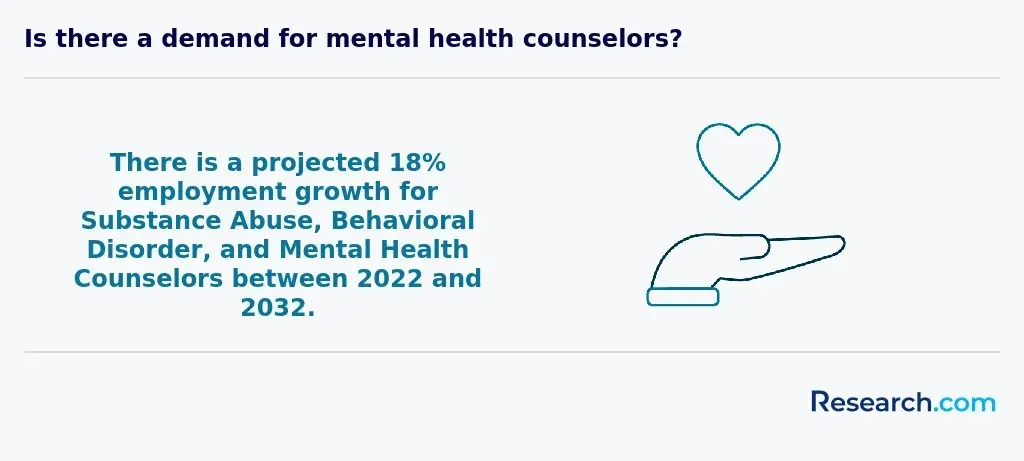
Demand indicators are favorable for counseling careers, though they do not guarantee a job or a specific salary. The US Bureau of Labor Statistics projects 18% employment growth for substance abuse, behavioral disorder, and mental health counselors from 2022 to 2032, which is much faster than the average growth rate for all occupations in the United States. In Missouri, 5,790 substance abuse, behavioral disorder, and mental health counselors were employed as of May 2023 (US BLS, 2024).
Employers may include hospitals, community mental health centers, private practices, nonprofit agencies, substance use treatment providers, correctional facilities, schools, and public-sector programs. The Missouri Department of Mental Health and hospitals such as Barnes-Jewish Hospital are examples of institutions connected to behavioral health services in the state.
Students should view demand data alongside local realities. Rural areas may need providers but offer fewer specialized roles. Urban areas may offer more jobs but also more competition. Candidates comparing other states can explore resources such as New Mexico LPC training programs to understand how licensure and labor markets vary.
What are the key legal and ethical considerations for mental health counselors in Missouri?
Missouri counselors must practice within legal and ethical boundaries. Core responsibilities include protecting confidentiality, obtaining informed consent, documenting accurately, maintaining appropriate boundaries, following mandated reporting laws, managing conflicts of interest, and referring clients when needs fall outside the counselor’s competence.
- Confidentiality: Clients should understand what information is private and when disclosure may be legally or ethically required.
- Informed consent: Counselors should explain services, fees, telehealth procedures, risks, benefits, records, and emergency policies in clear language.
- Mandated reporting: Counselors need to know when reporting is required to protect vulnerable people or respond to serious safety concerns.
- Scope of practice: Counselors should not provide services they are not trained or authorized to deliver.
- Supervision and consultation: New counselors and experienced clinicians alike benefit from consultation when cases raise complex ethical issues.
Students who want a shorter overview of the route into the profession can review the quickest path to becoming a counselor in Missouri, while still confirming requirements with official state sources.
Can mental health counselors transition to school counseling roles in Missouri?
A mental health counselor may be able to move toward school counseling, but the transition usually requires understanding education-specific certification rules. School counselors focus on academic development, social and emotional support, college and career readiness, crisis response, student advocacy, and collaboration with teachers and families.
Clinical counseling experience can be valuable in schools, but it does not automatically satisfy school counselor credential requirements. Counselors considering this move should review Missouri-specific education rules, required coursework, practicum expectations, and certification steps. This guide on how to become a school counselor in Missouri explains that pathway in more detail.
How do insurance and reimbursement policies impact your practice in Missouri?
Insurance rules can strongly affect a counselor’s work, especially in private practice. Reimbursement rates, claim denials, documentation requirements, paneling timelines, prior authorization, and delayed payments can influence income and workload. Counselors who accept insurance often need strong billing systems or administrative support.
Before opening a practice, counselors should learn how payer contracts work, what documentation insurers require, and how licensure status affects reimbursement eligibility. Maintaining compliance with state standards is also essential; this overview of LPC license requirements in Missouri can help candidates understand the credentialing foundation that insurers may review.
What other specialties can mental health counselors in Missouri consider?
Counselors who want to broaden their career options can explore adjacent specialties such as marriage and family therapy, school counseling, addiction counseling, trauma counseling, geriatric counseling, employee assistance counseling, and crisis intervention. The right specialty should match your clinical interests, training capacity, and desired work setting.
Marriage and family therapy may interest counselors who want to focus on couples, family systems, communication patterns, parenting concerns, and relational conflict. To compare that route with mental health counseling, review this guide on how to become a marriage and family therapist in Missouri.
What careers are available to Mental Health Counseling Graduates in Missouri?
A graduate counseling degree can support several mental health and human services roles, though some positions require specific licenses, certifications, or supervised experience. Graduates should compare job descriptions carefully because titles can vary by employer.
| Career option | What the role may involve | Good fit for graduates who want to |
| Social worker | Connecting clients with services, supporting care coordination, and working in hospitals, schools, or community organizations. | Combine mental health support with resource navigation and advocacy. |
| Substance abuse counselor | Helping clients address addiction, recovery planning, relapse prevention, and family support. | Work in treatment centers, outpatient programs, or private practice settings focused on recovery. |
| Geriatric counselor | Supporting older adults with grief, life transitions, depression, anxiety, caregiving stress, and adjustment concerns. | Serve aging clients in nursing homes, senior centers, clinics, or community programs. |
| Employee Assistance Program counselor | Helping workers manage stress, personal issues, workplace conflict, and short-term mental health concerns. | Support mental wellness in organizational or workplace settings. |
| Family and relationship therapist | Helping couples and families improve communication, address conflict, and manage emotional strain. | Focus on relational dynamics and family systems. |
One counseling graduate described feeling uncertain at first because the desire to help people did not automatically point to a specific role. After exploring several options, the graduate chose substance abuse counseling in St. Louis because the need felt immediate and the work aligned with a personal sense of purpose. The experience was demanding, but watching clients rebuild stability became a major source of motivation.
What challenges do mental health counselors face in Missouri?
Mental health counseling can be meaningful work, but it is not an easy profession. Missouri counselors should prepare for clinical, administrative, financial, and emotional challenges before entering the field.
| Challenge | How it can affect counselors | Better way to prepare |
| Limited access to care | Rural shortages and long wait times can create heavy caseloads and pressure to serve broad client needs. | Seek strong supervision, build referral networks, and learn community resource mapping. |
| Licensure complexity | New graduates may struggle with documentation, supervision rules, and application timing. | Track hours carefully and verify requirements before choosing a program or supervisor. |
| Client affordability | Insurance gaps and out-of-pocket costs may make consistent treatment difficult for some clients. | Learn about sliding-scale models, community referrals, and reimbursement procedures. |
| Burnout risk | Trauma exposure, crisis work, paperwork, and emotional labor can accumulate over time. | Create boundaries, use consultation, and develop sustainable caseload practices. |
| Continuing education demands | Staying current can be difficult when workloads are high. | Plan professional development annually and use online training when appropriate. |
Cost is another issue for students. Comparing affordable online counseling schools may help reduce educational expenses, but affordability should be weighed against accreditation, licensure alignment, practicum support, and graduation requirements.
Common Mistakes to Avoid Before Choosing This Career Path
- Choosing a graduate program without checking licensure alignment: A counseling degree is only useful if it supports the credential you need in Missouri.
- Looking only at tuition: Fees, books, travel to practicum sites, lost work hours, and exam costs can change the real price of the degree.
- Assuming online programs are automatically approved: Online study can be convenient, but students must verify clinical placement and state licensure compatibility.
- Waiting too long to plan supervision: Supervised hours require qualified supervisors, accurate documentation, and a realistic schedule.
- Expecting salary outcomes to be guaranteed: Wages depend on location, employer, experience, licensure status, specialty, and hours worked.
- Ignoring burnout until it becomes severe: Sustainable counseling careers require boundaries, consultation, rest, and manageable caseloads.
How can mental health counselors in Missouri effectively manage burnout?
Burnout prevention should begin during training, not after a crisis. Counselors regularly hear distressing stories, manage risk, complete documentation, and carry responsibility for client care. Without support, the emotional load can become unsustainable.
- Use supervision intentionally: Bring clinical uncertainty, emotional reactions, ethical concerns, and workload issues into supervision instead of treating supervision as a formality.
- Build peer consultation routines: Trusted colleagues can reduce isolation and help counselors think through difficult cases.
- Set caseload boundaries: More clients do not always mean better care or better long-term income if exhaustion leads to turnover.
- Protect recovery time: Sleep, movement, relationships, and non-clinical interests are not optional extras in a high-empathy profession.
- Keep learning: Workshops and continuing education can renew skills and reduce feelings of stagnation. Counselors interested in broader academic resources can explore the best psychology schools in Missouri.
Questions to Ask Before Becoming a Mental Health Counselor in Missouri
- Does the graduate program clearly prepare students for Missouri counseling licensure?
- Is the program CACREP-accredited or otherwise structured to meet state expectations?
- Who helps students secure practicum and internship placements?
- How will I pay for tuition, fees, supervision-related costs, and exam expenses?
- Can I complete the required 3,000 supervised clinical practice hours on my expected timeline?
- Which clients or settings do I most want to serve?
- Am I prepared for documentation, insurance, crisis work, and ethical decision-making?
- What income do I need to support my household in Missouri?
- Would a related path such as school counseling, social work, marriage and family therapy, or substance abuse counseling fit me better?
Here’s What Mental Health Counselors in Missouri Have to Say About Their Careers
- One Missouri counselor described the profession as deeply meaningful because it allows them to support people during difficult periods and witness real growth over time. They also emphasized that professional relationships and local resources have strengthened their practice. — Trudy
- Another counselor said the work combines personal purpose with career stability. Serving clients from varied backgrounds keeps the role challenging, and helping reduce mental health stigma has become a major source of pride. — Madison
- A third professional described the path as personally and professionally transformative. The skills developed through counseling have shaped both client work and personal insight, while the professional community has provided meaningful support. — Preston
Related Articles for Nearby States
- 2027 How to Become a Mental Health Counselor in Kansas
- 2027 How to Become a Mental Health Counselor in Iowa
- 2027 How to Become a Mental Health Counselor in Nebraska
- 2027 How to Become a Mental Health Counselor in Arkansas
- 2027 How to Become a Mental Health Counselor in Oklahoma
- 2027 How to Become a Mental Health Counselor in Illinois
- 2027 How to Become a Mental Health Counselor in Kentucky
- 2027 How to Become a Mental Health Counselor in Tennessee
- 2027 How to Become a Mental Health Counselor in Indiana
- 2027 How to Become a Mental Health Counselor in South Dakota
References:
- bouve.northeastern.edu (28 May 2023). What do Mental Health Counselors Do? Role & Responsibilities. bouve.northeastern.edu https://bouve.northeastern.edu/news/what-do-mental-health-counselors-do-role-responsibilities
- Sheryl Grey (21 Feb 2024). How To Become A Mental Health Counselor: Salary, Education Requirements And Job Growth. forbes.com https://www.forbes.com/advisor/education/psychology-and-counseling/become-a-mental-health-counselor
- careervillage.org (22 May 2024). How can I best prepare myself for working in the world of counseling?. careervillage.org https://www.careervillage.org/questions/913920/how-can-i-best-prepare-myself-for-working-in-the-world-of-counseling
- dhp.virginia.gov (09 Aug 2024). Application Wizard - Registered Nurse. dhp.virginia.gov https://www.dhp.virginia.gov/Boards/Nursing/ApplicantResources/ApplyforLicense/RegisteredNurse
- socialworklicensemap.com (13 May 2022). What Are the Requirements to Become a Mental Health Counselor?. socialworklicensemap.com https://socialworklicensemap.com/social-work-resources/become-mental-health-counselor
- onetonline.org (06 Aug 2024). Missouri Employment Trends. onetonline.org https://www.onetonline.org/link/localtrends/21-1014.00?st=MO
- The Chicago School (26 Mar 2019). Careers You Can Pursue with a Master’s Degree in Clinical Mental Health Counseling. thechicagoschool.edu https://www.thechicagoschool.edu/insight/career-development/careers-with-masters-degree-clinical-mental-health-counseling
- counseling.education.wm.edu (24 Oct 2023). The Different Types of Counseling Careers and Their Challenges. counseling.education.wm.edu https://counseling.education.wm.edu/blog/opportunities-and-challenges-in-the-counseling-field
- Mental Health America. (2024). The State of Mental Health in America. https://mhanational.org/issues/state-mental-health-america
- US Bureau of Labor Statistics. (2024, April 17). Substance Abuse, Behavioral Disorder, and Mental Health Counselors. Occupational Outlook Handbook. https://www.bls.gov/ooh/community-and-social-service/substance-abuse-behavioral-disorder-and-mental-health-counselors.htm
- US Bureau of Labor Statistics. (2024, April 3). May 2023 State Occupational Employment and Wage Estimates. Occupational Employment and Wage Statistics. https://www.bls.gov/oes/2023/may/oes_mo.htm#top
- Centers for Disease Control and Prevention. (2024). About Mental Health. https://www.cdc.gov/mentalhealth/learn/index.htm
- Glasmeier, A. K. & Massachusetts Institute of Technology. (2024). Living Wage Calculation for Missouri. https://livingwage.mit.edu/states/29
Key Insights
- Missouri mental health counselors generally need a bachelor’s degree, a counseling-related master’s degree, supervised clinical experience, a qualifying exam, and state licensure before practicing independently.
- The state requires 3,000 hours of supervised clinical practice, and practicum experience is essential because it builds real client-care skills and helps candidates document licensure readiness.
- Demand indicators are strong: employment for substance abuse, behavioral disorder, and mental health counselors is projected to grow 18% from 2022 to 2032, and Missouri employed 5,790 counselors in this occupational group as of May 2023.
- Missouri’s May 2023 median hourly wage for this counseling group was $23.14, or an estimated $44,428.8 annually based on that hourly rate. That may meet the stated single-adult living wage benchmark of $42,024, but household needs vary.
- Program choice matters. Before enrolling, verify accreditation, licensure alignment, practicum support, supervision rules, total cost, and whether online or campus delivery fits your clinical training needs.
- Specialization can improve career focus. Substance abuse counseling, behavior disorder counseling, family-focused work, school counseling, telehealth, and geriatric counseling all serve different populations and require different preparation.
- The strongest candidates plan early: they gain helping experience, build supervision networks, track hours carefully, prepare for exams, understand ethical duties, and create burnout-prevention habits before entering full-time practice.
Other Things You Should Know About Mental Health Counseling in Missouri
Missouri applicants must pass the National Clinical Mental Health Counseling Examination (NCMHCE) and meet the state’s jurisprudence and ethics requirements set by the Missouri Committee for Professional Counselors. The committee under the Missouri Division of Professional Registration reviews exam results before granting full LPC status.
To renew a mental health counselor license in Missouri in 2027, you must complete 40 hours of continuing education, including three hours in ethics, every two years. The Missouri Committee for Professional Counselors manages the renewal process, and specific deadlines apply.