2027 BS in Business Administration Curriculum: How to Evaluate Preparation in Human Resource Management
Audited and Verified:
Our Editorial and Data Verification Process
Research.com uses government datasets, official education statistics and primary institutional information to support its career and degree guides. Our review process checks factual accuracy, occupational definitions, source dates and the requirements associated with the credentials discussed.
How This Article Was Fact-Checked
Our editorial team verifies salary estimates, employment projections, education requirements and program information against original data providers and official organizations. Salary figures are checked against the relevant occupational definitions and reporting periods. Information about licensure, accreditation and required in-person training is reviewed separately.
Fact-checked and verified on:

Co-Founder and Chief Data Scientist
A business administration degree can introduce human resource management without providing much practice in the work HR employees actually do. For prospective students and early-career employees, the distinction matters when comparing a broad business program with an HR-focused option.
This guide shows how to examine course requirements, assignments, accreditation, cost, and career outcomes so you can choose a curriculum that fits your target HR role - not simply one that lists HR among its possible careers.
Key Things You Should Know
- Look for required HR coursework beyond introductory management, especially staffing, employee relations, compensation, employment law, and HR data practices.
- Judge preparation through supervised or assessed work - such as a hiring-plan exercise or privacy-conscious workforce analysis - not course titles alone.
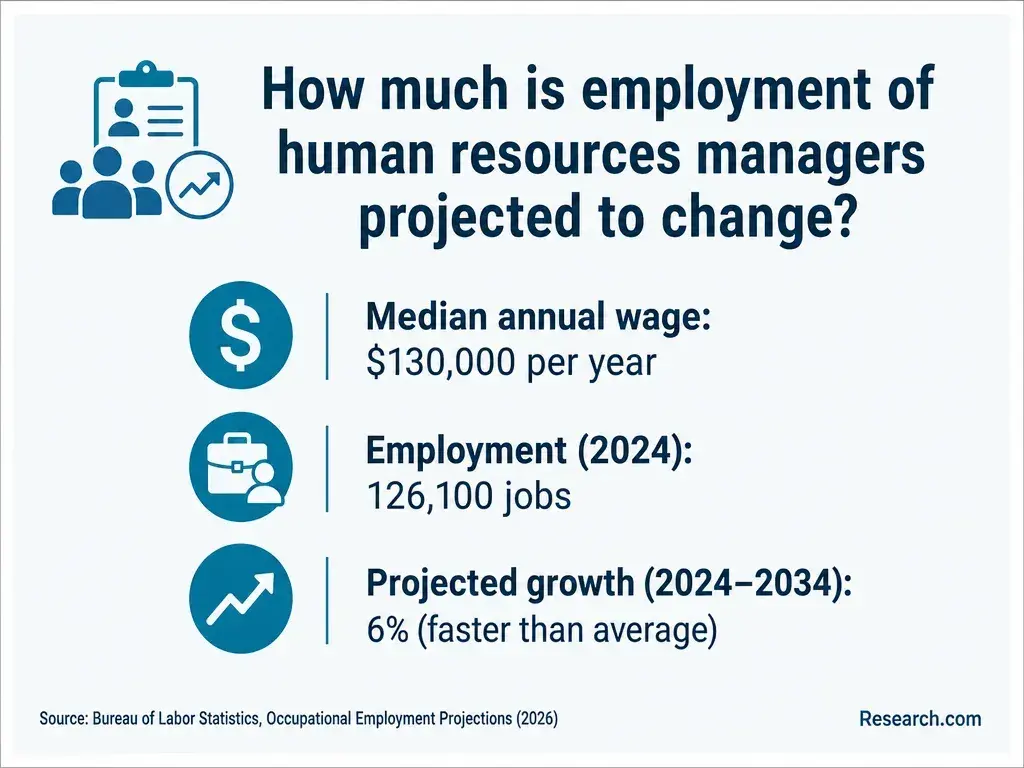
- The U.S. Bureau of Labor Statistics reports a $75,940 median annual wage for human resources specialists in May 2025 and projects 6% employment growth from 2025 to 2035; neither figure predicts a new graduate's pay or job prospects.
What Is a BS in Business Administration With an HR Focus?
It is a business bachelor's degree that combines a general business core with coursework in managing the employment relationship. The core may cover accounting, economics, finance, operations, analytics, and management. HR study examines how organizations recruit, develop, compensate, and support employees while meeting legal and ethical obligations.
"HR focus" is not a standard credential. At one school it may mean an officially recorded concentration; at another, an elective cluster or a few HR courses within a general degree. Compare the catalog's exact degree title, required courses, and transcript designation. A specialized HR bachelor's may offer greater functional depth, while the business administration route may suit students who want HR preparation alongside broader business options. A human resources degree subject guide can help frame that comparison, but the deciding evidence is each school's current curriculum.
What Courses Are Included in a Business Administration HR Curriculum?
Start with the required course sequence, not the elective catalog. A program that offers staffing but rarely schedules it gives students a different opportunity from one that requires and regularly offers it. The table shows what common course groups can contribute and what to inspect in the syllabus.
| Course group | Relevance to HR preparation | Evidence to look for |
| Business core | Connects staffing decisions to budgets, operations, strategy, and organizational performance. | Accounting, statistics, communication, and management requirements. |
| HR foundations and staffing | Introduces job analysis, recruiting, selection, and HR processes. | Assignments that assess job-related criteria and consistent selection practices. |
| Employment law and employee relations | Builds awareness of workplace obligations, documentation, and dispute handling. | Cases that require students to identify issues and know when to seek qualified advice. |
| Compensation, benefits, and learning | Examines rewards, training needs, and employee development. | Exercises using stated assumptions and appropriate data safeguards. |
| Analytics and applied work | Develops careful interpretation of workforce measures. | Spreadsheet work, a supervised project, or an assessed capstone with privacy limits. |
Check prerequisites and whether HR electives are offered often enough to finish on schedule. If your main interest is inventory or logistics rather than people operations, online colleges with accelerated supply chain bachelor's study offer a more relevant curriculum comparison than an HR track with one operations course.
How Does an HR-Focused Business Degree Prepare Students for Careers?
The strongest programs connect concepts to entry-level tasks: drafting a job description, applying a selection rubric, explaining an onboarding process, or presenting a training recommendation. Case studies and simulations allow practice, but they are not the same as handling real employee matters under supervision. Ask what each applied assignment produces, how it is assessed, and whether employers or faculty provide feedback.
An internship or approved workplace project can add context, provided the school accepts the site and duties and the employer permits the work. Students already employed in administration or customer service can bring useful communication and process experience, but their current job does not automatically satisfy an HR internship. For employees comparing schedules, guidance on how to balance employment and business administration college study is most useful when checked against the HR track's actual project and attendance requirements.
Effective HR preparation combines communication with accurate, fair, and confidential decision-making. Students should be able to explain a staffing recommendation, interpret basic workforce data without overstating its meaning, document a process, and recognize when an employee issue needs specialist or legal review.
Look for assessed practice in structured interviewing, writing for different audiences, spreadsheet analysis, conflict-sensitive communication, and protecting personnel information. The distinction is exposure versus demonstrated ability: reading about turnover is different from calculating a clearly defined measure, checking data quality, and explaining its limits. If your intended work is primarily coordinating schedules and deliverables rather than staffing or employee relations, explore applying previous coursework to a project management degree before choosing HR electives for skills a different pathway develops more directly.
First, confirm the institution's accreditation through the accreditor's official directory and check that its status covers your period of study. Then distinguish that institution-level status from business accreditation. AACSB, ACBSP, and IACBE have different accreditation scopes; verify directly whether the relevant business unit and degree are covered rather than assuming every HR option carries a separate endorsement.
Accreditation is a screening factor, not proof that a program teaches enough HR or places graduates in HR jobs. Read the current catalog and sample syllabi alongside it. If application charges affect how many schools you can investigate, a comparison of accredited schools with no application charge can narrow an initial list - but confirm both the fee policy and the precise accreditation scope with each institution.
Requirements vary by school and by entry point. First-year applicants commonly submit secondary-school records; transfer applicants submit prior college transcripts. Some institutions admit students to the university before they can declare or enter the business major. Quantitative or introductory business courses may be admission prerequisites, requirements completed after admission, or simply recommended preparation.
For transfer students, the important question is not only how many credits are accepted but which requirements they satisfy. Request an official evaluation showing general education, business core, HR concentration, electives, and remaining residency credits. Comparing online HR bachelor's programs accepting transfer credits can identify possibilities, but only the receiving school can determine how your courses apply to its degree.
A traditional full-time bachelor's path is commonly planned over four academic years; transfer credit, part-time study, course sequencing, and required internships can change the calendar. An advertised accelerated term does not necessarily reduce the number of required credits or the hours needed each week.
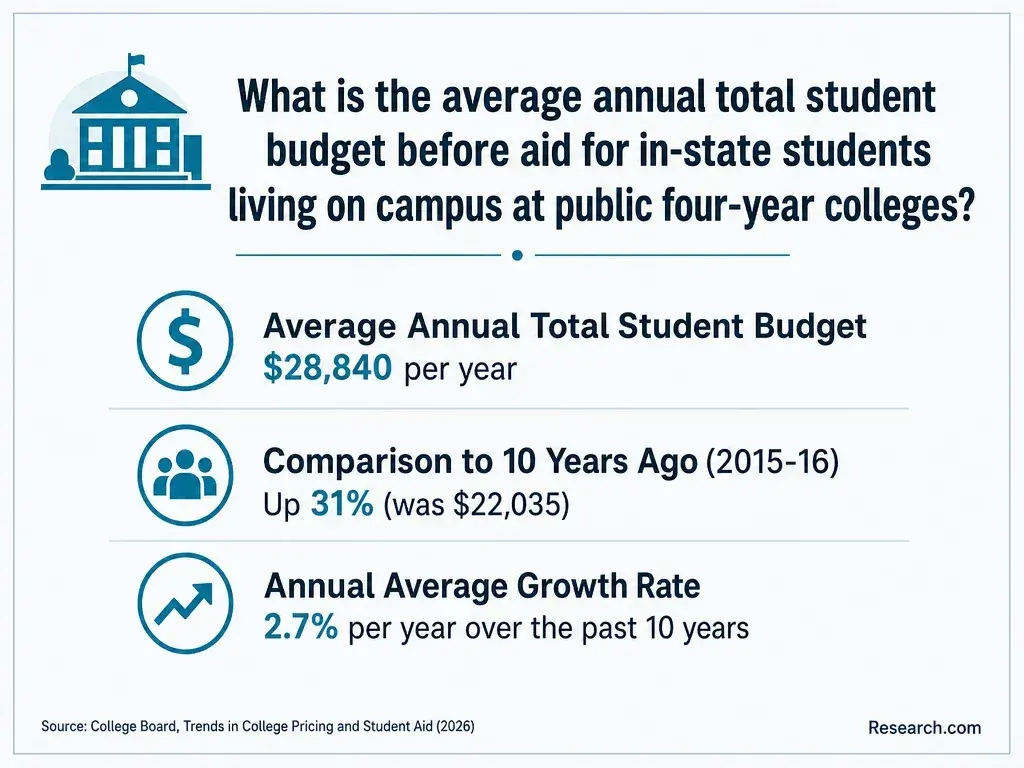
Compare schools using the credits you would still need to complete, not a headline tuition rate. Ask for tuition and required fees by term or credit, plus estimates for books, software, proctoring, travel, and any unpaid experiential requirement. Then check aid eligibility and whether a required HR course is offered when your plan needs it. A comparison of supply chain degrees by cost and length is useful only if supply chain is a genuine alternative; its published prices and timelines cannot stand in for an HR degree audit.
Neither format is inherently stronger for HR. Campus study may make scheduled discussion and local employer contact easier; online study can reduce commuting and expand access. In either format, assess whether students practice sensitive conversations, receive feedback on written work, and can access appropriate internships or projects.
Ask for sample schedules: Are HR classes asynchronous? Do team presentations, live sessions, proctored exams, or campus visits have fixed times? Online bachelor's programs with short sessions may fit some students' calendars, but compressed deadlines can make a demanding course harder to combine with work. Choose the delivery model whose actual obligations you can meet consistently.
Possible starting points include HR assistant, recruiting coordinator, benefits or payroll support, and training coordinator. Depending on the employer and the applicant's experience, an HR specialist position may also be within reach. These roles differ: recruiting work emphasizes candidate coordination and selection processes; benefits support requires accuracy and discretion; training coordination focuses on learning logistics and evaluation.
Read postings for tasks and experience requirements rather than relying on titles. HR manager roles generally involve substantial professional experience and responsibility beyond an undergraduate curriculum. If your goal is broad team leadership rather than HR practice, three-year-or-less leadership degree pathways provide a useful alternative to examine, though an accelerated degree does not itself confer managerial authority.
What Salaries and Certifications Can HR Graduates Expect?
The U.S. Bureau of Labor Statistics reports a May 2025 median annual wage of $75,940 for human resources specialists and projects 6% employment growth from 2025 to 2035. Those are occupation-wide figures, not starting salaries or outcomes for business administration graduates. Location, industry, responsibilities, and prior experience affect an individual offer; assistant and coordinator jobs may have different pay from specialist roles.
SHRM and HRCI offer voluntary HR certifications with credential-specific eligibility and exam rules. An HR concentration does not automatically award one or establish eligibility for every credential. Check the certifying organization's current requirements before paying for preparation. Likewise, funding aimed at another field - such as project management bachelor's scholarship options - should not be counted in an HR budget unless the award explicitly accepts your program. Choose a curriculum for the HR work you want to learn, then assess certification and financing separately.
Other Things You Should Know About Business Administration
Not necessarily. Schools may record a concentration on the transcript, diploma, both, or neither. Ask the registrar how the exact option is designated.
Only with appropriate institutional and employer permission and safeguards. A de-identified example may still be sensitive; an instructor-approved fictional dataset is often a safer choice.
HR coursework helps students recognize employment-law issues, but it does not qualify them to practice law. Escalate legal questions to qualified counsel.
Usually it is an optional professional-development activity, not a substitute for coursework or experience. Check your school's requirements and choose activities that offer useful learning or contacts.
- Bachelor's in Human Resource Management (BS) Degree | The University of Alabama at Birmingham https://www.uab.edu/business/home/programs/undergraduate-degrees/human-resource-management
- Business Administration - Human Resources, B.S. - Academics | Indiana Tech https://academics.indianatech.edu/program/ba-human-resources/
- Experiential Learning Assures Workforce Readiness | AACSB https://www.aacsb.edu/insights/articles/2025/12/experiential-learning-assures-workforce-readiness
- Organizational Behavior and Human Resources Management | Undergraduate Admissions https://admissions.purdue.edu/majors/organizational-behavior-and-human-resource-management/
- Business Administration Bachelor's Degree - K-State Online https://online.k-state.edu/programs/human-resource-management-bachelors/
- Management (BSBA) - Human Resources Concentration | University of South Alabama https://bulletin.southalabama.edu/programs-az/business/management/management-bsba-human-resources-concentration/
- SHRM Home - The Voice of All Things Work https://www.shrm.org/
- BUS301: Human Resource Management - Course | Saylor University https://learn.saylor.org/course/bus301