2027 Should You Choose a BS in Business Administration or A State Real Estate License for Your Next Career Step?
Audited and Verified:
Our Editorial and Data Verification Process
Research.com uses government datasets, official education statistics and primary institutional information to support its career and degree guides. Our review process checks factual accuracy, occupational definitions, source dates and the requirements associated with the credentials discussed.
How This Article Was Fact-Checked
Our editorial team verifies salary estimates, employment projections, education requirements and program information against original data providers and official organizations. Salary figures are checked against the relevant occupational definitions and reporting periods. Information about licensure, accreditation and required in-person training is reviewed separately.
Fact-checked and verified on:

Co-Founder and Chief Data Scientist
A business degree and a real estate license can both lead to work involving clients, money, and negotiation, but they prepare you for different jobs. If you are changing careers, the choice affects how soon you can start, what you can legally do, and how much financial risk you take on.
This guide compares the credentials, their costs and requirements, and the careers they support. You will leave with a practical way to decide whether to pursue one, the other, or both.
Key Things You Should Know
- Choose the license for property transactions: A BS in Business Administration does not authorize you to represent buyers or sellers; your state determines the licensing requirements.
- Choose the degree for broader business options: It can support applications across business functions, but it does not guarantee a job or a management position.
- Compare income risk, not just tuition: BLS reports a May 2025 median wage of $78,760 for market research analysts, one possible business-related occupation; that occupation-wide figure is not a new graduate's expected pay or a direct comparison with an agent's commission income.
What is the difference between a BS in Business Administration and a state real estate license?
A BS in Business Administration is an undergraduate academic degree covering several business functions. A state real estate license is legal authorization to perform specified real estate activities in that state, subject to its rules. They are not substitutes: the degree does not confer a license, and the license is not a bachelor's degree.
The comparison is useful because both paths can appeal to someone with sales or customer-service experience, yet they lead to different work and financial commitments.
| Decision factor | BS in Business Administration | State real estate license |
| Primary purpose | Broad preparation for business roles | Permission to perform state-regulated real estate activities |
| Geographic reach | Academic credential not tied to one state's licensing jurisdiction | Practice authority governed by state law; moving may require another application |
| Immediate career value | May meet a bachelor's requirement and develop transferable skills | Can provide a route into property transactions once all state conditions are met |
| Main limitation | Does not establish professional licensure or job experience | Does not replace a bachelor's requirement for unrelated roles |
If the degree is attractive but its price is a barrier, online business education on a smaller budget may be worth comparing. Judge programs by the credits you still need and total completion cost, not a headline tuition rate.
Which career goals favor a business administration degree or real estate license?
Favor the license if your specific goal is to represent clients in transactions permitted under your state's real estate laws and you are comfortable prospecting for business, working around client schedules, and managing variable income. Prior customer service or sales experience may help, but neither replaces the required license nor guarantees clients.
Favor the BS if you want to qualify for a wider set of business roles or an employer requires a bachelor's degree for advancement. Start with your target job posting: a business degree may address its education requirement, while an internship, work sample, or relevant experience may address a separate skills gap. If your goal is HR, compare the general business curriculum with education options for future HR professionals before choosing a program.
If you want to operate your own brokerage someday, investigate both pathways. A business degree can inform budgeting and marketing, but broker eligibility and supervision rules are separate state matters. Conversely, if you want a property company's accounting, operations, or marketing job rather than to perform licensed activities, ask the employer whether licensure is useful at all.
What are the education and licensing requirements for becoming a real estate agent?
Requirements are set by the state where you intend to practice, not by a national business-degree standard. Depending on the state, the process can include eligibility and background checks, approved prelicensing education, an examination, an application and fees, and affiliation with or supervision by a licensed broker before practicing. Some states also impose post-licensing education or continuing education. Check the state real estate commission's rules for your intended license type and application date.
Before paying a course provider, confirm that its particular course is approved by your state and that the delivery format meets state rules. Ask when you may legally begin representing clients and what supervision, renewal, and additional costs apply. Do not assume that taking the course or passing the exam alone authorizes practice.
Licensing-course funding should also be checked separately from degree funding. If federal student aid is essential to your decision, compare eligible degree options - including cheaper business administration college programs - without assuming the same aid is available for a stand-alone prelicensing course.
Most programs combine general education with a business core that may include accounting, economics, finance, marketing, management, operations, statistics, and business communication. A school may also offer electives, a formal concentration, an internship, or a capstone. Examine its published degree plan: a real estate elective does not provide a license, and an informal set of electives is not necessarily an awarded concentration.
For an aspiring agent, accounting and marketing can help with expense tracking and client outreach, while communication and data interpretation can support informed conversations. Coursework is preparation, not evidence that you have completed a transaction or managed a brokerage. If your real target is project coordination rather than property sales, compare the business curriculum with a specialized program and investigate whether you can use prior college credits in a project management bachelor's. Only the receiving school can determine how those credits apply.
A bachelor's degree is commonly planned as four years of full-time undergraduate study, but a returning student's remaining coursework depends on the school's evaluation of prior credits and its course sequence. Licensure is usually a shorter educational route, though course availability, exam scheduling, application review, and broker affiliation can delay the start of practice. Ask for a personalized degree audit and your state's licensing steps before comparing dates.
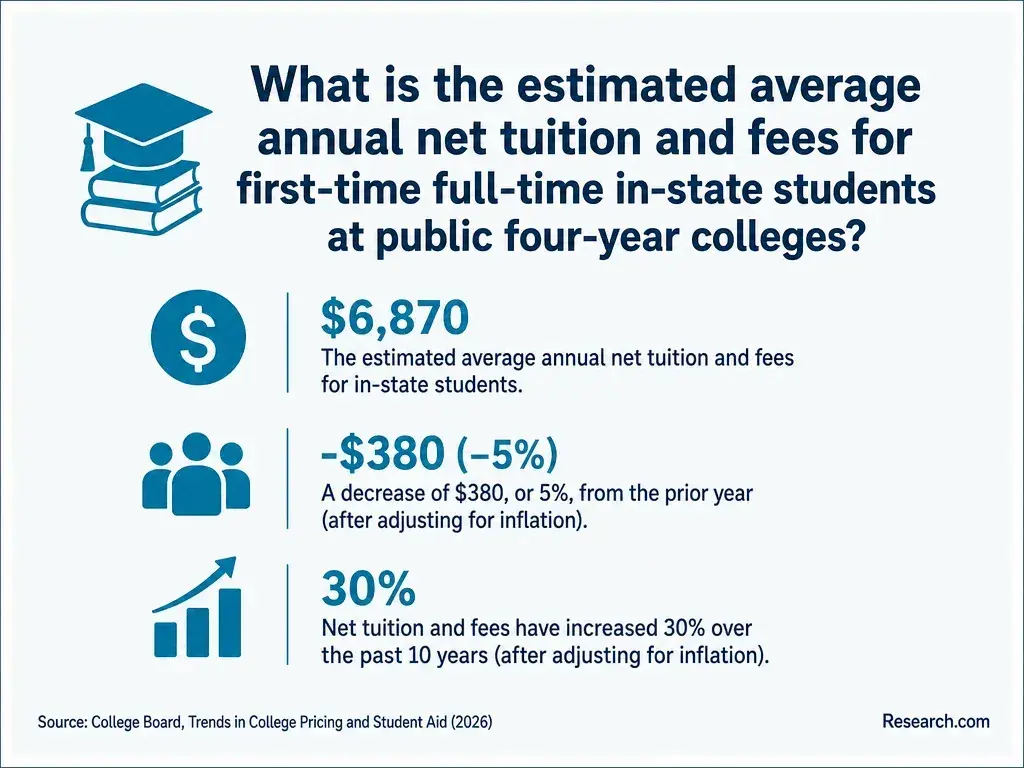
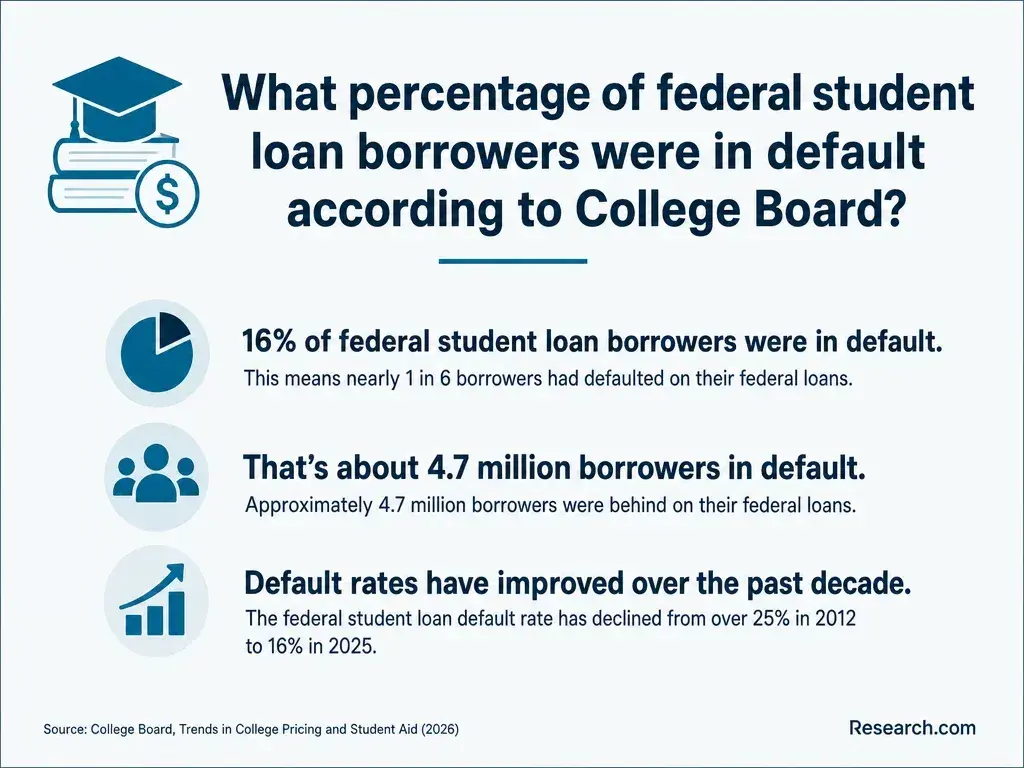
Compare the total cost to reach the goal: degree tuition, fees, books, remaining credits, and time away from work versus approved licensing education, exams, applications, renewals, and the costs of building a client base. For either path, distinguish upfront cash needs from borrowing and ongoing expenses. If you are also considering a specialized degree for project work, project management fees books and aid considerations offer a reminder to compare complete costs rather than tuition alone.
A quicker route is not automatically cheaper in practice. A new agent may face a gap between qualifying to work and receiving commission income; a student may be able to keep earning while studying part-time.
Neither format is inherently better. An online program may let you keep a job while studying; a campus program may make scheduled classes and local networking easier to use. In either format, career preparation depends on the curriculum and your access to relevant projects, faculty, career services, and employers - not the delivery label.
Ask whether classes are asynchronous, whether group meetings or exams require fixed times, and whether internships or campus visits are mandatory. Then check whether you can complete the required courses in the terms you need. A national guide to ranked online business colleges can help you identify candidates, but confirm each program's current requirements directly before enrolling.
Undergraduate applicants typically submit records of prior schooling; a school may also set GPA, prerequisite, or other requirements. Transfer applicants should ask separately about admission to the institution, admission to the business major, and whether accepted credits satisfy general education, business-core, or elective requirements. An accepted course does not necessarily replace a required accounting or statistics course.
If you have college credits, request an official evaluation and degree audit before relying on an advertised completion time. This matters particularly when weighing an accelerated business program: fast-track business degree options will save time only if your remaining requirements and course availability permit the faster schedule. A license applicant, by contrast, should follow the state's eligibility rules rather than a college admissions checklist.
A business graduate might seek entry-level work in sales operations, marketing coordination, HR support, procurement, or project coordination, depending on skills and employer requirements. These are possible routes, not positions awarded by the degree. A licensed real estate salesperson may pursue work representing clients within the scope of state law and required broker supervision. Brokerage ownership or other advanced responsibilities can require additional licensure and experience.
For a career change, compare the tasks you have already performed with those in actual job descriptions. A customer-service professional may have transferable client communication skills but still need transaction-specific training; an experienced agent moving into a corporate operations role may need stronger spreadsheet or budgeting evidence. If project work - not property transactions - is the goal, compare job requirements and the cost of a relevant degree, using an online project management undergraduate funding guide if that specialized route is under consideration.
There is no single "business administration graduate salary": the degree can lead to different occupations, and pay varies with role, experience, location, and employer. For one relevant occupation, the U.S. Bureau of Labor Statistics reports a $78,760 median annual wage for market research analysts in May 2025 and projects 7% employment growth from 2025 to 2035. Those figures describe the occupation as a whole, not starting pay for BS graduates or the outcome of choosing a marketing course.
Real estate compensation needs a different risk assessment. Agents may earn commissions tied to completed transactions and may have business expenses; an occupation-wide wage figure would not show how quickly a new agent develops clients or what remains after expenses. Compare local broker arrangements, realistic startup expenses, and your household's ability to handle uneven cash flow with the pay and benefits in specific business job offers.
For a degree, evaluate the price of the remaining coursework against roles you can plausibly pursue - not against a manager's median wage. Economical business administration degrees with quicker study routes can provide candidates for comparison, but neither a short timeline nor an occupational wage figure establishes a personal return on investment.
How can you choose an accredited business school or reputable real estate program?
For a degree, verify the institution's recognized accreditation and the exact degree it awards. If a school cites AACSB, ACBSP, or IACBE, check whether that accreditation covers the business program you are considering; it is distinct from institutional accreditation and is not a promise of employment. Obtain the current catalog, a credit evaluation if applicable, a remaining-course plan, and a written cost estimate. If you need federal student aid, confirm the institution's and program's eligibility rather than inferring it from an advertisement for cheaper business administration study with FAFSA-based aid.
For licensing education, start with your state real estate commission's approved-provider information. Verify approval for the exact course, exam preparation versus required instruction, refund terms, and any additional state steps. Finally, speak with prospective supervising brokers about training, fees, and expectations. The best next step is the one that meets your target role's actual requirements at a cost and income risk you can manage.
Other Things You Should Know About Business Administration
Yes, if your schedule and program allow it. Check fixed class times, group work, and deadlines against client appointments, which may arise on evenings or weekends.
Not automatically. Ask your state real estate commission whether a specific course qualifies before relying on it for renewal.
Not generally as an academic prerequisite, but operating a brokerage is subject to state licensing rules. Business training may help with operations without replacing those requirements.
Look at specific property-management, leasing, operations, or finance job postings. Duties that require a real estate license vary by state, while employers set their own education and experience requirements.
- Requirements to Apply for a Real Estate Salesperson License | ca.gov https://www.dre.ca.gov/examinees/requirementssales.html
- Requirements for an Ohio Real Estate Salesperson's License https://com.ohio.gov/divisions-and-programs/real-estate-and-professional-licensing/salespersons-and-brokers/guides-and-resources/requirements-for-an-ohio-real-estate-salespersons-license
- Real Estate Commission Licensure Guide | Department of State https://www.pa.gov/agencies/dos/resources/professional-licensing-resources/licensure-processing-guides-and-timelines/real-estate-commission-guide
- Become Licensed - Salesperson | LREC https://lrec.gov/become-licensed/salesperson
- Career paths in real estate | Cornell SC Johnson College of Business https://business.cornell.edu/news/2025/03/03/real-estate-career-paths/
- Entry-Level Jobs With a Business Administration Degree | Warner Pacific University http://www.warnerpacific.edu/blog/top-entry-level-jobs-ba-business-administration/
- 17 types of business degrees and the jobs they can lead to | ASU Online https://asuonline.asu.edu/newsroom/online-learning-tips/types-business-degrees-jobs/
- 10 Key Subjects Taught in a Bachelor of Business Administration Program | Carson-Newman University https://www.cn.edu/cps-blog/10-key-subjects-taught-in-a-bachelor-of-business-administration-program/
- Launch a Real Estate Career With a Business Degree | Purdue Global https://www.purdueglobal.edu/blog/business/launch-real-estate-career-bachelors-business-administration/
- What Jobs Can You Get With a Business Degree? | snhu.edu https://www.snhu.edu/about-us/newsroom/business/what-jobs-can-you-get-with-a-business-degree