2027 Customer Experience vs. Procurement for a Business Administration BS: Which Fits?
Audited and Verified:
Our Editorial and Data Verification Process
Research.com uses government datasets, official education statistics and primary institutional information to support its career and degree guides. Our review process checks factual accuracy, occupational definitions, source dates and the requirements associated with the credentials discussed.
How This Article Was Fact-Checked
Our editorial team verifies salary estimates, employment projections, education requirements and program information against original data providers and official organizations. Salary figures are checked against the relevant occupational definitions and reporting periods. Information about licensure, accreditation and required in-person training is reviewed separately.
Fact-checked and verified on:

Co-Founder and Chief Data Scientist
If you are choosing a business administration concentration, customer experience and procurement lead toward different kinds of work. One focuses on how people interact with an organization; the other focuses on how that organization buys what it needs. The distinction matters when choosing electives, projects, and internships - not just a concentration name.
This guide compares the work, preparation, and career evidence for each path so you can choose the better fit for your interests and experience, or recognize when a more specialized degree would serve you better.
Key Things You Should Know
- Choose customer experience if you want to improve customer journeys, service processes, and retention; choose procurement if you prefer supplier evaluation, purchasing decisions, contracts, and cost control.
- Marketing or analytics coursework often supports customer experience, while operations or supply chain coursework usually supports procurement. Verify the actual required courses: a concentration title alone does not establish job readiness.
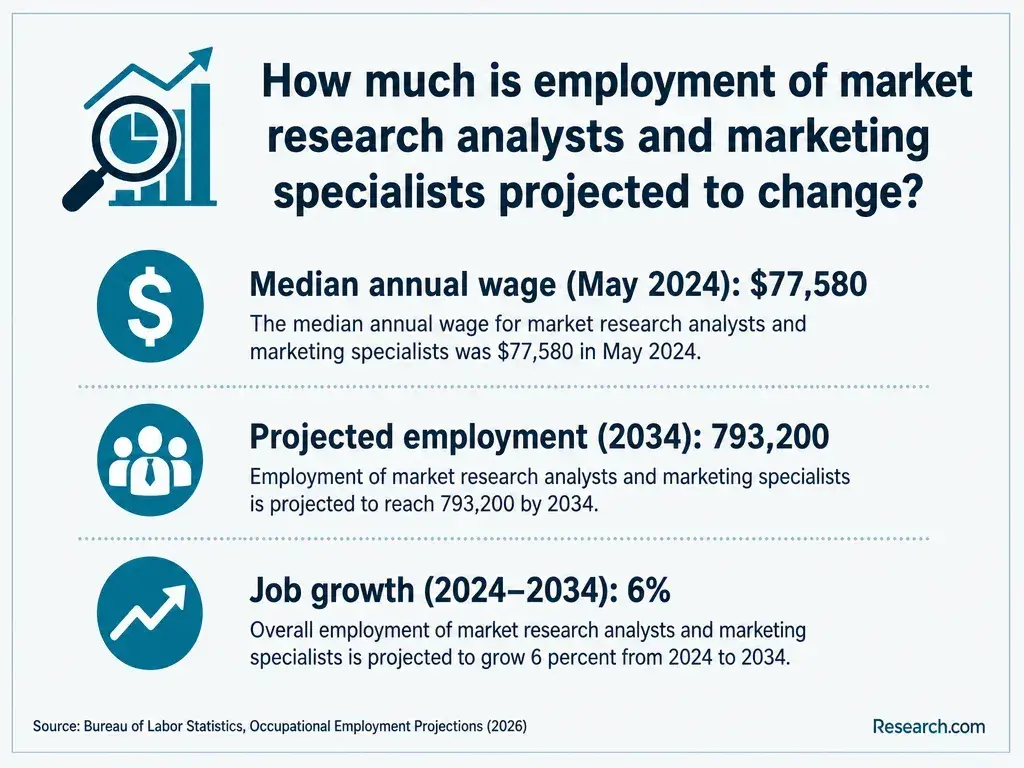
- Neither path guarantees a specialist job at graduation. For context, the U.S. Bureau of Labor Statistics reports a May 2025 median wage of $78,760 for market research analysts and $82,320 for logisticians - related occupations, not starting salaries for customer experience or procurement graduates.
What Is the Difference Between Customer Experience and Procurement Careers?
Customer experience (CX) concerns the interactions people have with an organization, from finding information and making a purchase to getting support afterward. CX employees may analyze feedback, map a customer journey, identify service failures, or coordinate changes across marketing, sales, and support. Procurement concerns obtaining goods and services for an organization. Its work can include comparing suppliers, requesting bids, reviewing purchasing terms, tracking orders, and monitoring supplier performance.
The difference is the decision each function supports. CX asks how to make an interaction work better for customers and the organization. Procurement asks what to buy, from whom, under which terms, and with what operational risk. Both require communication and analysis, but procurement typically has more direct exposure to purchasing policies, supplier negotiations, and contract terms.
Customer experience is not synonymous with customer service: service is often one part of a broader journey. Likewise, procurement is not the whole supply chain; logistics and inventory are related functions. If you are more interested in employees' workplace experience than customers' experience, compare that goal with a human resources program selection guide before choosing a CX track.
Which Business Administration BS Concentration Fits Customer Experience or Procurement?
For CX, look first at marketing, marketing analytics, or a formally named customer experience concentration. For procurement, look first at supply chain management, operations management, or a procurement concentration. A general business administration BS can also work if its electives and applied assignments cover the target function. Schools do not use these labels consistently, so compare course requirements rather than assuming similarly named concentrations teach the same material.
The comparison below shows what each option is most likely to add beyond a general business core. Confirm the curriculum in the school's current catalog before relying on any label.
| Option | Best fit | What to check |
| Marketing or CX concentration | Customer research, service improvement, journey analysis | Whether it includes research methods and CX work, rather than only advertising or promotion |
| Supply chain or operations concentration | Sourcing, supplier performance, purchasing processes | Whether procurement, contracts, and supplier management are covered - not only logistics |
| General business with targeted electives | Students testing either direction or combining the two | Whether relevant electives are offered regularly and fit the graduation plan |
Choose the option that gives you both relevant coursework and access to a credible project or internship. If procurement is already your firm goal and the BS offers little sourcing instruction, a specialized supply chain degree may provide greater depth; compare its curriculum and transfer rules with online colleges with accelerated supply chain bachelor's study. Faster advertised completion is useful only if your credits apply and required courses are available when you need them.
What Courses Do Customer Experience and Procurement Students Take?
Both paths benefit from accounting, statistics, spreadsheets, business communication, and organizational behavior. The distinction appears in upper-level work. A CX-oriented student should look for marketing research, consumer behavior, service management, business analytics, and process improvement. A procurement-oriented student should look for operations, supply chain management, sourcing or purchasing, managerial accounting, business law, and negotiation.
Assignments reveal more than course titles. A useful CX assignment might analyze a hypothetical customer journey and explain where evidence is missing. A useful procurement assignment might compare supplier proposals against stated cost, quality, and delivery criteria. Neither classroom exercise proves professional results, and workplace data should be used only with appropriate permission.
Project management can support either path: CX improvements and supplier changes both require coordination. If that work - not customer or supplier decisions - is your primary goal, compare the courses and compare project management bachelor's credit transfer rules before switching degrees. An elective does not create a formal concentration or guarantee credit in another program.
For CX, employers may value clear writing, interviewing or feedback interpretation, spreadsheet analysis, service-process mapping, and the ability to explain a proposed change to different teams. For procurement, they may value spreadsheet-based comparisons, careful documentation, supplier communication, negotiation preparation, and attention to contract terms and purchasing controls. In both fields, ethical judgment matters: customer information and supplier bids can be sensitive.
Translate those skills into evidence appropriate to your experience. An early-career applicant could present a class project with its assumptions and limitations, supervised internship work they are permitted to discuss, or a process improvement from a current job. Customer service experience can support a CX transition; inventory, purchasing support, or vendor coordination can support a procurement transition. Neither substitutes automatically for the function-specific knowledge in a job posting.
If your strongest interest is scheduling and coordinating cross-functional work, project management may be a better target than either specialty. Compare the preparation required and tuition and aid questions for project management students before paying for a different degree. First check whether an elective, supervised project, or entry-level coordinator role could address the skill gap more directly.
Neither format is inherently better. Online study can help an employed student keep a customer-facing or purchasing-support job while completing a BS. Campus study may make scheduled team work, local employer visits, and face-to-face recruiting easier. What matters most is whether the format gives you access to the courses, feedback, projects, and career connections your target role requires.
Ask about live attendance, group presentations, exam scheduling, internship rules, and whether concentration courses run online every term. An online program may still impose fixed deadlines or require an approved workplace project. If you plan to study while employed, assess those obligations alongside flexible online study for business administration career growth; "online" by itself does not mean self-paced.
Confirm that the institution has recognized institutional accreditation, then check whether any claimed business accreditation actually covers the school or program you would attend. AACSB, ACBSP, and IACBE have different scopes and standards; a school's general accreditation is not the same claim as business-school or programmatic accreditation. Accreditation is important to evaluate, but it does not establish that a particular CX or procurement concentration has strong coursework or employment outcomes.
Use the institution's catalog and the relevant accreditor's directory to verify the degree name, accreditation status, and scope. Then inspect course availability and applied opportunities. Application fees are a separate consideration: application-cost-free online school options can widen your shortlist, but a waived fee should not outweigh curriculum fit or total degree cost.
Requirements vary by institution and by whether you are entering as a first-year or transfer student. Schools commonly request prior academic transcripts and may set GPA or introductory-course requirements. Some admit students directly to business administration; others require a separate application or prerequisites before declaring the major or concentration. Check the current catalog rather than assuming that admission to the university grants access to every upper-level business course.
If you have college credits, ask for an official evaluation showing which courses satisfy general education, the business core, and concentration requirements. Accepted elective credit is not the same as a procurement or marketing requirement fulfilled. Confirm any math, statistics, accounting, and course-sequencing rules before planning a graduation date.
If you are also considering a specialized project management degree, its separate admission and transfer policies may change the comparison; compare project management bachelor's credit transfer rules rather than assuming the same credits apply to both degrees.
A bachelor's degree is typically planned as four years of full-time undergraduate study, but your remaining time depends on applicable transfer credit, enrollment pace, prerequisites, and when required courses run. A concentration may fit within existing electives or require additional courses. Obtain a degree audit and term-by-term plan before treating an advertised completion time as your own.
Compare the total cost of finishing, not just the tuition rate: include required credits, mandatory fees, materials, possible travel, and the effect of part-time study on your schedule and aid. Ask the financial-aid office how your actual enrollment plan affects eligibility, and check employer reimbursement terms before counting it as available funding. Use a business degree tuition comparison guide to build a shortlist, then request school-specific cost estimates based on your evaluated credits.
Possible CX entry points include customer experience or service coordinator, customer insights assistant, and marketing research assistant. Procurement entry points may include purchasing assistant, procurement coordinator, or buyer trainee. Titles and degree expectations vary by employer. Roles that independently direct a CX function, negotiate major contracts, or manage staff generally call for demonstrated experience beyond undergraduate coursework.
There is no single federal wage category that captures all CX work or all procurement work. The following Bureau of Labor Statistics occupations offer context for related analytical and supply chain careers, not promised salaries for these entry-level titles or for BS graduates. The wages are May 2025 occupation-wide medians; projections cover U.S. employment from 2025 to 2035.
| Related occupation | Median annual wage | Projected employment growth | Interpretation |
| Market research analyst | $78,760 | 7% | Relevant to customer research, but not interchangeable with every CX role |
| Logistician | $82,320 | 18% | Relevant to supply chain analysis, but not interchangeable with every procurement role |
The logistician projection signals demand in a related field, not a forecast for purchasing assistants. Compare actual local postings for responsibilities, software, and experience requirements. If procurement appeals to you, weigh the added depth and expense of a specialized program using supply chain college costs versus potential career outcomes; occupation-wide medians should not be used as your expected starting pay.
Do Customer Experience or Procurement Careers Require Certifications?
Neither field has a universal certification requirement for entry-level work. Employers may value relevant training or voluntary credentials, particularly for more specialized customer research, purchasing, or supply chain responsibilities. Check the issuer's eligibility rules and the requirements in target job postings before paying for an exam or course. A business concentration is an academic designation, not a professional certification.
If you already have a bachelor's degree and need only a specific tool or sourcing skill, targeted training plus relevant work may be more efficient than earning a second BS. If job postings consistently require a bachelor's degree and you do not have one, compare that broader investment with a certificate's narrower scope. A business administration education length and salary outlook guide can help frame the degree decision, but verify costs and hiring requirements for the roles you actually want.
Other Things You Should Know About Business Administration
Yes. General business and analytical skills can transfer, but you will need evidence of purchasing knowledge, such as relevant coursework or supervised sourcing work. A lateral move may be more realistic than entering a senior procurement role.
It can be. Sales experience may show how customers evaluate options and where interactions break down. Pair it with evidence that you can analyze feedback and improve a process, not just meet sales targets.
Not necessarily. Some roles emphasize purchase orders, records, or supplier follow-up; others involve sourcing and negotiation. Read job descriptions closely to find the mix you want.
Yes. You could examine how a proposed supplier change might affect customer service, using hypothetical or authorized data. State the assumptions clearly and obtain permission before using employer or customer information.
- Managing buyer experience in a buyer-supplier relationship in MSMEs and SMEs - PMC https://pmc.ncbi.nlm.nih.gov/articles/PMC9483448/
- Procurement and Supply Management | College Of Business https://business.oregonstate.edu/programs/continuing-and-professional-education/operations-management/procurement-and-supply
- BSBA-BM Program | ECPI University Catalog https://catalog.ecpi.edu/programs/OWvBTGsy6OEbqEnz1l0M
- What is Customer Experience? | SNHU https://www.snhu.edu/about-us/newsroom/business/what-is-customer-experience
- Courses Overview | Project and Supply Chain Management (B.S.) | Penn State Harrisburg https://harrisburg.psu.edu/business-administration/supply-chain-management-bs/courses
- Bachelor of Science in Business Administration | Purdue University Global Academic Catalog https://catalog.purdueglobal.edu/undergraduate/business-information-technology/business-administration-bs/
- Business Administration (BS) - San Luis Obispo | Cal Poly Academic Catalog https://catalog.calpoly.edu/business/undergraduate/business-administration-bs/
- Best Procurement Courses & Certificates [2026] | Coursera https://www.coursera.org/courses