2027 Paying for an Online BS in Business Administration: Part-Time Work and Employer Benefit Eligibility
Audited and Verified:
Our Editorial and Data Verification Process
Research.com uses government datasets, official education statistics and primary institutional information to support its career and degree guides. Our review process checks factual accuracy, occupational definitions, source dates and the requirements associated with the credentials discussed.
How This Article Was Fact-Checked
Our editorial team verifies salary estimates, employment projections, education requirements and program information against original data providers and official organizations. Salary figures are checked against the relevant occupational definitions and reporting periods. Information about licensure, accreditation and required in-person training is reviewed separately.
Fact-checked and verified on:

Co-Founder and Chief Data Scientist
Part-time earnings may make an online BS in Business Administration affordable, but an employer education benefit is only useful if you qualify for it, and can cover the bill before reimbursement arrives. This guide is for employees weighing school against work hours and household expenses.
It explains how to check benefit rules, compare the full cost of degree completion, and choose a course load you can sustain. The goal is a financing plan based on written policies and your remaining degree requirements, not an advertised tuition price or an assumed employer contribution.
Key Things You Should Know
- Part-time employees may qualify for tuition assistance, but eligibility depends on the employer's written rules for hours, tenure, job status, approved programs, and continued employment.
- Reimbursement commonly follows course completion, so compare the amount you must pay upfront with your available cash, aid, and payment-plan options.
- Compare the cost of remaining required credits, not just tuition per credit; slower enrollment can also change aid eligibility, fees, and graduation timing.
How can part-time work help pay for an online business administration degree?
Part-time work can provide income for tuition, books, internet access, and ordinary living costs while allowing more time for classes than a full-time job might. Its financial value depends on predictable shifts and pay, not simply on being employed. An unpredictable schedule can make it difficult to meet weekly deadlines or participate in group assignments, even in an asynchronous program.
Start with the amount left after essential household expenses and an emergency reserve. Then compare that amount with the school's billing schedule. A lower-priced program may reduce what your wages need to cover; you can find inexpensive online business administration colleges, but request a degree audit before treating an advertised price as your completion cost. Transfer credits that enter as electives rather than business-core requirements may leave you with more courses to pay for.
What employer education benefits can online business students qualify for?
Employers may offer direct tuition payment, reimbursement after successful completion, discounted tuition through a school partnership, scholarships, or paid time for approved training. These are different benefits: a discount lowers the bill, direct payment may reduce what you owe at registration, and reimbursement usually requires you to finance the course first. Some plans cover fees or books; others cover tuition alone.
Ask human resources for the written policy and confirm whether an online bachelor's degree and your proposed school qualify. An employer may approve a general business degree but restrict payment to courses connected to your job, or it may approve only selected partner institutions. If your intended focus is project management and employer support is unavailable, scholarship search options for project management majors may be worth checking, but verify that each award accepts your actual degree program.

How do employer tuition reimbursement programs work for part-time employees?
Reimbursement generally means the student pays the school, completes an approved course, and submits documentation for repayment under the employer's policy. Approval before registration matters: a course can be academically required yet ineligible for payment if it was not authorized in advance. Employers may also set grade standards, claim deadlines, annual limits, or repayment terms if you leave soon after receiving the benefit.
Map the timing before you enroll. Ask when the school charges tuition, when your employer processes a claim, and whether an installment plan can bridge the gap without costly borrowing. Compare that schedule with your business administration tuition budgets using federal student aid. Federal aid and employer benefits may be used together when permitted, but disclose employer support to the financial-aid office; it can affect your aid package, and the same expense cannot be reimbursed twice under applicable program rules.
There is no universal eligibility rule for part-time staff. A plan may require a minimum period of employment, a defined weekly-hours threshold, active status at the start and end of a course, satisfactory job performance, or a degree related to current or future work. The employer, not the school, decides what its plan covers.
Get a written answer for your specific job classification, proposed BS in Business Administration, institution, and first course. If you work in HR, for example, a course on employee practices may support a relevance request, but it does not establish that an entire degree is approved.
Compare the curriculum with HR degree requirements and job opportunities if HR is your goal, then ask the employer whether it prefers a general business degree, an HR-focused program, or job-specific training. For tax treatment, consult current IRS guidance and your payroll team; an employer's payment is not automatically tax-free in every circumstance.
Yes, it can, but part-time work does not automatically disqualify you. Employers may include part-time employees, offer them a smaller allowance, require a minimum average of scheduled hours, or limit assistance to full-time staff. Hours can fluctuate, so clarify whether eligibility is measured when you apply, when classes begin, throughout the course, or when reimbursement is paid.
Before changing shifts to accommodate school, ask HR what happens if your hours fall below the threshold or you move into a different employment classification. Also ask an academic adviser about course deadlines and live sessions: a job schedule that preserves benefit eligibility still needs to leave enough time to succeed in class. Compare flexible online study for business administration career growth against actual course schedules rather than assuming every online class is self-paced.
Compare the cost to finish at each school, after an official review of your previous coursework. A program with a lower tuition rate can cost more if fewer credits satisfy its business core, required courses are offered infrequently, or repeated fees accumulate during part-time study.
The table separates charges from timing effects so you can build a comparable estimate for each program. Obtain each school's current charges and degree audit rather than filling the categories with assumed prices.
| Cost component | What may differ | Why it matters part time |
| Remaining tuition | Credits that meet specific degree requirements; per-credit or per-term pricing | A lighter course load may lower each bill without lowering the total |
| Required fees and materials | Technology, proctoring, software, books, or course fees | Per-term fees can recur over a longer enrollment period |
| Financing costs | Loan interest and payment-plan charges | Delayed employer reimbursement can increase borrowing needs |
| Work and time costs | Reduced shifts, travel requirements, and additional terms | Lost earnings may outweigh a small tuition difference |
If your goal is specifically supply chain work, compare the business degree's remaining cost with shorter online supply chain degree pathways. The specialized route makes sense only if its curriculum, accepted credits, and employer benefit rules fit your goal better.
Check institutional accreditation for the college awarding the degree, then separately check any claimed business-school or programmatic accreditation. AACSB, ACBSP, and IACBE have different scopes; a college's mention of one does not establish that its particular online BS in Business Administration is covered. Accreditation is also not a promise that credits will transfer or that an employer will approve tuition assistance.
Use the institution's current accreditation information and the accreditor's own directory to confirm status and scope. Ask the school to identify the exact online degree and catalog governing your enrollment, and ask HR whether the employer requires a particular type of accreditation. You can compare nationally ranked online business programs for possible options, but verify accreditation and benefit eligibility independently before applying.
Completion time depends on the credits that apply to the degree, your course load, prerequisites, and how often required classes run. An online format does not remove course sequencing or guarantee that every class is available every term. Ask for a term-by-term plan based on an official transfer evaluation, including business-core requirements and any institutional residency requirement.
Test that plan against your actual work schedule and the employer's benefit cycle. A faster pace may shorten the calendar but create larger upfront bills or exceed what the employer will pay within its benefit period; a slower pace may preserve work hours while adding terms and recurring fees. Compare faster undergraduate completion pathways only if their course intensity and credit policies are workable for you.
A BS in Business Administration can support applications for roles such as operations coordinator, project coordinator, administrative specialist, sales operations associate, or entry-level HR and marketing positions. The right target depends on your prior work: someone who already schedules staff or tracks inventory may have stronger evidence for operations roles than a graduate whose experience is entirely in another function.
Use part-time work to document responsibilities, such as improving a scheduling process, preparing reports, or coordinating customers, without claiming access to confidential results you cannot share. Match that evidence to job postings and the program's coursework. If logistics or procurement is your clear target, compare a general business curriculum with fast undergraduate routes into supply chain management. Neither degree substitutes for experience required in a particular posting, and graduation alone does not qualify someone to manage a department.
What salary and job outlook can business administration graduates expect?
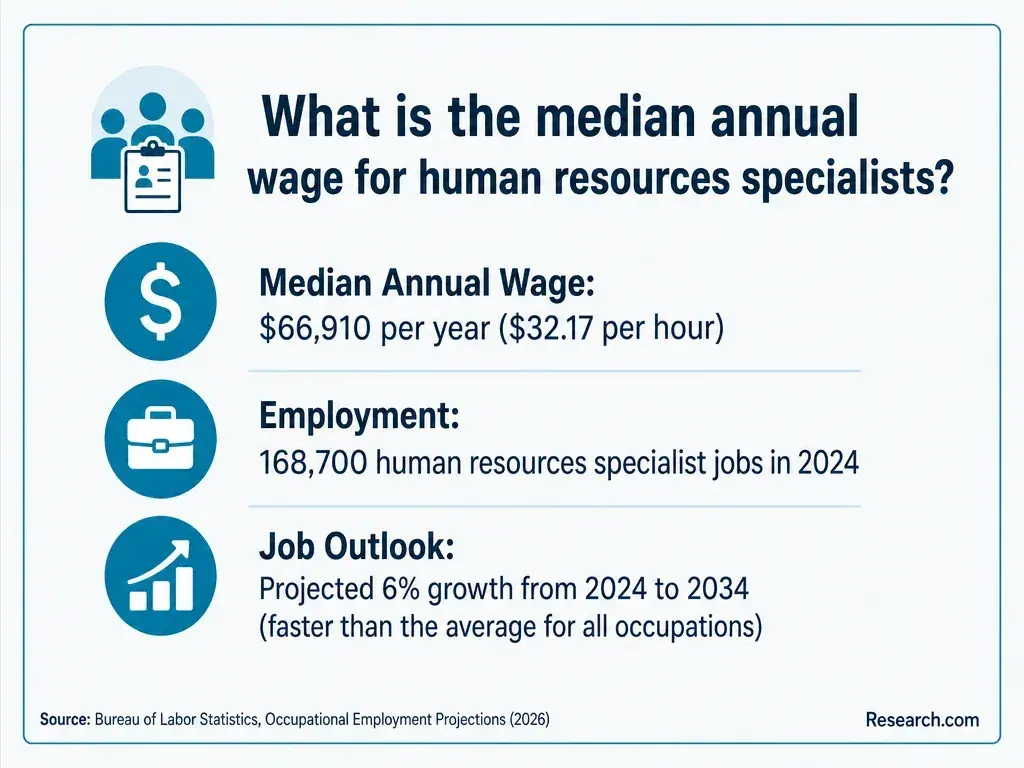
There is no single salary for a business administration graduate: pay follows the occupation, location, industry, and experience level. For context, the U.S. Bureau of Labor Statistics reports a May 2025 median annual wage of $75,940 for human resources specialists and projects 6% employment growth from 2025 to 2035. That is an occupation-wide median and projection, not an entry-level offer or an outcome attributable to this degree.
Judge the financial payoff against jobs you can realistically pursue with your existing experience, not managerial wage figures. If leadership is your aim, fast-track undergraduate organizational leadership study is another curriculum to compare, but finishing sooner does not replace the workplace record employers typically expect for management responsibility.
Other Things You Should Know About Business Administration
Possibly. Ask the school whether it offers credit for prior learning and what assessment it requires. Employment alone does not award credit or automatically satisfy an internship or capstone.
Not necessarily. A reimbursement claim may require a grade report or proof of payment. Ask HR exactly what documentation it collects and how it handles academic information.
Often, but check the school's leave and reentry rules before stopping. A pause can affect course availability, catalog requirements, and financial-aid status.
Only if the instructor accepts the project and your employer permits the proposed use of its information. Confirm confidentiality and ownership rules before sharing workplace data or putting the project in a portfolio.
- Employer-offered educational assistance programs can help pay for college | Internal Revenue Service https://www.irs.gov/newsroom/employer-offered-educational-assistance-programs-can-help-pay-for-college
- School-Determined Requirements - FSA Partner Connect https://fsapartners.ed.gov/knowledge-center/fsa-handbook/2026-2027/vol1/ch1-school-determined-requirements
- Handy Reference Guide to the Fair Labor Standards Act | dol.gov https://www.dol.gov/agencies/whd/compliance-assistance/handy-reference-guide-flsa
- Types of Financial Aid: Grants, Work-Study, and Loans | studentaid.gov https://studentaid.gov/understand-aid/types
- Employee Benefits | longbeach.gov https://www.longbeach.gov/hr/city-employees/employee-benefits/
- School Program Approval - Education and Training https://www.benefits.va.gov/GIBILL/school_program_approval.asp
- Fast Facts: Tuition costs of colleges and universities (76) | ed.gov https://nces.ed.gov/fastfacts/display.asp
- and Ask For - Employer Tuition Reimbursement Benefits | Harvard Extension School https://extension.harvard.edu/blog/how-to-use-and-ask-for-employer-tuition-reimbursement-benefits/
- Online Bachelor's Degree in Business Administration | Purdue Global https://www.purdueglobal.edu/degree-programs/business/bachelor-business-administration/
- Online BSBA in California (ACBSP-Accredited) TUW https://www.tuw.edu/academics/business/business-administration-and-management/