2027 Nonprofit Management vs. International Business for a Business Administration BS: Which Fits?
Audited and Verified:
Our Editorial and Data Verification Process
Research.com uses government datasets, official education statistics and primary institutional information to support its career and degree guides. Our review process checks factual accuracy, occupational definitions, source dates and the requirements associated with the credentials discussed.
How This Article Was Fact-Checked
Our editorial team verifies salary estimates, employment projections, education requirements and program information against original data providers and official organizations. Salary figures are checked against the relevant occupational definitions and reporting periods. Information about licensure, accreditation and required in-person training is reviewed separately.
Fact-checked and verified on:

Co-Founder and Chief Data Scientist
Choosing between nonprofit management and international business changes what you study - and which opportunities you can credibly pursue after a Business Administration BS. Nonprofits need people who can manage limited resources and serve a mission; internationally active companies need people who can work across markets, suppliers, and regulations. For students choosing a concentration or finishing an existing degree, this guide compares the coursework, practical experience, career evidence, and costs that should drive the decision. It also shows when a more specialized pathway may serve your goal better.
Key Things You Should Know
- Choose nonprofit management for mission-driven operations, fundraising, or program administration; choose international business for cross-border marketing, trade, or supplier work. Neither concentration guarantees a management job.
- Compare the additional courses, approved experience, and credits needed to finish - not just the concentration name. A formal concentration must appear in the school's requirements, not merely in its elective list.
- For salary context, the U.S. Bureau of Labor Statistics reports a May 2025 median of $78,760 for market research analysts, a role relevant to either sector. That occupation-wide figure is not a starting salary for graduates.
What is the difference between nonprofit management and international business in a BS program?
Both concentrations usually build on the same business administration core, but they apply it to different decisions. Nonprofit management emphasizes mission, governance, funding, and accountability to beneficiaries and donors. International business emphasizes decisions across national markets, such as sourcing, market entry, and adapting operations to different legal and cultural settings.
The comparison below focuses on the work each concentration should prepare you to discuss and demonstrate. Exact course titles and concentration requirements depend on the school.
| Decision point | Nonprofit management | International business |
| Primary stakeholders | Beneficiaries, funders, boards, staff, and community partners | Customers, suppliers, employees, and partners across markets |
| Typical business problem | How to fund, deliver, and measure a mission-driven service responsibly | How to enter or serve a market while managing cross-border costs and risks |
| Useful applied evidence | An approved program budget, fundraising analysis, or volunteer-process review | A market-entry analysis, sourcing comparison, or cross-cultural marketing plan |
Choose based on the function you want to perform, not an assumption that nonprofits are small or international firms require constant travel. If your specific goal is logistics rather than broader cross-border strategy, compare the concentration with supply chain undergraduate programs with shorter terms; a specialized curriculum may offer more relevant operations depth. Confirm how its credits would apply before changing degrees.
Which concentration offers better career opportunities: nonprofit management or international business?
Neither has a universally better job market. Nonprofit management is a stronger fit if you want to support fundraising, grants administration, program operations, or organizational development. International business is a stronger fit if you want to support international sales, market research, trade operations, or supplier coordination. In both cases, a first job is more likely to involve analysis or coordination than organization-wide management.
Experience can matter more than the concentration label. A nonprofit volunteer who has tracked a program budget may have stronger evidence for an operations role than a student with coursework alone. Likewise, language ability, industry knowledge, and documented market research can strengthen an international-business application. If your target is specifically HR in a mission-driven organization, examine using existing credits in a human resources degree before assuming nonprofit management offers enough HR depth.
International business also does not require working overseas. Many relevant jobs are based in the United States, and overseas employment depends on the employer and applicable work-authorization rules.
What coursework do nonprofit management and international business concentrations include?
Start with the shared BS core: schools commonly require some combination of accounting, finance, marketing, management, economics, statistics, and business law. The concentration's value lies in what it adds beyond those courses. Check whether the courses below are required, optional, or merely available as electives.
These examples show the substantive difference to look for in a current catalog; they are not a universal curriculum.
| Concentration | Courses to look for | Skill to demonstrate |
| Nonprofit management | Nonprofit finance, fundraising, board governance, program evaluation, grant management | Connecting a budget or operating plan to mission, funding restrictions, and outcomes |
| International business | International marketing, global strategy, trade, cross-cultural management, international finance | Comparing markets or suppliers while explaining costs, regulations, and uncertainty |
Look beyond course names to prerequisites, course frequency, and the capstone. A project-management course can support either path, but it is not the same as a specialized degree or professional certification. Students who already hold substantial college credit and want project coordination as their main goal can compare project management bachelor's completion using existing credits. Ask each school which credits would satisfy major and concentration requirements.
Online delivery can help students who work or care for family, but it does not necessarily mean self-paced study. A nonprofit course may require scheduled meetings with a community partner; an international-business course may require live team presentations across time zones. Campus programs may make local networking and organization visits easier, while online programs can widen your choice of schools and project partners.
Before enrolling, ask for sample course schedules and confirm live attendance, group-work deadlines, exam rules, required campus visits, and how internships or capstones are arranged. For a student keeping a job, compare those obligations - not the "online" label - when reviewing business administration programs for advancement while working. If you plan to use your workplace for a project, get faculty approval and check employer permission and data-use rules first.
Requirements vary by institution and by whether you apply as a first-year, transfer, or returning student. Schools typically ask for prior academic records; some separately require admission to the business major or completion of introductory quantitative and business courses. Admission to the university does not by itself establish that you can enter a concentration or finish it on your preferred schedule.
If you have previous college work, request an official evaluation showing which credits meet general education, business core, concentration, elective, and residency requirements. Ask whether accounting, statistics, or economics courses have equivalency or recency rules. Applicants comparing schools can also check colleges that waive online application costs, but an application-fee policy should not outweigh credit applicability or program fit.
A conventional full-time bachelor's path takes about four academic years, but transfer credit, part-time enrollment, prerequisites, and course availability can substantially change your remaining time. A concentration that uses existing electives may add no courses; one with limited course offerings or extra requirements may delay completion. The school's degree audit, not an advertised completion estimate, is the useful starting point.
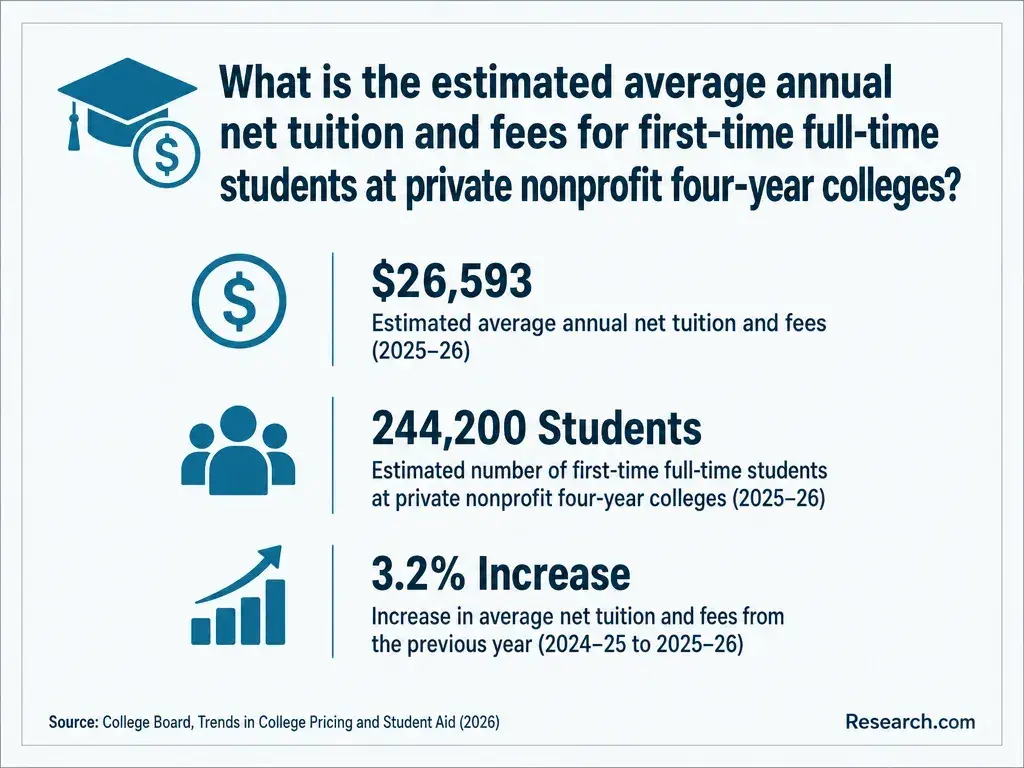
Compare total completion cost rather than tuition alone: count remaining credits, mandatory fees, materials, travel or technology needs, and potential lost work time. Then check financial aid and any employer reimbursement rules. Lower-priced accredited business administration study options can provide a starting list, but the lowest advertised rate may not produce your lowest cost if fewer of your credits apply. Request a written remaining-course plan and a school-specific cost estimate for each concentration.
There is no reliable single salary for either concentration: employers pay for a role, location, responsibilities, and experience, not the concentration name alone. As one relevant benchmark, the U.S. Bureau of Labor Statistics reports that market research analysts had a median annual wage of $78,760 in May 2025. Market research can support either nonprofit outreach or international market decisions, but that occupation-wide median includes experienced workers and is not an expected starting offer.
For a realistic comparison, collect postings for the specific entry roles you would pursue and note required skills, experience, location, and posted pay. If trade or sourcing is your main interest, supply chain college costs versus potential career outcomes offers an adjacent degree comparison; do not assume its occupational salary figures describe international-business graduates.
Outlook is more meaningful for an occupation than for a concentration. BLS projects 7% U.S. employment growth for market research analysts from 2025 to 2035. That suggests continuing opportunities in a function useful across sectors, but it does not predict openings at a particular nonprofit, international company, or location - or guarantee a new graduate a position.
Test demand for your preferred function in your target region. Search for recurring tasks in job postings, such as donor reporting, grant coordination, market analysis, or supplier communication, and identify experience you can gain through approved projects or supervised work. If your long-term aim is people leadership rather than either sector, online leadership bachelor's programs with compressed schedules are another curriculum to examine. A shorter schedule still does not replace the experience normally expected for supervisory work.
First verify the institution's recognized accreditation and that the BS program is eligible for the academic and financial-aid purposes important to you. AACSB, ACBSP, and IACBE are business-focused accreditors; if a school cites one, verify its actual scope rather than assuming every degree or location is covered. Accreditation is a quality checkpoint, not proof of a particular job outcome.
Neither concentration itself awards a professional license. A role-specific certificate or certification may help later, but eligibility can depend on work experience and the issuing organization's rules. If project management is your primary objective, compare the curriculum and total expense of a dedicated pathway using project management degree tuition comparisons before paying for more education than the target role requires.
How can you choose a reputable business administration program for your goals?
Choose the program that offers the clearest, affordable route to your target work - not simply the most appealing concentration title. Ask each school for its current catalog, concentration course schedule, degree audit, total remaining-cost estimate, and examples of approved applied work. Confirm that the concentration is formally recognized and ask career services what employer or nonprofit connections students can actually use.
A useful final test is whether you can name an entry role and show how required courses plus permitted projects would help you qualify for it. Use online business school comparisons across the United States to identify candidates, then verify each school's policies directly. Favor nonprofit management if mission-based budgeting, funding, and program work align with your goal; favor international business if cross-market analysis and operations do. If neither adds meaningful skills beyond your current experience, targeted coursework or supervised experience may be the better next step.
Other Things You Should Know About Business Administration
Possibly. Some schools permit a second concentration, minor, or electives from the other area. Ask whether courses can count toward both and whether the combination adds credits or time.
No. Budgeting, operations, and stakeholder communication can transfer across sectors. You will still need to show how your experience matches the specific employer's work.
Not for every role or program. Language skills can be valuable for particular markets, but employers may prioritize trade knowledge, analysis, or relevant industry experience.
Not automatically. If your next goal is an entry-level role, relevant work experience may be more useful first. Consider an MBA when you can identify the advancement goal it would serve and compare its cost with other options.
- How to Choose a Concentration for Your Business Administration Degree - National https://www.national.edu/2026/02/02/how-to-choose-a-concentration-for-your-business-administration-degree/
- International Business vs. Business Management: What is the Difference? | Schiller International University https://www.schiller.edu/blog/international-business-vs-business-management-what-is-the-difference/
- Tools for Determining Salary Benchmarks | Yale School of the Environment https://careers.environment.yale.edu/resources/tools-for-determining-salary-benchmarks/
- 11 Best Degrees for a Career in Nonprofit | University of San Diego Online Degrees https://onlinedegrees.sandiego.edu/best-nonprofit-degrees/
- Salary Setting: Tools for Determining a Competitive Salary | Walden University https://www.waldenu.edu/programs/business/resource/salary-setting-tools-for-determining-a-competitive-salary
- What Employers Look for Beyond Your Degree | South University https://www.southuniversity.edu/news-and-blogs/2026/09/what-employers-look-for-beyond-your-degree
- Transferable skills: what they are and how to use them | Walbrook Institute London Limited https://www.walbrook.ac.uk/knowledge-hub/careers-employment/transferable-skills/
- Your guide to choosing the best college major for you | About the University of Cincinnati https://www.uc.edu/blog/choosing-a-major.html
- Which Business Concentration Should I Choose? | Touro University Worldwide https://www.tuw.edu/business/business-concentration-tips/
- 15 Transferable Skills That Work Across Industries | CityU of Seattle https://cityu.edu/transferable-skills/