2027 Is an Online BS in Business Administration the Right Next Step for Association Administrators?
Audited and Verified:
Our Editorial and Data Verification Process
Research.com uses government datasets, official education statistics and primary institutional information to support its career and degree guides. Our review process checks factual accuracy, occupational definitions, source dates and the requirements associated with the credentials discussed.
How This Article Was Fact-Checked
Our editorial team verifies salary estimates, employment projections, education requirements and program information against original data providers and official organizations. Salary figures are checked against the relevant occupational definitions and reporting periods. Information about licensure, accreditation and required in-person training is reviewed separately.
Fact-checked and verified on:

Co-Founder and Chief Data Scientist
Association administrators already coordinate people, budgets, events, and member services. An online BS in Business Administration may help turn that experience into broader operational responsibility - but only if its coursework fills a real skill or credential gap. For professionals balancing association work with study, the decision also depends on transfer credit, scheduling, and total cost.
This guide explains where the degree can help, where experience or targeted training may be more useful, and what to verify before enrolling.
Key Things You Should Know
- An online business degree is most useful when an association role requires a bachelor's degree or stronger budgeting, operations, HR, or analytics skills; it does not replace management experience.
- The U.S. Bureau of Labor Statistics reports a May 2025 median annual wage of $114,130 for administrative services managers - not for all association administrators or new graduates.
- BLS projects 5% growth for administrative services managers from 2025 to 2035. Before enrolling, compare the degree's remaining cost and study demands with the qualifications for your target job.
Is an online bachelor's in business administration useful for association administrators?
It can be, particularly if you want to move from coordinating association activities to managing a function, staff, or substantial operating budget. Association administrators may handle membership records, board materials, events, vendor relationships, and day-to-day services. A BS in Business Administration adds a broader foundation in finance, management, operations, and organizational decision-making. It does not, by itself, establish that you have led those activities at a managerial level.
The strongest case for the degree is a specific gap: a target employer requires a bachelor's degree, or you need business skills that your current job has not developed. If you already hold a bachelor's and need help with one task - such as event budgeting or member-data reporting - a course, certificate, mentorship, or expanded assignment may be more direct. A nonprofit management or public administration program may fit better if your goal centers on governance, fundraising, or public-service policy rather than general business operations.
Review job postings for the role you actually want, then compare their requirements with curricula at American business schools offering online degree study. Look for opportunities to apply coursework to association problems, but confirm that a faculty-approved project may use workplace information and that your employer permits its use.
What careers can an online business administration degree prepare association professionals for?
Your next role depends on what you have done, not just your current title or new diploma. The comparisons below connect common association duties to plausible moves and identify the experience that remains important.
| Potential path | Relevant association experience | Evidence or skills to develop |
| Membership or operations manager | Coordinating services, renewals, and workflows | Process measures, budgeting, staff supervision, and decision authority |
| Meetings or events manager | Scheduling events and working with vendors | Contract oversight, financial results, risk planning, and larger-event responsibility |
| HR specialist or coordinator | Onboarding, records, or staff support | HR procedures, employment-law knowledge, and direct HR work |
| Project coordinator | Tracking deadlines across committees or teams | Project schedules, stakeholder communication, and documented deliverables |
An administrator who has managed a membership process may be closer to operations than to HR, even if both interests appear in a general business curriculum. For an HR transition, compare the required experience and coursework before applying prior college coursework toward an HR bachelor's. A specialized degree could provide more functional depth, while the business administration degree offers wider options.
How much does an online business administration degree cost and how long does it take?
There is no reliable single price or completion time for this decision. Schools differ in tuition structure, and an administrator returning with college credit may have very different remaining requirements from a first-time student. An official degree audit - not an advertised "finish fast" claim - should establish how accepted credits apply to general education, the business core, electives, and residency requirements.
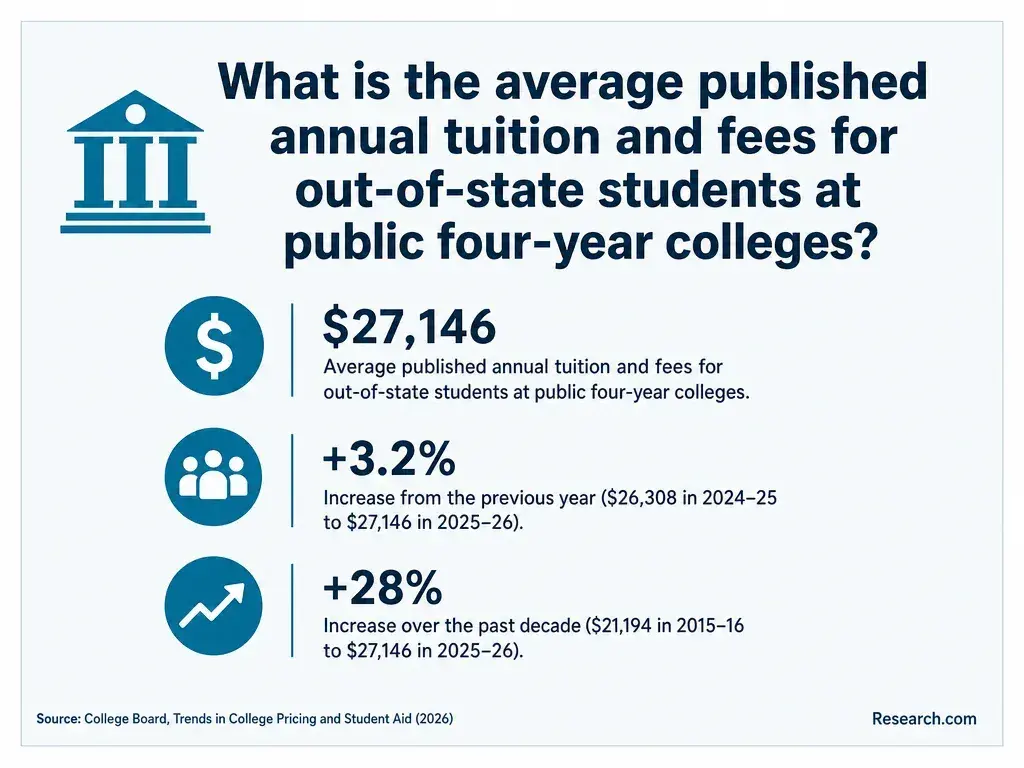
To estimate total cost, request a written breakdown of tuition for remaining required courses, mandatory online and technology fees, books or software, and any proctoring or travel costs. Then check course availability: studying part time may preserve work income but extend the calendar and expose you to additional term-based charges. Compare options for business administration program length and salary context without treating advertised speed or occupational wages as your personal return on investment.
Ask your employer whether education assistance applies to the program, when reimbursement arrives, and whether grades or continued employment are conditions. Compare the amount you would pay before reimbursement, any borrowing, and the value of work hours you would give up. A less expensive program is not a bargain if required courses delay completion or key credits do not apply.
First, verify that the institution holds recognized institutional accreditation and that the credential offered is the bachelor's degree you intend to earn. Institutional accreditation matters for academic oversight and can affect financial aid and future credit recognition; another school or employer still makes its own acceptance decisions.
AACSB, ACBSP, and IACBE accreditation concerns business education, but their scopes differ. If a school cites one, check the accreditor's directory and the school's documentation to see whether the relevant business unit or program is covered. Do not assume that a university's institutional accreditation means its business program has separate business accreditation, or that either designation proves a particular employment outcome.
Before applying, confirm the exact degree title, online availability, current catalog requirements, and accreditation status directly with the institution. Application fees are a separate consideration: you can compare no-fee college applications, but fee savings should not outweigh program fit or verified accreditation.
Online study can eliminate a commute and make it easier to stay employed, but it is not necessarily self-paced. An association professional's evening meetings and event weekends can conflict with live classes, team presentations, proctored exams, or fixed deadlines. Campus study may offer easier access to face-to-face collaboration and local recruiting, while requiring travel and scheduled attendance.
Request a sample course schedule and ask how often live participation, group work, exams, and campus visits occur. Check whether required courses are offered in the terms you can attend, whether part-time enrollment is permitted, and what happens if a major event season forces a break. When considering fastest bachelor's-level business study options, compare weekly workload and course sequencing as carefully as calendar length; an accelerated course does not mean less work.
Most programs combine general education with a business core, but the required courses and depth vary. For association work, accounting and finance can strengthen budget oversight; management and HR can inform staff coordination; marketing can support membership communications; and operations or analytics can help assess processes and service measures. Business law and ethics may also be relevant to contracts, governance, and responsible handling of member information.
Examine actual course descriptions and assignments, not just titles. A useful program might let you analyze an anonymized renewal process or develop an event budget under faculty guidance. Check prerequisites, software, elective availability, and whether a stated concentration is formally awarded rather than an informal collection of courses. If purchasing and vendor operations are your intended specialty, compare the business core with online supply chain programs balancing cost and completion time; their more focused coursework may justify a different degree choice.
Requirements vary by institution and by whether you apply as a first-time student, transfer student, or returning student. Schools commonly request prior academic transcripts and evidence of secondary-school completion or previous college study; some have separate requirements for entry to the business major. Ask whether mathematics, accounting, or other courses must be completed before admission to the major or simply before later classes.
If you have college credit, obtain an official evaluation showing which credits meet specific degree requirements. Acceptance as electives is not the same as satisfying the business core. Ask admissions about application documents, the registrar or transfer office about credit, and an academic adviser about the remaining course sequence. Admission also does not establish financial-aid eligibility: even when exploring college aid options for project management bachelor's applicants as a possible alternative, confirm aid rules and program eligibility with each school's financial-aid office.
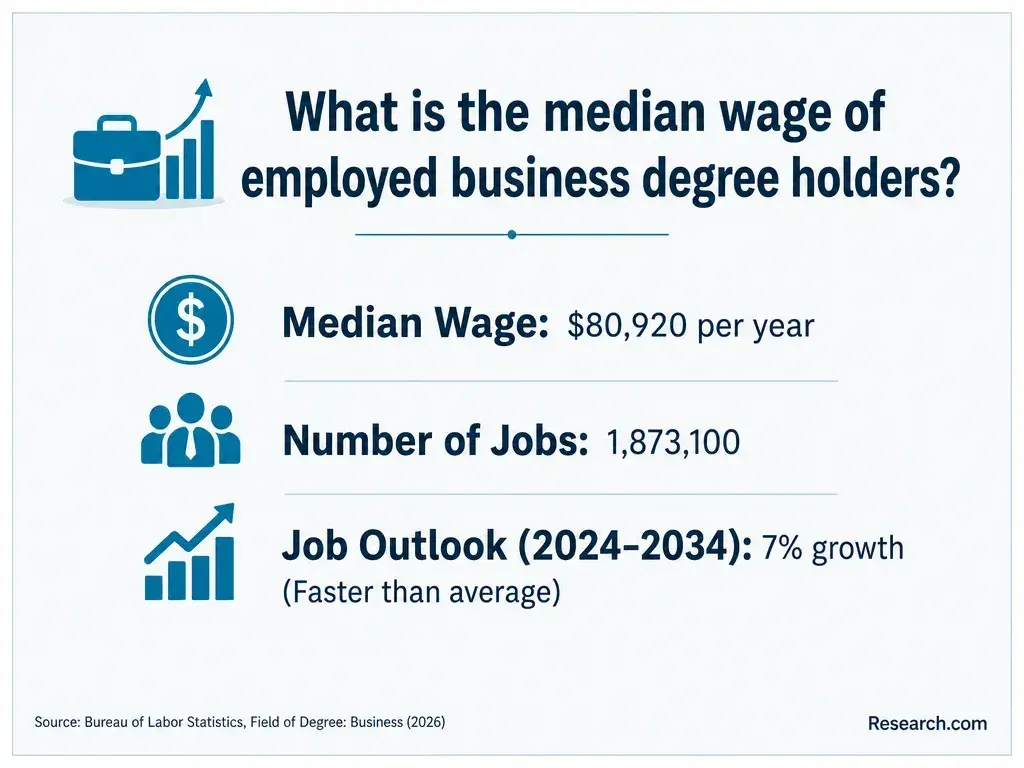
There is no single national salary for "association administrator with a business degree." Responsibilities and employer size vary, and a degree does not set pay. The closest relevant management benchmark for some advancement goals is the BLS administrative services manager occupation, which had a $114,130 median annual wage in May 2025. That occupation-wide median includes experienced managers across industries; it is not an expected starting salary for an association administrator or a new graduate.
For a sound comparison, collect posted pay ranges for your target role in your region and note whether they require supervision, budget authority, specialized experience, or a bachelor's degree. If your preferred work is project coordination rather than administrative management, compare its qualifications and education costs separately, including budget-conscious project management degrees. Use a realistic local pay range - not a manager median - to judge whether additional schooling is financially worthwhile.
BLS projects 5% employment growth from 2025 to 2035 for administrative services managers. This suggests continuing demand across the occupation, but it does not measure association-specific openings or guarantee promotion. Employers may expect experience managing facilities, records, services, people, or budgets in addition to a bachelor's degree.
Read local association postings alongside that national outlook. If your work increasingly centers on procurement or distribution rather than member operations, evaluate those job requirements on their own terms; supply chain bachelor's degrees in three years or less may be worth comparing, provided the advertised pace is feasible for your schedule and transfer record. Choose a path based on the work you want to perform, not growth figures alone.
Do association administrators need certifications or professional licenses?
General association administration does not typically require a professional license, but a particular job may call for specialized credentials or regulated activities. Check the posting and the relevant credentialing body rather than assuming a business degree satisfies certification requirements. An association-focused credential, for example, is distinct from an academic degree and may require documented professional experience.
Prioritize a credential only if it supports your target responsibilities. Project management training may help someone who runs cross-team initiatives; HR training may be more relevant to someone moving into employee relations. Compare the eligibility rules and total cost of those routes with a full bachelor's degree. If project leadership is your main goal, find project management programs with lower total costs as one comparison - but verify whether a shorter credential or supervised project experience would address the gap without another degree.
Other Things You Should Know About Business Administration
Only with appropriate employer permission and under the school's project rules. Remove personal or confidential information where possible, and agree in advance on what may appear in a submitted assignment or portfolio.
It may demonstrate governance and decision-making experience, but it is not automatically equivalent to supervising staff or managing operations. Describe your actual responsibilities and results rather than relying on the board title.
Possibly, if you have substantial professional experience and need graduate-level management study. First compare MBA admissions requirements, cost, and curriculum with the narrower skills your target role requires.
Only if the institution offers an applicable prior-learning or work-based credit process and approves your evidence. Employment alone does not award credit, and an approved workplace project is not necessarily credit for past experience.
- Employment Outcomes of Bachelor's Degree Holders - COE https://nces.ed.gov/programs/coe/indicator/sbc/bachelor-degree-holder-outcomes
- Accreditation in the U.S. | ed.gov http://www.ed.gov/laws-and-policy/higher-education-laws-and-policy/college-accreditation/accreditation-in-the-us
- Undergraduate and Graduate Tuition and Fees | Purdue Global https://www.purdueglobal.edu/tuition-financial-aid/undergraduate-graduate-tuition-and-fees/
- Why Is Accreditation Important? | ACE Blog https://ace.edu/blog/why-is-accreditation-important/
- Policies for Online Teaching | Teaching and Learning Resource Center https://teaching.resources.osu.edu/teaching-topics/policies-online-teaching
- What Is an Accredited University? Understanding Accreditation | National University https://www.nu.edu/blog/what-is-an-accredited-university/
- Time-Cost Calculator - Tuition & Aid | UMass Global https://www.umassglobal.edu/tuition-and-aid/time-cost-calculator
- Distance Education & Online Programs Costs - Pembroke https://www.uncp.edu/admissions/tuition-and-fees/distance-ed-online-costs.html
- Transfer of Credits | Bryan University https://catalog.bryanuniversity.edu/transfer-of-credits
- Going the Distance: Why Online Learning Works | Harvard Extension School https://extension.harvard.edu/blog/going-the-distance-why-online-learning-works/