2027 Comparing Online BS in Business Administration Options for Adults with a Foreign Bachelor's Degree
Audited and Verified:
Our Editorial and Data Verification Process
Research.com uses government datasets, official education statistics and primary institutional information to support its career and degree guides. Our review process checks factual accuracy, occupational definitions, source dates and the requirements associated with the credentials discussed.
How This Article Was Fact-Checked
Our editorial team verifies salary estimates, employment projections, education requirements and program information against original data providers and official organizations. Salary figures are checked against the relevant occupational definitions and reporting periods. Information about licensure, accreditation and required in-person training is reviewed separately.
Fact-checked and verified on:

Co-Founder and Chief Data Scientist
A foreign bachelor's degree may qualify you for admission to a U.S. online business program, but it does not tell you how much of a second bachelor's degree you would need to complete. That distinction matters when you are balancing work, family, tuition, and possibly enrollment from another country.
This guide explains how to compare programs by credit applicability, accreditation, evaluation requirements, scheduling, and career purpose, so you can decide whether an online BS in Business Administration is worth pursuing or whether a shorter route better serves your goal.
Key Things You Should Know
- A foreign bachelor's degree can support admission without necessarily satisfying a U.S. program's business core, upper-level, or residency requirements; request a degree-specific audit before committing.
- Compare the remaining courses and total completion cost, not the number of credits a school says it will accept. Also confirm that online enrollment is permitted from your location.
- A second bachelor's is most useful when you need substantial undergraduate business preparation or a specific bachelor's credential. For context, U.S. human resources specialists had a $75,940 median annual wage in May 2025, but that occupation-wide figure is not a new graduate's expected salary.
What Is an Online Business Administration Bachelor's Degree for International Students?
An online BS in Business Administration is a U.S. undergraduate degree covering several business functions rather than one occupation. For an adult who already holds a foreign bachelor's degree, it is generally a second bachelor's pathway, not a conversion of the first degree into a U.S. credential.
A school may also offer a BBA or BA with similar aims; compare the actual curriculum and degree requirements rather than assuming the titles are interchangeable.
The reason for earning another bachelor's should control the comparison. If your first degree is in a non-business field and you need a broad foundation in accounting, finance, operations, and management, a BS may fit. If you need only a few business skills, a certificate or targeted courses may demand less time and money.
An MBA is a different, graduate-level option with its own admission expectations and may be more appropriate for someone with relevant professional experience.
Online delivery can make study possible without relocating, but it does not mean every program accepts students living abroad. Check location restrictions, live-session times, exam arrangements, and access to required software.
For employed adults, work-compatible business administration education options are a starting point; the school's actual course schedule must still fit your time zone and workweek. Online enrollment by itself does not provide a U.S. visa or work authorization.
How Can a Foreign Bachelor's Degree Transfer Into a U.S. Business Program?
A U.S. institution decides whether to recognize your prior study and where to apply it. Admission, credit acceptance, and satisfaction of degree requirements are separate decisions.
A completed foreign degree might meet an admission requirement or some general education requirements while leaving most business courses untouched. Schools may also limit second-degree transfer credit or require a minimum amount of study in residence, including online courses taken through that institution.
The following distinctions make competing transfer offers easier to compare. Ask each school for an official degree audit showing these categories, not just a total of accepted credits:
| Audit category | What it means for a second bachelor's |
| General education | Prior study may fulfill broad requirements, subject to the school's second-degree policy. |
| Business core and prerequisites | Courses must meet the institution's content, level, and any recency rules; a similarly named course may not qualify. |
| Concentration and upper-level work | Specialized or advanced requirements may need to be completed at the new school. |
| Electives and residency | Accepted credits may count only as electives, while residency rules still require additional institutional coursework. |
Gather your transcript, course descriptions or syllabi, grading scale, and any required translations. Then ask the transfer office to identify proposed equivalencies and the business adviser to show the remaining course sequence in the audit. If a course appears misclassified, ask about a documented appeal or substitution.
Students considering a more specialized route can compare transfer admission options for project management undergraduates, but should obtain a separate audit for that major; its requirements will not necessarily match a general business BS.
How Do You Choose an Accredited Online Business Administration Program?
First verify that the institution holds recognized U.S. institutional accreditation and that the advertised online degree is awarded by that institution. Then check any claimed business-specific accreditation - such as AACSB, ACBSP, or IACBE, against the accreditor's stated scope.
Institutional accreditation and business accreditation answer different questions, and a claim about a business school does not automatically establish that every degree it offers is covered.
For an applicant with a foreign bachelor's, the strongest shortlist is not necessarily the one with the most generous advertised transfer maximum. Compare written degree audits, required upper-level courses, course availability, access from your country, academic advising, and published graduation policies.
Ask whether the school can assess your international record before you make a nonrefundable commitment and whether a change in enrollment term would change the applicable catalog.
Cost-focused lists can help identify candidates: find accredited affordable business administration colleges with aid options, then verify accreditation and your own aid eligibility directly. A school's participation in U.S. federal student aid does not mean every international applicant qualifies for that aid.
The receiving university - not an evaluation company - sets its international credential policy. It may require an external course-by-course evaluation, an internal review, or different documentation for admission and transfer credit.
A course-by-course report can describe U.S. credit and grade equivalents, but it does not decide which business requirements your courses satisfy.
Before ordering a report, contact international admissions and the transfer office with the name of your awarding institution and degree. Confirm the accepted evaluation providers, required report type, transcript-delivery method, translation standards, and whether original-language documents are needed.
Ask how the school treats study completed at more than one institution. Ordering an unapproved report can mean paying again for an evaluation the school will not use.
Budget for evaluation and document costs alongside application charges. If you are applying to several schools, online college application fee savings may reduce one expense, but check each school's evaluation requirements before assuming applications can share the same report.
Requirements vary by institution and sometimes by business major. Applicants with a foreign bachelor's commonly need to document prior college study and, where applicable, English-language proficiency.
A school may waive an English test based on specified prior instruction or another accepted measure, but a foreign degree alone should not be assumed to trigger a waiver. Some programs admit students to the university before they meet separate business-major requirements.
Check whether the program requires particular grades or prior courses in mathematics, statistics, accounting, economics, or communication. A missing prerequisite may be completed after admission at one school but before entry to the major at another.
For a broader view of possible requirements, consult the business administration degree admissions requirements guide, then use the current catalog for each school's binding rules.
Send admissions a concise record of your degree, transcripts, grading information, and relevant work experience. Ask for written answers to two different questions: "Am I eligible to enter this program?" and "Which requirements will my previous study fulfill?" A positive admissions decision does not settle the second question.
Expect a general business core that may include financial and managerial accounting, economics, finance, marketing, management, operations, statistics, and business law or ethics.
Programs differ in quantitative depth, elective choice, and whether they require an internship or capstone. Your foreign bachelor's may cover general education while still leaving introductory business courses that must be taken before advanced classes.
Compare the remaining sequence, not just the course count. For example, an accounting prerequisite may delay a finance course, while a capstone may be offered only after the business core.
If you want a concentration, confirm that it is formally available online, that its required courses run often enough, and whether it adds credits. A cluster of electives is not necessarily a named concentration on your academic record.
If your aim is primarily people leadership rather than broad business preparation, online leadership bachelor's programs with compressed schedules provide a different curriculum to examine. Compare their remaining requirements against the BS audit; an advertised schedule does not establish how quickly a student with your particular foreign degree can finish.
There is no reliable completion-time or price estimate until a school applies your previous study to its degree requirements. Two institutions can accept the same transcript but assign different courses to the business core, electives, and residency.
Part-time enrollment, prerequisite chains, infrequently offered classes, and breaks for work or caregiving can extend the calendar even when the remaining credit totals look similar.
Request an itemized estimate based on your audit: remaining tuition-bearing credits, mandatory fees, evaluation and translation expenses, books or software, proctoring charges, and any travel requirement.
Compare charges on the same basis, per credit, course, or term, and ask what happens to the estimate if one proposed transfer equivalency is denied. To compare the least expensive business administration schools, use your remaining required coursework rather than the advertised price of an entire degree.
Ask the financial-aid office about your individual eligibility before counting on grants, loans, or employer reimbursement. U.S. federal aid is not available to every student who enrolls in a U.S. university, and employer benefits may have approval, grade, or repayment conditions.
The best financial comparison is the expected cost and time to finish your degree, including uncertainty in the transfer decision.
Online study is often the more practical option if relocation or regular travel is impossible. It is not automatically more flexible: courses may have fixed deadlines, live presentations, group work, identity checks for exams, or required internships.
An adult studying outside the United States should check whether those obligations fall at workable local times and whether the school permits access to all required activities from their location.
Campus-based study may be preferable if you need in-person recruiting, structured class meetings, or access to a particular employer network.
For either format, ask how career services support students who are not near campus and whether any applied project can be completed with an overseas employer, subject to faculty approval and workplace permission.
Business degrees through accelerated online learning may shorten the calendar for some students, but compressed courses can intensify weekly work and group-project demands. Compare a sample term schedule with your actual work and family commitments; acceleration does not by itself reduce the number of required credits or the total price.
A business BS can support applications for roles such as operations coordinator, marketing coordinator, procurement assistant, project coordinator, or human resources specialist, depending on prior experience and the employer's requirements.
These jobs involve different work: an operations role may track processes and vendors, while an HR role may handle recruiting or employee records. A broad degree supplies relevant knowledge, not automatic qualification for every function.
If you already have professional experience abroad, identify the responsibilities you can document, budgets handled, processes improved, customers served, or teams supported, and match them to the roles you want. Add evidence from coursework or an approved project where it fills a genuine skill gap.
A second bachelor's may be less direct than targeted training or a graduate program if you already hold a recognized bachelor's and need only specialized skills or U.S. employer connections.
Speed matters most when a particular job requires a bachelor's credential you lack or will not recognize. You can explore US business bachelor's fast-track rankings to find programs to investigate, but compare their audited completion timelines and career support before treating a faster advertised path as a better career choice. Management roles generally also require demonstrated responsibility and experience.
What Are the Salaries and Job Outlook for Business Graduates?
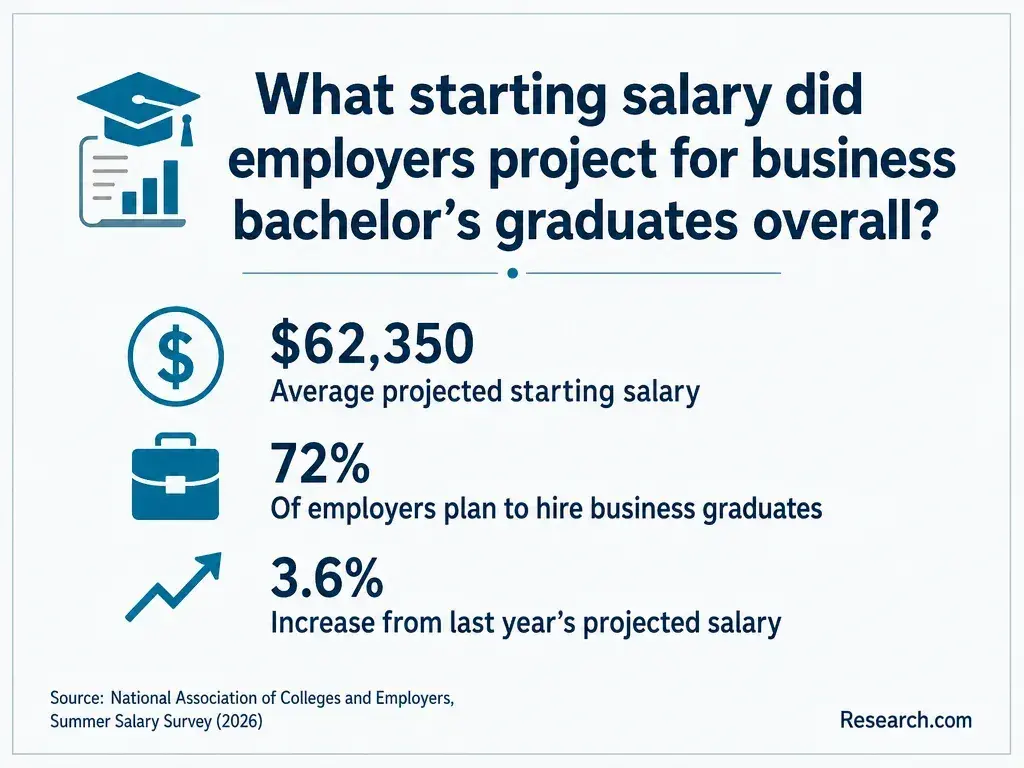
There is no single salary or employment-growth rate for "business administration graduates." U.S. Bureau of Labor Statistics figures describe occupations, not the earnings of people with a particular degree or of new entrants.
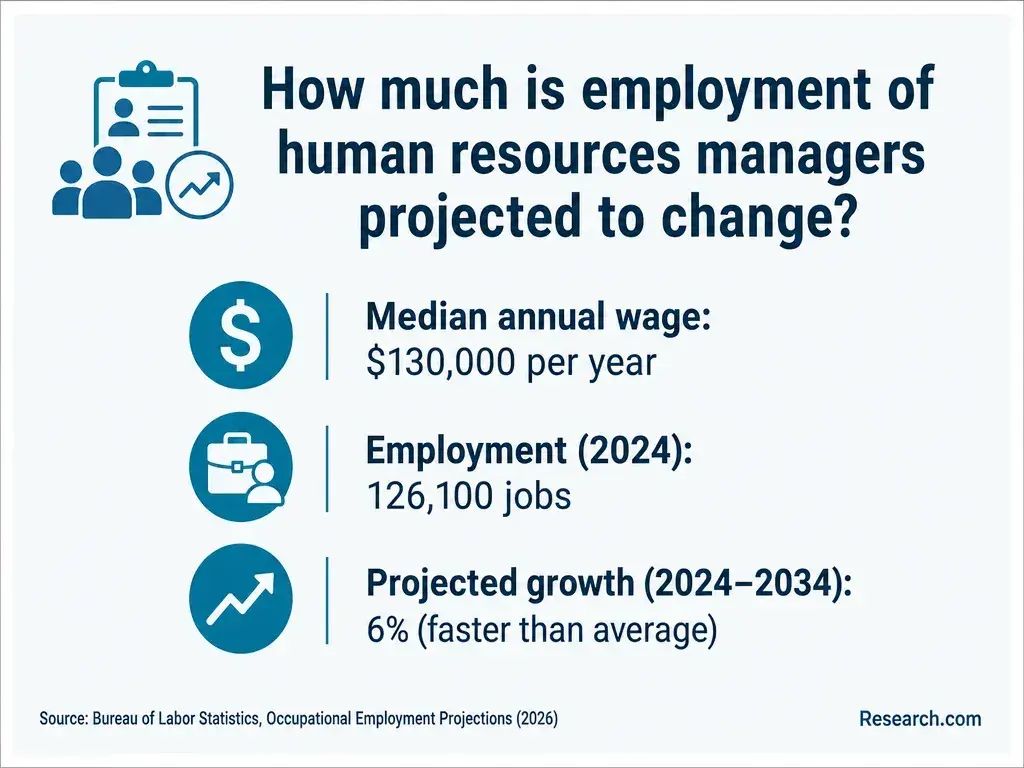
For example, human resources specialists had a $75,940 median annual wage in May 2025, and U.S. employment in that occupation is projected to grow 6% from 2025 to 2035. Those figures can help you assess a target occupation, but they do not predict your starting pay, eligibility, or prospects in another country.
To judge the value of another degree, compare job postings in your intended U.S. market with your present qualifications. Note whether employers ask for a bachelor's, a particular business function, U.S.-specific knowledge, or relevant experience.
Then compare likely education costs with the opportunities the credential would realistically open; the business degree tuition comparison guide can help you identify cost questions to bring to schools. Do not base the decision on occupation-wide managerial wages or assume that graduation will provide U.S. employment authorization.
Other Things You Should Know About Business Administration
Usually, yes, when both are relevant and accurately awarded. Give each degree its official title and institution; do not relabel your foreign degree as a U.S. degree.
Recognition depends on the country, employer, and any applicable professional regulator. Check local rules before enrolling if you intend to use the degree outside the United States.
No. Admission to an online program and permission to enter or work in the United States are separate matters. Seek guidance on the immigration rules relevant to your circumstances.
Possibly, if the instructor approves the assignment and your employer permits the work and any data use. Existing employment does not automatically satisfy an internship or capstone requirement.
- Equivalence of a U.S. Bachelor's Degree | Syracuse University https://www.syracuse.edu/admissions-aid/application-process/international/graduate/equivalence-us-bachelors/
- International Admissions Requirements | umdearborn.edu https://umdearborn.edu/admissions-aid/international-applicants/international-admissions-requirements
- Tuition & Fees | Bursar | Chicago State University https://www.csu.edu/financialoperations/bursar/tuition/
- International Student Funding & Documentation Requirements | University of Illinois Chicago https://ois.uic.edu/immigration/estimated-expenses/
- International Student Application Checklist | Monroe University https://www.monroeu.edu/admissions-and-aid/how-apply/international-student
- Academic Policies and Procedures | buffalo.edu https://catalogs.buffalo.edu/content.php
- Exams & Visas | University of Michigan Office of Undergraduate Admissions https://admissions.umich.edu/apply/international-applicants/exams-visas
- Transfer Credit | Office of the University Registrar (OUR) https://registrar.ucdavis.edu/records/transfer-credit
- International Degree Equivalencies - Graduate School https://gradschool.cornell.edu/admissions/application-steps/transcripts/international-degree-equivalencies/
- Undergraduate and Graduate Tuition and Fees | Purdue Global https://www.purdueglobal.edu/tuition-financial-aid/undergraduate-graduate-tuition-and-fees/